
Turtle Canyon Oahu: How Researchers Identify Honu
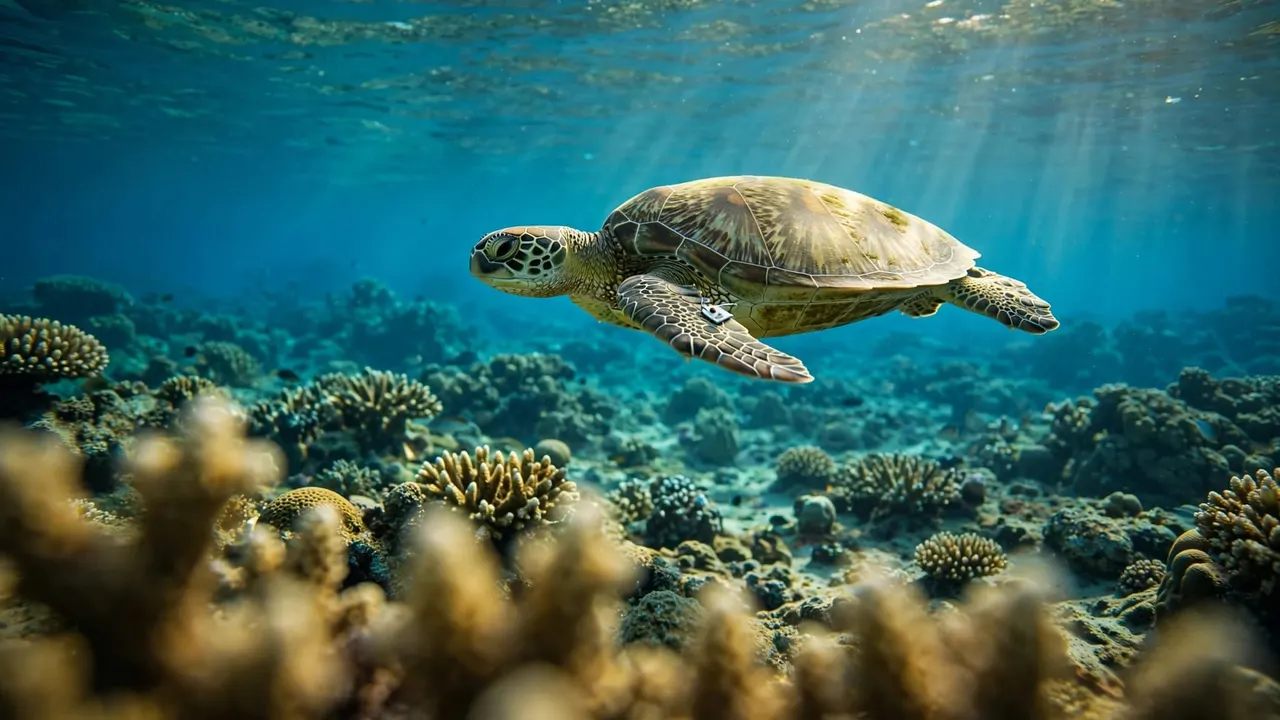
Researchers identify individual Hawaiian green sea turtles, or honu, through recorded shell markings and tags connected to research histories. At Turtle Canyon Oahu, you may notice one of these clues while snorkeling with us at Living Ocean Tours.
However, recognizing a green turtle and identifying a particular animal are different tasks. A documented identity lets researchers connect separate encounters across places and years, rather than count every sighting as a different turtle.
Understanding those methods gives you a more informed way to watch the honu without interrupting their day.
Key Takeaways
- Painted shell codes can help you recognize a marked honu and contribute a sighting to NOAA’s Honu Count.
- Flipper tags and implanted identification tags serve different research needs; neither continuously broadcasts a turtle’s location.
- Your most useful contribution is an accurate observation made without approaching, touching, or following the animal.
What Turtle Canyon Oahu Reveals About Honu
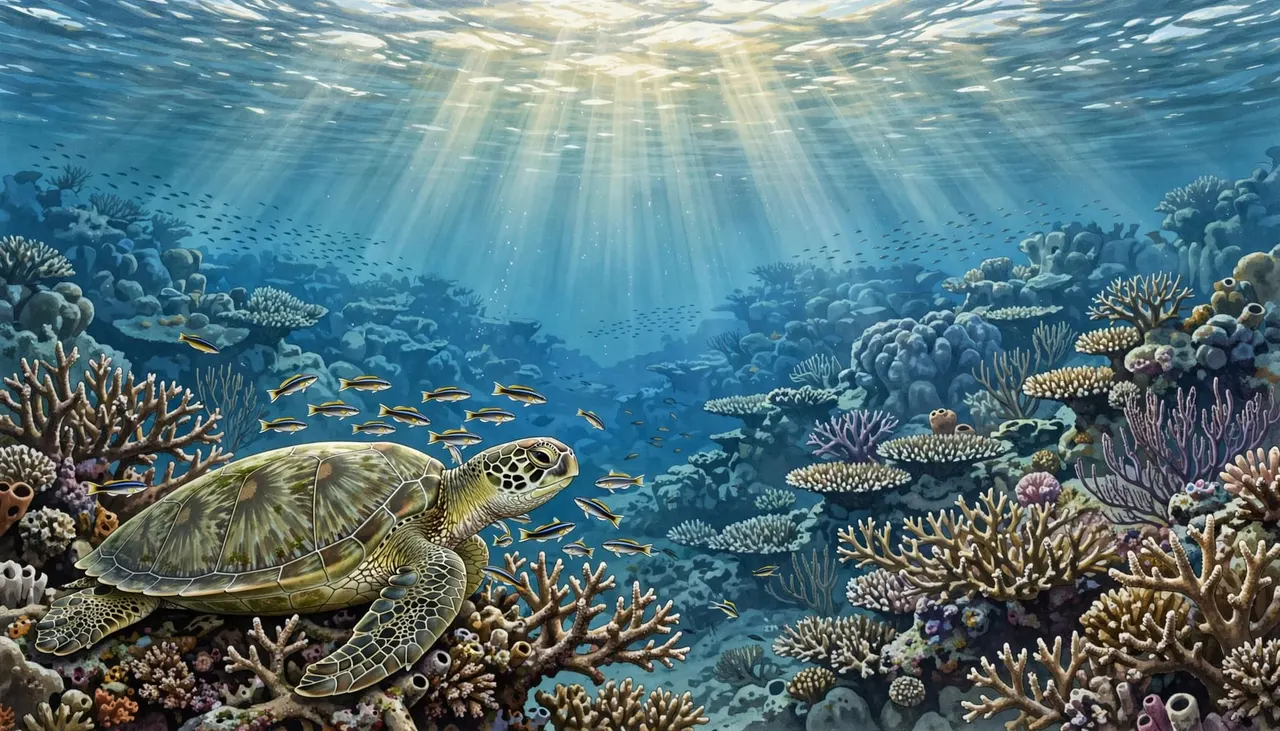
Illustration of a turtle at a reef cleaning station.
Turtle Canyon is offshore reef habitat near Waikiki, known for a natural turtle cleaning station. Small reef fish remove material from turtles’ shells and skin while the animals pause nearby.
You may see a honu resting, passing through, or swimming toward the surface for air. Those behaviors tell you what the turtle is doing during your visit. They don’t establish its identity, age, or history.
Even a familiar-looking turtle needs a documented match before its sighting becomes part of an individual research record. Size and shell color alone don’t establish that match.
Through our Oahu snorkeling tours, you can observe this habitat with guidance. However, a recreational visit isn’t a research survey. Seeing several turtles gives you a memorable encounter, not a count of every honu using the reef.
How Researchers Use Shell Codes
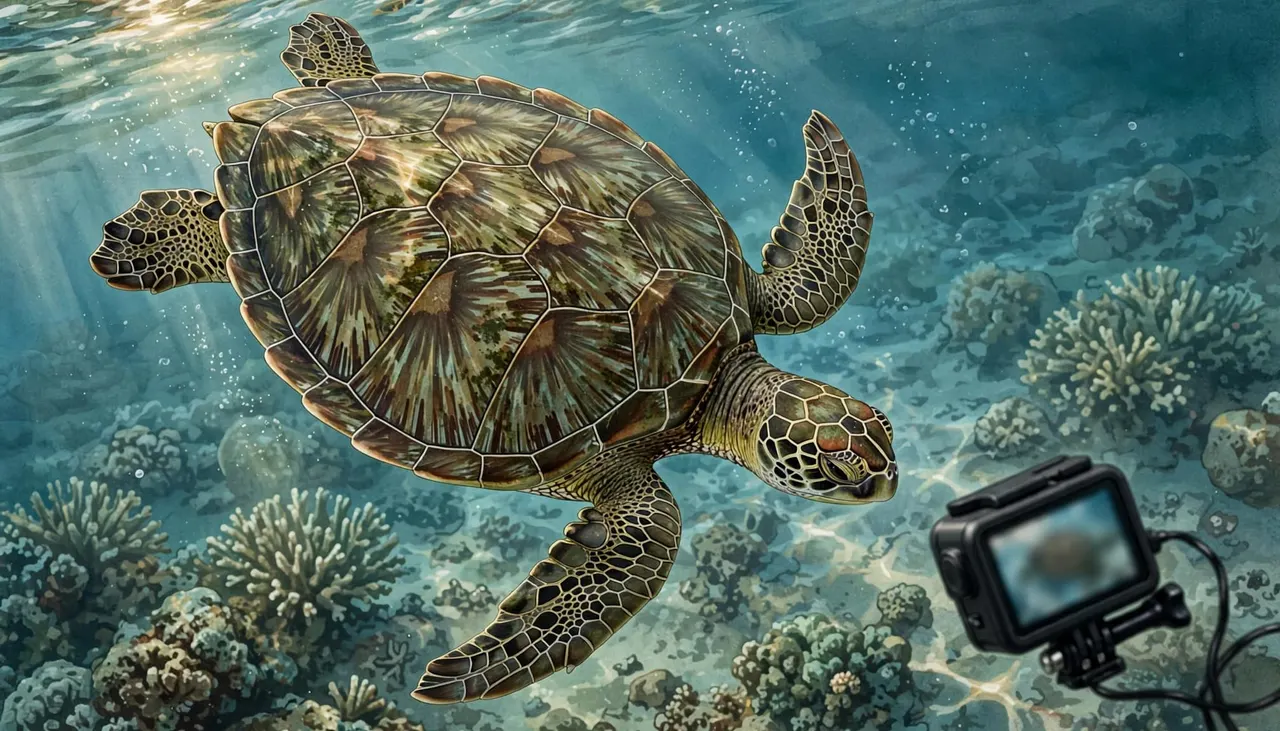
A visible code connects sightings
Some Hawaiian green turtles carry alphanumeric markings applied by researchers. NOAA describes codes etched into the shell and highlighted with non-toxic paint so observers can read them from a distance.
These markings connect an encounter to an existing record. The code can also indicate the island or location where researchers encountered the turtle.
At Turtle Canyon Oahu, a visible marking may therefore offer more useful identification information than a general photograph of an unmarked animal. However, the code doesn’t reveal a turtle’s complete history by itself. Researchers interpret it alongside the records associated with that animal.
Shell markings can fade
Research markings aren’t necessarily permanent. A 2026 study of Hawaiian turtle identification describes painted shell markings that generally remain visible for six to twelve months, with some lasting longer.
The same paper describes their use at Lalo, also called French Frigate Shoals, since the early 1990s. Different projects use different marking procedures, so one protocol doesn’t describe every marked turtle.
For you, the practical point is simple: an unreadable or absent marking doesn’t prove that a turtle has never been studied. Recording a code is useful; trying to expose or inspect one isn’t appropriate.
What Flipper Tags and PIT Tags Tell Researchers
Visible flipper tags identify an animal
Researchers also use externally attached tags with identification information. Hawaiian research records describe metal tags on turtles’ hind flippers.
When researchers encounter a tagged turtle again, its identifier can connect that encounter to earlier measurements or observations. Depending on the study, those records may help document growth, nesting activity, or movement.
A flipper tag doesn’t continuously report where a turtle swims. It supplies identification when someone encounters the animal and records the tag. You should never approach a honu to read one, and you shouldn’t handle a tag yourself.
PIT tags require a scanner
Passive integrated transponder tags, usually called PIT tags, sit beneath the skin. You won’t see them while snorkeling.
NOAA-hosted recovery records document PIT tagging at French Frigate Shoals beginning in 1998. Researchers need an electronic scanner to read these identifiers.
Unlike a satellite transmitter, a PIT tag doesn’t send researchers a turtle’s route across the ocean. It allows identification during a suitable research encounter. That distinction matters when you spot an apparently unmarked honu: invisible identification may still exist.
Why Repeated Sightings Matter More Than One Encounter
Identification prevents double-counting
If you see a turtle several times, you have several encounters with one animal. Without dependable identification, observations can give a misleading impression of how many different turtles are present.
Researchers use individual records to separate repeat encounters from encounters with different animals. They also consider survey effort, location, and timing.
That’s why your experience at Turtle Canyon Oahu can’t establish a population trend. A busy morning and a quiet afternoon describe different visits. Neither observation alone demonstrates that the local turtle population has increased or declined.
Long records answer different questions
Once researchers can recognize individuals, they can investigate what changes between encounters. Repeated measurements may document growth, while resightings in different places can show movement.
Nesting records answer another set of questions. An identified female encountered across breeding seasons can contribute information about reproduction and survival.
Still, a sighting establishes presence at a particular time and place. It doesn’t prove that the turtle stayed there between observations.
A confirmed resighting documents where an individual was seen. It doesn’t fill in every movement between sightings.
How You Can Record a Useful Turtle Sighting
If you notice a painted shell code, NOAA’s Honu Count reporting guidance explains how public observations can contribute to turtle records. NOAA directs observers to look for markings on the shell’s right side near the hind flipper.
Your role is observation, without repositioning the animal or yourself for a closer inspection.
- Note the date, time, and location of the encounter as accurately as you can.
- Photograph the visible marking only if you can do so from a responsible distance.
- Record the characters you can read, without guessing unclear letters or numbers.
- Submit the sighting through NOAA’s Honu Count reporting process.
At Turtle Canyon Oahu, underwater visibility and the turtle’s position may prevent a readable photograph. Let that opportunity pass rather than pursue the animal.
A photograph of a painted code records an assigned identifier. Recognizing the animal as a green turtle answers a different question: which species you’re watching.
Give Honu Space While You Observe
NOAA’s Hawaii marine wildlife viewing guidelines recommend staying at least 10 feet, or 3 meters, from sea turtles in the water and on land.
That distance is a viewing recommendation, not a fixed statewide legal boundary. Federal and state protections still prohibit conduct that harms or harasses these animals.
Leave a turtle room to surface, change direction, and depart. Never touch, chase, feed, surround, or block one for a photograph.
If a honu approaches your position, stay calm and avoid reaching toward it. Follow your guide’s directions and give the animal an open route.
Protect the reef as well. Keep your fins clear of coral, and don’t stand on it while adjusting equipment. Your observation should leave both the turtle and its surroundings undisturbed.
A readable tag or shell code never takes priority over your safety or the animal’s freedom to move.
Explore Turtle Canyon With Our Professional Guides
You can enjoy the reef without turning your vacation into a research assignment. At Living Ocean Tours, we’re Oahu’s only tour company with professional snorkel guides. Our crew provides instruction and helps you practice respectful wildlife viewing.
Our Turtle Canyons Snorkel Excursion departs from Kewalo Basin Boat Harbor near Waikiki. The trip lasts two hours, with approximately one hour of in-water snorkeling time. You receive snorkeling equipment, flotation support, and guidance.
For your Turtle Canyon Oahu outing, shaded seating, onboard restrooms, dry storage, and sturdy water-entry ladders add comfort before and after snorkeling.
If you’re ready for a turtle-focused trip, CHECK AVAILABILITY for your preferred departure.
Our turtle snorkeling tour welcomes you to observe wild honu on their terms. You can watch their behavior while our guides help you maintain space and stay aware of your surroundings.
Frequently Asked Questions
Does every turtle have an identification marking?
You shouldn’t expect every honu to display a shell code or visible tag. Research methods vary, painted markings can fade, and implanted PIT tags aren’t visible. An apparently unmarked turtle may still have a research history that you can’t determine from the surface.
Can you learn a turtle’s age from its code?
You can’t read a turtle’s age directly from a shell code. The marking connects to research records rather than displaying an age. Researchers need relevant history to interpret what they know about that animal, and identification alone doesn’t supply a birth date.
Does a tagged turtle mean you’re at a research station?
A tagged honu doesn’t make Turtle Canyon Oahu a research station. You’re visiting wild reef habitat where turtles choose their movements. Identification may connect an animal to work conducted elsewhere, but it doesn’t mean researchers are actively monitoring that particular encounter.
Watch the Individual, Respect the Animal
At Turtle Canyon Oahu, a shell code or tag can connect a brief encounter to a much longer research record. Understanding that connection adds meaning to what you see without requiring a closer approach.
Your best contribution is patient observation. Give honu space, record readable markings when conditions allow, and let every turtle continue its day undisturbed.


