
Turtle Canyon Oahu: What Green Turtle DNA Can Reveal
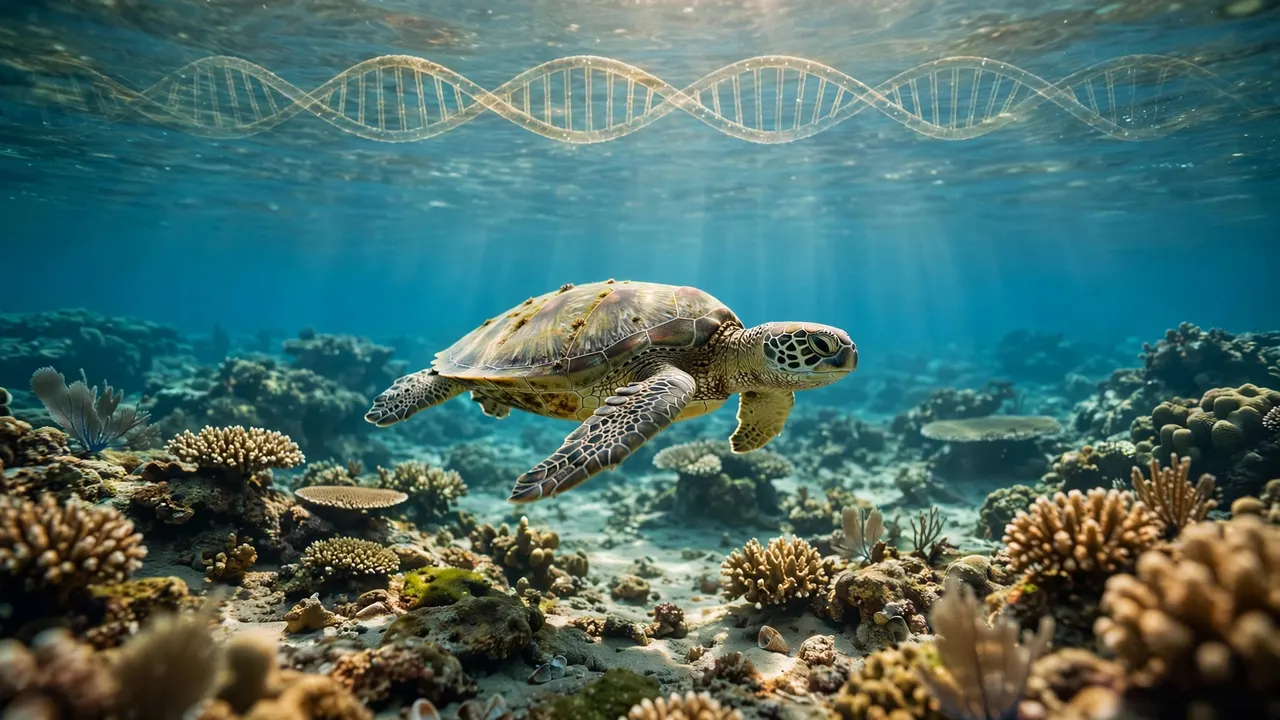
You can watch a honu glide over a reef without knowing where its ancestors nested. With Living Ocean Tours, your Turtle Canyon Oahu encounter opens a window into a bigger story: DNA can connect Hawaiian green turtles to their broader breeding population.
The distinction is population history. Genetic research can reveal relationships that you can’t see through a snorkel mask, but Hawaiian findings shouldn’t be mistaken for a genetic survey of this particular reef.
Start with the habitat you can observe, then follow the evidence beyond Waikiki.
Key Takeaways
Your turtle encounter becomes more meaningful when you separate visible behavior from genetic evidence.
- Hawaiian green turtle DNA helps researchers distinguish breeding populations and understand connections between nesting beaches and feeding habitats.
- Mitochondrial DNA follows maternal ancestry, while nuclear DNA provides information inherited from both parents.
- Hawaiian population studies point strongly toward French Frigate Shoals, also called Lalo, as the origin of most turtles using Hawaiian feeding grounds.
- At Turtle Canyon, your role is to observe respectfully. Biological sampling belongs to authorized research programs, not a recreational snorkel trip.
Why Turtle Canyon Oahu Draws Green Turtles
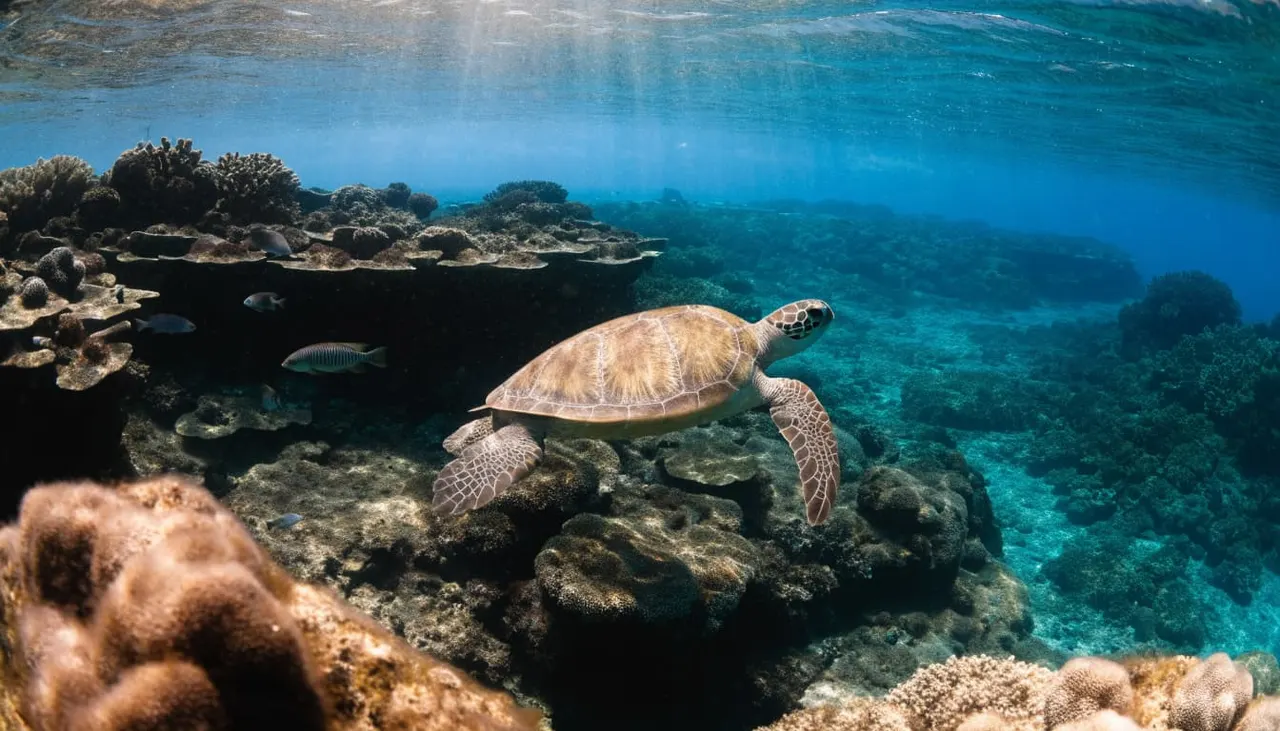
Offshore from Waikiki, Turtle Canyons is reef habitat where Hawaiian green turtles may pause at natural cleaning stations. Small reef fish pick algae and other material from their shells and skin.
As you float nearby, you might see one turtle hovering while another heads toward the surface. Several animals sharing the reef don’t necessarily travel together or have a lasting social relationship.
Likewise, a cleaning station isn’t a nesting site. Green turtles lay eggs on land, so an underwater encounter doesn’t identify the beach where that animal hatched.
The reef brings turtles together because it offers useful habitat. Their ancestry is a separate question.
NOAA identifies Hawaiian green turtles as part of the Central North Pacific Distinct Population Segment. Its green turtle species profile explains the population framework behind their protection.
For you, that means a familiar Waikiki wildlife encounter connects to conservation across the Hawaiian archipelago. However, the location of a sighting alone doesn’t establish a turtle’s genetic background.
What Green Turtle DNA Can Reveal
For your Turtle Canyon Oahu outing, two types of genetic information help explain what researchers mean by a turtle’s origin.
Maternal lineages connect feeding grounds with nesting areas
Mitochondrial DNA usually passes from a mother to her offspring. Researchers compare variations in that DNA, called haplotypes, across turtles sampled at different nesting and feeding locations.
Because female green turtles often return to their natal region to nest, maternal lineages can help distinguish breeding populations.
Scientists first need reference samples from nesting areas. They can then compare turtles found elsewhere with those reference groups through a method called mixed-stock analysis.
You can understand the result as an estimate of how different breeding populations contribute to a feeding aggregation. It describes population relationships rather than a visible feature of the animal’s shell.
Nuclear DNA adds information from both parents
Nuclear DNA comes from both the mother and father. Therefore, it can reveal patterns that maternal DNA alone doesn’t capture.
Researchers use nuclear markers to examine genetic diversity, population structure, and connections between breeding groups. These markers help account for ancestry contributed through males as well as females.
Combining both kinds of evidence gives you a fuller explanation of turtle populations. Maternal lineages describe one inheritance pathway, while nuclear markers broaden the comparison.
That difference matters because conservation boundaries should reflect biological relationships. A reef, island, or ocean region doesn’t automatically correspond to a separate breeding population.
What Hawaiian Turtle Studies Have Found
Hawaiian research gives your reef encounter context, although its findings cover a much larger area than Turtle Canyon.
A study of 788 turtles traced Hawaiian feeding populations
In a 2008 study, Dutton and colleagues analyzed mitochondrial DNA from 788 Hawaiian green turtles sampled between 1995 and 2003.
They identified six haplotypes. Their mixed-stock analysis estimated that Hawaiian feeding aggregations derived, on average, 99.9% from French Frigate Shoals.
Three sampled turtles carried haplotypes that weren’t found in the French Frigate Shoals reference samples. That detail matters because the overall pattern was strong without being identical in every animal.
For your Turtle Canyon Oahu visit, the useful takeaway is the link between Hawaiian coastal habitat and a distant nesting area. The study’s estimate applies to sampled Hawaiian feeding aggregations, rather than functioning as an individual turtle’s birthplace certificate.
Pacific comparisons put Hawaii in a wider family tree
A 2014 study by Dutton and colleagues compared mitochondrial DNA from 545 turtles across eight central and eastern Pacific nesting populations.
The researchers identified 31 haplotypes and five distinct stocks. Hawaiian turtles showed closer genetic relationships to eastern Pacific populations than western Pacific populations.
Later work continued expanding that picture. Roden and colleagues’ 2023 Pacific green turtle population study builds on earlier mitochondrial research with additional genetic evidence.
These studies show why you shouldn’t treat every green turtle across the Pacific as interchangeable. The same species can contain breeding populations with different histories and conservation needs.
How Water Samples Can Contribute to DNA Research
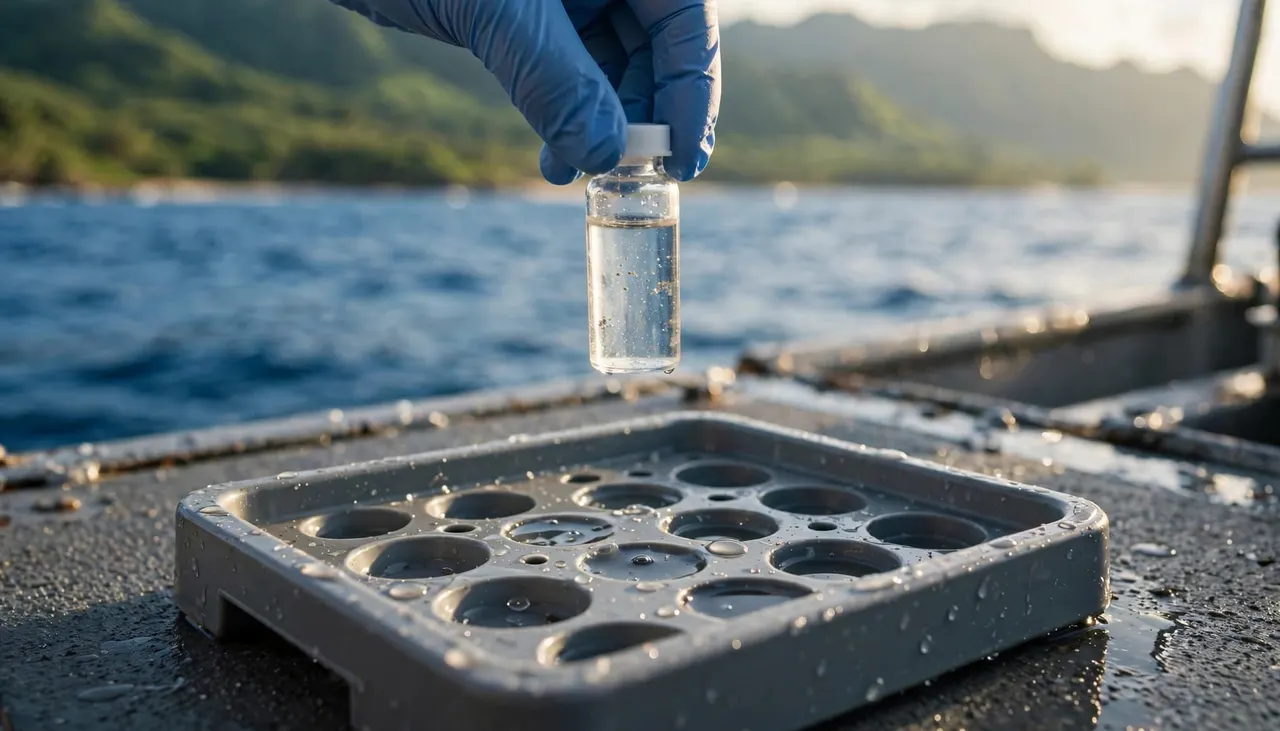
You don’t always need to see an animal for its biological material to enter the surrounding environment. That principle supports environmental DNA research.
Environmental DNA begins with material animals shed
Animals release cells and other biological material into water. Researchers can collect water samples and test them for genetic sequences associated with particular species.
This material is called environmental DNA, or eDNA. It offers a way to investigate marine life without relying entirely on direct sightings.
However, ocean water moves. Currents, sample timing, degradation, and laboratory methods all affect how researchers interpret a result.
Species detection and detailed population analysis also require different tests. Finding green turtle DNA in a sample doesn’t automatically provide the same information as a study designed around maternal lineages or nuclear markers.
Genetic research differs from a snorkeling activity
Tissue-based genetic studies use biological samples collected through authorized research or response programs. Handling protected turtles requires appropriate authorization.
During your excursion, you can learn about this science without participating in sampling. Environmental DNA testing isn’t part of our recreational snorkel experience.
Your most useful contribution is leaving the habitat undisturbed. Keep personal belongings secure and follow your guide’s instructions around wildlife.
You can enjoy the reef while understanding that laboratory evidence answers different questions than observations through your mask. Both have value, but they require different methods and responsibilities.
Why Turtle Genetics Matter for Conservation
Your Turtle Canyon Oahu sighting connects coastal habitat with nesting beaches far beyond Honolulu.
More than 96% of Hawaiian green turtle nesting activity occurs at French Frigate Shoals, also known as Lalo. That concentration makes protection of the nesting area important to the wider Hawaiian population.
Meanwhile, turtles still need suitable feeding and resting habitat elsewhere. Protecting a nesting beach alone doesn’t cover every stage of their lives.
Genetic research helps managers understand those connections. It can also help identify which breeding populations face threats away from nesting grounds.
For example, research on central Pacific green turtle bycatch origins uses genetic evidence to investigate population of origin. That makes interactions with fishing gear relevant to particular populations, rather than only to the species overall.
When you see a honu near Waikiki, you’re observing one part of this broader conservation picture. Healthy reef habitat and protected nesting areas support different needs within the same population’s life cycle.
Observe Honu Without Disturbing Their Routine
You don’t need genetic results to make good choices around a turtle. Its movements already tell you when to give it more space.
Keep at least 10 feet away, consistent with Hawaii’s sea turtle viewing guidance. Never touch, feed, chase, surround, or block a turtle.
Because green turtles breathe air, they need an open route to the surface. If one begins swimming upward, move aside rather than following it for a closer photograph.
At a cleaning station, float calmly and watch the entire interaction. Notice the fish approaching the shell, the turtle’s position, and the reef beneath it.
Several turtles sharing a cleaning station show shared habitat use. Their proximity alone doesn’t establish family relationships or a traveling group.
Also, keep your fins clear of coral and avoid standing on the reef. Flotation support can help you remain comfortable without resting on underwater habitat.
A respectful encounter lets the animal continue its routine while you enjoy the details you came to see.
Plan Your Turtle Canyon Oahu Snorkel
With Living Ocean Tours, you depart from Kewalo Basin Boat Harbor, minutes from Waikiki, for a guided reef experience.
We’re the only Oahu tour company with professional snorkel guides in the water with you. You receive snorkeling gear, flotation support, and guidance that helps beginners and families settle into the experience.
Our Turtle Canyons snorkeling tours start at $79. You can focus on observing honu while our crew helps with equipment and responsible wildlife viewing.
Our double-decker vessels also provide shaded seating, onboard restrooms, and ladders for water entry. Those practical comforts matter when you’re sharing an ocean outing with your family.
You can browse available departures here:
Guest reviews offer another perspective on your time aboard:
For the Turtle Canyons Snorkel Excursion, CHECK AVAILABILITY to choose your departure.
Turtles remain wild animals. They choose when to visit, pause, surface, and leave, so your experience follows their natural activity.
A Reef Encounter With a Bigger Story
A Turtle Canyon Oahu encounter gives you a view of a honu’s daily life. Genetic research connects that animal’s broader population with nesting areas and other turtles across the Pacific.
The strongest takeaway is connection: a Waikiki reef and a distant nesting site can support different stages of the same population’s life.
As you watch a turtle glide away, give it room to continue that life undisturbed. Your respectful observation keeps the encounter rewarding without changing the animal’s routine.


