
Turtle Canyon Oahu: How Green Turtles’ Beaks Help Them Feed
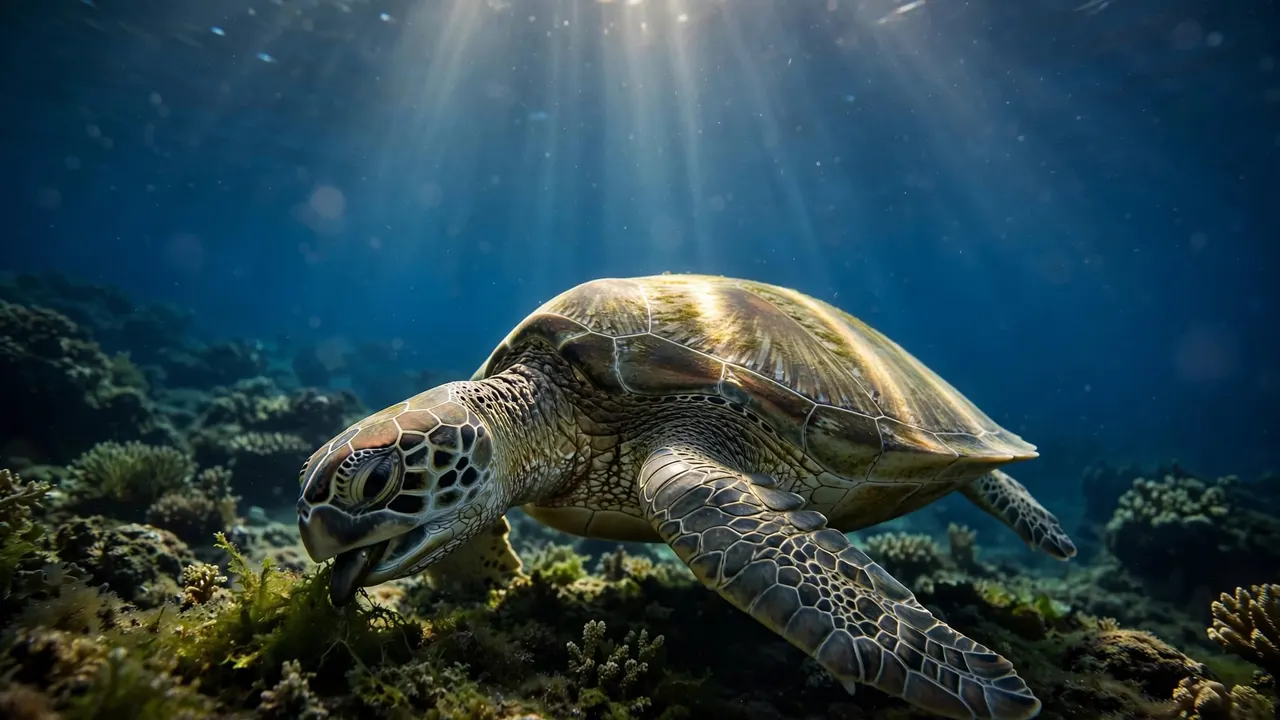
A Hawaiian green sea turtle can drift past your mask so slowly that you notice every contour of its face. At Turtle Canyon Oahu, its beak offers a clue to how it feeds, even if you never see it take a bite.
Living Ocean Tours brings snorkelers from Kewalo Basin Boat Harbor near Waikiki to this wild reef habitat. Knowing what the beak can tell you, and what it can’t, helps you watch honu with curiosity while giving them room to follow their own routine.
Key Takeaways
- A green sea turtle has a hard, toothless beak suited to its plant-heavy adult diet.
- Adult honu eat mainly algae and other marine plants, but a turtle near you at Turtle Canyon may be resting or visiting a cleaning station rather than feeding.
- Cleaner fish picking material from a turtle’s shell are doing something different from a turtle eating algae.
- You can watch natural behavior without touching, feeding, chasing, or blocking a turtle’s route to the surface.
Why You See Green Turtles at Turtle Canyon Oahu
Turtle Canyon, also called Turtle Canyons, is reef habitat offshore from Waikiki. Hawaiian green sea turtles may pass through, pause near the reef, or rise through the water for air. Because the animals come and go freely, each snorkel visit unfolds differently.
The reef’s cleaning stations
Turtle Canyons is known for natural cleaning-station activity. Small reef fish may pick algae and other material from a turtle’s shell and skin while it stays nearby.
That scene can look like feeding if you focus only on the turtle’s head. Watch the fish’s movements, though, and you’ll see that the turtle may simply be holding position. Give it space to remain there or swim away.
A stop within a larger habitat
A cleaning station is one reason a honu might visit the reef, but it doesn’t explain every turtle you see. One may glide across the site without stopping. Another may move upward to breathe.
When you snorkel at Turtle Canyon Oahu, treat those different movements as part of a wild animal’s day. Neither a cleaning-station visit nor a close pass tells you where that turtle last ate. Watching patiently gives you a better view than swimming after it.
How a Green Turtle’s Beak Helps It Feed
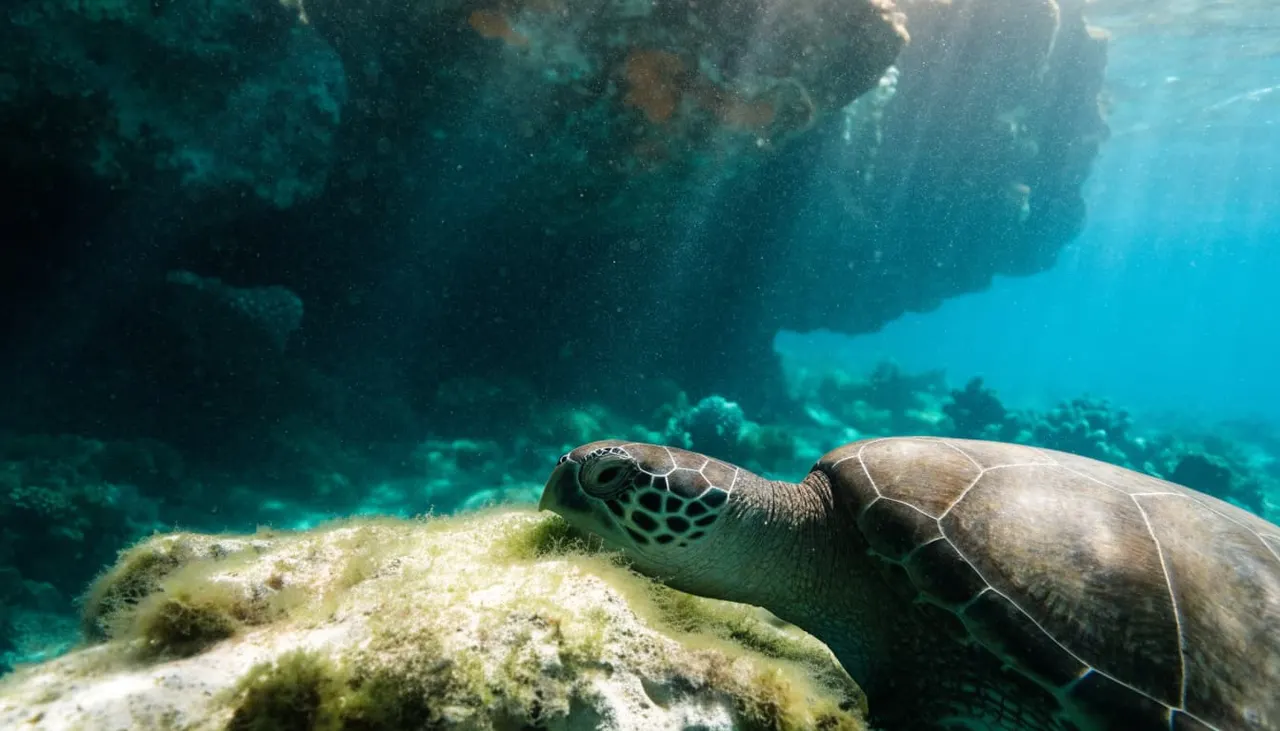
A green sea turtle has no teeth. Its hard beak is part of how it takes food from its surroundings. The South Carolina Aquarium’s explanation of sea turtle beaks notes that beak shape offers a clue to a turtle’s usual diet. For green turtles, that diet consists largely of algae and seaweeds.
A beak suited to grazing
Green turtles have a serrated edge to the beak, an adaptation associated with their plant-heavy diet. If you get a clear view of a honu’s face, you may notice its curved outline and firm mouth rather than the jaws you might expect on a fish.
You don’t need to approach it for a closer look. A turtle can turn toward you, pass below you, or pause where visibility makes its features easier to see. Keep your position steady and let that view come naturally.
What its shape cannot tell you
A beak is evidence of how a species generally feeds. It isn’t a record of a particular turtle’s last meal. You can’t identify food in its stomach by looking at its mouth, and a turtle passing over coral isn’t necessarily eating.
At Turtle Canyon Oahu, that distinction matters. A honu may be near fish that are cleaning its shell, or it may be moving between reef areas. Look for behavior rather than assigning every slow movement a feeding purpose.
What Hawaiian Green Sea Turtles Eat
Adult Hawaiian green sea turtles, called honu in Hawaiian, feed mainly on marine vegetation, including algae. The common name refers to the greenish color of their body fat, which is linked to their diet, rather than to a green shell. A Hawaiian sea turtle wildlife guide explains that connection.
Diet also changes during a green turtle’s life. Young turtles may eat more animal material before shifting toward the plant-heavy feeding typical of adults. The Maryland Biodiversity Project’s green turtle profile describes that age-related change.
Neither the adult diet nor the beak’s shape proves that a turtle feeds at a particular spot within Turtle Canyons. Food availability varies across marine habitats. If you see a turtle there, enjoy what you can observe without assuming you know which plants it has eaten.
That careful distinction makes a reef encounter more interesting. You can connect the turtle’s beak to its broader biology while still letting the animal’s visible behavior speak for itself.
How to Read a Turtle Encounter From the Surface
At Turtle Canyon Oahu, your best viewpoint is often the surface. Floating calmly gives you time to notice where a turtle is headed and what is happening around it. You can also keep track of your fins and the other snorkelers nearby.
If small fish cluster around a mostly stationary turtle, you may be seeing cleaning-station activity. If the turtle angles upward, leave a clear route to the surface. Sea turtles breathe air, so an upward swim needs room, not an audience gathering overhead.
Look beyond the turtle, too. Reef contours, fish movement, and the boundary between reef and open water help you understand the scene without chasing a single animal. When visibility changes, stay with your group rather than following a turtle out of sight.
A turtle surrounded by cleaner fish may look busy, but the fish’s activity doesn’t mean the turtle is feeding.
Give Honu Room to Behave Naturally
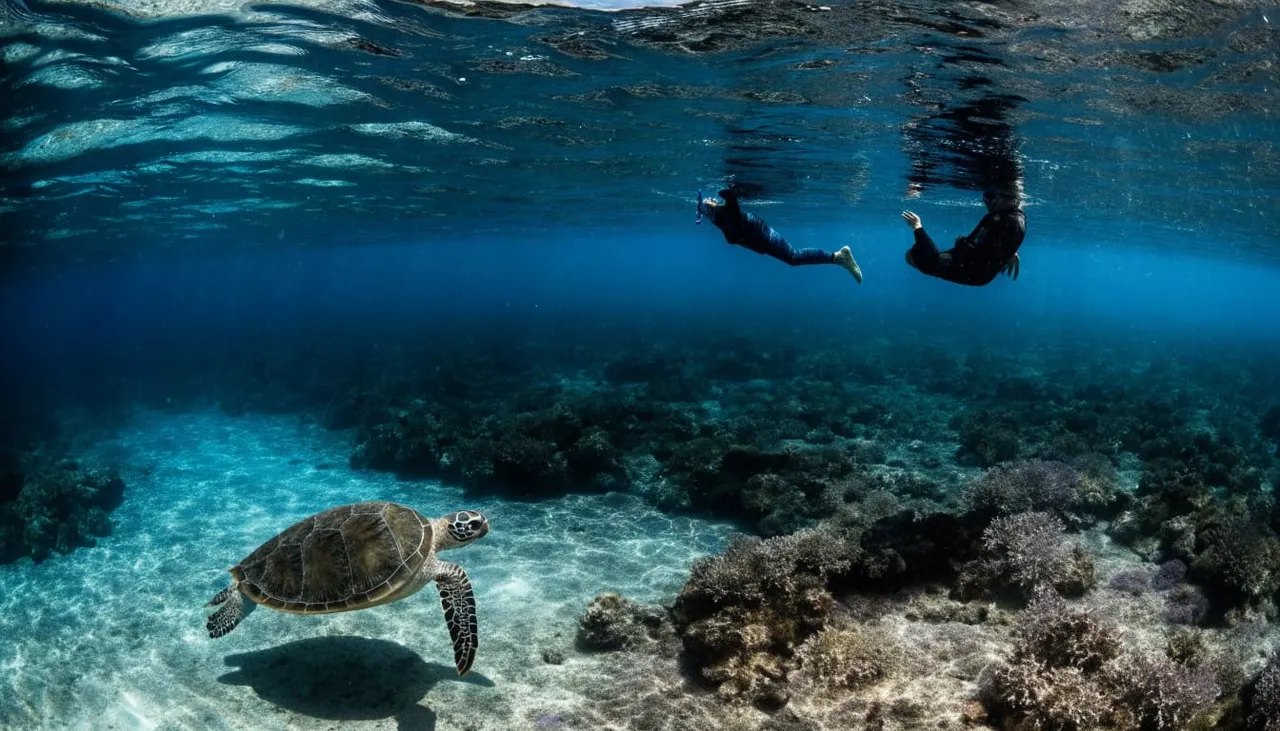
Watching a beak work is tempting, but a closer view isn’t worth interrupting a turtle. Your position in the water can affect whether it rests, turns, or reaches the surface comfortably.
Keep a clear path
Living Ocean Tours’ responsible turtle-viewing guidance cites a distance of at least 10 feet, or 3 meters, from sea turtles. Don’t touch, chase, feed, or surround them. Stay to the side rather than hovering directly above one.
If a honu approaches unexpectedly, remain calm and give it space to pass. You don’t need to make a sudden move or reach out to guide it. Keep your fins clear of both the animal and the reef.
Let your guide know what you see
If you notice a turtle that appears tangled, injured, or unable to swim normally, alert your snorkel guide. Don’t try to remove line, move the animal, or examine it yourself. A trained response starts with a clear report and enough distance to avoid adding stress.
The same restraint applies to a turtle that appears healthy. Your role is to observe it in its habitat, not to offer food or coax it toward a photograph.
Snorkel Turtle Canyon With In-Water Support
Living Ocean Tours departs from Kewalo Basin Boat Harbor, minutes from Waikiki. Its Turtle Canyon snorkeling tours bring you to the offshore cleaning-station habitat with gear, flotation support, and guidance. The company says it’s the only tour company with professional snorkel guides in the water with you.
Settle in before looking for turtles
If you’re new to snorkeling, tell the crew before entering the water. You can ask for help with your mask, breathing, or flotation, then take your time getting comfortable at the surface. In-water guides can also help you maintain a respectful distance when turtles appear.
On board, shaded seating, restrooms, dry storage, and sturdy ladders make the trip easier to manage. Those details matter when you’re traveling with children or getting back into snorkeling after a long break.
Plan for wildlife, not a guaranteed sighting
Living Ocean Tours reports a 95% turtle-sighting rate for its Turtle Canyons excursion. Still, honu choose where to swim, and conditions affect what you can see. A trip remains a chance to observe the reef, not a scheduled encounter with a particular turtle.
When you’re ready to plan a turtle-focused outing, you can CHECK AVAILABILITY for the excursion.
If you’re considering a different ocean outing with Living Ocean Tours, you can check the company’s broader trip availability as well.
Frequently Asked Questions
Do green sea turtles have teeth?
No. Green sea turtles have a hard beak rather than teeth. Its shape is suited to the foods the species commonly eats, including algae and other marine vegetation.
Will you see turtles feeding at Turtle Canyon?
You might see turtle behavior around the reef, but don’t assume every turtle is feeding. Turtle Canyons is known for cleaning-station activity, where fish pick material from a turtle’s shell and skin. The turtle may also be resting, passing through, or heading up for air.
Why shouldn’t you feed a turtle?
Offering food changes a wild animal’s behavior and brings it close to people. Keep your food to yourself and watch honu find what they need on their own. That way, your encounter stays on the turtle’s terms.
Can beginners snorkel at Turtle Canyons?
A guided trip can help you get comfortable if you’re new to snorkeling. Living Ocean Tours provides gear, flotation support, and professional in-water guidance. Tell the crew about your comfort level, and follow their instructions around wildlife and changing water conditions.
Let the Turtle Set the Pace
At Turtle Canyon Oahu, a honu’s beak tells you something about its plant-heavy diet. Its movements tell you what deserves your attention in the moment, whether it’s pausing near cleaner fish or rising for air.
Give it room, stay curious, and watch from where you are. The best view is one that lets the turtle continue its day.


