
Snorkeling Oahu: Best Spots, Tours & Safety Tips
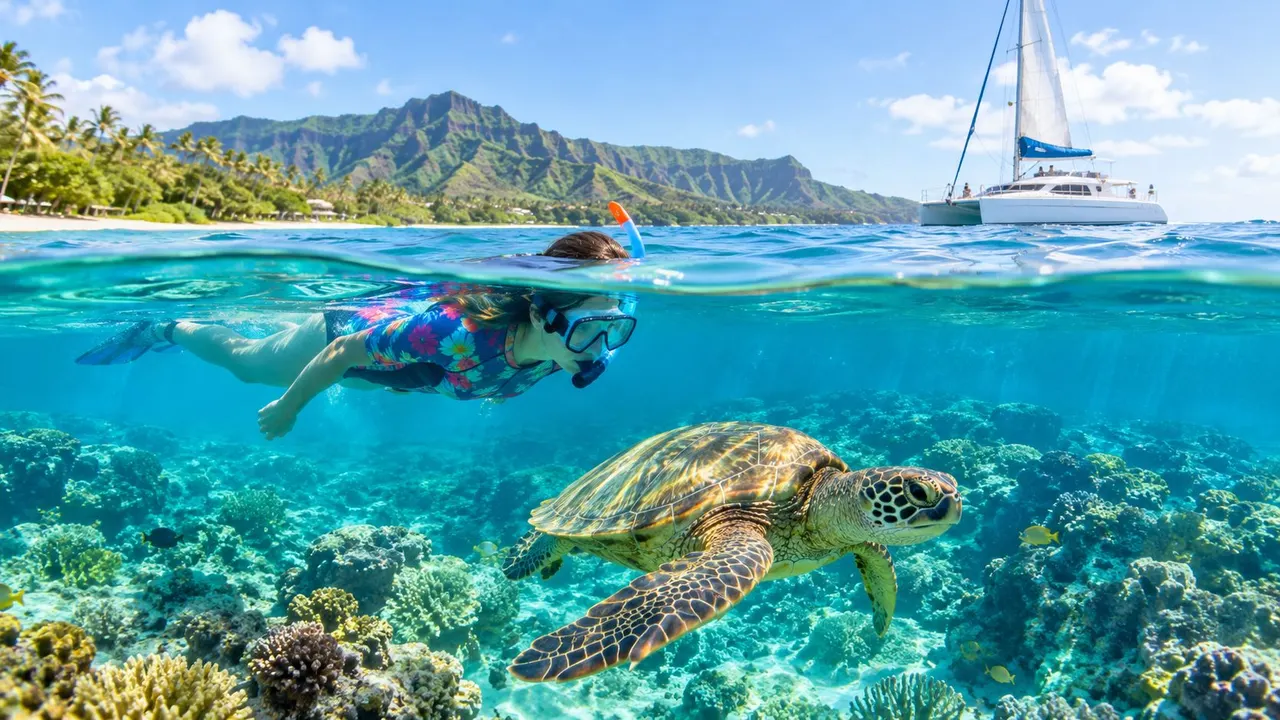
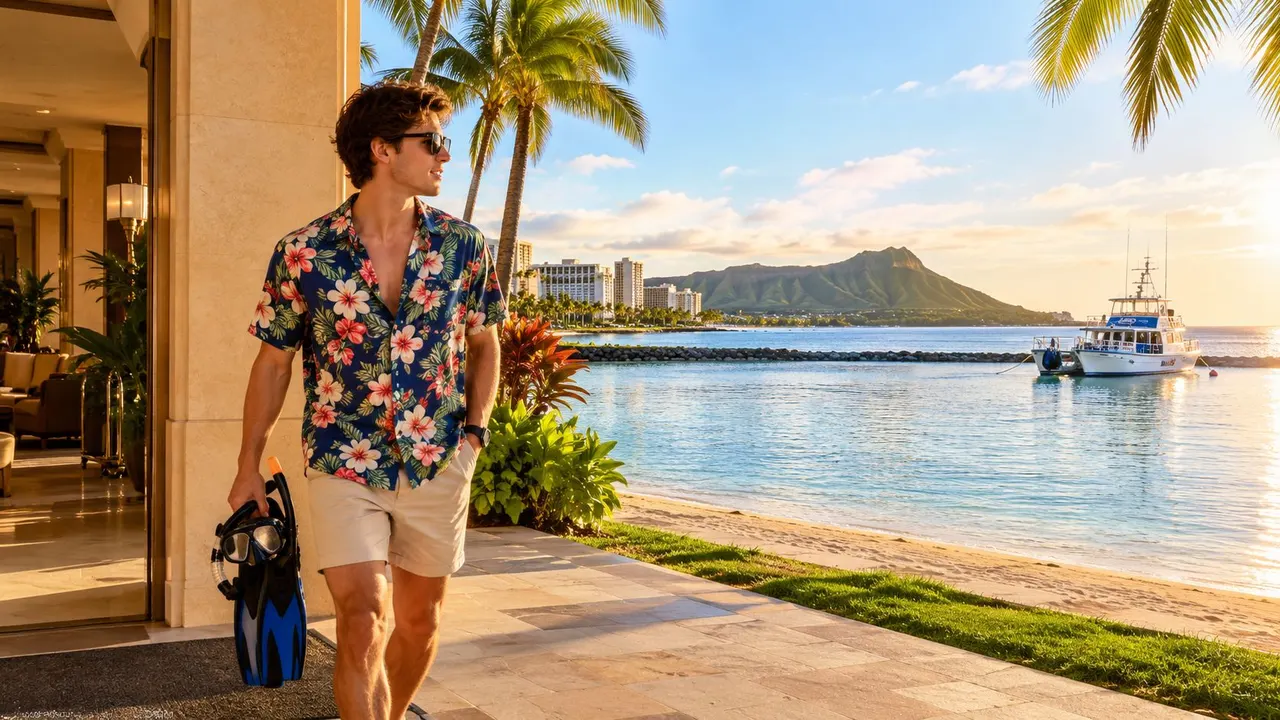
You've just stepped out of a Waikīkī hotel with a mask, fins, and a decision to make. Do you walk to a nearby beach and keep the day simple, or commit to a boat trip from Kewalo Basin for clearer reef access and a better chance of seeing honu? The right answer depends less on a universal “best spot” than on your swimming ability, the day's wind and swell, and how much planning you want to handle yourself.
Oʻahu rewards both approaches. A sheltered bay can give a first-timer a comfortable introduction, while a guided boat excursion can move beyond the busiest shore entries and provide instruction, equipment, and active supervision. The safety context matters from the beginning. Hawai'i reports more visitor drownings during snorkeling than during any other activity, and one Hawaii-focused safety summary cites 204 snorkeling-related fatalities from 2012 to 2021, including 184 tourists. Read the Hawaii snorkeling safety overview before you choose your entry point.
Why Snorkeling in Oahu Captivates Every Visitor
Oʻahu is unusual because it gives travelers several very different ocean experiences within a manageable island itinerary. A family staying in Waikīkī can start with a protected beach or lagoon, while a confident swimmer can travel toward a more exposed reef or join a boat heading to Turtle Canyons. That range makes snorkeling Oahu accessible without making it predictable.
The island also has the infrastructure that beginners need. Waikīkī has familiar beach access and visible safety services, while managed sites such as Hanauma Bay apply rules designed to protect both visitors and the reef. Hanauma Bay is widely identified as Oʻahu's only dedicated snorkeling beach, and its Monday-Tuesday closure and no-entry rule after 1:30 p.m. on open days show how carefully access is managed at a heavily used site. Explore Oʻahu marine life before your trip to learn what you may encounter and how to behave around it.
Choose the water, not just the landmark
A calm inner bay suits a nervous swimmer who wants time to practice clearing a mask and breathing through a snorkel. A boat trip suits someone who wants to avoid a difficult rocky entry or who prefers a crew to explain the conditions before entering. Neither choice is automatically safer. A calm-looking shore can still have currents, fatigue, and poor exit options, while an outer reef can expose a guest to swell that wasn't obvious from the harbor.
That's why an operator starts with the guest, not the marketing name of the site. Children, older travelers, casual swimmers, and experienced ocean users can all enjoy the island, but they shouldn't all enter the same water in the same way.
Practical rule: If you're uncertain about your swimming comfort, choose an outing with in-water guidance rather than treating a popular beach as a guarantee of easy conditions.
Hawai'i received 5.81 million visitors in 2024, according to the safety summary cited above. That volume helps explain why Oʻahu's famous sites need reservations, closures, lifeguard awareness, and conservation rules. The attraction is real, but so is the pressure created when thousands of people seek the same shallow reef experience.
What Makes Oahu Reefs Special for Snorkelers
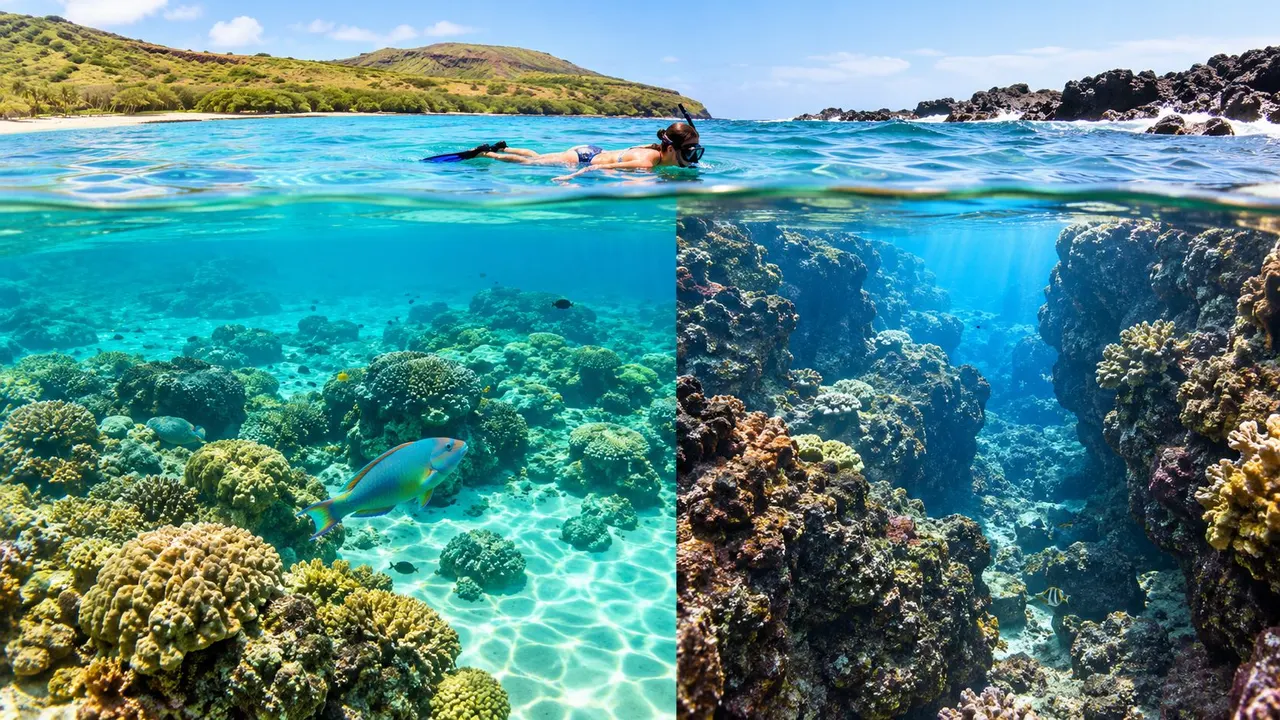
Think of Hanauma Bay's sheltered water as a natural classroom. In favorable conditions, its inner lagoon can feel far less intimidating than open ocean, giving beginners room to learn how to float, breathe, and look down without fighting constant movement. Shark's Cove offers a different lesson, with lava formations, channels, and changing surge that demand more awareness of footing and water motion.
The biodiversity is the main reason these places remain memorable. One destination summary says Hanauma Bay supports more than 400 species of marine life, while another Oʻahu guide describes the island's reefs as containing about 450 fish species and 70 coral species, with nearly a quarter of those fish species endemic to the Hawaiian archipelago. See this practical guide to snorkeling in Oʻahu for additional context on the island's reef environments.
Access rules shape the experience
Hanauma Bay's management controls are part of what makes the site viable. The bay closes on Monday and Tuesday, limits entry timing, and doesn't allow park entry after 1:30 p.m. on open days. Those restrictions can frustrate spontaneous travelers, but they also reduce pressure on a sensitive shoreline.
At any site, treat the reef as living habitat rather than a floor. Coral tissue can be damaged by a hand, knee, or fin, and cuts from broken coral can become infected. Hawai'i's coral guidance recommends avoiding contact, entering and exiting over sand where possible, and keeping at least 10 feet from Hawaiian green sea turtles.
Why beginners benefit from Oʻahu
Oʻahu gives new snorkelers a way to build skills gradually. They can learn surface breathing in protected water, practice staying with a buddy, and understand how wind changes visibility before attempting more exposed Pacific locations. The island also makes it possible to replace a poor plan quickly. If the north shore is rough, a traveler can reassess rather than forcing an entry because it was on the original itinerary.
The strongest first experience combines clear conditions with restraint. Seeing fewer animals from a safe distance is better than chasing a turtle, standing on coral, or exhausting yourself trying to reach a reef edge.
The Best Snorkeling Spots on Oahu
No local operator should present Oʻahu's snorkeling locations as a simple ranking. Each site is a tool for a different kind of day, and the same place can change dramatically with wind, swell, tide, and crowding.
Hanauma Bay is the most logical choice for first-timers who are prepared to plan ahead. Its protected setting and managed access can provide a comfortable introduction, with shallow areas near shore and reef habitat farther out. The trade-off is logistics. It closes on Monday and Tuesday, doesn't admit visitors after 1:30 p.m. on open days, and heavy demand means you shouldn't treat it as a casual walk-in stop.
Shark's Cove suits experienced swimmers visiting the North Shore during calmer summer conditions. Its rocky shoreline and lava formations create interesting habitat, but the entry is less forgiving than a sandy beach. Winter surf can make the cove unsafe, and weekend parking and crowds can undermine the relaxed experience many visitors expect.
Turtle Canyons is a boat-based option for guests who want a guided turtle encounter without negotiating a shore entry. The crew can brief guests before they enter and manage spacing around wildlife. The drawback is exposure to open-water movement and the fact that wild animals never provide a guaranteed performance. Compare Oʻahu snorkeling locations by traveler type before committing to a site.
Kuilima Cove near Turtle Bay can work well for travelers who want a resort-adjacent outing and a simpler beach routine. Conditions still need checking, and popularity can mean crowded water or limited parking during busy periods. The cove is a poor choice for anyone who assumes a sheltered appearance eliminates the need for a buddy.
Electric Beach belongs with advanced options. The current and changing water movement require strong situational awareness, and the site isn't appropriate for a casual first session. Marine life can be rewarding, but the operator's warning is straightforward: don't enter because an online list made the site sound exciting.
Depth varies by entry, reef edge, tide, and route, so a fixed depth range would give false confidence. Ask a lifeguard or guide about the actual conditions that day instead.
| Spot | Best Conditions | Crowd Level | Skill Level | Best For |
|---|---|---|---|---|
| Hanauma Bay | Sheltered conditions and an early arrival | Managed but heavily sought after | Beginner to intermediate, with care | First-timers willing to plan |
| Shark's Cove | Calm summer conditions | Busy at popular times | Intermediate and confident swimmers | Rocky reef exploration |
| Turtle Canyons | Suitable boat conditions | Limited by boat capacity | Beginner to intermediate with instruction | Guided turtle viewing |
| Kuilima Cove | Calm water and reasonable access | Can be busy near resort periods | Beginner with supervision | Resort-adjacent families |
| Electric Beach | Mild current and favorable visibility | Variable | Advanced | Experienced ocean swimmers |
Guided Snorkeling Tours From Waikiki
A guided trip changes the decision from “Can I find the reef?” to “Is this the right water for my group today?” Departures from Kewalo Basin are convenient for Waikīkī guests and put the crew in a position to discuss the route, equipment, entry procedure, and wildlife etiquette before anyone climbs into the water.
The Turtle Canyons Snorkel Excursion is the clearest match for a first-time guest whose priority is seeing honu. The booking information lists a maximum of 40 travelers, a concrete capacity limit that matters when you're comparing a managed boat experience with an unstructured beach crowd. Review the Turtle Canyons excursion details and confirm the current departure information before booking.
A deluxe Waikīkī wildlife cruise fits families and mixed-ability groups. Guests can enjoy reef viewing while non-snorkelers use the boat's other features, and the crew can keep the group together rather than sending every family member into separate shore conditions. The trade-off is that a family-oriented boat isn't a private reef. You may have less freedom to choose a route, and the outer water can still move with the swell.
A sunset catamaran is best for couples or travelers who want a low-effort ocean experience rather than a full morning in the water. The light is excellent for photographs, but underwater visibility typically becomes less consistent as daylight fades. A late sailing should be selected for the overall atmosphere, not because it promises the same conditions as an early snorkel.
What the crew changes
A guide can identify when a guest is breathing too quickly, drifting away from the group, or finning toward coral. That intervention is useful for beginners and for strong swimmers who underestimate fatigue. Crew also enforce distance from turtles, which protects the animals and prevents a single guest from turning a wildlife encounter into a chase.
The primary trade-off is control. A guided trip reduces navigation and entry uncertainty, but you accept a schedule, a defined swim area, and the possibility that the captain changes the route because conditions aren't suitable. That flexibility is a safety feature, not a failure to deliver.
| Tour Type | Best For | Duration | Price Tier | Key Trade-Off |
|---|---|---|---|---|
| Turtle Canyons boat trip | First-timers seeking guided turtle viewing | Confirm at booking | Confirm at booking | Open-water movement and wildlife uncertainty |
| Deluxe Waikīkī family cruise | Families and mixed-ability groups | Confirm at booking | Confirm at booking | Shared schedule and defined activity areas |
| Sunset catamaran sail | Couples and relaxed ocean guests | Confirm at booking | Confirm at booking | Better atmosphere, less dependable late-day visibility |
An independent review of Living Ocean Tours' reviewed batch gives the company an overall score of 89.3 out of 100 across 6 tours, with Turtle Canyons listed at 97 out of 100 as the top-rated individual product. See the independent Living Ocean Tours review. The published Tripadvisor review page also repeatedly describes patient instruction and knowledgeable guides for first-time snorkelers.
Sunset Cruises and Boat Alternatives
A sunset cruise makes sense when snorkeling isn't the only goal. Travelers with small children who nap during the middle of the day, older adults who prefer a seated sailing experience, and couples planning a relaxed evening may value the boat ride as much as the swim. The changing light also gives you a different view of Waikīkī and the south shore.
Late-afternoon water can feel more comfortable on some days, but timing doesn't remove the need to check conditions. Wind can build earlier and ease later, or it can remain strong. Underwater visibility also tends to become less dependable as the sun drops, so choose a sunset outing for its scenery and social pace rather than expecting the same clarity as a morning session.
Pick the right alternative
A glass-bottom boat can let non-swimmers observe reef habitat without entering the water. A dolphin-focused sailing experience may suit guests who want wildlife from the deck, while a dinner cruise from Honolulu Harbor works for travelers who have decided that snorkeling isn't the right fit for their group.
For a mixed family, this can be a better decision than pressuring every person to snorkel. One guest can watch from the boat, another can swim under crew direction, and everyone still shares the outing.
If you're combining snorkeling with a sunset sail, keep the safety sequence simple:
- Check the day's conditions first. A late departure isn't automatically calmer or safer.
- Stay with your buddy and crew. Don't swim beyond the marked or explained area.
- Keep wildlife space. Turtles need room to surface and move naturally.
- Leave the water when visibility or energy drops. A tired swimmer makes poor decisions, especially near a rocky entry.
The strongest boat alternative is the one that matches the least confident person in your group, not the most adventurous one.
Safety Rules Every Oahu Snorkeler Must Know
Hawai'i's public-health guidance states that more visitors drown while snorkeling than during any other ocean activity. It also notes that non-resident fatal ocean-drowning risk is about eight times higher than for residents, and advises snorkelers to be experienced swimmers familiar with surf, currents, and shorebreak. Read the state's drowning-prevention guidance before entering the water.
A strong swimmer can still misread a shore break, become fatigued while looking down, or panic when a mask leaks. Waikīkī's small waves can look harmless, which is exactly why guests sometimes skip a proper assessment.
Use this pre-entry briefing
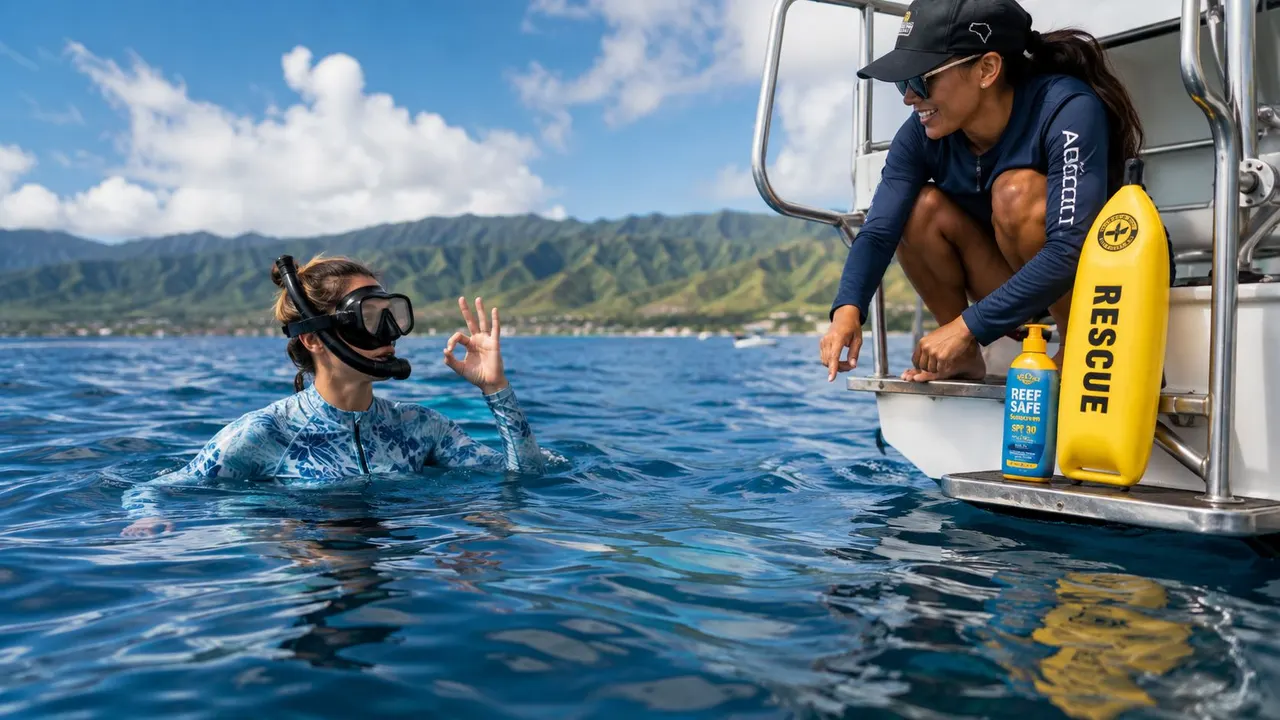
- Check the water, not just the weather. Look at the surf, wind, tide, and shorebreak at the actual entry point. If local lifeguards advise against entering, don't substitute a social-media report.
- Use a buddy system. Agree on hand signals, stay close enough to see one another, and end the session when either person is tired.
- Avoid alcohol before swimming. Alcohol reduces judgment at the exact moment you need to assess changing water.
- Take post-flight fatigue seriously. If you've just arrived after a long flight, choose rest or a conservative supervised activity rather than treating jet lag as irrelevant.
- Stay away from the reef. Don't stand, sit, touch, or scrape coral. Enter over sand when possible and keep your fins from striking the bottom.
- Give honu room. Keep at least 10 feet from Hawaiian green sea turtles, don't touch or chase them, and let them surface without interference. Review the guidance on Hawaiian green sea turtles.
Know when to abort
Skip the water when surf is breaking across the entry, wind is pushing you toward rocks, visibility is poor, or your group includes a swimmer who can't comfortably float and breathe through a snorkel. A life vest can support flotation, but it doesn't turn rough water into beginner water.
If a current carries you away from shore, don't fight directly against it until exhaustion. Signal for help, stay with your buddy, and follow lifeguard or crew instructions. A guided tour helps because the crew can identify changing conditions and organize an exit, but each guest still needs to communicate about comfort and fatigue.
Remember: A beautiful reef doesn't make an unsafe entry acceptable.
Gear Checklist and Best Time to Snorkel Oahu
Good preparation improves both comfort and reef behavior. When a mask leaks, fins fit badly, or a swimmer gets chilled, the guest often grabs the bottom, kicks harder, or rushes an exit. Reliable equipment gives you more control and makes it easier to keep your distance from coral.
Pack for the whole session
- Bring reef-conscious sunscreen. Apply it before entering and reapply after ocean time according to the product directions.
- Add a rash guard and towel. They help with sun exposure and comfort between water sessions.
- Carry water and a small snack. Hydration and energy matter more than squeezing extra minutes from a tiring swim.
- Use a dry bag. Keep phones, keys, and travel documents away from splash zones.
- Choose fitted equipment. A properly sealed mask and correctly adjusted snorkel reduce the urge to touch the bottom for balance.
You can rent equipment near Waikīkī or Kewalo Basin, or bring a set you've already tested. If you rent, ask the staff to check the seal and try the fins before leaving the shop. Full-face masks and unfamiliar gear deserve extra caution because a product that feels convenient on land may be uncomfortable once you're breathing and swimming.
Match timing to conditions
Morning is generally the strongest operating window. Trade winds haven't built as much surface chop, suspended sand is lower, and visibility is often better. Hawai'i's snorkeling guidance recommends early starts, and Hawaii Ocean Safety specifically connects morning conditions with better visibility and more active marine life.
Seasonal shore choice matters too. North Shore sites can become dangerous with winter swell, while south-shore locations can be affected by summer swell and wind. Don't force a particular beach because it appears on a list. Choose the shore with the best conditions that day.
Protect what you came to see
Neutral buoyancy and slow fin strokes reduce accidental contact. Keep your hands off coral, never collect pieces, and let fish and turtles choose their distance. A respectful snorkeler usually sees more because calm movement keeps animals from fleeing.
Reef pressure is a real trade-off. A Nature Sustainability study found that higher live coral cover attracts more reef visitors, while visitation contributes to later reef degradation. Read the reef visitation and degradation study. The practical response is simple: go early when possible, spread out, follow closures, and accept that a less famous site may be the better choice for the reef and your group.
Booking Your Snorkeling Adventure
Start with the departure point. Guests staying in Waikīkī generally have the easiest access to Kewalo Basin and nearby harbor departures. Travelers based elsewhere should compare the drive, parking, and check-in requirements before choosing a boat. A short transfer can make a major difference for families carrying towels, snacks, and children's equipment.
Then choose the experience by the group's actual priority:
- A shore site suits confident swimmers who want flexibility and are prepared to assess conditions independently.
- Turtle Canyons suits first-timers who want a guided turtle encounter and clear instruction.
- A deluxe wildlife cruise suits multigenerational families with swimmers and non-swimmers.
- A sunset sail suits couples and celebration groups who want scenery and an easier pace.
Don't book from a price headline alone. Confirm what the operator includes, such as mask and fins, in-water instruction, flotation equipment, photos, food, transportation, and reef-conscious sunscreen requirements. Also check the cancellation policy and weather procedure. A responsible operator should be willing to change the route or cancel when conditions aren't appropriate, even when that disappoints guests.
Exact prices and availability change, so the comparison below avoids invented price bands. Ask for the current per-person total before you finalize plans, especially when booking for a family.
| Tour Style | Best For | Duration | Price Range Per Person | Includes | Book Direct |
|---|---|---|---|---|---|
| Turtle Canyons boat trip | First-time turtle seekers | Confirm at booking | Confirm at booking | Confirm equipment, instruction, and inclusions | Turtle Canyons Snorkel Excursion |
| Deluxe Waikīkī family cruise | Families and mixed-ability groups | Confirm at booking | Confirm at booking | Confirm gear, wildlife activities, and boat features | Deluxe Waikīkī Snorkel and Wildlife Cruise |
| Sunset catamaran sail | Couples and celebrations | Confirm at booking | Confirm at booking | Confirm snorkeling availability, beverages, and sailing inclusions | Confirm with operator |
| Alternative turtle tour | Guests comparing guided turtle options | Confirm at booking | Confirm at booking | Confirm directly with provider | Turtle Canyon alternative tour |
Living Ocean Tours operates guided snorkeling and wildlife outings from Kewalo Basin, with equipment and in-water guidance described as part of its Oʻahu snorkeling offerings. The company's Turtle Canyons experience is one option for travelers who want a structured approach to turtle viewing rather than an unsupported shore entry.
For a guided Waikīkī experience, visit Living Ocean Tours to compare Turtle Canyons and the Deluxe Waikīkī Snorkel and Wildlife Cruise. Choose the trip that matches your group's swimming confidence, timing, and interest in responsible turtle and reef viewing.


