
Snorkeling Oahu: How Reef Fish Protect Their Eggs

Some reef fish protect their eggs by guarding a nest, chasing away intruders, and tending the developing clutch. While snorkeling Oahu’s reefs, you may spot a fish returning to the same patch of rock or coral, though that behavior alone doesn’t prove a nest is nearby.
At Living Ocean Tours, we love helping you notice these smaller moments alongside the turtles and other wildlife. With patient observation, a quiet stretch of reef can reveal a busy fish nursery.
Explore Reef Life With Our Snorkel Guides
Our trips depart from Kewalo Basin Boat Harbor near Waikiki, giving you access to offshore reef habitat without planning a shore entry. We’re the only tour company with professional snorkel guides, so you have support as you get comfortable in the water and observe marine life.
Our Turtle Canyon Snorkel Tour visits an area known for Hawaiian green sea turtles and their cleaning stations. Reef fish are part of that experience too, although nesting behavior and wildlife sightings are never guaranteed. For the turtle outing, CHECK AVAILABILITY.
For another way to explore Waikiki’s reefs, our Deluxe Waikiki Snorkeling and Wildlife Cruise combines reef time with a boat-mounted waterslide. You can also browse our Waikiki snorkeling tours or CHECK AVAILABILITY for the deluxe cruise.
You can read guest reviews and explore availability for our trips below.
What a Reef Fish Nest Can Look Like
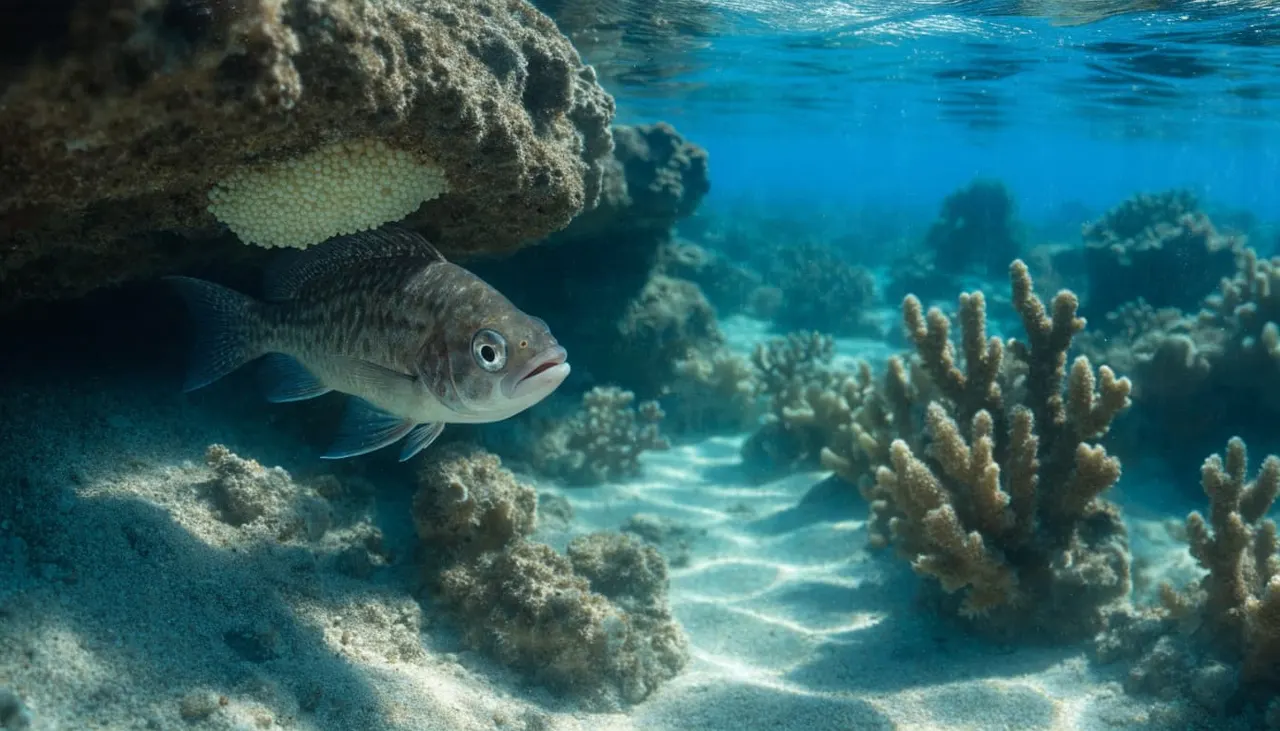
Illustration of a reef fish guarding eggs.
You won’t necessarily see a pile of twigs or a hollow in the sand. Some fish lay eggs on a hard surface, where the clutch can be tucked against reef structure and difficult to notice from above.
Look for a Fish That Returns to One Place
A fish hovering close to a rock, then repeatedly returning after a short chase, gives you something interesting to watch. Give it space and observe the surrounding reef. A guarded clutch may be hidden on the side or underside of a surface.
Keep your interpretation open. Fish also defend feeding areas and shelter, so repeated visits to one spot don’t confirm that eggs are present.
Give Small Details Time to Appear
When you’re snorkeling Oahu’s reefs, water movement and changing light can make tiny features hard to see. Pause over a comfortable depth and look across the reef rather than diving toward a crevice.
A patch that first looks empty may reveal a fish moving in and out of shelter. You may never see the eggs themselves, and that’s fine. Watching the fish without disturbing its habitat is the rewarding part.
Meet a Hawaiian Fish Known to Guard Its Nest
One local example is the Hawaiian sergeant, Abudefduf abdominalis, also known as maomao. This damselfish has been documented protecting a nest. A reef fish reproduction guide shows a Hawaiian sergeant at its nest, and a published research reference identifies male nest guarding in the species.
That example gives you a useful starting point, but it doesn’t mean every sergeant you see is tending eggs. You might encounter one swimming, feeding, or interacting with other fish elsewhere on the reef.
If a fish appears to defend a small area, notice where it returns after another fish passes. Then continue observing from a distance. You don’t need to identify a clutch or get a close photograph to appreciate that the fish is using the reef in a purposeful way.
A guide can help you notice distinguishing features and talk through what you saw. Even so, underwater behavior can be difficult to interpret during a brief encounter. Treat a possible nest as an observation rather than a confirmed discovery.
How Fish Tend and Protect Their Eggs
Some nest-guarding fish do more than stay nearby. Their care can include movements that help maintain the eggs and the area around them. Exactly which behaviors occur depends on the species.
Fanning Water Across the Clutch
Some fish move their fins near their eggs, pushing water across the clutch. This fanning can help replenish oxygen around developing embryos.
Research on oxygen replenishment in fish nests describes fanning and mouthing as forms of nest tending. During a snorkel, you might notice a fish holding position while its fins move, but that view alone won’t tell you how much oxygen the eggs are receiving.
Mouthing is another behavior associated with egg care in some fish. From the surface, though, it can be difficult to distinguish tending from feeding or other ordinary movements. Resist the urge to move closer for a better look.
Keeping Intruders Away
A guarded patch can attract unwanted attention from other reef animals. Depending on the species, a parent may position itself near the clutch or make short movements toward an approaching fish.
The defense can look surprisingly energetic next to the fish’s small body. However, a chase may have several explanations, including competition for food or space. Look at the whole sequence before deciding what you might be seeing.
If a fish approaches you or repeatedly darts in your direction, back away slowly. You may be too close to an area it is defending, whether or not eggs are present.
Why a Nest Needs More Than a Hiding Place
A sheltered surface can make eggs harder for other animals to reach, but it doesn’t remove every risk. Eggs remain in one place while water, sediment, and other reef residents move around them.
Eggs Stay Exposed to Their Surroundings
A clutch attached to a surface can’t swim away from a hungry fish. For species that guard nests, an adult’s presence can discourage some intruders during the time the eggs develop.
Water quality around the clutch matters too. That’s why the fanning behavior seen in some fish is useful: it moves water over eggs that otherwise remain fixed in place. You can appreciate this work without needing to spot each tiny egg.
Hatching Changes the Young Fish’s Needs
Once eggs hatch, the young no longer occupy the same fixed clutch. Many reef fish spend an early stage as larvae in open water before settling into reef habitat.
That transition doesn’t look the same across every species. Parental care also varies, so avoid assuming a guarding adult will remain with its offspring after hatching. On your snorkel, the nest itself offers only one glimpse into a much longer life cycle.
Not Every Reef Fish Builds or Guards a Nest
As you watch fish while snorkeling Oahu, you’ll see many ways of using the reef. Some species lay eggs that float or drift in the water rather than attaching them to a defended nest. Others have different reproductive strategies altogether.
For that reason, a fish swimming through open water isn’t neglecting a nest. It may belong to a species that doesn’t provide nest care in the first place.
The same caution applies when you see two fish together. A pair might be feeding, defending an area, or interacting for another reason. Close swimming isn’t enough to identify courtship or parenting.
This variety makes a reef worth watching beyond the largest animals. Instead of assigning every fish a role, notice its position and what happens next. Does it stay close to one surface? Does it follow another fish away? Does it return to the same place?
Those observations give you a clearer memory of your encounter, even when the reason for the behavior remains uncertain. Nature doesn’t have to provide a confirmed answer to make the moment memorable.
Watch Reef Fish Without Disturbing Them
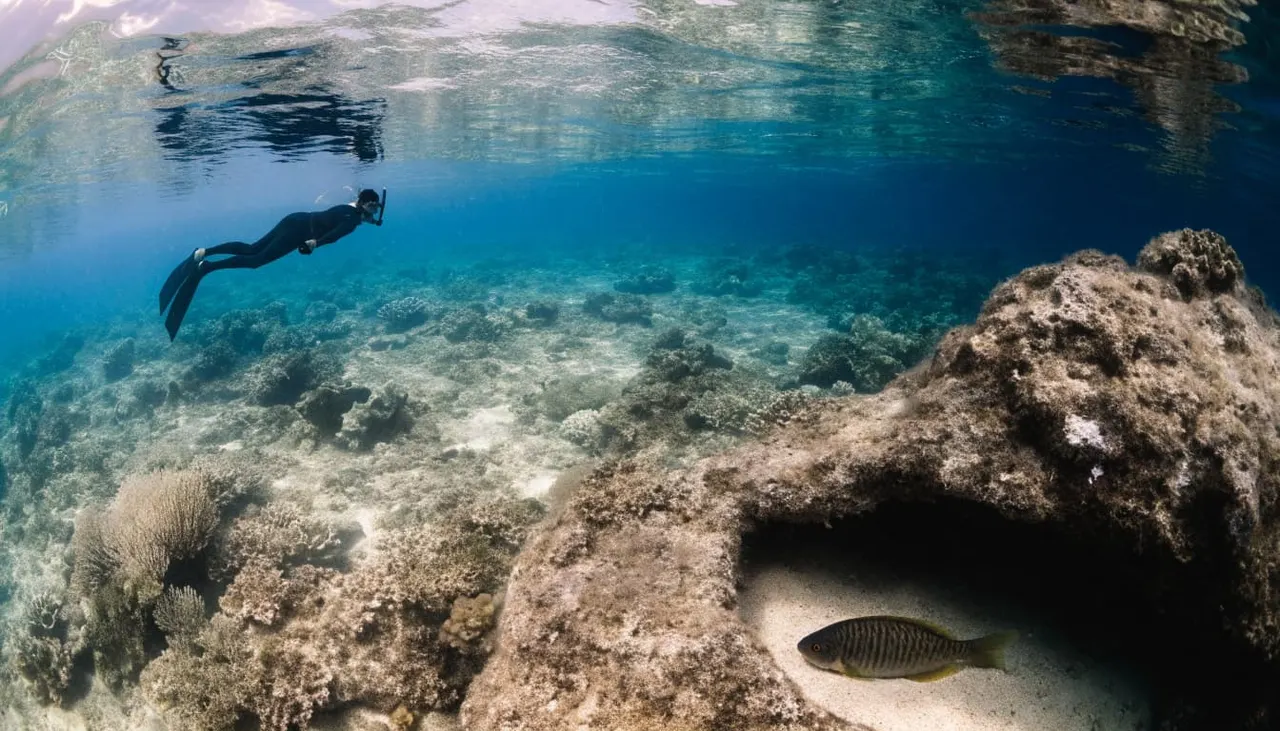
Illustration of a snorkeler observing reef life from above.
A good view starts with a comfortable position in the water. Stay at the surface, leave room beneath your fins, and let fish continue their normal movements.
Protect the Reef Around the Nest
Coral is made up of living animals. Standing on it, grabbing it, or kicking it can damage the habitat that fish use for shelter and reproduction.
Keep your hands out of holes and crevices. Don’t move rocks or shells to search for eggs, and never touch a fish or its nest. If a possible nesting site is too deep or hidden to see from the surface, leave it undisturbed.
A rash guard can provide sun protection while reducing the amount of sunscreen you need on covered skin. Whatever you wear, keep your gear close to your body so it doesn’t drag across the reef.
Keep Your Group Comfortable
Snorkel with a buddy and stay aware of your group’s location. If your mask leaks or you feel tired, return to the boat or a suitable resting area before continuing.
With children, turn the encounter into a simple observation activity. Ask them to notice a fish’s color, where it swims, and whether it returns to the same place. Point from the surface rather than reaching toward the animal.
Conditions can change, and a fish sighting is never worth swimming beyond your comfort level. Our guides can help you settle in and enjoy the reef at a pace that suits you.
Frequently Asked Questions About Reef Fish Nests
Can You See Fish Eggs While Snorkeling Oahu?
You might, but many clutches are small, hidden, or difficult to distinguish from the surface. A fish guarding one area can be interesting to watch even when you can’t see eggs. Never move reef material or approach closely to look for them.
Do Both Fish Parents Guard the Eggs?
Care varies by species. In some fish, a male guards the nest, while other species have different arrangements or provide no nest care. You can’t identify which parent is present simply by seeing a fish near a patch of reef.
Will You See a Nest on a Waikiki Snorkel Tour?
A nesting encounter is possible, but it isn’t guaranteed. Reef fish behavior changes, eggs can be concealed, and your view depends on water conditions. Your guide can help you notice the marine life that’s visible during your visit.
Bring Curiosity and Give Fish Room
Reef fish can protect their eggs through guarding and nest tending, but those behaviors vary across species. A fish returning to one patch is a reason to observe, not proof that you’ve found a nest.
On your next trip, give yourself time to watch a small section of reef. With space and patience, you can enjoy the details without interrupting the life around you.


