
Snorkeling Oahu: Identify Goatfish by Their Chin Barbels
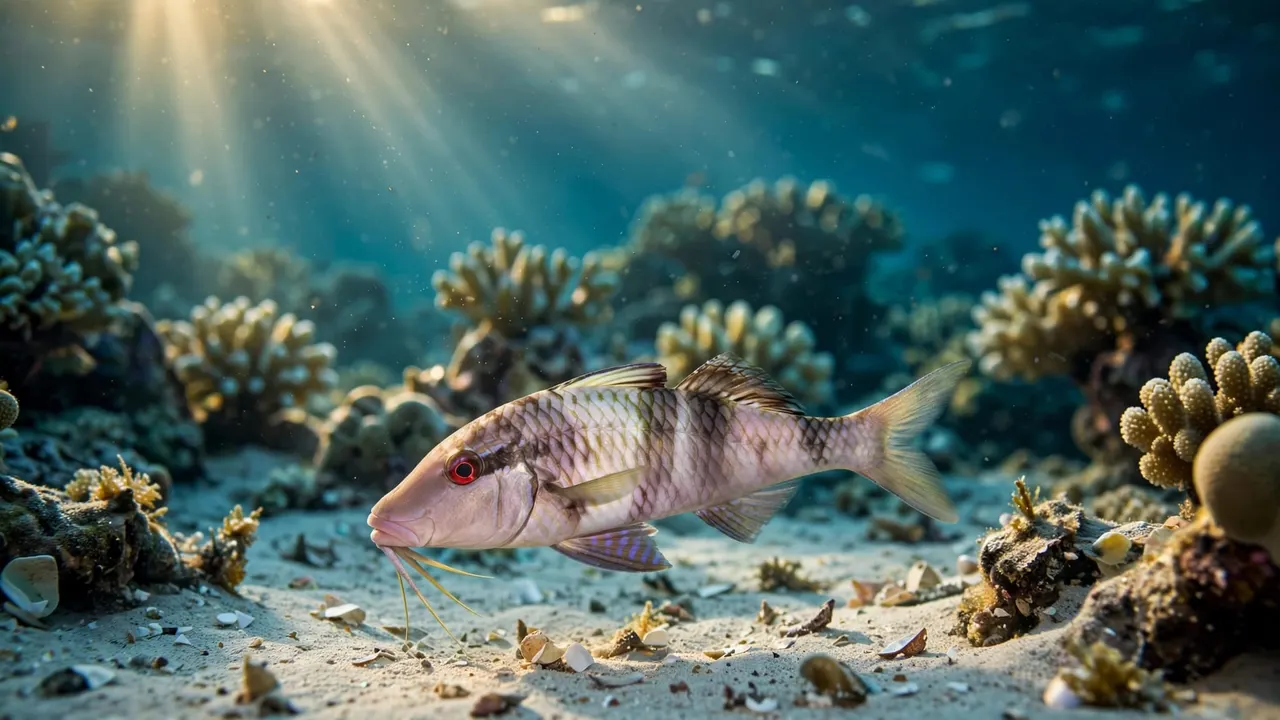
When you’re snorkeling Oahu reefs, look for two barbels beneath a fish’s chin to recognize a goatfish. These whisker-like organs help the fish locate food along the bottom.
With us at Living Ocean Tours, you can bring that curiosity to a family-friendly reef outing. You don’t need to memorize a fish guide before entering the water, because one useful feature can give you a starting point.
Begin with the chin, then watch how the fish uses it.
Key Takeaways for Spotting Goatfish
- Look for a pair of fleshy barbels beneath the lower jaw, rather than relying on body color alone.
- Watch the fish’s relationship with the bottom. Goatfish use their barbels to search for food.
- Separate recognizing a goatfish from naming its exact species. A clear family-level identification is useful even when you can’t narrow it further.
While snorkeling Oahu waters, give yourself time to notice small features. A fish passing quickly beneath you may offer less useful information than one you can observe calmly.
Find the Paired Barbels Beneath the Chin
Illustrative view of a goatfish near the bottom.
Look under the lower jaw
A goatfish’s defining feature sits below its mouth: two slender, fleshy barbels. Their resemblance to a goat’s beard explains the common name.
You may initially notice only one because the fish’s body hides the other. A slightly different viewing angle can reveal the pair without requiring a closer approach.
Hawaii’s Division of Aquatic Resources describes goatfish as bottom-feeding carnivores recognizable by their paired barbels in its Hawaiian fish identification manual. That makes the chin a more useful starting point than a general impression of the fish.
Allow for a changing silhouette
Barbels don’t always hang straight down. A goatfish can move them while searching and tuck them beneath the head when they’re not extended.
As a result, a quick glance may miss the feature entirely. Watch through another movement or turn before deciding whether you saw it.
When snorkeling Oahu reefs, you don’t need every fish to present a perfect side profile. You need enough visual information to distinguish an observed feature from something you merely expected to see.
Watch How Goatfish Search for Food
Follow the barbels toward the bottom
Goatfish use their barbels to locate food, so their movements can help you understand what you’re seeing. Watch beneath the head as the fish passes over the bottom.
The barbels are sensory organs, rather than decorative whiskers. They help the fish investigate food sources that aren’t obvious to you through a mask.
Because goatfish are carnivores, their feeding differs from a fish grazing on algae. However, you won’t necessarily see the prey itself. Small food items can remain hidden even when the fish’s searching movements are clear.
Separate searching from swallowing
A fish moving its barbels across the bottom is searching. That movement alone doesn’t prove it has captured something.
Look for the sequence rather than assigning a result too quickly. You may see the fish pause, lower its mouth, and then continue. Unless the food is visible, describe the action as searching or feeding behavior without naming a particular meal.
This distinction makes your observations more accurate. While snorkeling Oahu, you can recognize how a fish finds food without claiming to know everything it ate.
Recognize Goatfish Before Naming the Species
Start with the family-level identification
Goatfish belong to the family Mullidae. Recognizing that group is a useful achievement, even if your identification stops there.
The paired chin barbels support that first step. They don’t, by themselves, tell you which goatfish species you’re watching.
Keep those two tasks separate: first establish the visible feature, then consider whether you have enough information for a more detailed identification. This prevents a familiar name from becoming a shortcut that overrides what you saw.
Treat Hawaiian names as specific names
You may encounter Hawaiian names while learning about reef fish. For example, the state’s Hawaiian fish life-history compendium lists kūmū alongside the common name whitesaddle goatfish.
That doesn’t make kūmū a name you should apply to every fish with chin barbels. Names distinguish fish more precisely than the broad goatfish label.
If your view supports only “goatfish,” use that description confidently. An accurate broad identification tells you more than a species name attached to uncertain evidence.
Use a Wider View While Snorkeling Oahu

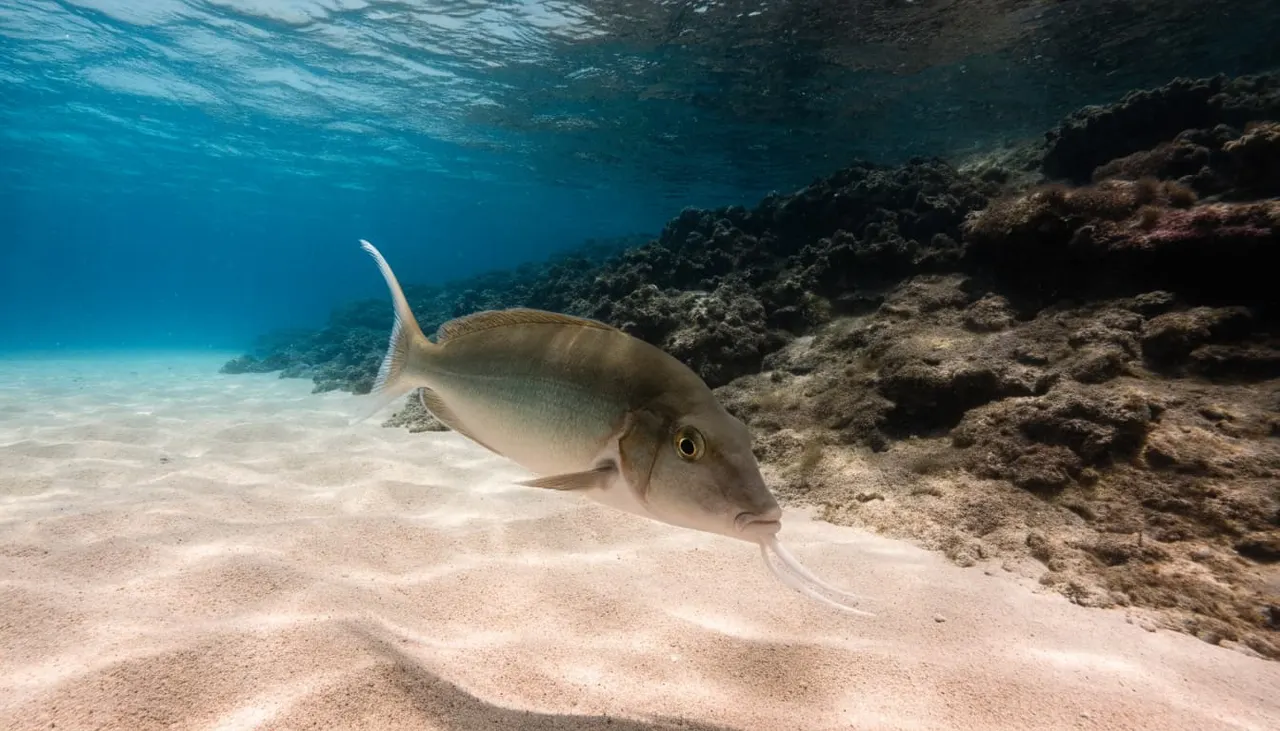
Illustrative view of a small goatfish group over sand.
Your attention naturally follows a moving fish. However, watching its surroundings can help you interpret its actions.
Notice whether the fish passes above the bottom or lowers its head toward it. Then return your attention to the chin. This alternation gives you both context and detail.
If several fish enter your view, choose one to observe rather than switching constantly between them. Following one animal’s movements makes it easier to connect a visible barbel with a particular action.
Also, distinguish what the group does from what an individual does. One fish investigating the bottom doesn’t prove every nearby fish is feeding.
A searching movement supports an observation about behavior; it doesn’t automatically identify the prey or the species.
Your position matters, too. From directly above, the head may obscure the chin. A naturally occurring turn can provide a clearer view than continued effort to inspect the same unhelpful angle.
For couples and families snorkeling Oahu together, compare observations afterward. One person may have noticed the barbels while another followed the fish’s movements. Combining those details can clarify the sighting without turning it into a competition.
Remember Details That Support Your Identification
A useful fish description separates visible features from interpretation. After your swim, begin with what you actually noticed beneath the head.
Did you see two barbels, one partially obscured barbel, or only a shape you couldn’t resolve? Those are different levels of evidence.
Next, recall the action. A fish traveling above the bottom gave you a different view from one repeatedly investigating it. Neither observation requires a species name to be worthwhile.
If you have a photograph, assess what it shows rather than what you remember wanting to capture. A full side view may preserve the head clearly, while a distant overhead image may not reveal the chin at all.
Don’t let an unclear photograph erase a clear observation. Equally, don’t let a confident memory supply details the image never captured.
When describing the encounter to your group, keep the strongest evidence first. The paired barbels establish your reasoning more clearly than calling the fish unusual or colorful.
Explore Waikiki Reefs With Our Guides
You can bring a simple observation goal aboard: look beneath a fish’s chin and notice how it searches.
Our family-friendly ocean tours give you a way to explore Waikiki’s marine life without making every outing a species-identification exercise. Tell us you’re interested in smaller reef fish, and share what you notice during your swim.
You can also explore our Waikiki snorkeling tour options when planning your group’s reef day. Choose an experience for the whole outing, rather than expecting one particular animal to appear.
For a Waikiki snorkeling cruise, CHECK AVAILABILITY and bring your curiosity about the fish community.
Your questions don’t need technical language. Describing a pair of appendages beneath a fish’s mouth gives us a starting point for discussing what you saw.
Frequently Asked Questions About Goatfish
Are goatfish barbels the same as whiskers?
“Whiskers” is a convenient visual description, but barbels aren’t hairs. They’re fleshy sensory organs beneath the jaw.
You can use the resemblance to remember where to look. However, pay attention to their paired arrangement and movement rather than expecting something that looks exactly like a mammal’s whiskers.
The term “chin barbels” gives you a precise way to describe the feature after your swim. It also helps distinguish what you observed from the fish’s mouth or fins.
Will you see goatfish on every snorkeling trip?
You shouldn’t plan around a guaranteed goatfish sighting. Your view of wildlife depends on which animals are present and what you can observe during that particular swim.
A missed sighting doesn’t mean you searched badly. Likewise, seeing a fish without clearly seeing its chin doesn’t justify a definite identification.
Keep the observation goal flexible. You can practice noticing fish movements and relationships with the bottom even when a goatfish never offers a clear view. Those habits remain useful on your next outing.
Let the Chin Barbels Guide Your Next Look
When you’re snorkeling Oahu reefs, start with the paired barbels beneath the jaw. Then watch how the fish uses them to investigate the bottom.
You don’t need an exact species name to make a meaningful identification. A clear view and an honest description give you something useful to remember.
Let the fish’s visible features lead your conclusion, rather than choosing a name first.


