
Snorkeling in Waikiki: A Local’s Complete Guide
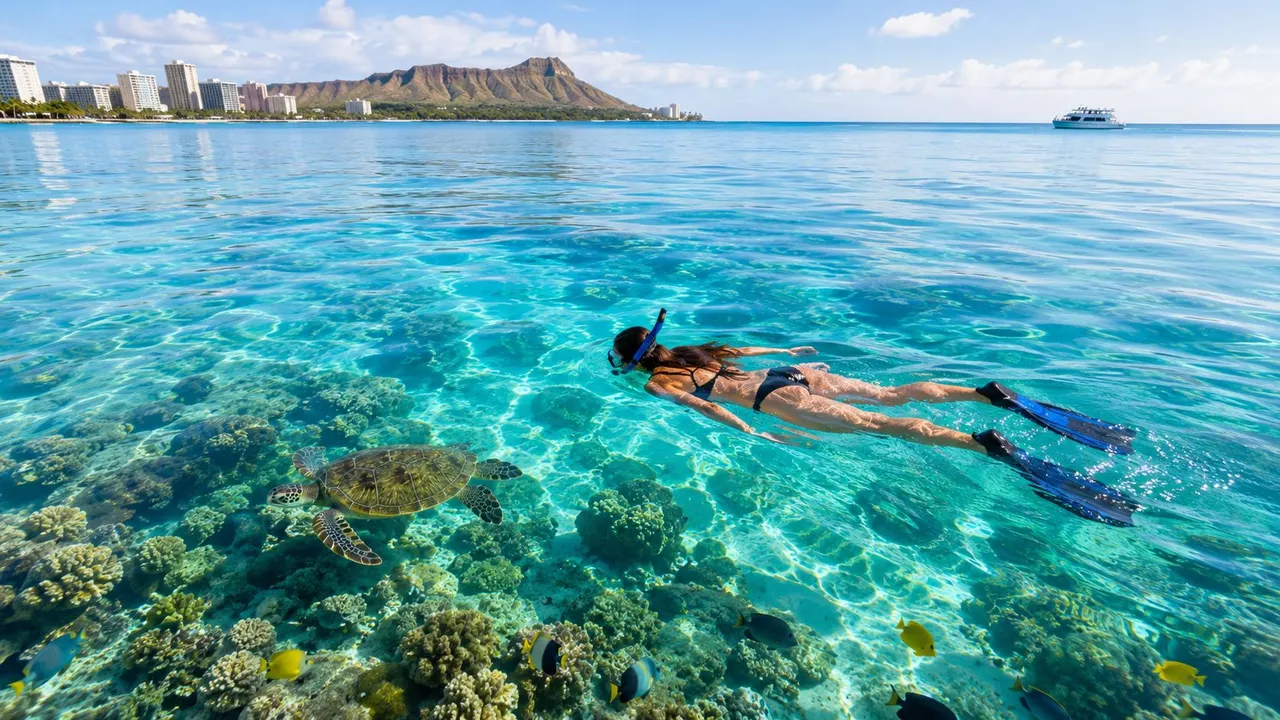
You're standing on Waikīkī sand with rental masks in one hand, kids asking where the fish are, and a shoreline that looks calm but not especially clear. That's the actual starting point for snorkeling in Waikīkī, not a postcard fantasy. The honest version is better: Waikīkī can be a good place to learn the water, but it rewards people who read conditions, choose the right entry point, and know when the short boat ride beats the beach.
What Snorkeling in Waikīkī Actually Looks Like
A lot of visitors show up expecting to step off the beach and find a reef packed with color. On the main stretch of Waikīkī, that's usually not what happens. The shoreline is narrow, the bottom is mostly sand with scattered coral heads, and the water can look stirred up even when the day feels sunny and gentle.
The shore scene most families run into
I see it often. A family drags gear across the hot sand near Queens Beach, one mask fogs up before anyone gets in, and the kids are already complaining about brown water moving across the shallows. That isn't a bad attitude problem, it's a reality problem. After rain, runoff can make the water look worse fast, and nearshore fish viewing gets modest in a hurry.
Waikīkī's marine setting adds another layer. The Waikīkī Marine Life Conservation District has been protected since 1988, and it covers 76 acres from the groin at Kapahulu Avenue to the ewa wall of the Waikīkī War Memorial Natatorium, out to at least 500 yards seaward or to the reef edge if farther, according to the state's marine managed areas page (DLNR Waikīkī Marine Life Conservation District). That protected status matters, because it means the reef you're seeing is managed, not random beach water. It also means expectations need to match the place.
Practical rule: if you want casual fish viewing close to your hotel, shore snorkeling can work. If you want a real underwater payoff, don't pretend the main beach is something it isn't.
The best days on the beach are calm, clear enough to see your fins, and simple enough for beginners to stay relaxed. The better water still tends to sit a short ride away from the crowds. That's the bridge most visitors need, and it's the difference between a decent family outing and a disappointing first impression.
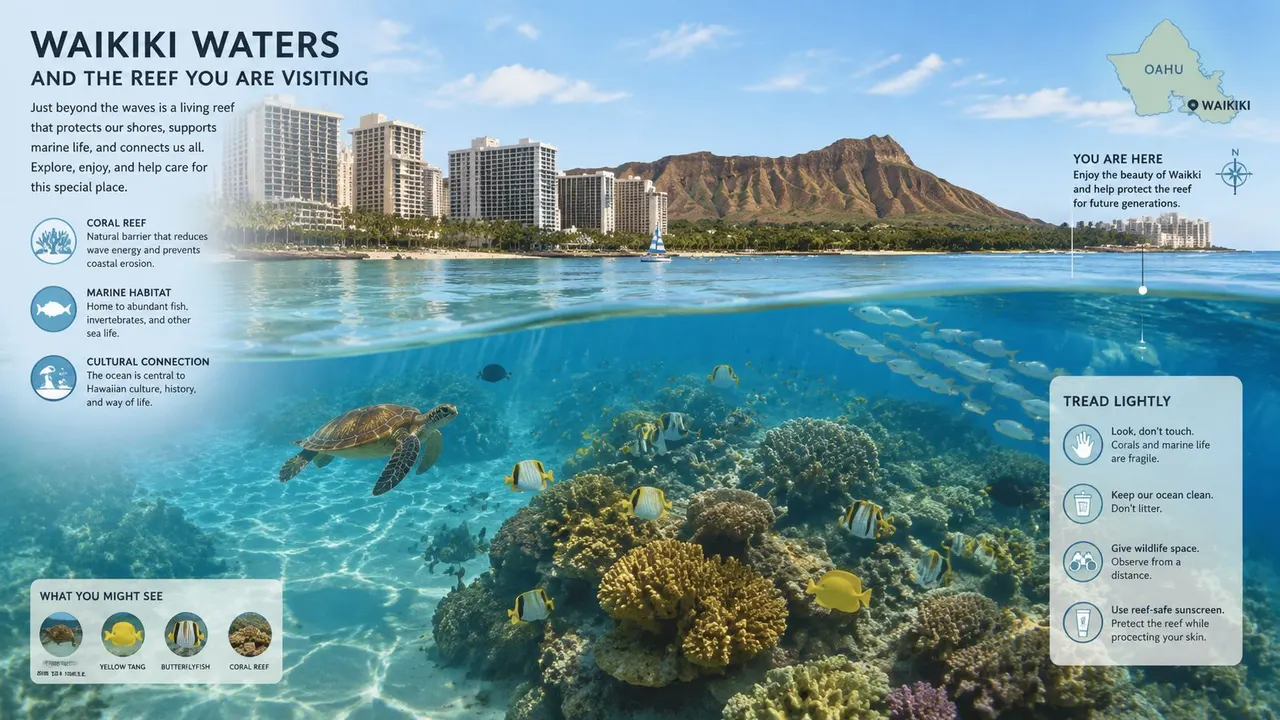
Waikīkī Waters and the Reef You Are Visiting
Waikīkī sits on a shoreline that looks protected from the street and still behaves like an open ocean edge. The nearshore reef is fringing, the water is shallow close in, and the beach environment has been reshaped by a long history of urban shoreline engineering. Honolulu's ocean safety history also traces the area back to the Waikīkī Beach Life-Saving Patrol established under Territory of Hawaiʻi Act 201, a reminder that this has always been a managed recreational zone, not a wild cove (Honolulu Ocean Safety history).
Why the water changes so fast
The main reason visibility swings is runoff. The Ala Wai Canal drains into the area, and after rain it can push sediment and bacteria into the nearshore water. Independent local guidance says good days often bring about 15 to 30 feet of visibility, while heavy rainfall can make snorkeling unsafe for 72 hours afterward because of bacteria exposure (Safe To Swim Hawaii). That's not a theory. That's the difference between a pleasant swim and a day you should skip.
Water temperatures stay comfortable, so temperature usually isn't the issue. The decision is clarity, swell, and whether the surface is broken up by wind. The leeward side of Oʻahu is sheltered, but trade winds and summer swell still create chop. The right morning can feel glassy, while the wrong afternoon turns the same stretch into chopped-up gray water.
What lives where
The shallow inshore zone gives beginners a chance to see reef fish, juvenile species, and the occasional octopus tucked into cover. Past the reef line, you get deeper water, better clarity, and a better shot at turtles moving naturally through cleaner water. If you're staying at a hotel on the beach, it's normal for the water to look calm but cloudy. A short boat ride changes the picture because it gets you away from the sediment and the worst of the shoreline traffic.
For a boat-side look at that reef transition, the Turtle Canyon area is the spot most visitors mean when they say they want “Waikīkī snorkeling” but want a strong reef experience.
Best Snorkel Spots From Shore and From a Boat
If you want a snorkel day in Waikīkī, start with the trade-off. Shore access is easy and cheap to reach, but the water is often modest in clarity and tied to recent weather. A boat ride costs more and takes more planning, yet it usually puts you over cleaner water and into a better reef zone. Families feel that difference fast, especially on the first day when expectations are high and the shoreline looks calmer than it snorkels.
Shore options worth considering
Sans Souci, Kuhio Beach, and the Queen's Beach side get attention because they are practical. You can walk in, get your mask on, and avoid turning the morning into a transport project. The limits are just as clear, though, sand bottom, modest coral, and visibility that can fall off after rain.
Kuhio Beach is the easiest place for nervous swimmers who mainly want to get used to breathing through a snorkel. Sans Souci gives you a better chance of some reef texture and the occasional turtle, but it is still a modest shore snorkel. Queen's Beach and the Waikīkī Wall side can be sheltered when conditions cooperate, yet they are better for casual fish viewing than for a strong reef session.
Boat access is the significant upgrade
A short boat ride changes the water. It gets you beyond the murkier inshore zone and into cleaner reef habitat, where the bottom is easier to read and marine life is more active. Turtle Canyons is the clearest example. Green sea turtles tend to gather around a cleaning station over deeper water, and a guided crew can keep nervous swimmers calm instead of letting the shoreline chop set the pace. For many visitors, that is the moment Waikīkī snorkeling starts to match what they had in mind.
Decision rule: if you want turtles, better water, and a fuller reef experience, take the boat. If you only need an easy dip with the kids, shore can be enough.
The difference matters because plenty of pages blur the line between “you can snorkel here” and “you should expect a strong snorkel here.” Those are separate calls. Waikīkī's shore spots are fine for practice and convenience, but the boat is where the day usually feels worth remembering.
| Waikīkī Snorkel Spots Compared | Access | Typical Visibility | Marine Life Highlights | Best For | Watch Out For |
|---|---|---|---|---|---|
| Sans Souci Beach | Shore | Modest and weather-dependent | Occasional turtles, small reef fish | Calm beginners, local-style beach time | Visibility drops after rain, limited coral |
| Kuhio Beach | Shore | Modest | Easy fish viewing close to shore | First-timers, kids | Mostly sand bottom, crowded at times |
| Queen's Beach and Waikīkī Wall | Shore | Variable | Some reef life in sheltered pockets | Casual snorkelers | Choppy water, stirred-up sand |
| Turtle Canyons | Boat | Clearer offshore water | Green sea turtles, reef fish | Families, first-timers, turtle seekers | Needs a booked trip |
| Offshore reef edges near Diamond Head | Boat | Better than shore | Larger reef activity, cleaner water | Guests wanting more reef texture | Conditions and route depend on the day |
For a wider comparison of Oʻahu spots, the Oʻahu snorkeling guide is a useful reference point.
When to Go and How to Read the Conditions
The best Waikīkī snorkel days usually come down to four things, season, swell, wind, and recent rain. Get those right, and even a simple shoreline session feels manageable. Get them wrong, and the same water turns churned up and frustrating.
The morning matters more than most visitors realize
The calmest window is usually early. Before noon, the wind is lighter, the surface is less broken up, and light reaches the reef better. That's why local operators talk about morning starts instead of lazy beach-hour timing. If you're serious about seeing anything clearly, don't wait until the day has already been worked over by sun and trade wind.
The broader seasonal pattern helps too. The South Shore generally behaves better from May through September, while winter brings larger surf and more mixed conditions. Winter can still be great for ocean time, but it's a different game. You may get better wildlife moments in the wider season, but shore visibility usually loses out when the swell picks up.
Use the weather tools before you leave the hotel. A forecast that shows building south swell or stronger trades should push you toward a boat ride or a Plan B beach day. For local reading, Oʻahu surf forecasts are worth checking before you commit the family to gear and parking.
The runoff rule is non-negotiable
If the Ala Wai looks brown, skip the water. That outflow can drag sediment into the swim zone and change the day fast. If there's been meaningful rain, the safest move is often to wait, not to “see how it feels.”
Morning checklist: clear forecast, light wind, calm surface, no fresh rain runoff, and a start time before the crowds stir the water.
Water temperature usually stays comfortable enough that many don't need a wetsuit. The main issue is whether the ocean is open for a clear look or too broken up to be worth the effort. A one-minute check saves a wasted morning.
What to Bring Rent and Know Before You Get In
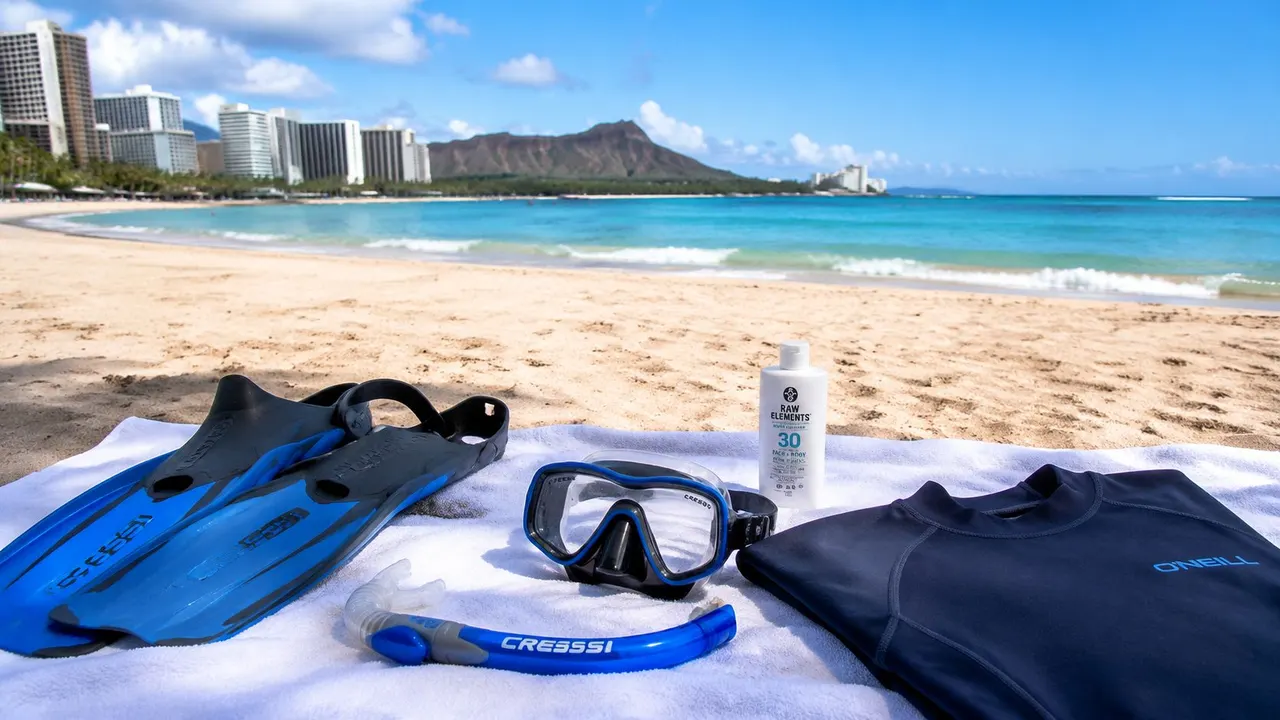
Good gear doesn't make the water clearer, but it does stop a bad mask from ruining a good day. That's why the first rule is simple, bring your own mask if you trust it. Rental masks leak more often than people expect, and once you start clearing water every few minutes, beginners get discouraged fast.
Pack for comfort, not for fantasy
A basic Waikīkī snorkel bag should hold a reef-safe mineral sunscreen, a rash guard or UV shirt, a towel, and a dry bag for phone and keys. If you're entering over rocks, water shoes help more than most tourists think. If you're heading offshore and know you get seasick, bring the medication you already tolerate well.
Beginners also do better when they keep the technique simple. Breathe through your mouth, not your nose. Keep your fins under the surface instead of kicking like you're in a pool. Stay flat and horizontal so you're not fighting the water with every move.
Respect the reef and the animals
The etiquette is easy, and it matters. Don't touch turtles. Give monk seals plenty of space. Never stand on coral, even if the water feels shallow and you're tired. Coral looks sturdy until a careless foot turns into a broken patch that can't heal quickly.
Don't treat the reef like a pool floor. If you need a break, float, stand in sand, or head back in.
A lot of first-timers worry that they're “bad swimmers” and shouldn't even try. Most aren't asking for a lap test, they just need a calm entry, a mask that fits, and a guide who explains what to do before they get in. If a mask fills up, lift, clear, reset, and keep it simple. Snorkeling feels odd for the first few minutes, then it usually settles.
For a practical packing checklist before you leave the hotel, the Waikīkī snorkeling packing list keeps the day organized without overpacking.

Guided Tours That Solve the Waikīkī Snorkel Gap
The marketing often oversells the beach and undersells the boat. If you want strong visibility and a higher chance of seeing turtles without spending your morning guessing at shore conditions, a guided trip is the practical answer. For many first-time visitors, Living Ocean Tours is one option, and the company is described by an independent reviewer as having a quality score of 89.3 out of 100 across 6 tours in that reviewer's first batch (Hawaii Guide review). Tripadvisor also shows it at 4.9 out of 5 with 2,981 reviews, and a separate current listing shows 3,165 reviews, which tells you it's one of the most reviewed snorkel operators on Oʻahu (Tripadvisor listing).
The tour that fits most Waikīkī visitors
The Turtle Canyons snorkel trip is the simplest answer for families and first-timers who want a clear, guided experience without a long offshore commitment. It puts guests into a protected cove-style setting, includes gear and instruction, and gives nervous swimmers a crew to rely on instead of a beach full of guesswork. The Turtle Canyons snorkel excursion is the kind of booking that solves the “should we even try shore snorkeling today?” question.
The Deluxe Waikīkī Snorkel and Wildlife Cruise fits a different guest. That's the choice for people who want a longer outing, more time on the water, and a mixed experience with sightseeing plus snorkeling. Couples and multi-generation groups usually feel the value there because the day becomes more than a quick swim.
The sunset cruise is a better fit when people don't want to be wet at all, just on the water with a relaxed finish to the day. Whale watching belongs in the winter window, and it makes sense for guests who care more about marine viewing from the boat than about snorkeling itself. If you're comparing boat options, the Waikīkī snorkel and wildlife cruise is the useful product page to read first.
| Waikīkī Guided Snorkel Tour Comparison | Duration | Best For | Includes | Price Range |
|---|---|---|---|---|
| Turtle Canyons Snorkel Excursion | Short guided boat trip | First-timers, families, turtle seekers | Gear, instruction, boat access | Check current booking rates |
| Deluxe Waikīkī Snorkel and Wildlife Cruise | Longer half-day style outing | Couples, relaxed groups, mixed-skill families | Snorkel time, wildlife viewing, onboard fun features | Check current booking rates |
| Waikīkī Sunset Cruise | Evening cruise | Couples, non-swimmers, celebrations | Scenic cruise, relaxed onboard time | Check current booking rates |
| Whale Watching Tour | Seasonal winter outing | Wildlife-focused visitors | Boat-based whale viewing | Check current booking rates |
For visitors who want a documented option with gear and guidance, Living Ocean Tours also offers the Deluxe Waikīkī Snorkeling and Wildlife Cruise, which is easier to fit into a mixed-skill family day than a self-directed shore attempt.
Sample Waikīkī Snorkel Itineraries for Real Trips
A good day in Waikīkī usually depends on how early you start and how honest you are about the conditions. These schedules work because they build around calm water, lunch resets, and the fact that nobody wants to drag tired kids through traffic after a bad snorkel attempt.
Family morning plan
Start with a quick 7:00 a.m. look at Sans Souci or Kuhio Beach, just to read the water and decide whether the shore is worth it. If the nearshore looks brown or choppy, skip the swim and head straight to a guided boat departure instead. If conditions are decent, keep the beach session short, then move to lunch and the second half of the day.
A family with kids usually does better if parking and gear pickup happen near the Kapiʻolani Park side before the water session. That keeps the day from turning into a long backtrack through traffic. By midafternoon, the kids are usually done, and that's fine.
Couples afternoon plan
A 1:00 p.m. snorkeling cruise works better for couples who want a slower start and a less rushed morning. Pair it with an early dinner and a sunset beach walk, and you've got a full day without forcing a shore-snorkel gamble. If the ocean looks off that day, move the water time earlier or switch to a non-snorkel cruise and keep the dinner reservation.
Winter whale day plan
From December through March, combine a morning snorkel with an afternoon whale-watching cruise. That gives you one active water session and one seated wildlife experience, which is easier on families and older travelers. If the swell gets too big or the runoff looks ugly, make the morning a beach walk and save the ocean energy for the whale trip.
Sustainability Etiquette and Common Questions
The rules around Waikīkī snorkeling are straightforward because the reef is already under pressure. Hawaii's reef-safe sunscreen law took effect in 2021, so use mineral formulas that fit the rule and avoid the chemical products that aren't allowed in this context. The protected district status, the lifeguard history, and the tourism traffic all point to the same thing, your choices matter here.
The rules that keep the water usable
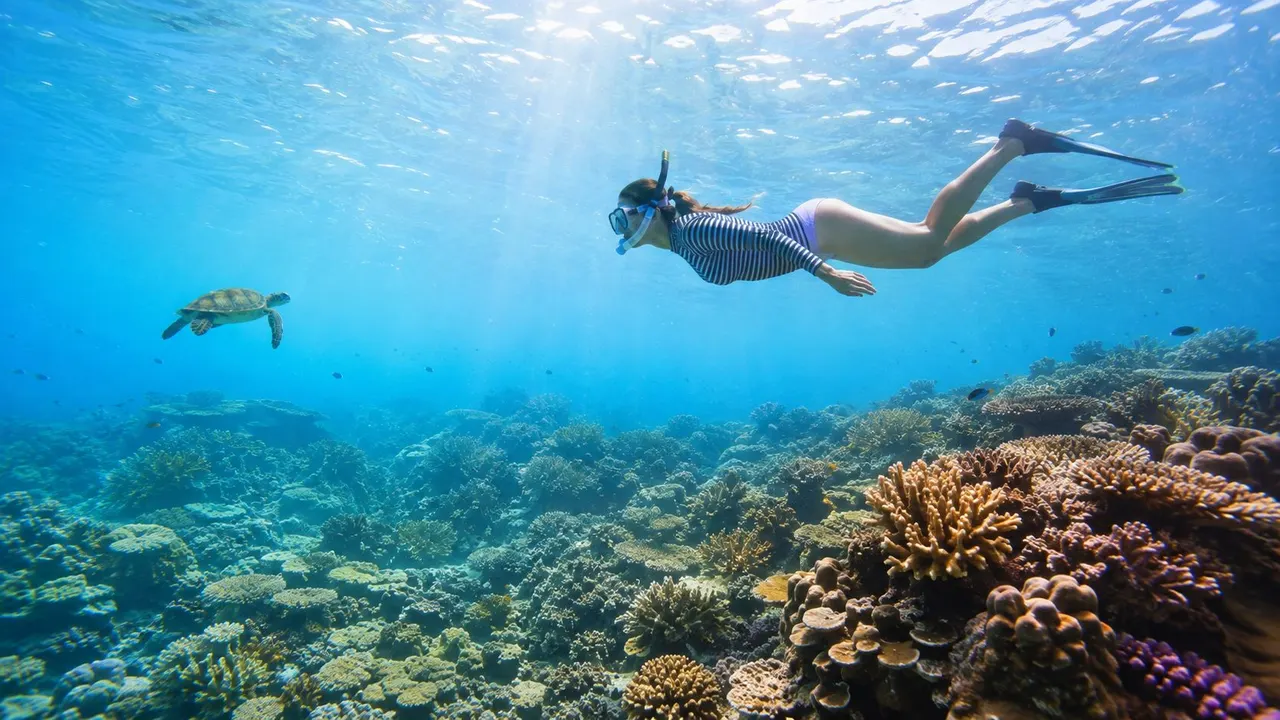
Never touch a turtle, chase one, or box it in for a photo. That's not just bad etiquette, it can trigger serious consequences under the Endangered Species Act. Never stand on coral either, even if you think you're in sand. The reef is living structure, and one careless step does lasting damage.
Boat traffic and snorkel traffic work best when everyone respects spacing. Stay aware of dive flags, keep clear of moorings, and don't drift into another group's swim lane. If you're unsure where to enter, watch first. Let the water show you where it's calm enough to start.
Fast answers to the questions people ask most
Do you need to book in advance? Yes, if you want a guided boat trip on a specific day. Shore snorkeling doesn't require it, but weather can make that a bad gamble.
Can beginners snorkel at Turtle Canyons? Yes, when they're on a guided boat with clear instruction and gear help.
What visibility is realistic? On good shore days, about 15 to 30 feet is a fair local benchmark from the guidance cited earlier. Offshore usually looks better.
Is shore snorkeling worth it? Sometimes. It's worth it for easy practice and low-pressure water time, not for reef drama.
Are sea urchins and sharks a real concern? The bigger risk is stepping on the reef or getting careless near rocks. Sharks are not the typical issue visitors should fixate on.
What if a guest can't swim? They should stay with a crewed experience, use flotation, and only enter where the guide says it's appropriate.
The single habit that protects almost everything else is simple. Observe before you enter, never chase marine life, and leave only bubbles.
If you want the clearest version of this day without guessing at shore conditions, book with Living Ocean Tours and choose the trip that fits your group, whether that's Turtle Canyons, a wildlife cruise, or a sunset sail. Visit Living Ocean Tours to check current options and pick the Waikīkī water time that makes sense for your family, your weather window, and your comfort in the ocean.


