
Snorkeling Honolulu: How to Adjust a Mask With Long Hair
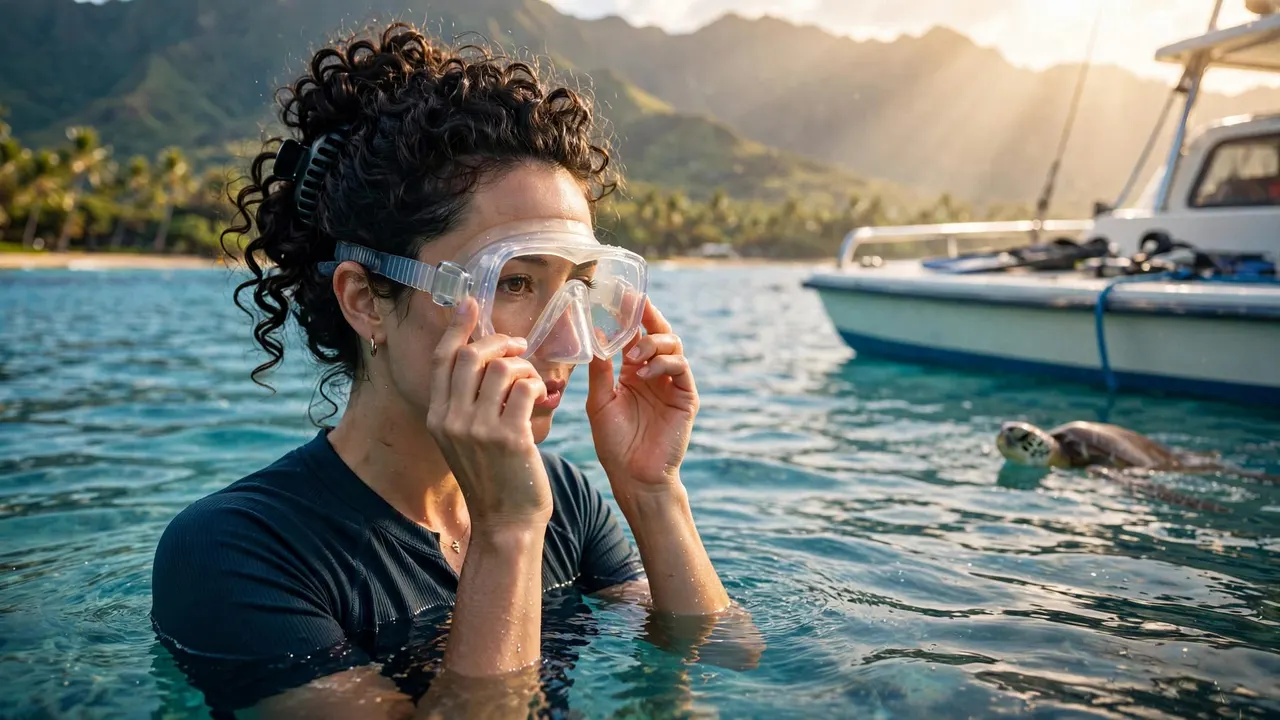
A beautiful reef is hard to enjoy when a single strand of hair keeps letting water into your mask. For snorkeling Honolulu, a comfortable seal starts before you enter the ocean, especially if you have long, thick, curly, or textured hair.
You don’t need an elaborate hairstyle or expensive gear. You need a mask that fits your face, hair kept away from the silicone skirt, and enough time to test everything near the boat or shore.
Key Takeaways for a Leak-Free Mask
- Keep loose hair, sunscreen, and sand away from the silicone edge that seals against your face.
- Place the strap flat around the back of your head without overtightening it.
- Test the mask against clean, dry skin before you enter the water.
- If a leak returns in the same spot, ask for a different mask size instead of pulling the strap tighter.
- Stay close to your buddy, the boat, or a guide while you make your first adjustments.
- Watch Hawaiian green sea turtles from a respectful distance, even when a clear mask gives you a perfect view.
Why Long Hair Affects Your Snorkel Mask Seal
Your mask works by creating a smooth seal around your forehead, temples, cheeks, and nose. Hair caught beneath that soft silicone edge creates a tiny channel for water. Even one wet curl at the temple can cause a slow, distracting leak.
Long hair can also tangle around the strap, particularly after a windy boat ride. If you repeatedly tug at the strap underwater, you can loosen the mask and pull more hair into the seal.
A few careful minutes on deck save you from stopping every few strokes. During snorkeling Honolulu outings, the best gear setup is the one you barely notice once you start floating over the reef.
Snorkeling Honolulu Mask Adjustment for Long Hair
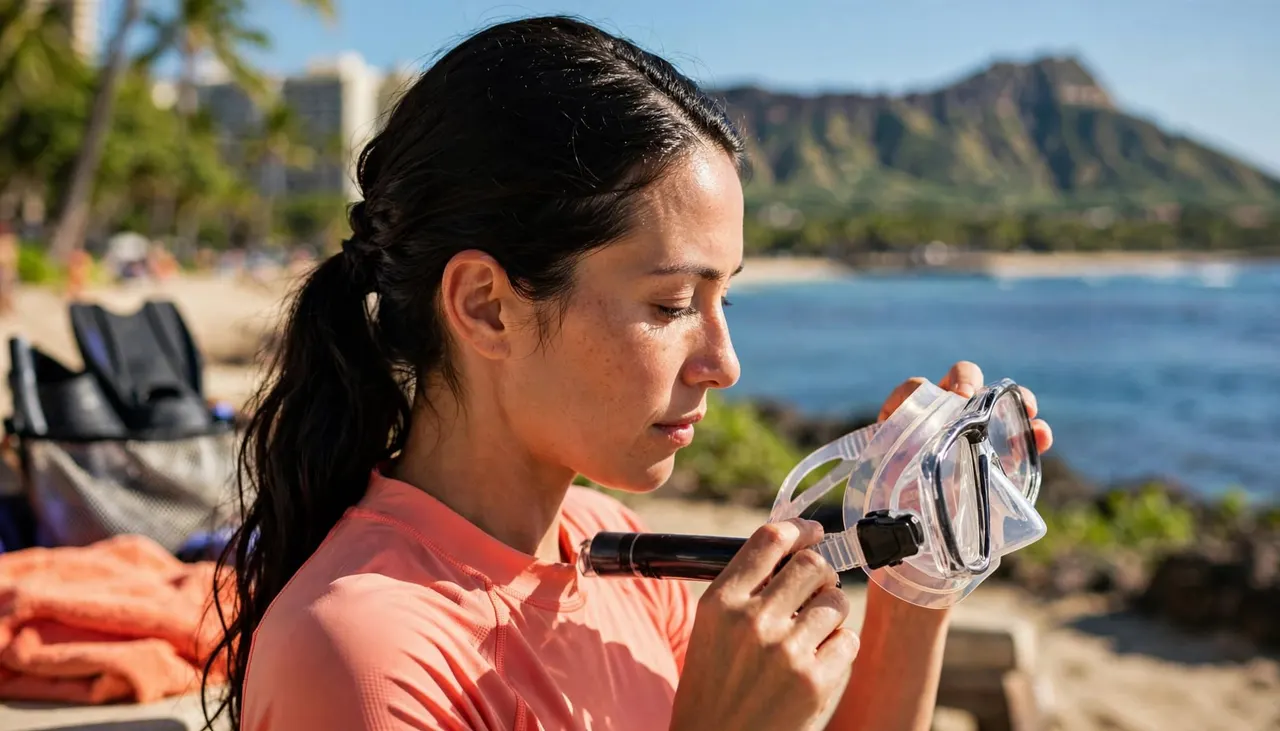
Part Your Hair Before You Put on the Mask
Start by moving loose hair away from your forehead and temples. A low braid, low ponytail, or loose bun can work well if it stays comfortable under the strap. Avoid a high bun directly beneath the strap because it can push the mask forward.
Then center the mask over your eyes and nose. Check the entire silicone skirt in a mirror, or ask your buddy to look from the side. Your hair should sit above, behind, or well outside the sealing edge.
If curls or flyaways slip under the skirt, lift them out gently before entering the water. Don’t pull the mask away from your face repeatedly. Instead, hold the frame steady and slide the hair clear with light fingertips.
Set the Strap Flat and Light
Position the strap around the broadest part of the back of your head, usually low enough to rest over the smoother section of your hairstyle. Keep it flat, untwisted, and centered.
A mask strap should hold the mask in place, not crush it against your face. Over-tightening can distort the silicone skirt, leave painful pressure marks, and make a leak worse.
Press the mask gently against clean, dry skin without using the strap. Breathe in softly through your nose. A suitable mask should hold in place briefly without painful suction. If it slips, leaves visible gaps, or pinches while you stand still, ask to try another size.
A recurring leak usually comes from hair, a shifted skirt, or the wrong mask size. More strap tension rarely solves the real problem.
Test Your Gear Before You Enter the Water
Start Near the Swim Step or Shallow Water
Once you have the mask on, float near the boat’s swim step or stand in shallow water if conditions allow. Put your face in the water and take a few slow breaths through the snorkel.
Use that first minute as a gear check. Notice if water enters near your forehead, temples, or cheeks. If it does, stop moving forward, signal your buddy or guide, and reset the mask while you are still close to support.
Children, first-time snorkelers, and anyone returning after a long break should take this practice time seriously. Calm breathing and a steady float make it easier to notice a fit problem early.
Check the Whole Setup, Not Only the Mask
A comfortable mask works better when the rest of your equipment feels right. Fins should fit securely without rubbing your heels. A flotation vest should let you turn your head, move your arms, and breathe easily.
Wear a fitted rash guard if you want shoulder coverage and less wind on the ride back. It can also keep damp hair from rubbing against bare skin. Bring drinking water, a towel, and a dry layer in a secure bag.
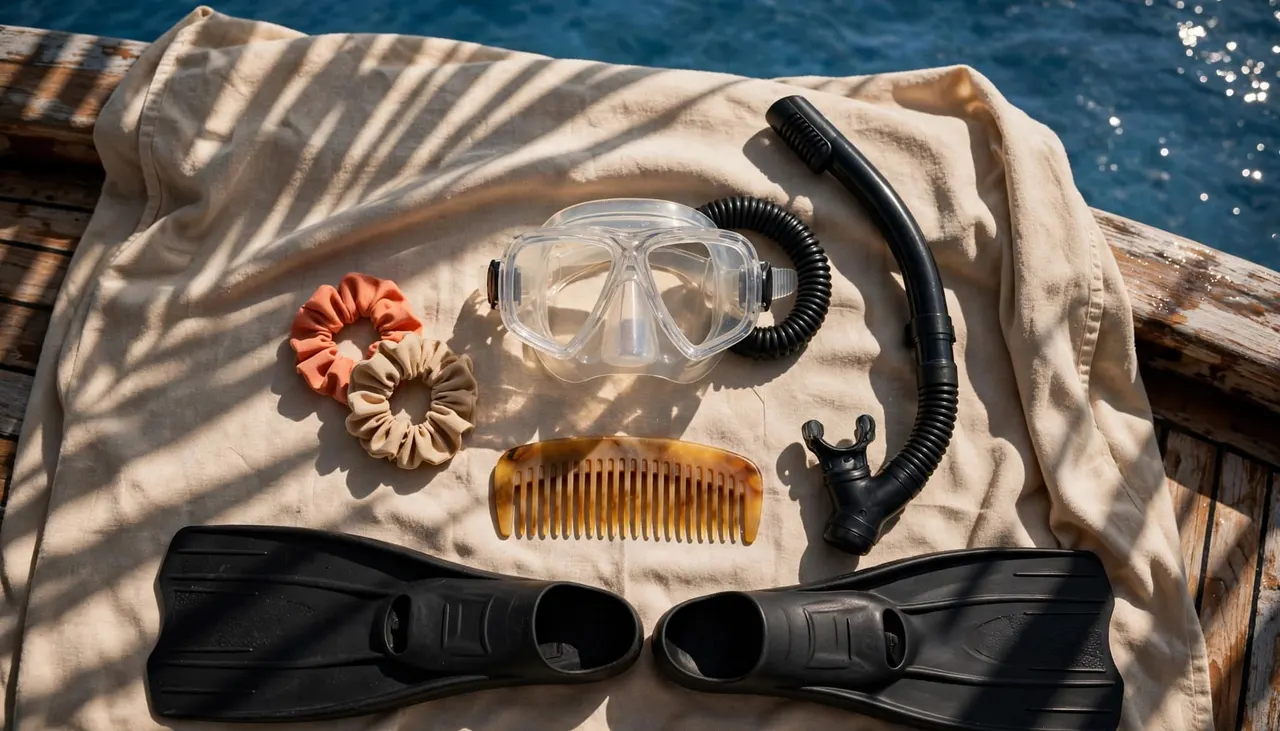
For hair care afterward, pack a wide-tooth comb and a microfiber towel or soft cotton T-shirt. Press water from your hair instead of rubbing it with a rough towel, which can leave curls frizzy and tangled.
Fix Common Mask and Hair Problems Without Stress
When Water Keeps Entering the Mask
Stop swimming and let your buddy or guide know. Move any visible hair away from the seal, reposition the mask evenly, and check that the strap has not twisted.
Clear a small amount of water only if you feel calm and comfortable. If the same area keeps leaking after a reset, return to the boat or shallow water and request another mask. A better-fitting frame often fixes the issue faster than repeated adjustments.
You don’t need to push through discomfort to prove you can snorkel. During snorkeling Honolulu excursions, pausing for a proper fit gives you more relaxed time with the reef.
When the Strap Pulls, Pinches, or Slides
Hair that is wet and loose can make the strap slide upward. Smooth it back down to the broad part of your head, then check that it is not caught in a braid or twisted around strands.
If the strap tugs behind your ears, loosen it slightly and re-center the mask. Persistent pressure, headaches, deep marks, and facial pain are signs that the mask is too tight or the wrong shape for your face.
A narrow face may need a smaller mask, even if you are an adult. The right size beats a high-priced mask that does not match your face.
Keep Long Hair Comfortable Before and After the Reef
Choose Simple, Swim-Ready Hair Accessories
Bring soft, snag-free hair ties rather than clips, pins, or bulky accessories. Metal clips can press into your head under a strap, while rigid hair pieces can make the mask sit unevenly.
Apply a small amount of fresh water to your hair before swimming if that works for your routine. Then secure it loosely enough that you can adjust the strap without undoing your whole style.
Keep leave-in products away from the mask skirt. Oils and heavy creams can transfer to the silicone and make a reliable seal harder to maintain.
Protect Your Hair During the Boat Ride
Wind and saltwater can rough up damp hair, so use a loose braid or soft tie while you are on deck. A rash guard gives your shoulders coverage and can make the return ride more comfortable when ocean wind picks up.
After your swim, rinse your hair with fresh water when available. Use your fingers or a wide-tooth comb to work through tangles from the ends upward. That approach is gentler than dragging a fine comb through salt-dried hair.
Snorkel With In-Water Support Near Waikiki
Choose a Turtle-Focused Guided Experience
Living Ocean Tours is Oahu’s top-rated and most-reviewed snorkel company, offering welcoming ocean adventures from Kewalo Basin Boat Harbor, minutes from Waikiki. It is also the only Honolulu tour company with professional snorkel guides, so you can get direct in-water help if your mask shifts or your hair catches in the seal.
The company’s Waikiki Turtle Canyons snorkeling tours include gear, instruction, shaded seating, restrooms, dry storage, and sturdy ladders for water entry. Turtle Canyons is known for Hawaiian green sea turtles at a natural cleaning station, although wildlife behavior and ocean conditions always vary.
If a mask leak interrupts your swim, signal a professional snorkel guide and take a moment to reset. You can focus on the water again without guessing at the problem.
CHECK AVAILABILITY for a Turtle Canyons snorkel trip.
Pick a Family-Friendly Option With Extra Space
The Deluxe Waikiki Snorkeling and Wildlife Cruise is a good fit when your group wants more than reef time. The Lokahi has a boat-mounted waterslide, water trampoline, floating lily pad, cash bar, shaded seating, and a SeaKeeper stabilization system that reduces boat roll.
You can take your time with gear before entering the water, while family members who prefer staying aboard still have plenty to enjoy. For snorkeling Honolulu with young children or hesitant swimmers, that flexibility can make the day feel far less rushed.
Respect Wildlife While You Snorkel
Give Turtles Space to Swim Naturally
A well-fitted mask lets you see more, but it does not give you a reason to move closer to wildlife. NOAA recommends staying at least 10 feet away from sea turtles, both in the water and on land.
Float calmly, keep your body horizontal, and let the turtle choose its own direction. Do not block its route to the surface, surround it with your group, or reach toward it for a photo.
Observe, Don’t Touch
Hawaiian marine life is protected and wild. NOAA’s Hawai’i wildlife viewing guidance says never to touch, chase, or feed turtles and other marine animals.
Keep your fins away from coral and avoid standing on the reef in shallow water. Your snorkeling Honolulu experience is better when the reef remains healthy and the animals can behave naturally.
FAQ About Long Hair and Snorkel Masks
Should you wear your hair up or down for snorkeling?
A low braid, low ponytail, or loose bun usually keeps hair out of the mask seal better than wearing it fully down. The most comfortable style is one that lets the strap lie flat around the back of your head.
Avoid placing a thick knot directly behind the mask. It can push the strap up and pull the mask away from your face.
Can you snorkel with a leaking mask?
You can clear a little water and continue if the leak is minor and you feel comfortable. However, stop and adjust the mask if it keeps filling, distracts you from breathing, or makes you anxious.
Move your hair away from the silicone edge, check the strap, and ask for a different size if the problem returns. Snorkeling Honolulu should feel calm enough that you can focus on the reef, not your equipment.
A Comfortable Mask Makes the Reef More Memorable
Long hair does not have to complicate your ocean day. Keep it clear of the silicone skirt, set the strap gently, and test the seal before you swim.
When your gear feels secure, you can float longer, breathe more easily, and enjoy the reef with the attention it deserves.


