
Snorkeling Honolulu: Identify Moorish Idols on Reefs
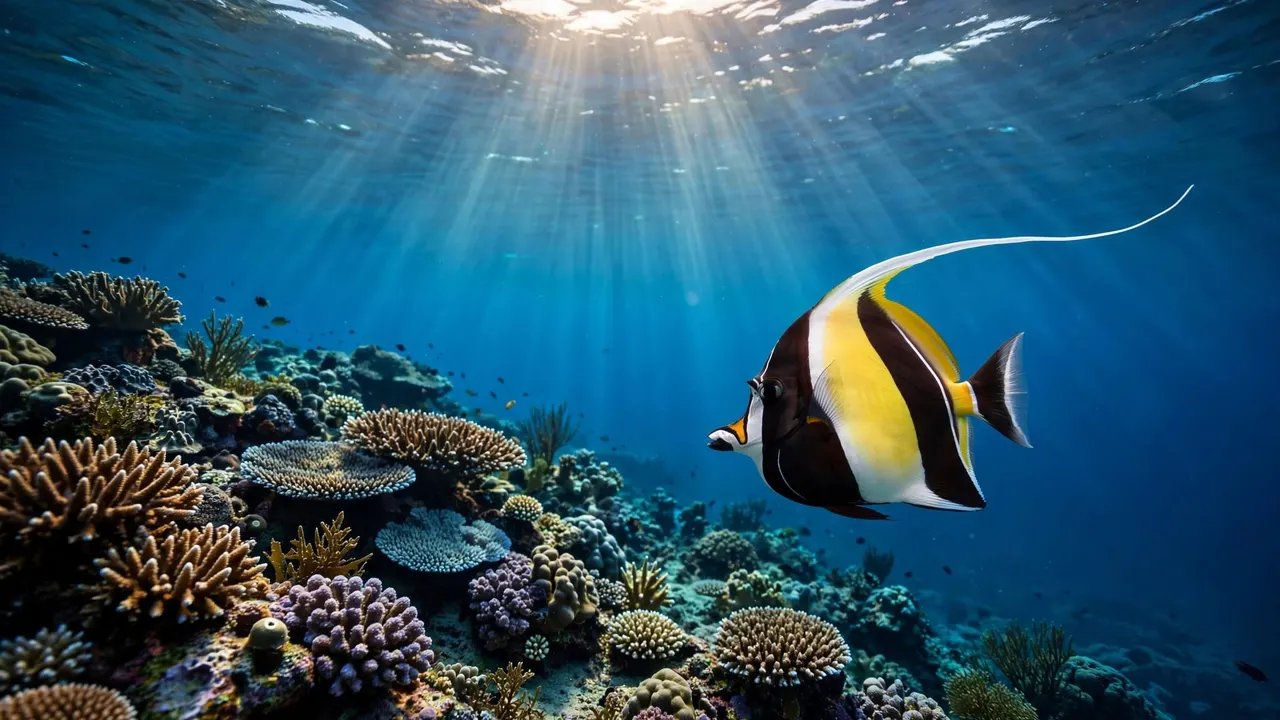
A Moorish idol can look like a living reef flag, with bold bands and a long white streamer trailing behind it. During snorkeling Honolulu outings, that striking shape gives you a rewarding fish to recognize without getting too close.
Living Ocean Tours is Oahu’s top-rated and most-reviewed snorkel company, and it is the only tour company with professional snorkel guides. You can enjoy the reef with more confidence when a guide helps you spot wildlife and stay oriented in the water.
Once you know the fish’s key markings, you can spend less time guessing and more time watching its natural behavior.
Key Takeaways for Spotting a Moorish Idol
- Look for a tall, flattened body with strong black, white, and yellow vertical bands.
- Watch for the long white filament extending from the dorsal fin, which is often the easiest clue.
- Notice the narrow, tubular snout as the fish moves around coral formations.
- In Hawaii, you may hear the Moorish idol called kihikihi.
- Keep your distance, avoid touching coral, and let fish move across your view on their own path.
A fish sighting is never guaranteed during snorkeling Honolulu, yet learning reef-fish features makes every swim more interesting.
How to Identify a Moorish Idol
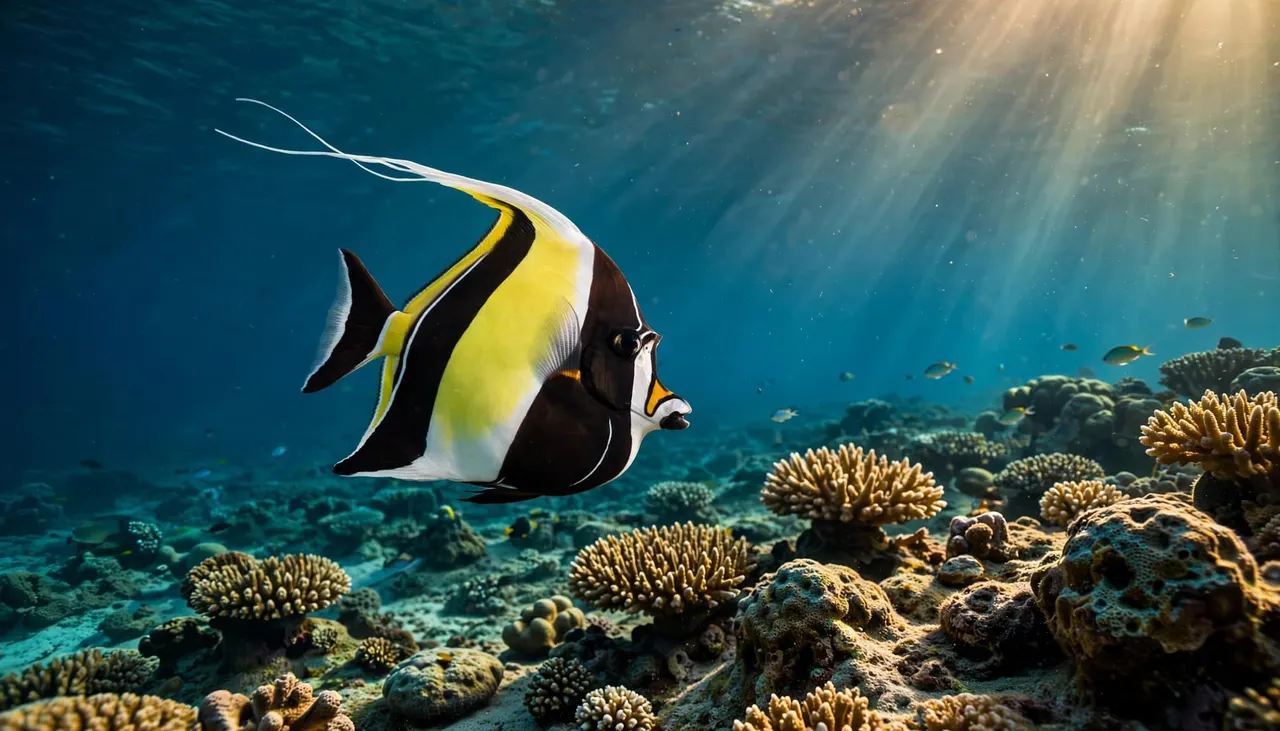
A Moorish idol, Zanclus cornutus, is the only species in the Zanclidae family. It is a free-swimming coral-reef fish that can reach 250 mm total length, although the fish you see may appear smaller beneath the water’s surface.
Start with the black, white, and yellow bands
The body has broad, high-contrast vertical stripes. You will usually see white and black bands first, followed by a bright yellow area near the rear of the body.
Color alone can fool you because many Hawaiian reef fish carry yellow, black, or white markings. Instead, look at the entire profile. A true Moorish idol has a high, disk-like body that appears thin when it turns sideways.
For a close visual reference, Reef Life Survey’s Moorish idol identification notes the distinctive bands, high body, orange patch near the snout, and dorsal filament.
Look for the trailing dorsal filament
The dorsal fin produces a long, narrow white filament that flows behind the fish like a ribbon. It can bend with the current or disappear against bright water, so wait for the fish to angle across your line of sight.
This streamer is the field mark most snorkelers remember. When you combine it with the bold bands and tall body, you can identify the fish without trying to approach it for a closer photo.
Check the snout before you call it a match
A Moorish idol has a pointed, tube-shaped snout that projects farther than you might expect. It uses that narrow mouth to feed around the reef’s uneven surfaces.
You may not see every feature during one pass. That is fine. A good identification comes from several clues, not a rushed look at one color pattern.
Snorkeling Honolulu: Read the Reef Before You Enter
Knowing where you are swimming helps you read what you see. Reefs near Honolulu hold changing patterns of light, surge, sand, coral, and fish activity, so conditions shape every encounter.
Learn the scientific and Hawaiian names
The scientific name is Zanclus cornutus. In Hawaii, the fish is also called kihikihi, a name listed in NOAA’s 2022 ecosystem status report for Hawaii.
Using both names can help when you talk with local guides or review a Hawaiian fish chart after your trip. Still, don’t expect a fish to stay in place while you search for the perfect angle. The best observation happens when you let it swim normally.
Treat “nearshore” as context, not a promise
NOAA lists the Moorish idol among Hawaii’s nearshore reef fish. That tells you the species belongs in the broader coastal reef setting, but it does not promise a sighting at a particular beach, canyon, or boat stop.
Conditions change with visibility, currents, weather, and the behavior of the animals themselves. On snorkeling Honolulu trips, focus on the reef in front of you instead of searching only for one species. Schools of smaller fish, coral texture, and shifting sunlight can be just as memorable.
A careful identification is better than a close encounter. Let the fish’s shape and movement do the work.
Watch Moorish Idols Without Pressuring Wildlife
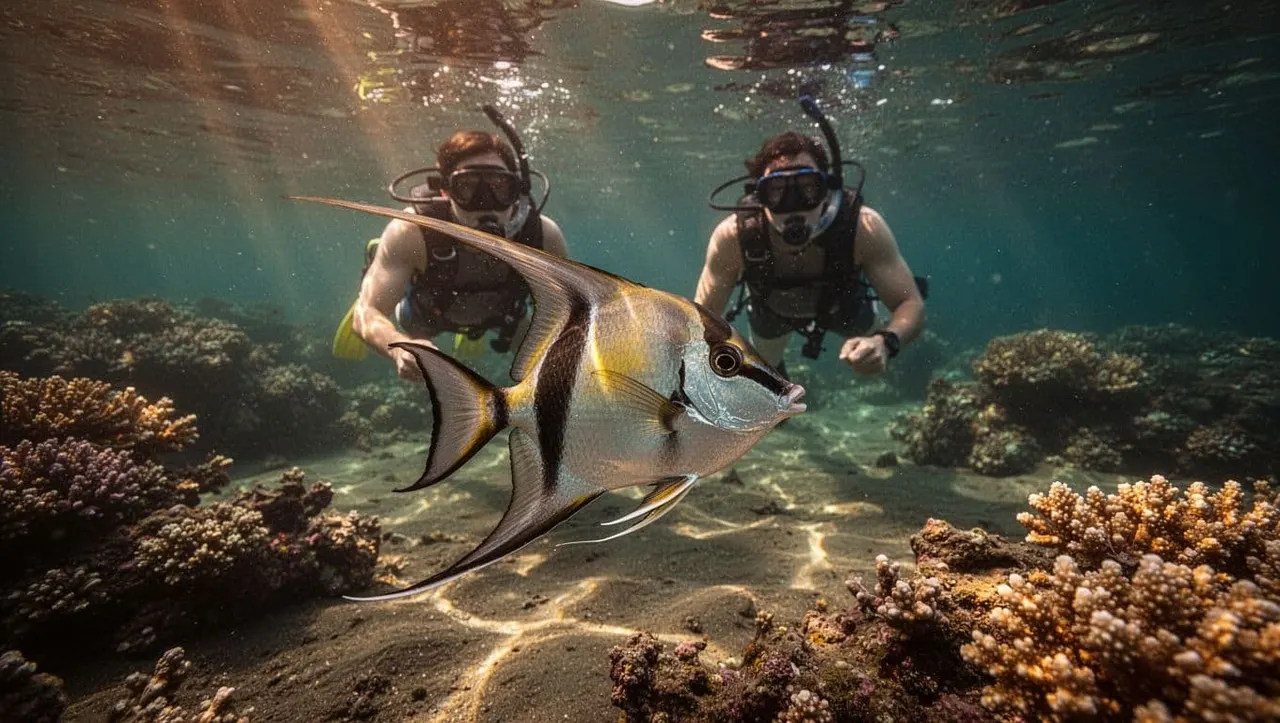
Your position in the water affects what you see. If you stay calm and horizontal, fish are more likely to continue their normal movement through the reef.
Let the fish cross your field of view
Pause your finning when you notice a Moorish idol. Keep your arms relaxed and let it pass across your view rather than swimming directly toward it.
This approach also helps you avoid stirring sand into the water. Clearer water gives you a better chance to see the narrow snout, long dorsal filament, and band pattern that separate a Moorish idol from other colorful reef fish.
If you use a camera, take a few quick photos from where you are. Chasing a fish for a perfect image can push it away and distract you from coral, currents, or other snorkelers.
Keep your fins away from the reef
Coral is living habitat, not a place to stand or hold yourself steady. Maintain buoyancy, watch where your fins are moving, and avoid kicking, touching, or standing on coral.
NOAA’s marine-life viewing guidance also advises visitors not to touch wildlife. That applies to reef fish, turtles, rays, and every other animal you may meet in the water.
A fish that chooses to swim nearby gives you the most natural view. You don’t need to feed, touch, or follow it to enjoy the moment.
Choose a Guided Reef Experience That Fits Your Group
Living Ocean Tours operates from Kewalo Basin Boat Harbor, minutes from Waikiki. Its Coast Guard-inspected double-decker boats include shaded seating, restrooms, dry storage, and sturdy ladders for water entry.
You can browse guided Oahu ocean snorkeling excursions before choosing a trip that suits your schedule and comfort level.
Prioritize reef time with Turtle Canyons
The Turtle Canyons Snorkel Excursion brings you to Waikiki’s natural turtle cleaning station, where Hawaiian green sea turtles may pause while reef fish remove algae and other material.
Living Ocean Tours reports a 95% turtle-sighting rate, although all wildlife sightings depend on conditions and animal behavior. Professional snorkel guides provide gear support, water orientation, and help identifying reef life, which is especially helpful if you are new to snorkeling Honolulu.
If turtles and reef fish are your priority, you can CHECK AVAILABILITY for a preferred departure.
Add water play on a Deluxe Wildlife Cruise
For a family-focused outing, the Deluxe Waikiki Snorkeling and Wildlife Cruise visits a less-crowded reef and includes a boat-mounted waterslide, water trampoline, and floating lily pad.
The Lokahi has a SeaKeeper stabilization system that reduces boat roll, which can make the ride more comfortable if you are prone to seasickness. Families with children ages 3 and up can snorkel, float, or enjoy time aboard while guides offer direct support in the water.
For a reef day with extra onboard activities, CHECK AVAILABILITY before your travel dates fill.
Frequently Asked Questions
Are Moorish idols the same as butterflyfish?
No. Both can appear flat-bodied and brightly patterned from a distance, but a Moorish idol has a long trailing dorsal filament and a more pronounced tubular snout. Its high black, white, and yellow banding is also distinctive when you view the whole fish.
NOAA’s field guide to Moorish idols identifies Zanclus cornutus as the sole member of the Zanclidae family.
Can you expect to see a Moorish idol on every snorkel?
No. Moorish idol sightings depend on the site, visibility, water movement, and the fish’s own behavior. Reef wildlife does not follow a schedule, so treat a sighting as a welcome part of a broader reef experience.
You may also see tropical fish, sea turtles, rays, eels, and other marine life. Your guide can help you notice details while keeping the group safely together.
What should you do if a turtle swims near you?
Stay relaxed, float horizontally, and let the turtle choose its route. Never touch, chase, feed, surround, or block a turtle’s path to the surface.
The same patient approach works with every wild animal. Your best snorkeling Honolulu memories come from watching wildlife behave freely in its own habitat.
A Better Way to Remember the Reef
A Moorish idol is easy to recognize once you know its tall body, bold bands, pointed snout, and white dorsal streamer. The real reward is seeing those features while the fish moves naturally through a living reef.
Keep your distance, protect the coral beneath you, and let your guide help you read the water. Respectful observation gives you a clearer view of Hawaii’s marine life and leaves the reef healthy for the next snorkeler.


