
Snorkeling Honolulu: A Practical Guide for 2026
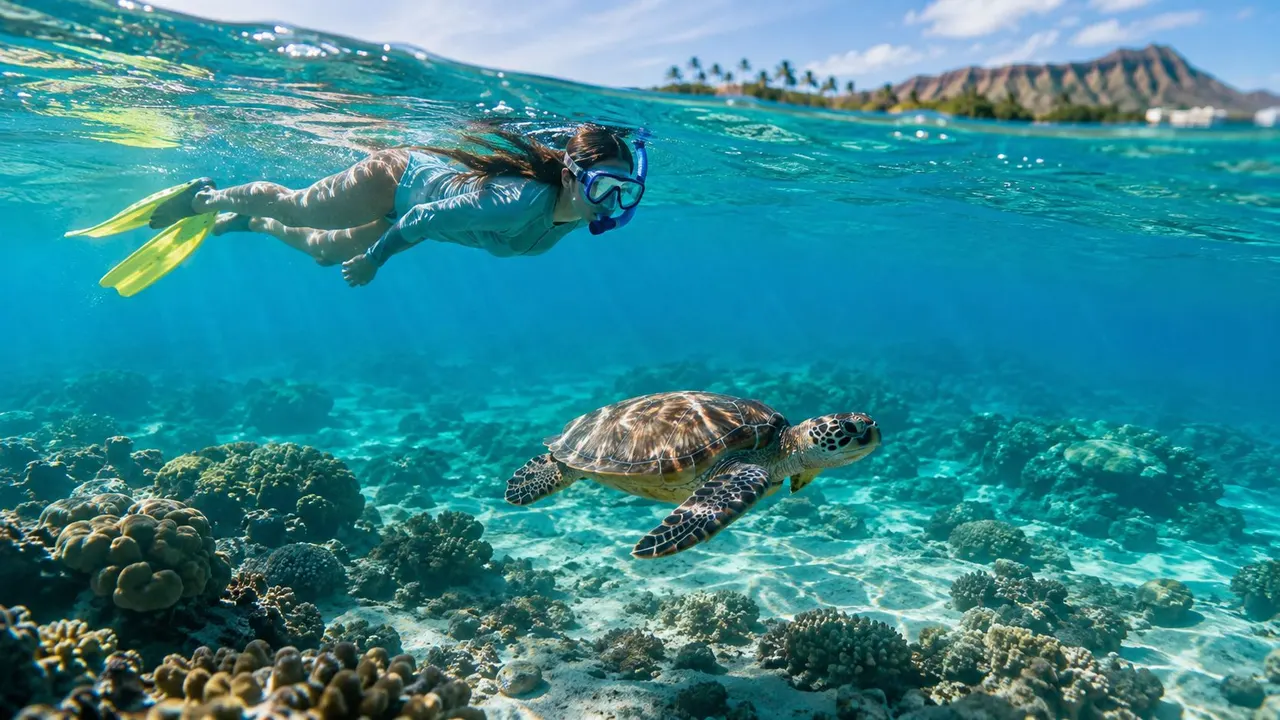
You've got your mask packed, the sun is already up over Waikiki, and every beach photo seems to promise the same thing: calm blue water, bright fish, and a sea turtle gliding past your fins. Then you reach the shoreline and notice the wind, the shorebreak, the crowded entry, or the sand clouding the reef. That moment is where good snorkeling in Honolulu starts, not with a universal “best beach,” but with an honest read of the conditions and your own comfort in the water.
Honolulu snorkeling changes by wind, swell, tide, visibility, crowd level, and access. A sheltered shore reef can be perfect for a relaxed beginner one morning and frustrating by afternoon, while an offshore site may offer cleaner water and better wildlife viewing when the beach is stirred up. The practical choice is to match the day and the swimmer to the site, then choose the option that puts less pressure on both people and reef.
What Honolulu Snorkeling Really Feels Like
Step off the Ala Wai Boat Harbor ramp and the first sensation is usually the temperature. The water feels comfortable rather than shocking, and as you move into knee-deep water, the reef slope begins to disappear beneath your fins. Waikiki's fringing reef sits close to shore, which makes snorkeling accessible even for visitors who don't want a long boat ride or a demanding open-water swim.
That convenience comes with a catch. The same shallow access that makes Waikiki appealing also concentrates swimmers, fins, sunscreen, and accidental contact over a limited reef area. A quiet-looking shoreline can become awkward once several groups enter through the same channel, especially when wind pushes sand across the bottom.
The local question isn't “Which beach is best?” It's “Which site fits today's ocean and your group?”
You may see honu, damselfish, parrotfish, and other reef life close to the city, but wildlife sightings depend on the habitat and conditions, not on a guarantee printed in a tour description. The experience also changes dramatically between an early morning entry and a late arrival, when surface chop, glare, and swimmer traffic can make the same water feel less inviting.
This guide treats snorkeling Honolulu as a conditions-and-crowd decision. You'll learn how to screen wind, swell, turbidity, and water quality; compare shore and boat-access sites; understand why Turtle Canyon offers a different kind of encounter; and decide when a guided trip is worth more than a rental mask and a beach towel.
Reading the Ocean Before You Get In
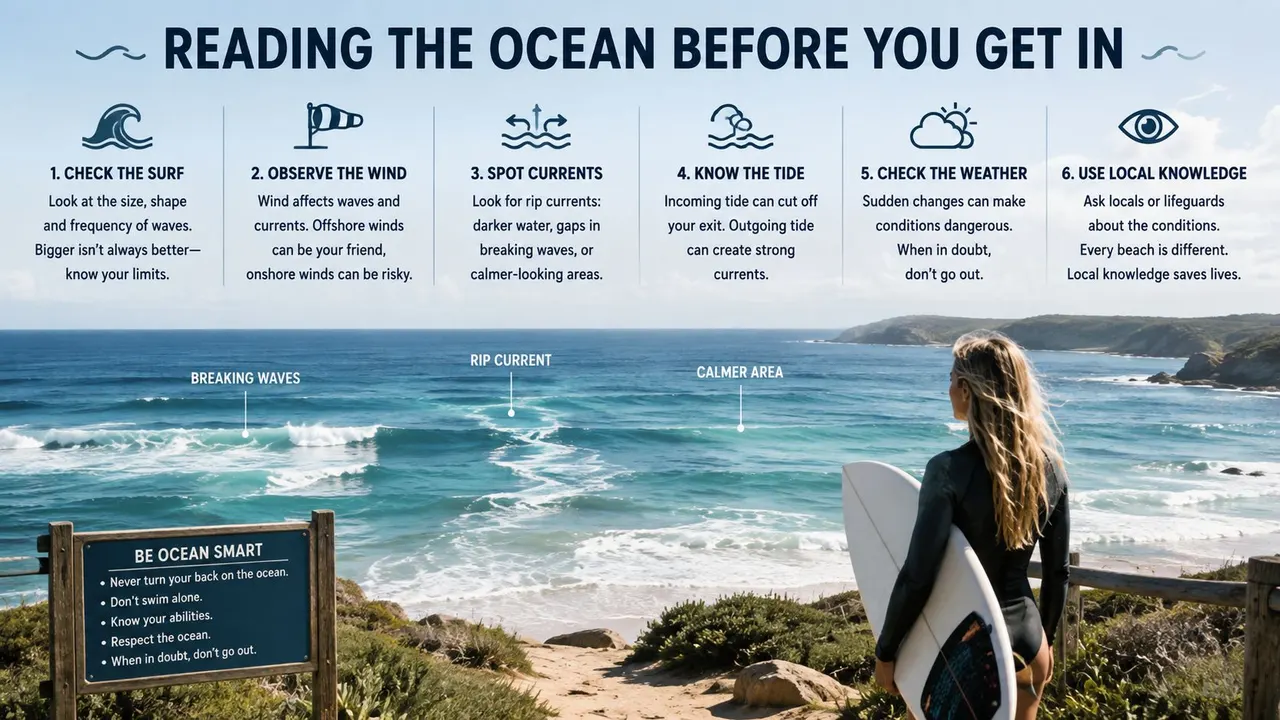
Start with the water, not the itinerary. Trade winds, south swells, and Kona wind shifts can rewrite the plan between breakfast and launch, so check the forecast before you leave the hotel and again when you reach the harbor.
Trade winds often push surface chop and suspended sand across south-shore reef flats. A Waikiki marine-condition report described 20 to 25 mph trade winds, 7 to 10 foot surf, active longshore currents, and visibility ranging from poor to fair when breaking swell resuspended bottom sand and drove current through channel cuts, as documented in this Waikiki snorkel conditions report. The important lesson isn't the forecast number by itself. It's that a blue sky doesn't mean an easy entry.
What to check before leaving
Use the NOAA Honolulu buoy for swell and wave information, inspect wind direction and strength on Windy.com, and review current DLNR or Hawaii Department of Health water-quality notices before committing to a shore entry. Don't treat one app as the final authority. Look at the harbor, too. If flags are snapping, whitewater is breaking across the entry, or sand is visibly moving through the shallows, visibility will usually be worse underwater than it appears from land.
Runoff matters after heavy rain. Hawaii Department of Health guidance cited by local water-safety information recommends staying out of the ocean for at least 72 hours after heavy rain, because runoff can increase bacteria levels and reduce snorkeling safety, as explained in this Waikiki ocean safety guidance.
A simple go or no-go screen
- Shore entry: Go only when the entry is calm, the channel is clear, and you can identify an exit route before swimming out.
- Offshore site: Ask the captain whether the boat has a sheltered backup location and how the crew handles changing wind or swell.
- Visibility: If you can't see the bottom clearly through the first few feet of water, expect the reef to look worse once you're swimming.
- Current: Avoid channels with visible foam lines, sideways-moving debris, or water pulling seaward.
- Your group: A confident swimmer may tolerate conditions that overwhelm a child or casual swimmer. Plan around the least comfortable person.
For a broader look at how changing conditions affect Oahu sites, use this Honolulu snorkeling conditions guide. A captain's call to change locations isn't a failure of the trip. It's often the decision that saves the day.
Choosing the Right Snorkel Site for You
Each Honolulu snorkel site solves a different problem. Sans Souci and Kaimana Beach offer an approachable sandy entry, Waikiki provides convenience, Hanauma Bay adds structured conservation management, Turtle Canyon trades beach access for offshore habitat, and Electric Beach rewards experienced swimmers who can handle a more exposed setting.
Compare the main options
| Site | Entry | Best For | Crowd Pressure | Visibility |
|---|---|---|---|---|
| Sans Souci and Kaimana Beach | Sandy shore entry with patch reef farther out | Beginners who want a gradual start | Can build around the easy entry and nearby beach activity | Best when wind and swell are light |
| Waikiki fringing reef | Shore access through beach channels | Convenience, families, and visitors staying in Waikiki | High near popular beach access points | Changes quickly with sand, wind, and swimmer traffic |
| Hanauma Bay | Managed shore entry with reservation and visitor briefing | Travelers seeking a protected bay with established access | High, with active visitor controls | Often depends on wind, wave action, and inner-bay activity |
| Turtle Canyon | Boat access to offshore reef | Turtle-focused wildlife viewing | Concentrated around moorings and guided groups | Often cleaner than a stirred-up shore entry, but still condition-dependent |
| Electric Beach, Kahe Point | Exposed shore entry | Advanced snorkelers comfortable with current and ocean assessment | Less convenient, but pressure remains around fish-rich areas | Can be clear, though entry and current are the real constraints |
Sans Souci and Kaimana are useful when you want a forgiving start and don't need the most dramatic reef scenery. Waikiki's protected snorkeling zone, the Waikiki Marine Life Conservation District, runs from the Kapahulu Groin to the north wall of the Natatorium. A Waikiki snorkeling guide describes a dredged channel about 100 feet offshore, with calm-condition access toward an outer reef edge roughly 400 to 600 feet farther out, where depths can reach about 15 to 20 feet. Those distances are not an invitation to swim farther than you can comfortably manage. They're a reminder that shore convenience can still involve exposure and navigation.
Match the site to the swimmer
Hanauma Bay is the most structured option. Reservations, visitor education, and stricter rules around reef contact help manage a heavily used protected area, but the bay can still feel crowded. Electric Beach is the opposite in character. It suits capable swimmers who understand currents and can turn around early, not visitors chasing clear water without ocean experience.
Turtle Canyon is the clearest choice when turtles are the priority. You give up spontaneous beach access, but a boat puts you over offshore habitat without forcing a long surface swim from shore.
Swimming With Turtles at Turtle Canyon
Turtle Canyon is a natural cleaning station about 15 boat minutes from Kewalo Basin near Diamond Head. Reef fish groom Hawaiian green sea turtles while the turtles feed and rest, as described in this Turtle Canyon site guide. Local operators describe a series of reef ledges in roughly 20 to 40 feet of water, although the holding area shifts with sea conditions and turtle movement. For a deeper look at the site itself, see this Turtle Canyon Oahu guide.
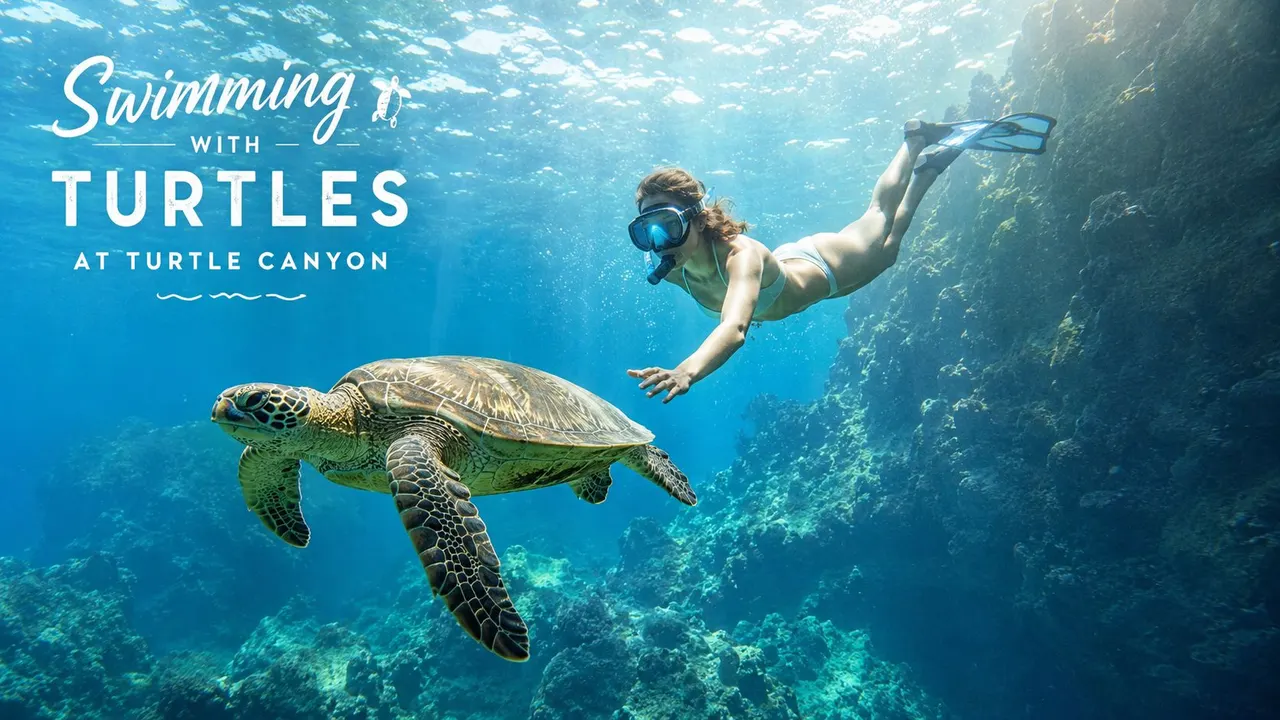
A boat changes the practical equation. You enter close to offshore habitat instead of pushing through shorebreak, swimming out, and searching for reef structure at the same time. Water may be clearer, animals may be larger, and fewer unrelated swimmers may fill your view. Turtle Canyon still depends on wind, swell, current, and the captain's decision about where turtles are holding that morning. Offshore access improves your odds, but it does not guarantee a quiet site or a turtle encounter.
Let the turtle control the distance
Hawaiian green sea turtles have been federally protected under the Endangered Species Act since 1978. Hawaii safety guidance says never to feed fish or turtles or stand on coral reef. Local guidance citing NOAA recommends staying at least 10 feet away from sea turtles, remaining level in the water, and keeping clear of their route.
Use a simple test: if your movement makes the turtle change direction, slow down and give it more room. Stay beside the animal rather than directly above it, leave a clear path to the surface, and control your fins before raising a camera.
- Don't touch: Contact disrupts natural behavior and puts you too close.
- Don't chase: A turtle accelerating away is telling you to stop following.
- Don't block: Keep the route to open water clear.
- Don't stand: Coral is living habitat, not a place to brace your body.
- Stay calm: Neutral buoyancy and lateral spacing produce a better encounter.
If Turtle Canyon is your priority, review the Turtle Canyons Snorkel Excursion. Snorkel Turtle Canyon is another option when comparing departure times and group formats. Check how each operator handles changing conditions and wildlife spacing before booking.
Why a Guided Tour Beats Going Alone
Renting gear and walking into a beach can work for an experienced swimmer on a calm day. For first-time visitors, families, and anyone who isn't comfortable judging surf or current, a guided Honolulu snorkel trip removes the decisions that cause most problems before the first fish appears.
The crew can check mask fit, choose the right fin size, explain entry technique, and place flotation within reach of tired swimmers. That support matters because a leaking mask or loose fin quickly turns a curious beginner into someone who's focused only on staying comfortable.
The value is judgment, not just equipment
A licensed boat crew watches conditions before launch and can redirect to a backup site when the original plan no longer makes sense. The crew also keeps the group together, monitors swimmers from the boat or tender, and responds when someone is anxious, fatigued, or struggling to clear a mask.
Practical rule: Choose the operator that explains what happens when conditions change, not just the operator that promises a particular location.
Guided access can also reduce reef pressure when the crew uses established moorings, limits group spread, and keeps guests from walking across shallow coral. That doesn't make every tour automatically responsible. Ask how the company handles wildlife distance, group supervision, and site changes.
What to ask an operator
Before booking, ask whether the session is capped, whether flotation is available, how guides brief guests around turtles, and whether the boat anchors or drifts. A drift approach can reduce bottom contact in some locations, but the captain should explain the plan for that day rather than treating it as a fixed marketing claim.
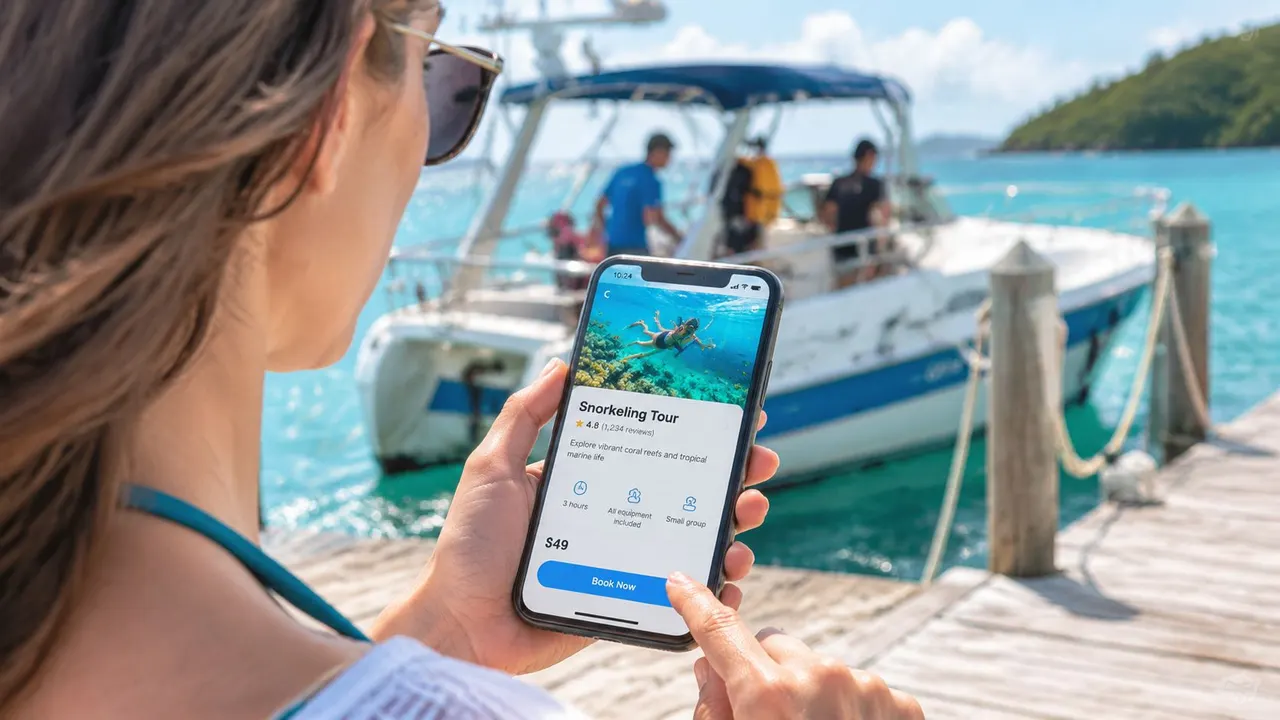
Living Ocean Tours operates guided Waikiki snorkeling experiences from Kewalo Basin, including turtle-focused and wildlife-oriented options. Hawaii Ocean Charters and Snorkel Bob's reef tours are other operators travelers may compare when looking at different schedules and budgets. The right choice is the crew whose safety briefing, site selection, and wildlife rules match your group.
What to Bring and How to Prepare
Good preparation prevents small problems from becoming the story you tell about the trip. Pack a quick-dry towel, rashguard or UV shirt, reef-safe sunscreen, a secure strap for your mask and sunglasses, and a dry bag for your phone and car keys.
Leave cotton clothing, heavy jewelry, and brand-new fins at the hotel. New fins can rub before you've learned where the pressure points are, and cotton stays cold and heavy after you leave the water.
Set up your body before boarding
Eat a light breakfast about an hour before launch and drink water instead of relying on coffee. If you're prone to seasickness, consider motion-sickness medication the night before and again about an hour before departure, following the product directions and checking with a medical professional when needed.
Children often enjoy snorkeling once their mask fits correctly. Bring a familiar mask and snorkel if you have them, because an ill-fitting rental mask can make a child blame the ocean for a gear problem.
- Cover up first: Apply reef-conscious sunscreen before you leave, then use a rashguard for additional protection.
- Secure valuables: Put phones, keys, and medication in a dry bag rather than loose pockets.
- Confirm logistics: Check pickup time and departure point the evening before.
- Arrive early: Give yourself enough time to park, find the dock, and settle your group.
- Share health information: Tell the captain about asthma, recent surgery, pregnancy, or anything else that may affect entry and buddy assignment.
For a more detailed checklist, use this Oahu snorkeling packing guide. The goal isn't to bring more gear. It's to arrive comfortable, hydrated, and ready to listen to the crew.
Responsible Reef Choices in a Crowded Bay
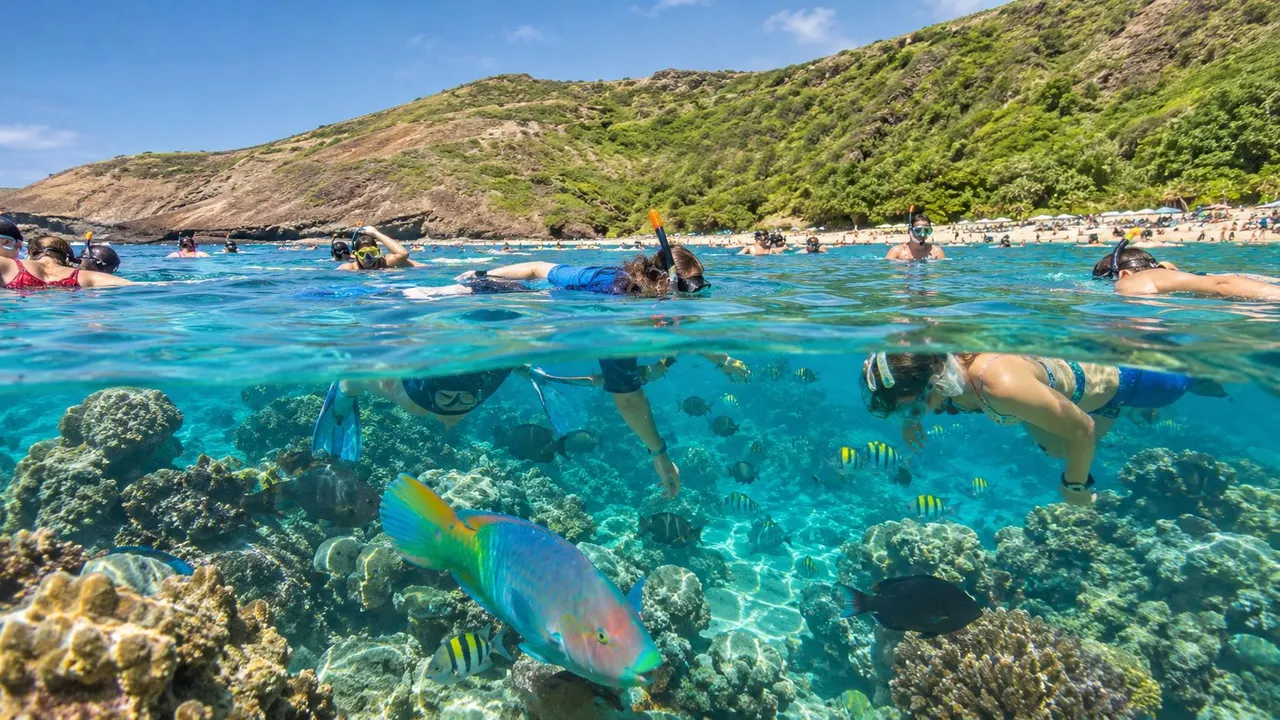
Hanauma Bay illustrates the central Honolulu snorkeling trade-off. It offers convenient access to a protected reef, but heavy use creates management pressure that visitors can't see in a single afternoon.
A 2021/2022 social carrying-capacity survey observed 327 snorkelers across monitored plots, and those snorkelers contributed 168 reef disturbances over a 9-month period, roughly one disturbance for every two snorkelers, according to Honolulu's Hanauma Bay carrying-capacity annual report. The report also found that 27% of total Bay visitors were observed swimming or snorkeling, with the highest activity concentration in the Channel sector.
Those figures don't mean visitors should stop going. They show why visitor controls, education, reservations, and spatial management matter. They also challenge the assumption that the most famous bay automatically delivers the most comfortable or responsible experience for every family.
Reduce pressure through your choices
Keep your fins off the bottom, don't stand on coral, and maintain neutral buoyancy above reef structure. Choose mineral sunscreen where appropriate, cover exposed skin with a rashguard, and avoid applying excess product immediately before entering the water.
A practical way to redistribute pressure is to combine a managed shore visit with a guided offshore outing. Offshore sites still need careful operation, but a captain can concentrate access at appropriate locations rather than sending every visitor through the same shallow entry.
Reef behavior travels with you. Practice distance, buoyancy, and clean entries at Hanauma Bay, then use the same habits at every Oahu site.
Honolulu continues to adjust access management as it studies carrying capacity and reservation systems. That means convenience may change, and a plan built around one famous bay can become fragile. A lower-pressure alternative may offer a calmer family experience while reducing the temptation to crowd a single reef.
Booking Tips and Final Questions
Book around the experience you want. If turtles are the priority, choose a boat-access site and ask how the crew handles wildlife viewing. If your group includes nervous swimmers or young children, prioritize flotation, in-water supervision, calm departure times, and a clear backup plan over a famous location name.
Confirm the departure point, parking, equipment, session length, and cancellation policy before paying. Kewalo Basin and Hilton Pier can become difficult places to improvise around, so rideshare may be simpler than driving a rental car when your group has limited time.
Questions worth asking before checkout
- Group size: Ask how many guests enter the water together and whether the crew separates groups.
- Conditions: Find out what happens if wind, swell, or visibility makes the advertised site unsuitable.
- Reef policy: Ask whether the company prohibits reef contact and gives a specific turtle-distance briefing.
- Boat movement: Confirm whether the captain anchors or drifts at the snorkel site.
- Family support: Check whether children can use float belts and whether less confident swimmers receive direct guidance.
- Motion comfort: If you're prone to seasickness, ask about the boat profile and choose an appropriate medication with professional advice.
- Cancellation terms: Read whether weather cancellations receive a full refund and how operator rescheduling works.
For families, the most useful question is often simple: “What would you choose for our swimmers on the conditions you expect?” Give the captain an honest picture of your group instead of saying everyone is comfortable in the ocean when one person is not.

The same decision framework works for shore snorkeling. Check water quality after rain, inspect the entry, watch current and sand movement, and leave when conditions stop matching your ability. Honolulu's best snorkel day may happen at a quieter site or offshore, not at the beach with the most photographs.
Living Ocean Tours offers guided Waikiki snorkeling from Kewalo Basin, with gear, instruction, safety support, and wildlife-focused trips suited to families and first-time snorkelers. Visit Living Ocean Tours to compare the Turtle Canyons Snorkel Excursion and the Deluxe Waikiki Snorkel and Wildlife Cruise, then choose the departure that fits your group and the day's ocean conditions.


