
Snorkel with Turtles Oahu: 2026 Guide to Best Spots
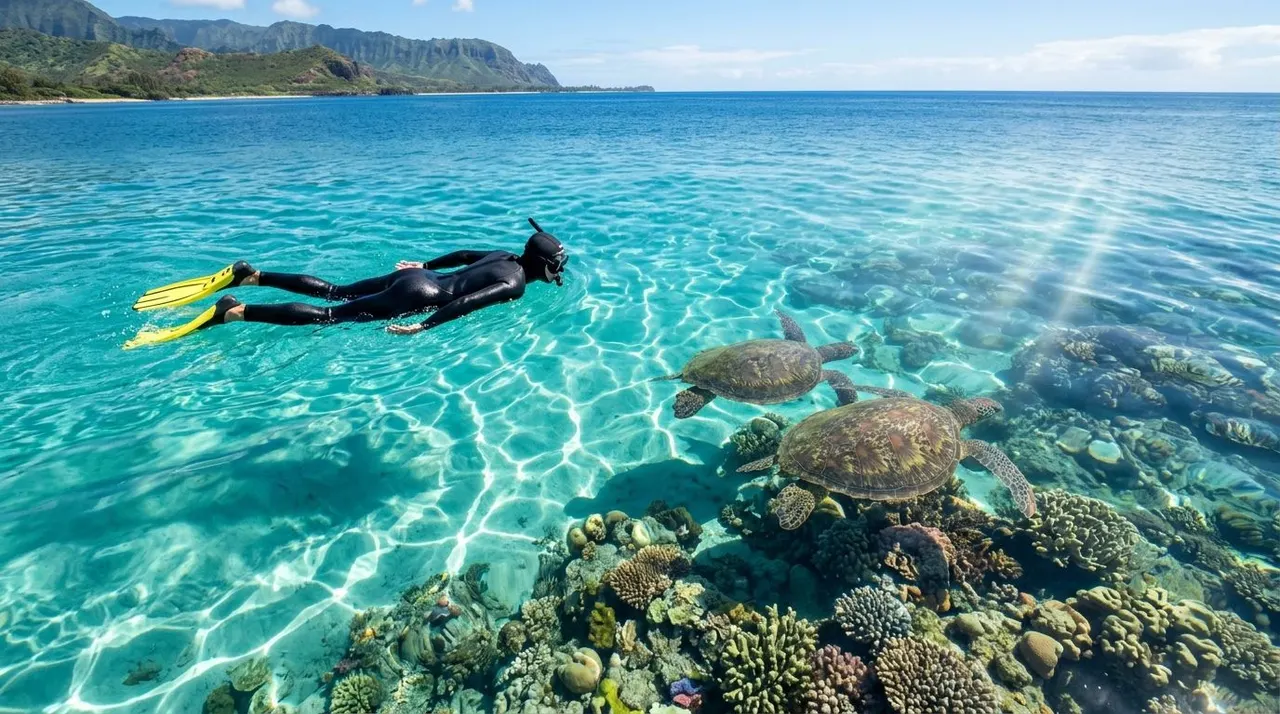
You're probably sitting in a hotel room in Waikiki right now, or planning from home with too many tabs open, trying to answer one simple question: what's the smartest way to snorkel with turtles on Oahu without wasting a vacation day on bad conditions, crowded beaches, or a sketchy setup.
That's the right question to ask.
Seeing a honu in the water is one of those Oahu moments people remember for years. But the quality of that moment depends on where you go, how you go, and whether you treat the ocean like a living place instead of a theme park. The difference between an easy, memorable snorkel and a stressful one usually comes down to access, timing, gear, and wildlife etiquette.
The Magic of Oahus Sea Turtles and Where to Find Them
You slip into clear water, look down, and a honu rises off the reef with two slow strokes. The chatter stops. Even nervous first-time snorkelers usually settle down once they see how calmly a turtle moves through the water.
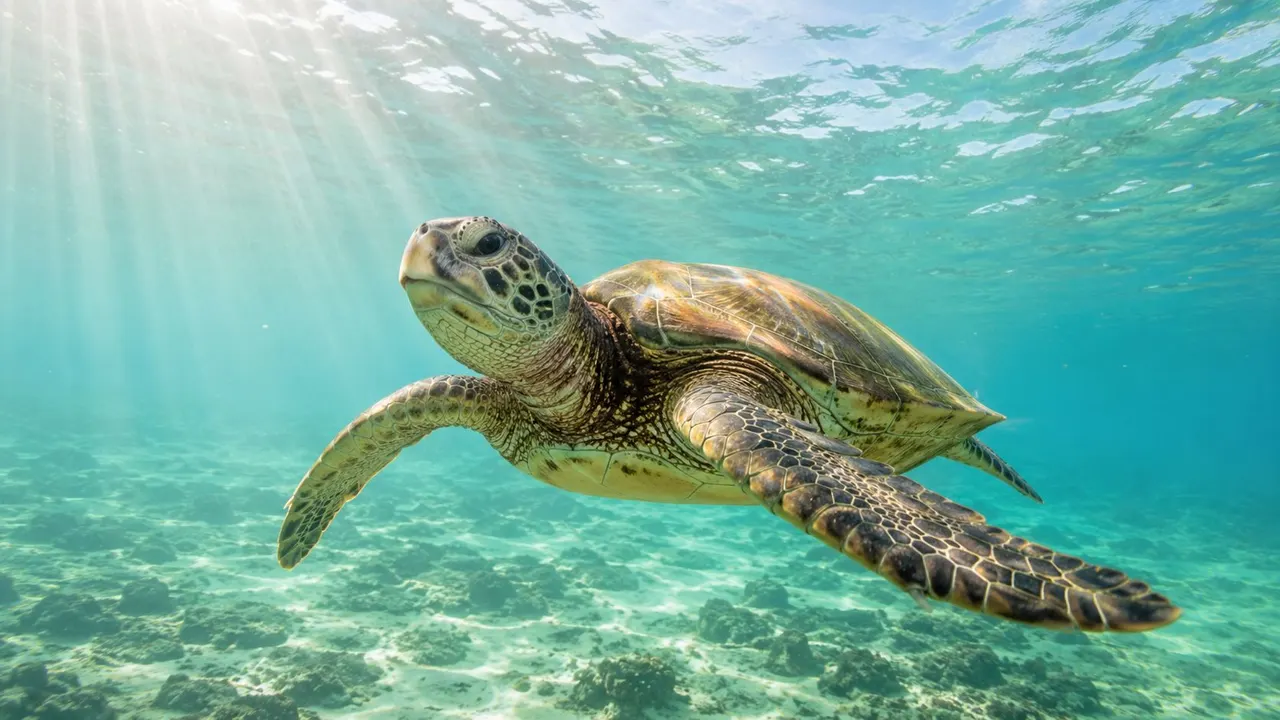
Why honu encounters stay with people
Part of the draw is simple. Hawaiian green sea turtles are big, graceful, and easy to watch without feeling like you have to chase the moment. A good encounter feels quiet and unforced, which is rare on a busy vacation day.
Oahu gives snorkelers a legitimate chance at that experience because turtles are seen regularly around the island. They are still protected wildlife, though, and the rules are strict for good reason. Do not touch them, feed them, block their path, or crowd them for a photo.
The best encounters happen when your presence changes nothing.
From a captain's point of view, that is the standard. If a turtle keeps feeding, keeps cruising, or keeps resting without adjusting to you, you are doing it right. If it turns sharply, speeds up, or surfaces away from the group, people got too close.
Where those encounters happen
On Oahu, turtle sightings usually fall into two categories. Shore spots can produce great days, especially near reef and rock where turtles feed or rest. Offshore sites reached by boat tend to offer a more controlled outing, with the reef, current, and group setup working in your favor instead of against you.
That difference matters more than many visitors expect. A beach may have turtles in the area and still deliver a poor snorkel if the entry is rough, the surge is up, or the visibility drops. A well-run offshore site can turn the same goal into a much cleaner experience because you start in the habitat instead of fighting your way out to it.
Season also changes the map. North Shore beaches that look inviting in summer can become a bad call during winter surf, especially for casual snorkelers and families. If you want a broader look at common sighting areas around the island, this guide on where to see turtles in Oahu gives a helpful overview.
One more practical point. “Seeing turtles on Oahu” is not one single experience. Watching a turtle rest near shore, catching a brief sighting through choppy water, and snorkeling over a calm reef where turtles circle below are completely different outings. The animal is the headline, but the setting decides whether the trip feels stressful or memorable.
Guided Boat Tour vs Shore Snorkeling The Smart Choice
If your main goal is to snorkel with turtles on Oahu, a guided boat trip to an offshore reef is the smarter play for most travelers. Not because shore snorkeling never works. It does. But because visitors usually want a clean, safe, high-probability experience, not a scavenger hunt with mixed conditions.
What works offshore
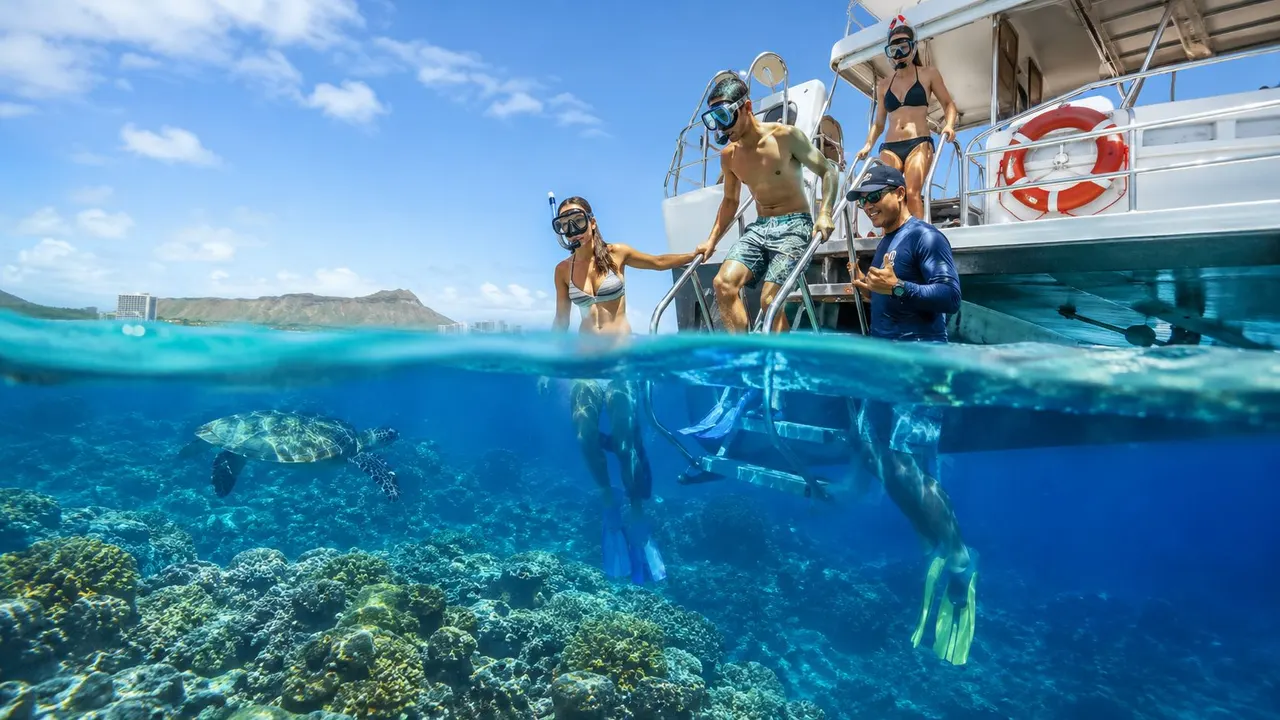
At Turtle Canyon off Waikiki, guided boat tours report a nearly 99% turtle sighting success rate, with guests typically seeing 3 to 5 Hawaiian green sea turtles per excursion, and morning water clarity often reaches 50 to 100 feet, according to this description of guided turtle snorkeling at Turtle Canyon. That same source notes the reef is accessible only by boat, which helps minimize disturbance and often means calmer, clearer conditions.
Those points matter in practice. Offshore access removes the beach-entry problem. You don't have to shuffle across lava rock, guess which channel is safest, or burn half your energy swimming out to where marine life is. You arrive where the turtles already tend to congregate.
Here's the clean comparison:
| Option | Strength | Common trade-off |
|---|---|---|
| Guided boat tour | Direct access to offshore reef and structured support | You need to choose a solid operator and follow instructions |
| Shore snorkeling | Lower-commitment setup if conditions are ideal | Conditions, visibility, and turtle sightings can be inconsistent |
Morning departures also tend to be more forgiving. Surface chop is usually lower before afternoon trade winds build, which is easier on beginners and better for underwater visibility.
Where shore plans break down
Shore snorkeling usually falls apart in one of four places:
- Entry problems. A beach may look calm from the sand but have a tricky rocky entry or surge over shallow reef.
- Visibility issues. Nearshore water can turn murky fast, especially after swell or wind.
- Distance to the action. You may need to swim farther than expected before you reach the better reef structure.
- Safety mismatch. A spot that's fine for a confident local swimmer may feel overwhelming for a family with kids or first-time snorkelers.
That's why I tell visitors to be honest about their main objective. If the goal is exploration, shore snorkeling can be fun. If the goal is a dependable turtle outing, guided access is usually the better call.
A side-by-side breakdown of Waikiki snorkeling versus tours can help if you're still deciding. It lays out the trade-off that many travelers miss. Convenience and reliability are not the same thing.
Offshore trips remove a lot of guesswork. That's a bigger advantage than people realize until they've had one bad shore day.
How to Choose the Best Oahu Turtle Snorkel Tour
You feel the difference in a tour within the first few minutes on the dock. One crew gets people checked in, fitted, and briefed without confusion. Another has guests guessing where to stand, how the gear works, and what happens once they hit the water. That early organization usually carries through the whole trip.
A good turtle snorkel tour is not just a boat ride to a reef. It is a safety system, a wildlife plan, and a guest experience built for real-world conditions around Oahu. If your goal is a dependable shot at seeing turtles at Turtle Canyon, focus less on flashy promises and more on how the operator runs the trip.
What to check before you book
Start with the basics that matter on the water. Look for USCG-inspected vessels, a clear safety briefing, and guides who are active in the water instead of watching only from the deck. Turtle-focused operators should also explain wildlife distance rules and actively keep guests from crowding the animals, as described in this Turtle Canyon snorkeling operations guide.
Then look at the trip design itself.
- Departure time: Earlier trips usually give you a calmer ride and an easier first snorkel.
- Guide involvement: Beginners and families do better when guides stay close, give clear hand signals, and help people settle down once they are in the water.
- Gear handling: Good crews fit masks carefully before the boat leaves or before anyone enters the water.
- Wildlife standards: The crew should enforce a no-touch, no-chase approach every time, not only mention it during the briefing.
Reviews still help. Read them for operating habits, not hype. The useful comments usually mention whether boarding felt organized, whether the crew stayed patient with nervous snorkelers, and whether guests got enough support to enjoy the water instead of just enduring it.
If you are comparing options, this guide to choosing a Honolulu snorkel company worth booking gives a useful checklist.
A practical example
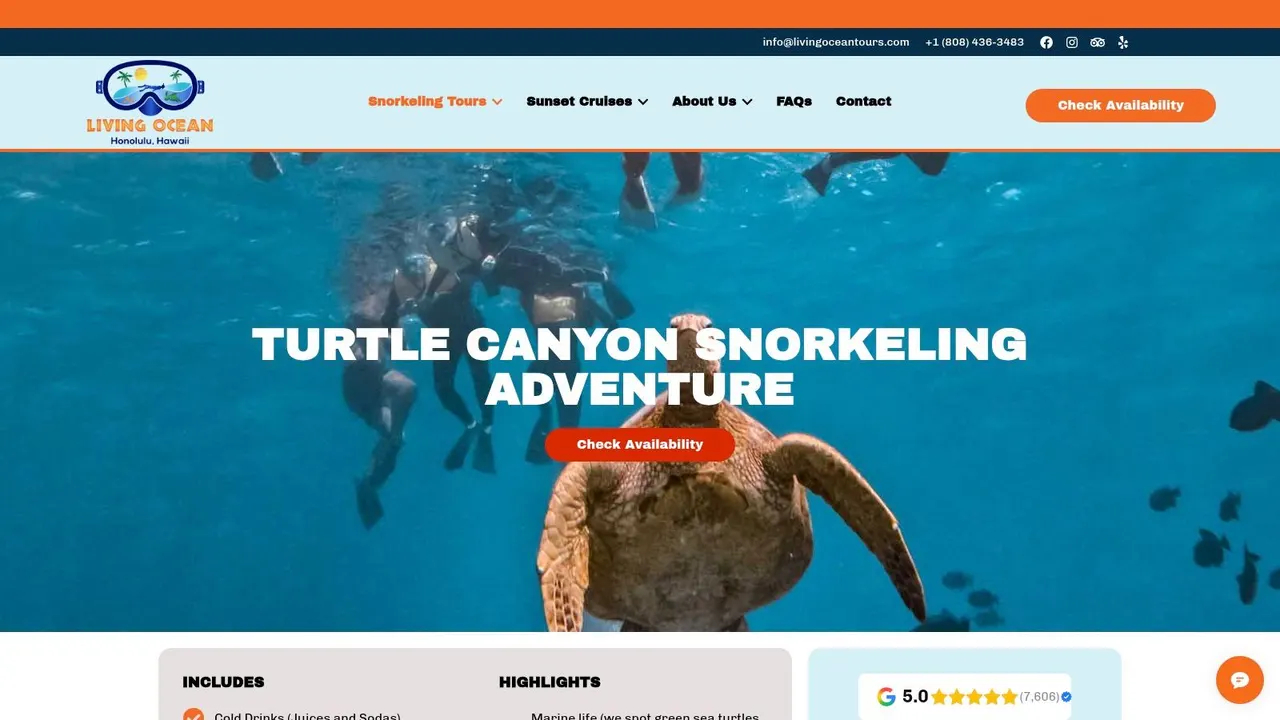
One option visitors often consider is the Turtle Canyons Snorkel Excursion. Living Ocean Tours is a highly-rated snorkel company on Oahu with many guest reviews, and the Turtle Canyons Snorkel Excursion is presented as a two-hour trip built around a meaningful block of in-water snorkeling time.
That format works well for a lot of visitors. Families usually want enough water time for everyone to relax and look around, but not such a long outing that younger kids or first-time snorkelers burn out halfway through. Shorter trips can feel rushed. Longer ones are not always better if your group is new to boats or sun exposure.
Choose the operator that does the small things well: organized boarding, careful mask fitting, clear hand signals, calm in-water supervision, and firm wildlife boundaries. Those are the details that turn a turtle snorkel from unpredictable into enjoyable.
Essential Gear and Preparation for Your Snorkel Trip
You feel the trade winds on the ride out, the reef comes into view, and then someone realizes their mask leaks or they skipped water all morning. That is how a promising turtle snorkel turns into a short, uncomfortable swim.
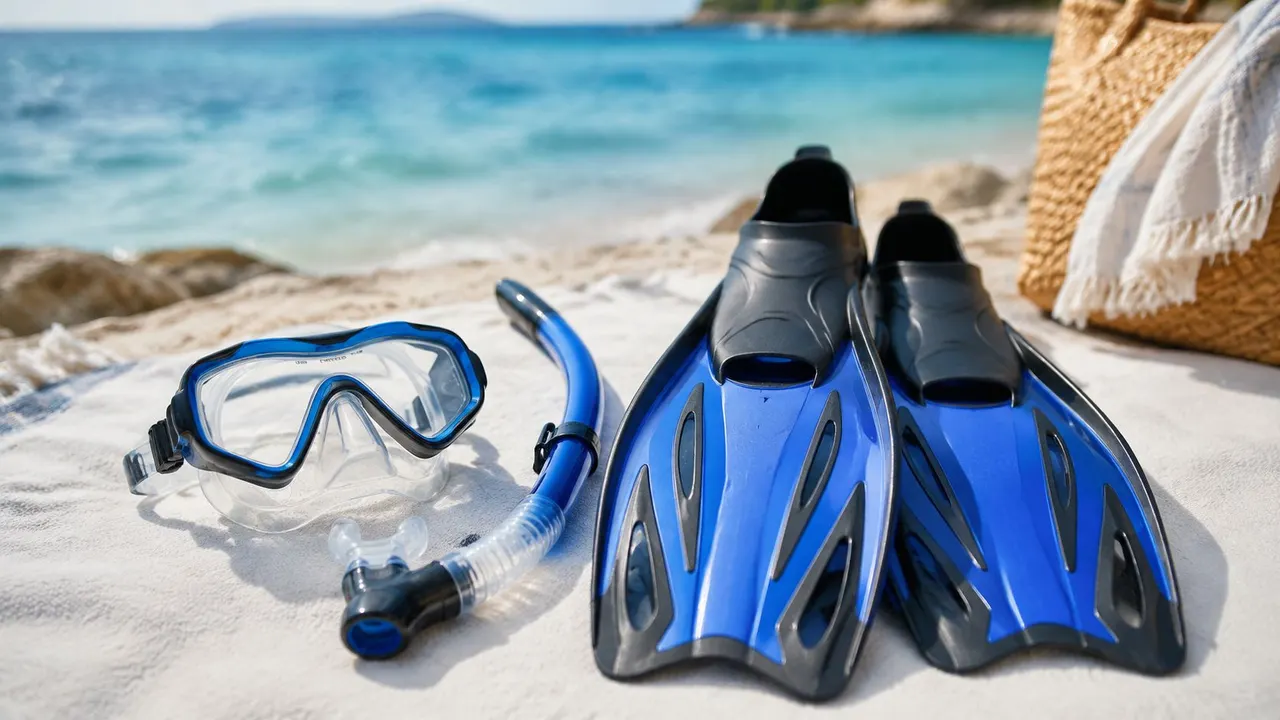
Preparation is not about bringing more stuff. It is about removing the little problems that drain your energy once you are in the water. On a guided boat trip to Turtle Canyon, the crew usually handles the major gear. Your job is to show up ready for sun, saltwater, and a boat ride.
Pack for comfort, not clutter
Keep your personal gear list simple and useful:
- Swimwear that stays put. If you have to adjust it every few kicks, it will distract you the whole time.
- A towel and dry clothes. The ride back is a lot nicer when you can warm up and dry off.
- Reef-safe sunscreen. Apply it before boarding so it has time to set.
- A rash guard or swim shirt. This cuts sun exposure and reduces how much sunscreen you need.
- Water and a light snack beforehand. Start hydrated, and avoid boarding after a heavy meal.
If you want a straightforward checklist, this Oahu snorkel packing list covers what to bring without overdoing it.
Fit matters more than fancy gear
Good snorkeling gear should fade into the background. If you keep thinking about your mask, snorkel, or fins, something needs attention.
A leaking mask is the problem I see most often. It breaks concentration, fogs up the experience, and makes beginners feel less comfortable than they should. Poorly fitted fins cause the next issue. People kick harder to compensate, burn through energy faster, and end the session early even when conditions are good.
Full-face masks also deserve a quick note. Some guests like them, but on a guided boat tour I generally favor a standard mask and snorkel because they are easier to clear, easier for crew to troubleshoot, and easier to communicate in if you need help.
Do these checks before you get in
Five minutes on deck can save your whole snorkel.
- Test the mask seal before entry. Press it gently to your face and make sure it sits cleanly without hair or straps pinching the edge.
- Adjust fins while you are still on the boat. Fine-tuning fit in the water is awkward, especially if there is surface chop.
- Listen closely to the safety briefing. Entry, exit, hand signals, and where to rest are practical details, not filler.
- Tell the crew if you are nervous, cold, or prone to seasickness. Early help is easy. Waiting until you are stressed makes everything harder.
Shore snorkeling often adds more variables here. You may be carrying your own gear across sand or rocks, guessing at entry conditions, and dealing with current without in-water support nearby. A guided boat tour removes a lot of that friction. You get fitted equipment, a controlled entry, and crew who can fix problems before they snowball.
The guests who have the best turtle snorkels are rarely the ones with the most gear. They are the ones who arrive rested, hydrated, sun-protected, and willing to speak up if something does not fit right.
Honu Etiquette Understanding and Respecting the Turtles
The fastest way to ruin a turtle encounter is to treat it like a chase. The best way to improve one is to slow down and let the animal decide the distance.
The distance rule is there for a reason
Professional guided tours at Turtle Canyon maintain a mandatory 10 to 15 foot buffer from turtles to comply with NOAA and DLNR guidance, and approaching closer than 10 feet can trigger stress-induced behavioral changes and risk federal penalties, according to this guide on Turtle Canyon snorkel rules.
That rule protects both sides of the encounter. Turtles need room to feed, rise for air, and move naturally around the reef. Snorkelers need a clear reminder that wildlife viewing isn't the same thing as wildlife interaction.
A honu may look relaxed, but that doesn't mean it wants company. If you angle in front of one, drop directly over it, or kick down to “get closer,” you've changed the moment from observation to pressure.
What respectful snorkeling looks like
Respect in the water is mostly body position and patience.
- Stay off the turtle's line. Never block where it's headed.
- Float, don't pursue. Let the encounter come to you if it happens.
- Keep your hands in. No touching, no reaching, no trying for a shell tap.
- Watch your fins near reef. Avoid standing, bracing, or scraping coral.
People often assume rules reduce the experience. In reality, the opposite is true. When snorkelers stay calm and hold position, turtles often continue their natural behavior. That gives you a better look at what you came to see.
The closer you try to get, the worse the encounter usually becomes.
There's also a safety side that visitors overlook. A large marine animal in close quarters can change direction quickly. Giving it space isn't only good etiquette. It keeps the water calmer and more predictable for everyone nearby.
If you've got kids with you, teach this before they hit the water. “We watch, we don't follow” is easier for children to remember than a long legal explanation, and it leads to much better behavior around wildlife.
Your Family-Friendly Turtle Adventure Awaits
Families usually want the same three things. They want the outing to feel safe, they want the kids or grandparents to have a real shot at seeing something memorable, and they don't want the day to depend on one strong swimmer in the group.
That's a reasonable standard.
What families and beginners should know
One issue many guides gloss over is the anxiety non-swimmers feel about having to move away from the boat. That concern is real. Living Ocean Tours has clarified that its turtle tour is best for guests with basic swimming skills, while guides and flotation aids can still provide a structured, supportive environment for beginners, as explained in this discussion of non-swimmer concerns on Oahu turtle tours.
That's the kind of honesty families need. “Guided” doesn't mean every person can float passively and still get the same view. It means the environment is more structured and supportive than trying it alone from shore.
If your group includes mixed comfort levels, be upfront before booking. Ask who the trip is best suited for. Ask how the guides assist nervous swimmers. Ask what happens if one person wants a lighter in-water experience. Clear answers usually tell you more than glossy photos.
A flexible option for mixed-skill groups
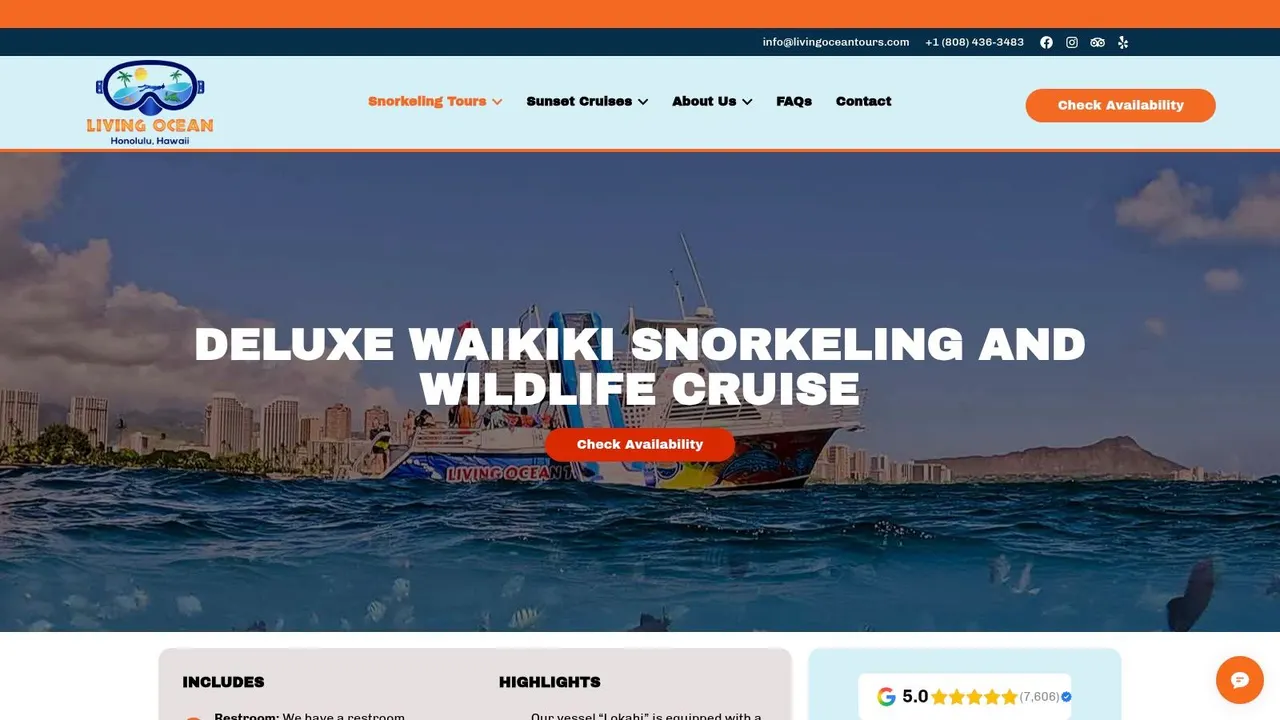
Some groups want snorkeling, but they also want more deck time, extra activities, and a setup that feels fun even for the least confident swimmer. In that case, the Deluxe Waikiki Snorkeling and Wildlife Cruise is worth a look because it offers a different kind of family day on the water.
That kind of trip can be the smarter pick when your group includes small kids, grandparents, or a few people who want ocean time without making the whole day about one snorkel stop. It gives everyone more than one way to enjoy being offshore.
If your priority is a focused turtle experience, go with a dedicated turtle snorkel. If your priority is keeping a mixed group happy, choose the format that gives everyone room to enjoy the day in their own way. Either way, the winning move is the same. Pick a professional crew, listen closely, respect the honu, and go in with realistic expectations about swimming comfort.
If you want a guided Oahu day on the water with snorkeling, wildlife viewing, and family-friendly options departing from Kewalo Basin near Waikiki, take a look at Living Ocean Tours.


