
Snorkel with Turtles Oahu: Your Guide to 2026 Adventures
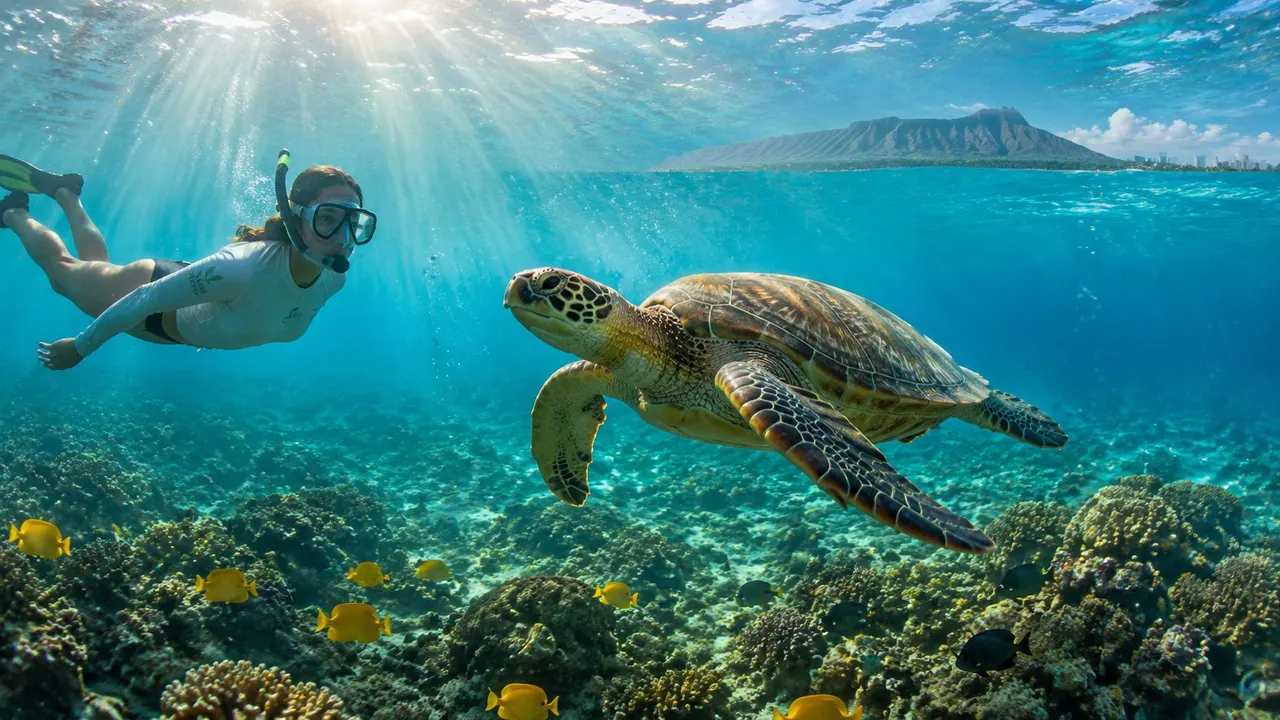
Many searching for a way to snorkel with turtles on Oahu are in the same spot. You want that clean, simple Hawaii moment. Warm water, a mask that doesn't leak, and a honu gliding past without crowds, stress, or guessing wrong.
That part is doable. The mistake I see most often is choosing the wrong format for the day. Families and first-time snorkelers often assume any beach with turtles nearby will deliver the same experience as a guided offshore snorkel. It won't. Conditions, entry style, and turtle behavior change everything.
This guide is built to help you make the right call the first time, especially if you're deciding between shore snorkeling and a boat trip off Waikiki.
Your Dream of Swimming with Turtles in Oahu
If you're planning a Hawaii trip right now, you can probably already see it. You're floating face down in clear blue water, the sun is bright above you, and a sea turtle moves through the reef like it owns the place. That image is a big reason people look up how to snorkel with turtles on Oahu in the first place.
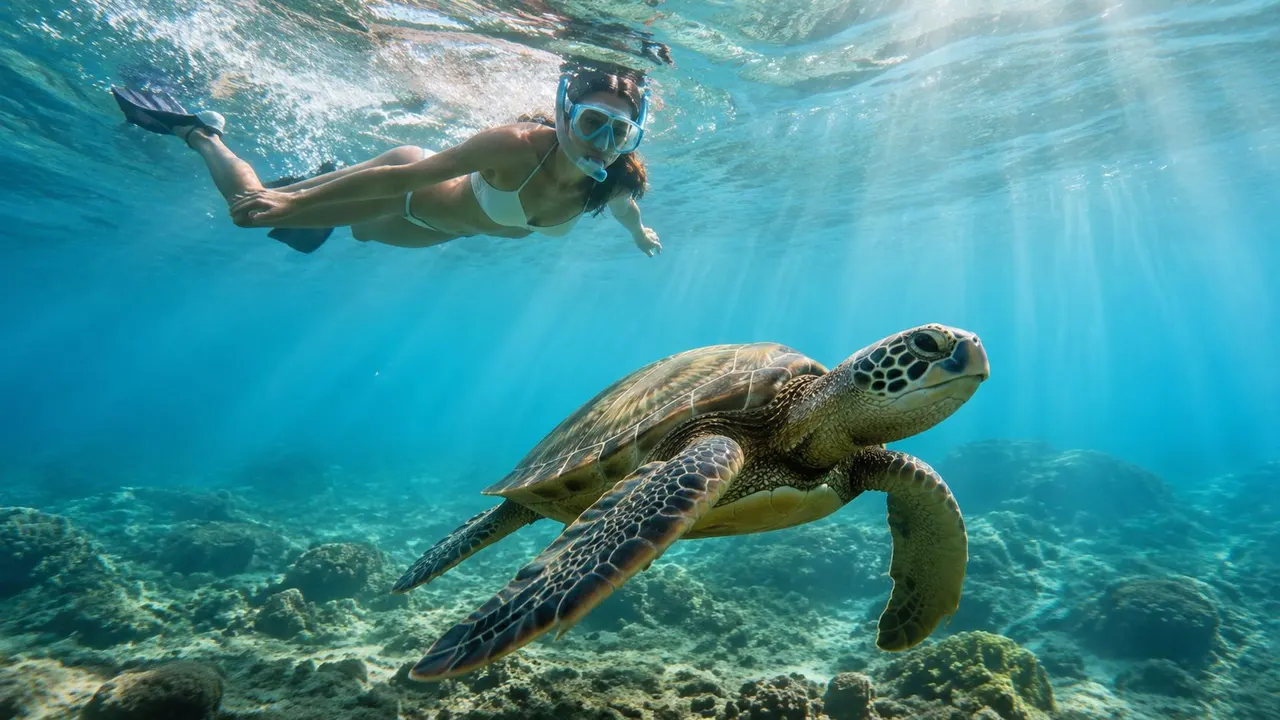
It's a real experience, but it works best when expectations are grounded in how Oahu's ocean behaves. Some visitors pick a famous beach, rent gear, and assume turtles will be waiting offshore in calm water. Sometimes that happens. A lot of times, they end up dealing with surf, distance, fatigue, and no clear idea where the turtles are spending time that day.
What makes a turtle snorkel go well
A good turtle day usually comes down to a few practical things:
- Easy ocean entry: Getting into the water calmly matters more than people think.
- A known turtle area: Wildlife is wild, but some sites are much more dependable than others.
- Clear guidance: Beginners do better when someone explains spacing, breathing, and what to do if nerves kick in.
- Respect for the animal: The best encounter is one where the turtle keeps acting naturally.
The goal isn't to get close. The goal is to be close enough to witness something natural without changing it.
If you want a broader look at where turtles are commonly seen around the island, this guide to where to see sea turtles in Oahu is a useful planning companion.
The rest of this article stays focused on what works for visitors who want a safe, memorable turtle snorkel, especially families, casual swimmers, and anyone who'd rather skip the trial-and-error version of the day.
Meet the Honu Understanding Oahu's Sea Turtles
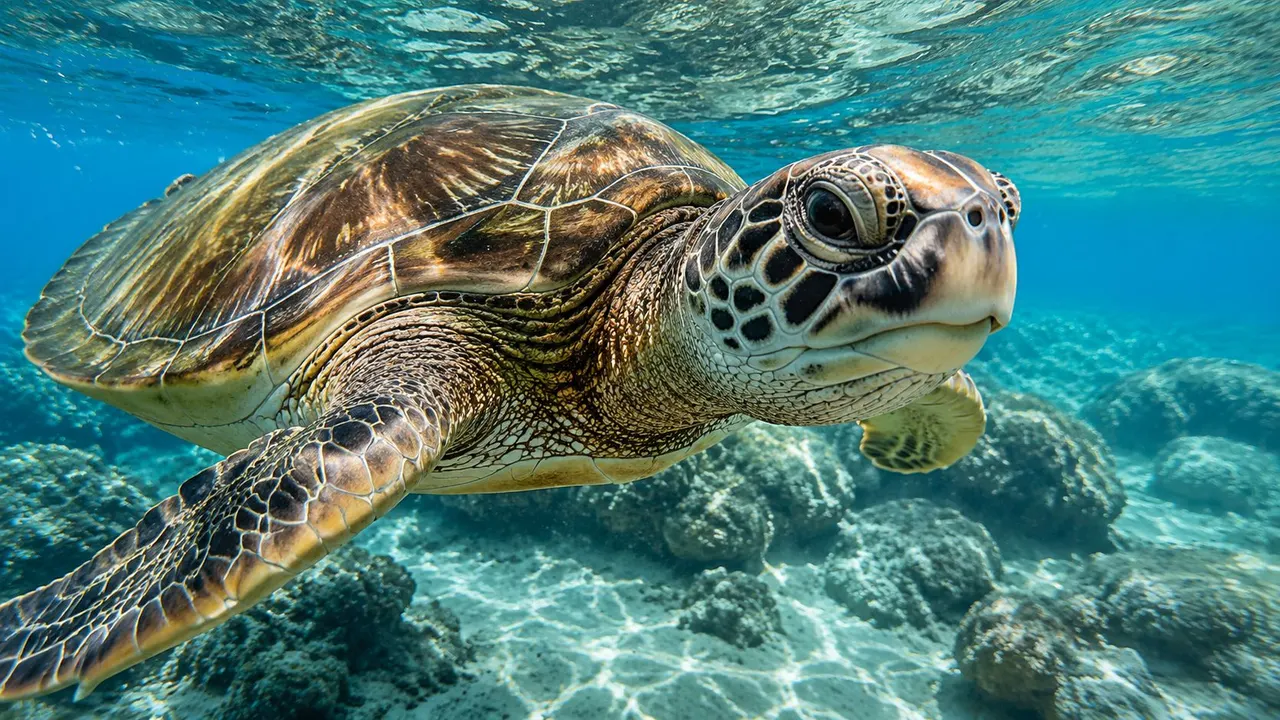
The turtles guests ask for by name are the Hawaiian green sea turtles, or honu. Slip into clear water off Oahu and see one rise for a breath a few yards away, and the whole pace of the day changes. People stop kicking so hard. Voices get quiet. Even kids tend to settle in and watch.
Why the honu matters
Honu are protected wildlife, not part of the scenery and not something to pursue for a closer photo. That matters more than many first-time snorkelers realize. A turtle that looks relaxed can still be forced to change direction, speed up, or leave a resting or cleaning area because people crowd it.
Good encounters are quiet and patient. You watch the turtle keep doing what it was already doing.
For readers who want more background on this reef area and why turtles gather there, this page on Turtle Canyon Oahu adds helpful local context.
Why turtles gather in certain reef zones
Turtles do not move around the reef at random all day. They return to places that support specific habits, including feeding, resting, surfacing, and visiting cleaning stations where reef fish pick algae and debris from their shells.
That behavior is one reason some snorkel sites are much more dependable than others. At well-known reef zones off Waikiki, crews often look for turtles in the same general areas because the habitat gives the animals a reason to be there. For families and beginners, that distinction matters. A planned stop over known habitat is very different from swimming out from shore and hoping you happen to cross paths with one.
The trade-off is simple. Shore snorkelers may reach turtle water on a great day, but they also deal with surf, current, entry stress, and a lot more guesswork. Boat crews can place guests closer to the habitat and spend more time watching turtle behavior instead of searching for it.
Respect starts before you get in
The best turtle guests are usually the easiest to brief. They understand three things right away:
- Wildlife sets the terms of the encounter.
- Distance protects the turtle and gives you a better chance to see natural behavior.
- A calm swimmer sees more than a swimmer who rushes.
I tell guests this often because it changes the whole experience. If you slow down, keep your fins under control, and let the turtle choose its own path, you usually get the kind of moment people came to Hawaii for in the first place.
Where to Snorkel With Turtles Shore vs Boat Tours
This is the planning decision that shapes the whole day. Not which mask to buy. Not what time to wake up. The primary fork in the road is shore entry or boat entry.
For some experienced swimmers, shore snorkeling can work. For families, nervous swimmers, and first-time snorkelers, a guided boat trip usually solves the biggest problems before they start.
Shore snorkeling vs boat tour at a glance
| Feature | Shore Snorkeling | Guided Boat Tour |
|---|---|---|
| Entry style | Walk in from the beach through changing surf | Start directly over the snorkel area |
| Sightings | Uncertain and highly condition-dependent | More reliable because crews go to known turtle habitat |
| Effort level | Can require a long surface swim and steady finning | Less searching, more time focused on the reef |
| Beginner fit | Harder for anxious or first-time snorkelers | Better for mixed-ability groups |
| Family logistics | Parking, surf timing, and gear handling add stress | Crew support simplifies the day |
One source focused on this exact planning mistake says the key difference for beginners is that boat entry solves the “uncertain sightings and unnecessary risk” problem, and reports a 99% turtle sighting success rate for Living Ocean Tours' boat-based Turtle Canyon excursions (boat versus shore turtle snorkeling comparison).
What works from shore and what usually doesn't
Shore entry sounds simple on paper. Park, walk in, snorkel, see turtles. In practice, it asks more of people than most travel articles admit.
- You need calm breathing early. If waves hit your face on entry and you're new to snorkeling, nerves can spike fast.
- You need enough energy to swim out and back. That matters even more when kids or older family members are involved.
- You need to accept uncertainty. A beach can look promising and still deliver murky water, current, or no turtles where you entered.
Boat entry removes a lot of that friction. You start over the reef instead of spending your best energy getting to it.
Practical rule: If anyone in your group is saying, “I'm not a strong swimmer, but I still want to try,” lean toward a guided boat trip.
Why families usually do better by boat
A family group only moves as fast as its least confident swimmer. That's normal. On a shore day, that can turn into pressure. People feel rushed entering, tired on the swim, and disappointed if conditions don't cooperate.
On a boat trip, the setup is cleaner. Crew members fit gear, explain the entry, and keep the group oriented around the reef instead of scattered along a beach line. That structure helps grandparents, kids, and casual swimmers enjoy the same outing without one strong swimmer having to manage everyone else.
If you're comparing these two formats side by side, Turtle Canyon vs Waikiki snorkeling gives a useful local breakdown.
Who should still consider shore entry
Shore snorkeling can still make sense if you're already comfortable in ocean surf, know how to read conditions, and don't mind that sightings may be inconsistent. It's the lower-cost, more independent option in theory. It just isn't the easiest route to a relaxed turtle encounter.
For most visitors searching “snorkel with turtles Oahu,” the better answer isn't “go farther.” It's “choose the right entry.”
A Deep Dive into Turtle Canyons Waikiki
A lot of families make the same planning mistake here. They hear “Waikiki turtle snorkel,” assume it will feel like an easy beach swim, and book based on location instead of entry style. Turtle Canyons works better when you treat it as an offshore reef trip with boat logistics, crew support, and open-water conditions.
Why this reef is so dependable
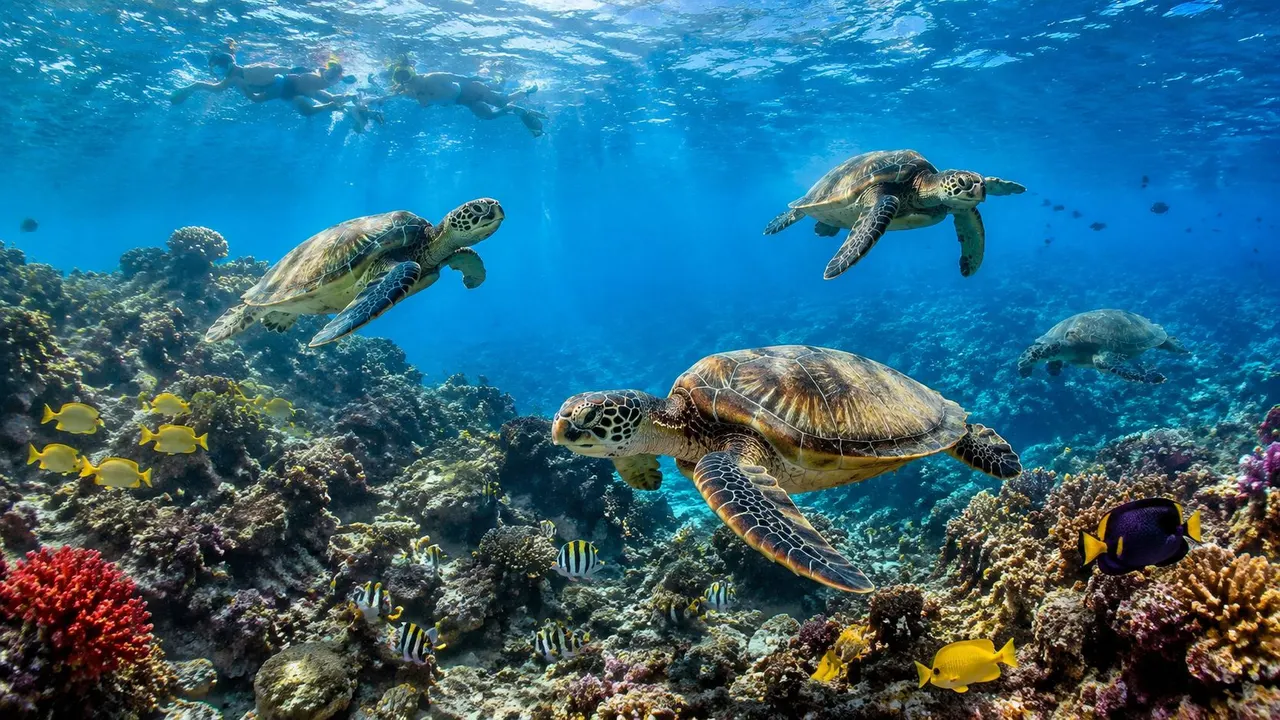
Turtle Canyons has a strong reputation because turtles use the area consistently. The reef functions as a cleaning station, where fish pick algae and debris from the turtles' shells. That repeat behavior gives guided trips a more reliable pattern than a random shoreline swim where you may spend most of your energy getting in and out.
That reliability matters most for beginners.
For a first-time snorkeler, “easy to reach” and “easy to enjoy” are not the same thing. A boat drops you near the activity instead of asking you to manage surf, footing, and a long surface swim before the actual snorkeling even starts.
What the snorkel actually feels like
Turtle Canyons is usually an open-ocean snorkel over deeper water, not a stand-up lagoon. You may be floating above blue water with reef structure below, watching turtles move through the area while the boat and crew keep the group oriented.
A published trip overview for the site describes water depths around 25 to 30 feet and a typical in-water window of under an hour on a roughly 2.5-hour outing dock to dock (Turtle Canyon snorkel trip details). That setup is one reason boat tours tend to be the safer, more dependable choice for families and casual swimmers. People spend their energy snorkeling, not fighting the entry.
The guests who do best here are rarely the strongest athletes. They are the ones who settle their breathing early, use flotation before they get tired, and stay relaxed on the surface.
Why guided boat access matters at Turtle Canyons
This site is offshore, and that changes the risk profile. Crew members can assess conditions, brief the group, time entries, watch for drift, and help nervous snorkelers before small problems turn into stressful ones. That structure is a real advantage for kids, older guests, and anyone who does not snorkel often.
Currents are one of the details people underestimate. Conditions can change the feel of the snorkel fast, even on a beautiful Waikiki morning. This overview of Turtle Canyon snorkel currents and conditions gives a useful site-specific look before you book.
For travelers who already know an offshore turtle snorkel is the right fit, Living Ocean Tours offers a factual access option through its Turtle Canyons snorkel trip.
The Golden Rules of Turtle Snorkeling
Good turtle etiquette isn't extra. It's the whole foundation of the experience. If you want a calm encounter, you have to act like a calm guest in the turtle's space.
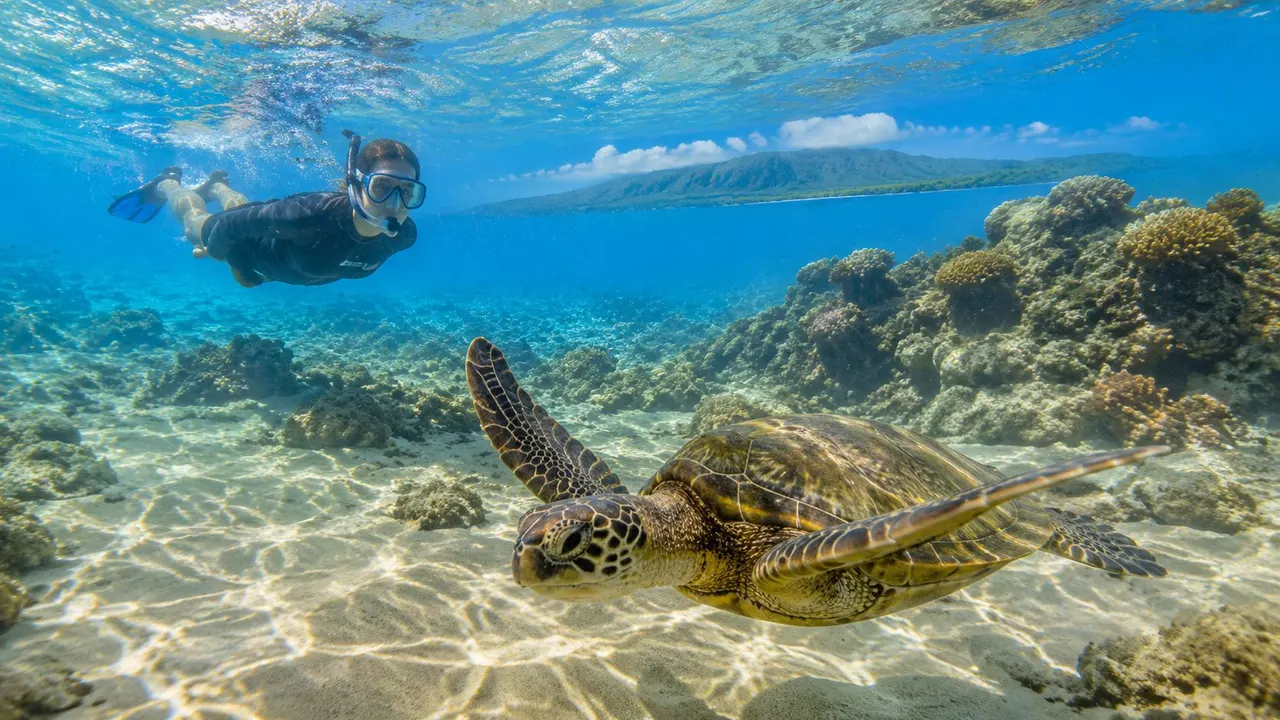
Start with distance
The single biggest rule is simple. Maintain at least 10 feet (3 m) from sea turtles. Local guidance also makes clear that touching or chasing them is illegal, and that snorkelers should avoid blocking their path or interfering with natural behavior (Hawaii Activities turtle snorkeling guide).
That distance isn't arbitrary. Turtles need room to surface, breathe, and use the cleaning station naturally. Crowding them changes how they move.
Learn the signs you're too close
A lot of visitors think obvious aggression is the warning sign. Usually the earlier clues are quieter.
One educational source on turtle snorkeling behavior notes that yawning or quick flipper swings are stress signals, not friendly behavior, and that responsible snorkelers should leave turtles a clear path to the surface and never chase or block them (snorkeling with turtles etiquette and behavior).
Watch for these patterns:
- Yawning: Back off. Don't treat it like a photo cue.
- Quick flipper movement: The turtle is telling you your position is a problem.
- A direct path upward: Leave it open. Turtles are air-breathing reptiles and need space to surface.
What respectful movement looks like in the water
You don't need fancy technique. You need restraint.
- Stop kicking hard when you spot a turtle. Fast finning closes distance before you realize it.
- Float to the side, not in front. Never become an obstacle between the turtle and the surface.
- Let the turtle decide the spacing. If it glides away, that's the end of that pass.
- Keep hands to yourself. No touching, no reaching, no trying to guide the moment.
A perfect turtle encounter ends with the turtle acting like you were never there.
Common mistakes that ruin the moment
The most common errors are easy to avoid once you know them:
- Crowding for a photo
- Following from behind
- Dropping down directly above the turtle
- Hovering in its surfacing lane
A respectful snorkeler gets better views anyway. Turtles stay calmer around people who drift, observe, and leave them room to move.
Choosing the Best Oahu Turtle Snorkel Tour
A family books the cheapest turtle snorkel they can find, then realizes too late that one child is nervous in open water, one adult has never used fins, and the plan depends on a long swim from shore. That is the planning mistake I see all the time. The better choice for many visitors, especially beginners, is a boat tour with crew support, easy water entry, and a site plan built around real ocean conditions.
What to look for before you book
Start with the part that affects safety and comfort the most. How guests get into the water.
For families and mixed-ability groups, boat tours usually solve problems that shore entries create. There is no scramble over rock, no long surface swim to reach productive reef, and no need to judge surf, current, and entry timing on your own. Guests step aboard in Waikiki, get fitted with gear, hear the briefing, and enter the water with the crew watching.
That setup gives beginners a much better first snorkel.
The next filter is crew behavior. A good operation does more than hand out masks. The crew should fit gear carefully, explain what the site feels like in the water, identify who needs flotation before entry, and keep the group from drifting into poor positions around turtles. If an operator cannot explain how they manage nervous swimmers, I would keep looking.
Questions worth asking any operator
Ask direct questions before you book:
- How do you support first-time snorkelers once they are in the water?
- What flotation options do you carry, and who uses them?
- How do you handle guests who panic or want to get back on the boat early?
- How many crew members are actively watching snorkelers in the water?
- Do you choose the snorkel spot based on conditions that day, or run the same plan every time?
Those answers tell you whether the trip is built for real guests or just for marketing photos.
How to judge the trade-off
Shore snorkeling can work for confident swimmers who know Oahu conditions, travel light, and are comfortable calling off the plan if the entry looks poor. It is often cheaper. It is also less forgiving. A rough entry, stronger-than-expected current, or limited parking can turn a simple outing into a stressful one before you even see the reef.
Boat tours cost more, but the value is clear for many visitors. You get a controlled launch point, onboard support, shorter effort to reach the snorkel area, and a crew that can adjust to the day. For kids, hesitant swimmers, and anyone who wants a higher-confidence turtle outing, that trade is usually worth it.
If you want a side-by-side local breakdown, this guide to the best Turtle Canyon snorkel tour does a good job explaining what separates one trip format from another.
A practical option for Waikiki visitors
For travelers staying near Honolulu and Waikiki, Living Ocean Tours is one operator to consider for Turtle Canyons. The fit is strongest for visitors who want crew support, boat access, and a beginner-friendly format rather than a do-it-yourself shore plan. If your group wants a broader snorkeling outing instead of a turtle-focused trip, the Deluxe Waikiki Snorkeling and Wildlife Cruise is another option to review.
Frequently Asked Questions About Turtle Snorkeling
What is the best time of year to see turtles in Oahu
Turtles can be seen off Oahu throughout the year, so trip planning usually comes down to ocean conditions, your group's comfort level, and how much support you want in the water.
For families and first-time snorkelers, the common planning mistake is choosing a shore entry just because it looks cheaper or simpler. In practice, a boat tour is usually the more reliable option because the crew can choose the best area for the day's conditions and help guests from the moment they gear up.
What is the best time of day for a snorkel tour
Morning trips are often the easiest fit for beginners. Winds and surface chop are often lighter earlier in the day, and guests tend to be less tired than they are after a full beach day.
That said, the schedule matters less than the operation. A well-run boat tour with a clear briefing, easy water entry, flotation, and attentive crew support will usually give beginners a better experience than a shore plan with no help once you step off the sand.
What if I'm not a strong swimmer
Say that before the boat leaves the harbor. Good crew members can set you up with the right flotation, check your mask fit, and talk you through how to enter and exit the water without rushing.
I always tell nervous guests the same thing. You do not need to be an athlete to enjoy turtle snorkeling, but you do need to be honest about your comfort level. That is another place where boat tours have a real advantage over shore entries for beginners. There is crew support close by, a controlled entry point, and a clear plan if someone gets tired or decides they have had enough.
What other marine life might I see at Turtle Canyons
Sea turtles are the headline, but they are not the whole show. You may also see reef fish, coral heads, and other small marine life around the cleaning stations and reef structure.
Every trip is a little different. Visibility, swell, sunlight, and current all affect what shows up and how easy it is to see.
If you want a guided day on the water with turtle snorkeling, beginner support, and other Waikiki ocean experiences, take a look at Living Ocean Tours.


