

You’ve booked an Oahu snorkel trip. You’re excited about clear water, reef fish, and the chance to spot Hawaiian green sea turtles. Then the practical question hits. If you can’t wear your glasses in the water, how are you supposed to see any of it clearly?
That concern is common, and it’s fixable. Modern prescription snorkeling goggles and snorkel masks make it possible to enjoy the reef without guessing whether that shape in front of you is a turtle, a rock, or your own fin. For a lot of guests, clear vision changes the whole day. You relax more, move more confidently, and enjoy what you came to Hawaii to see.
Don't Let Blurry Vision Spoil Your Snorkel Adventure
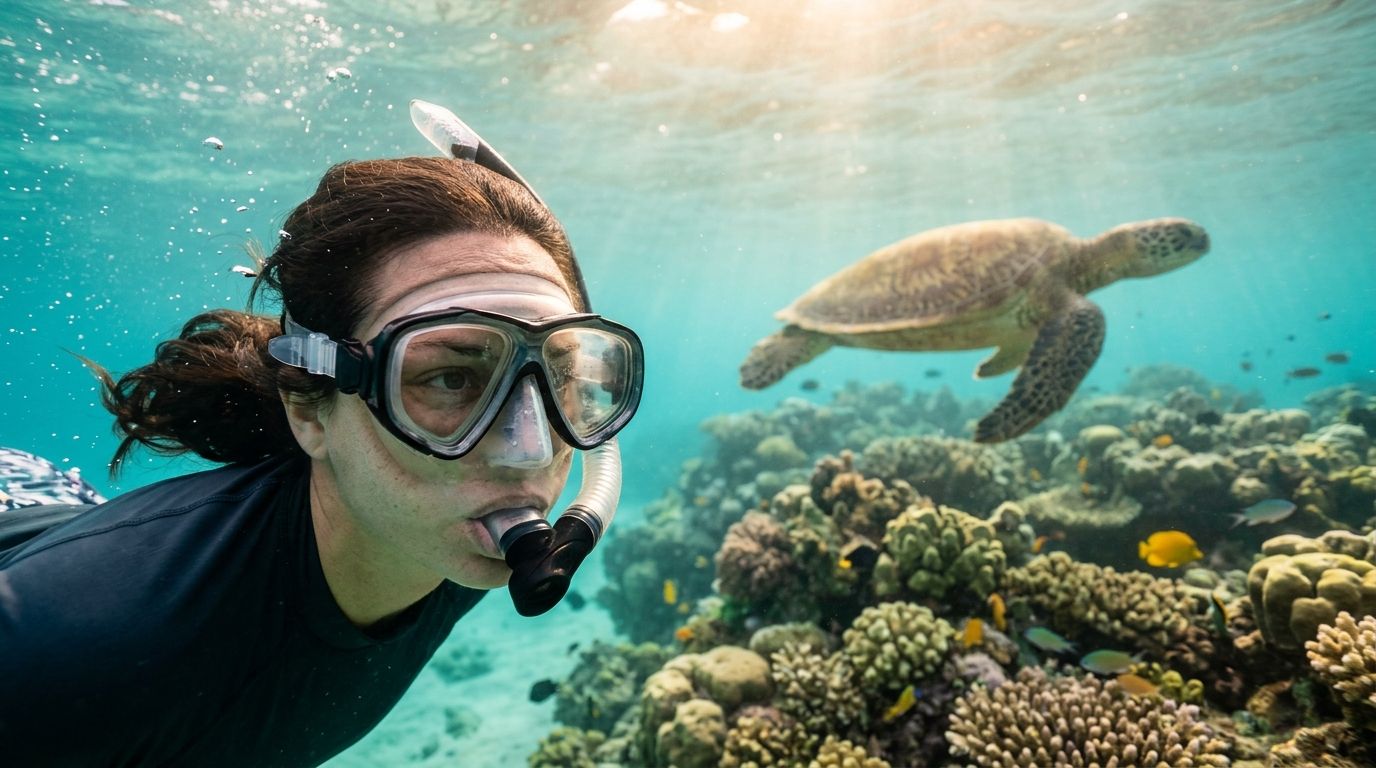
A blurry snorkel isn’t just disappointing. It changes how people move in the water. When guests can’t see clearly, they hesitate, lift their heads more often, and miss the details that make Oahu snorkeling special.
That’s one reason this category has grown so quickly. The global prescription goggles market was valued at USD 7.1 billion in 2024 and is projected to reach USD 10.7 billion by 2034, with growth tied in part to water sports participation and the recognition that clear vision matters for both safety and enjoyment, according to Global Market Insights on the prescription goggles market.
What blurry vision looks like on a snorkel tour
On land, many people can get by without perfect correction for a short walk or a beach day. Underwater, small details matter more. Fish blend into coral. Surface glare makes shapes harder to read. A guide can point out a turtle, but if your vision is soft, you may still miss the animal until it’s already moving away.
For first-time snorkelers, that can feel discouraging. For experienced swimmers, it’s frustrating.
Practical rule: If you rely on glasses to enjoy the view on shore, you’ll probably enjoy the reef far more with prescription correction in your mask.
The good news for Oahu visitors
You don’t need to be a diver, gear expert, or strong swimmer to solve this. There are simple options for vacationers, including stock prescription masks, custom masks, and insert systems that work well for many travelers.
What matters most is choosing the option that fits your trip, your prescription, and your comfort in the water.
Understanding Prescription Snorkel Masks
Think of a prescription snorkel mask as underwater eyeglasses built into a snorkel mask. It isn’t the same as pool swim goggles. For open-water snorkeling, you need a mask covering the eyes and nose, seals well against the face, and gives you a stable field of view.
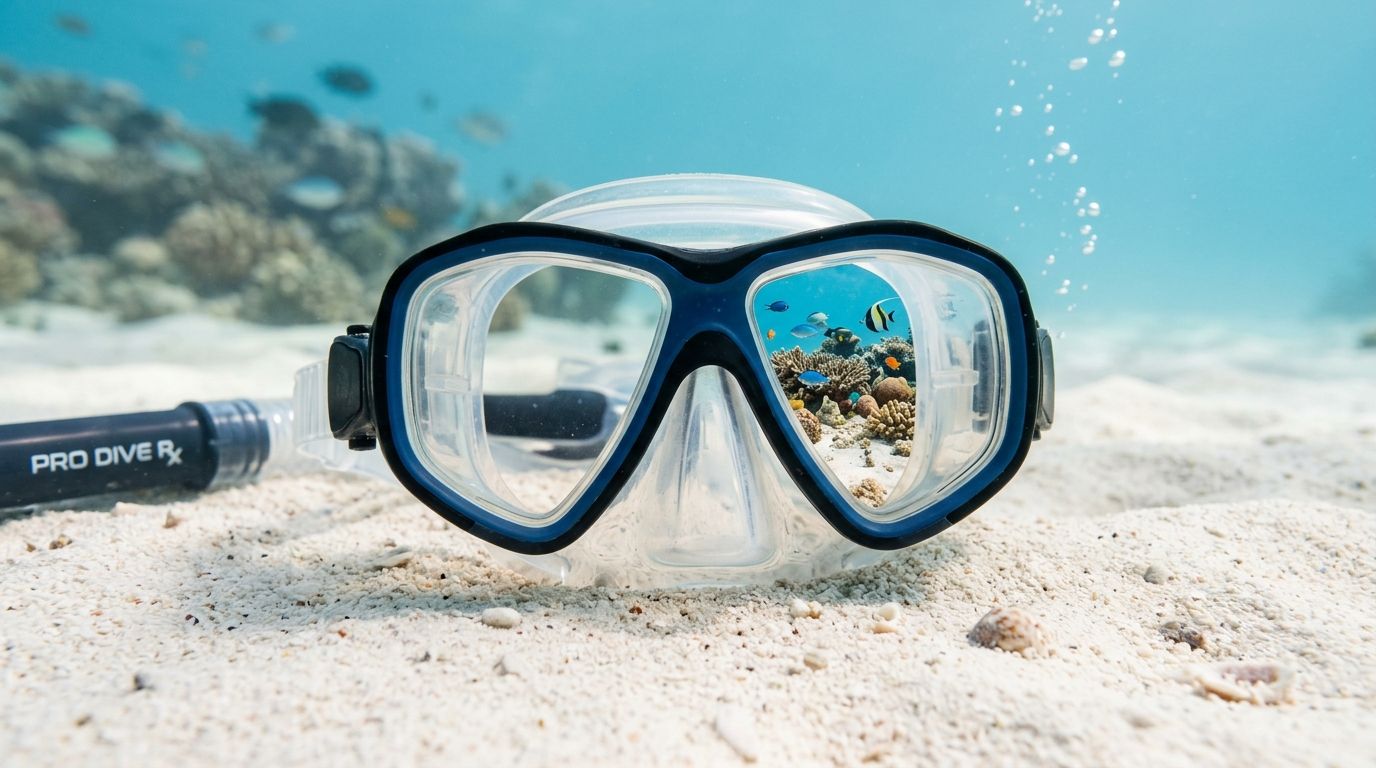
A proper snorkel mask also uses materials made for impact resistance and optical clarity. Prescription snorkel masks commonly use tempered glass, which shatters into small, blunt granules to reduce injury risk. They can correct prescriptions from -8.0 to +4.5 diopters and often include anti-reflective coatings and UV blockers, which matter in bright Hawaiian conditions, as described in this guide to a prescription snorkel mask and lens features.
Why standard swim goggles aren't the same thing
Pool goggles sit close to the eyes and are made for lap swimming or short recreational use. Snorkeling in Waikiki or off the south shore is different. You’re floating face-down, scanning a larger area, and dealing with sun glare, saltwater, and longer time in the water.
A snorkel mask gives you:
- A nose pocket so you can equalize pressure if needed
- A wider viewing area for fish, coral, and turtles
- A better seal for ocean use when fitted properly
- Safer lens materials than casual novelty gear
If you’re comparing mask types, this overview of full-face snorkel mask use on Oahu is useful background before you buy anything.
What to look for first
Before you worry about brand names, start with three basics:
- Lens material: Tempered glass is essential for ocean snorkeling.
- Prescription range: Make sure the available correction matches your needs.
- Face seal: Even perfect optics won’t help if the mask leaks every few minutes.
The best mask on paper becomes a bad mask fast if it doesn’t seal on your face.
Inserts vs Integrated Lenses The Two Main Options
Most travelers choosing prescription snorkeling goggles end up deciding between integrated lenses and prescription inserts. Both can work. The right choice depends on how exact your prescription is, how often you snorkel, and whether this is a one-trip solution or gear you’ll keep using.
Prescription Mask Options At a Glance
| Feature | Integrated/Bonded Lenses | Prescription Inserts |
|---|---|---|
| How it works | Prescription lenses are built into or bonded to the mask lens area | A prescription frame or insert sits inside a standard mask |
| Visual feel | Clean, simple setup with no extra interior frame | Can work very well, but some users notice more edge distraction |
| Best for | People who want a dedicated snorkel mask | Travelers who want flexibility or easier updates |
| Astigmatism | May be less ideal for complex corrections than a more exact insert setup | Often a stronger option when precise alignment matters |
| Travel convenience | One mask, one solution | Insert can sometimes move between compatible masks |
| Vacation practicality | Great if the mask already fits your face perfectly | Useful if you want a more modular setup |
When integrated lenses make more sense
Integrated or bonded prescription lenses are appealing because they feel straightforward. You put on one mask and go. For travelers with a simple prescription and a mask that already fits well, this can be the cleanest experience.
They’re especially good for people who snorkel often enough to justify owning a dedicated setup. If you already know what mask shape seals on your face, integrated lenses can be a very satisfying long-term solution.
When inserts are the smarter call
Inserts are often the more flexible option. If your prescription changes, or if you want the possibility of using the same correction setup with another compatible mask later, inserts can save hassle.
They also deserve a hard look if you have astigmatism or a prescription that doesn’t fit neatly into a simple stock lens. For many people, inserts handle complexity better than off-the-shelf bonded lenses.
If you’re sorting out what works when snorkeling with eyewear, this article on Waikiki snorkeling with glasses covers common real-world issues.
A note on full-face masks
Full-face snorkel masks come up a lot with beginners because they look approachable. They can accommodate nearly any prescription via inserts, but they also bring trade-offs. In humid places like Waikiki, they can fog more easily, and they’re often a poor match for beards or high astigmatism. Recent safety concerns and increased regulation have also made traditional mask styles a more reliable choice for guided tours, according to this review of prescription options for strong plus and full-face snorkel masks.
For most guided snorkel outings, a traditional two-window or low-volume mask is the safer bet than chasing convenience with a full-face design.
Should You Just Wear Contact Lenses
A lot of visitors ask this because contacts seem easy. You already own them. You already know how they feel. For a beach day, it sounds simpler than shopping for prescription snorkeling goggles.
In practice, contacts are the backup plan, not the ideal plan.
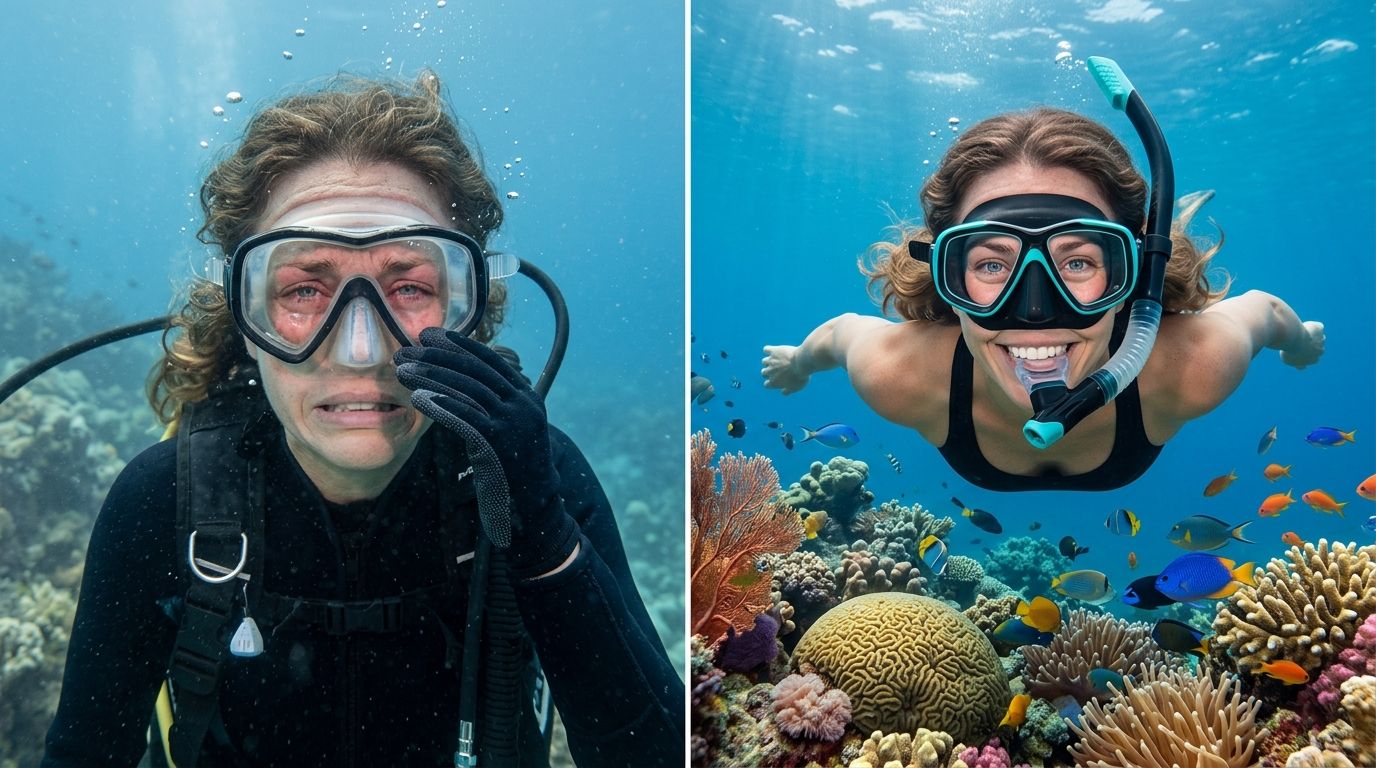
Contact lenses can desiccate up to 25% faster underwater, which can leave your eyes dry and uncomfortable. More importantly, they can trap ocean bacteria against the cornea and increase the risk of serious eye infections, which is why dedicated prescription masks are often the safer long-term choice, as noted by SportRx in its prescription scuba mask guide.
Why contacts feel riskier on the boat
Contacts can work until something small goes wrong. A mask floods. You clear it. Saltwater gets in your eyes. Now one lens feels off, or worse, disappears. That can turn a smooth morning snorkel into a distracted one.
Common problems include:
- Dryness: Saltwater and wind make contacts less comfortable.
- Lens loss: A flooded mask or rubbing your eye can end the day early.
- Eye irritation: Even minor irritation feels bigger in open ocean conditions.
- Trip disruption: Once your vision is uneven, many people stop enjoying the water.
For more on that trade-off, this practical look at snorkeling in Oahu with contact lenses is worth reading before your trip.
When contacts still get used
Some experienced snorkelers do wear daily disposable contacts under a standard mask. If you already know your mask fits perfectly and you’re comfortable clearing it, that may be acceptable for you. But it’s still less reliable than putting the prescription into the mask itself.
That difference matters most for beginners, kids, and anyone who wants a low-stress tour.
Clear vision is only part of comfort. Not worrying about your eyes the whole time matters just as much.
Finding Your Perfect Prescription Mask for an Oahu Tour
The right mask isn’t always the most expensive one. It’s the one that matches your prescription, seals on your face, and travels well enough to survive the flight to Honolulu.
Start with your actual prescription
Bring the current numbers from your eyeglass prescription when you shop. For many vacation snorkelers, stock step-diopter lenses are enough for simple nearsighted or farsighted correction. If your prescription is more complex, especially with noticeable astigmatism, custom options or inserts are usually worth the extra planning.
If you’re shopping for bifocals or readers, don’t guess. Underwater frustration usually comes from people rounding too aggressively or ordering a mask without checking the fine print on what that model can support.
Check pupillary distance and fit
Pupillary distance matters more than many travelers realize. If the optical centers don’t line up well with your eyes, the mask can feel “off” even when the prescription itself is technically correct.
On the fit side, I’d focus on these basics:
- Try the mask on without the strap first. Press it gently to your face and inhale lightly through your nose. A good mask should hold for a moment.
- Watch your mustache or beard line. Even a good prescription setup leaks if facial hair breaks the seal.
- Check the skirt near the nose and cheekbones. Those are common leak points on rental and travel masks.
- Avoid buying only by looks. A low-profile mask that seals beats a stylish one that constantly floods.
Rent or bring your own
For a short trip, renting can be practical if the operator has suitable options. For travelers with a more exact prescription, bringing your own mask usually removes a lot of uncertainty. You’ve already tested the fit, you know the correction works, and you’re not hoping the right diopter is available that morning.
Living Ocean Tours offers guided snorkeling departures from Kewalo Basin near Waikiki, and for guests planning ahead, it’s worth checking gear details in advance through Living Ocean Tours snorkel options in Waikiki.
A practical approach works best. If your prescription is mild and your trip is short, rental or stock options may be enough. If your vision needs are more specific, bring your own tested mask so your snorkel day starts smoothly.
Vision Solutions for the Entire Family
Family snorkel trips rarely involve just one kind of vision problem. One person is nearsighted, one has astigmatism, one teenager wears contacts, and a grandparent needs help seeing both the reef and the gear in their hands.

For older adults, the near-vision issue is especially common. Over 80% of adults experience presbyopia by age 50, and custom bifocal snorkel masks can cost upwards of $200. Precise pupillary distance measurement is important to avoid headaches and eye strain on 2-3 hour excursions, according to this guide on prescription snorkel masks for presbyopia and family use.
What works for parents and grandparents
Bifocal or reader-style snorkel masks can make a big difference for travelers who need to see at two distances. The upper area helps with distant marine life. The lower area helps when checking a strap, reading a small gauge, or looking at camera controls.
That sounds like a niche feature until you use it. Then it feels obvious.
If your family is planning a turtle-focused outing, this guide to turtle snorkeling on Oahu with glasses can help narrow the right mask style before the trip.
What to do for kids and mixed-experience groups
Children usually do best with simple, durable solutions. A perfect prescription means less if the mask is uncomfortable or hard to adjust. For kids, I’d favor:
- A straightforward mask shape that seals easily
- Correction that’s close and usable rather than overly complicated
- Plenty of pre-trip practice in a pool if possible
For mixed-age groups, consistency helps. If everyone uses gear they already understand, the tour starts calmer and the first few minutes in the water go much better.
A family snorkel goes smoother when each person can see well enough to stay relaxed, follow instructions, and enjoy the wildlife instead of fussing with gear.
How to Care For and Travel With Your Mask
Prescription snorkeling goggles are travel gear, but they’re also optical gear. Treat them like both.
Packing tips that prevent expensive mistakes
Don’t toss a prescription mask loose into a checked bag. Put it in a protective case, then pack that case in a spot where it won’t get crushed by shoes, toiletry bags, or camera gear. If it fits, carry it on.
A few habits help a lot:
- Rinse with fresh water after every snorkel. Salt dries on the skirt, buckles, and lens edges.
- Let it air dry out of direct heat. A hot car or full sun can age straps and skirt material faster.
- Keep the lenses separate from hard objects. Keys, chargers, and sunscreen caps are scratch hazards.
- Use anti-fog correctly. A clean lens and a good rinse matter more than dumping in random products.
If fogging keeps ruining your view, this practical page on snorkel mask defogging covers the simple fixes that usually solve it.
Before you leave for the harbor
Do one full fit check in your hotel room. Make sure the strap adjusts smoothly, the buckle isn’t twisted, and the prescription still feels right when you look across the room and down at something in your hand.
That minute of prep beats troubleshooting on the boat.
See Oahu's Underwater World in High Definition
The difference between “I went snorkeling” and “I had an amazing snorkel” often comes down to one thing. You could see what was in front of you.
Prescription snorkeling goggles solve a practical problem, but they also change the feel of the entire experience. The right mask lets you notice reef detail, track fish movement, and spot turtles sooner. It also makes the day less tiring because you aren’t squinting, guessing, or worrying about contacts.
The simple takeaway
If you snorkel with glasses on land, plan your underwater vision before your tour. Choose between inserts and integrated lenses based on your prescription and how often you’ll use the mask. If you’re traveling with family, think about everyone’s needs early, especially kids and adults who need bifocals.
A little preparation goes a long way in Hawaii. Clear vision lets you spend your time watching the reef instead of fighting your gear.
For travelers who want a guided Oahu snorkel with instruction, gear, and a family-friendly setup near Waikiki, Living Ocean Tours is a practical place to start planning.


