
Oahu Whale Season Guide: When, Where and How to Watch
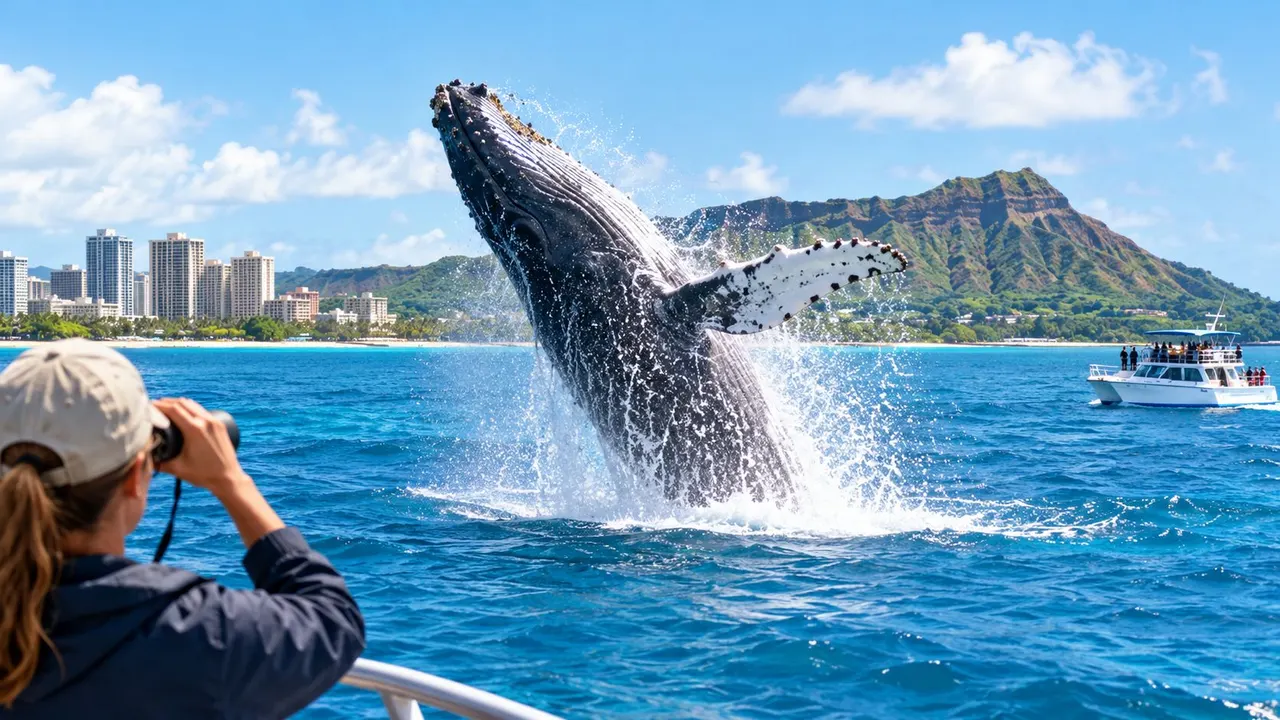
Humpback whales are in Hawaiian waters from November through May. On Oahu, the strongest odds are in January and February, with the highest concentrations generally from mid-February to mid-March. These are probability windows, not guarantees. A whale may surface far offshore, show only its blow, then disappear.
Thousands of humpbacks return to Hawaiian waters each winter to breed, calve, and nurse their young. Plan around the seasonal odds and your preferred way to watch. If a whale stays distant, a clear view of its blow or tail fluke is still a successful wildlife encounter.
Oahu Whale Season Dates and Peak Months
Humpbacks generally occupy Hawaiian waters from November through May, with the strongest overall viewing period from January through March. The Hawaiian Islands Humpback Whale National Marine Sanctuary identifies January through March as the period when concentrations are generally highest, with a regional peak expected around mid-February to mid-March.
The timing follows the whales' reproductive cycle. Hawaiʻi's warm, shallow water provides habitat for breeding, calving, and nursing. The whales later return to feeding areas elsewhere in the North Pacific.
| Month | What Whales Are Doing | Sighting Odds on Oahu |
|---|---|---|
| November | Whales arriving and numbers rising | Moderate |
| December | Numbers climbing toward the peak | Good |
| January | Peak season begins | Very high, best odds |
| February | Peak, with highest abundance from mid-February | Very high, best odds |
| March | Peak continues until mid-March, then eases | Very high early, high late |
| April | Whales begin leaving | Moderate |
| May | Last departures | Low to moderate |
| June to August | Whales largely absent | Low |
| September to October | Earliest arrivals possible | Low |
The broader possible season can begin before Oahu's most dependable viewing window. The Hawaiʻi Department of Land and Natural Resources' whale-watching guidance says whales may arrive in the main Hawaiian Islands as early as September and remain until May. It also notes that Oahu sightings are generally less frequent than sightings in some other Hawaiian destinations. For an Oahu trip, January and February are the strongest months to target.
Choose dates by probability, not promise. January through March offers the best chance of seeing whales. November, December, April, and May are possible, but sightings are less predictable. A quieter lookout in the early or late season does not mean more whales are active nearby.
Shore Viewing Versus Boat Tours
Shore viewing costs little and lets you choose how long to wait. A boat takes you out on the water, where whales are active, while respecting the legal viewing distance. Neither option guarantees a sighting. Choose based on your group's tolerance for waiting, weather, and motion.
| Factor | Shore Viewing | Boat Tour |
|---|---|---|
| Cost | Free apart from parking and any gear | Paid per person, covering crew and trip |
| Distance from whales | Often far away, zoom lens needed | Closer on some days, never inside the 100-yard legal limit |
| Time commitment | Flexible, stay as long as you like | Fixed departure and return time |
| Sighting reliability | Depends on lookout, weather, and luck | Operator moves within legal limits toward reported activity |
| Comfort | Sun and wind, no motion | Motion, spray, and limited shade on deck |
| Best fit | Budget travelers, photographers, independent visitors | First-time watchers, families, guests wanting a guide |
A lookout suits travelers who want a flexible day. Scan for a while, move to another coastline, or leave when the wind picks up. Photographers with a long lens may prefer a stable place on shore, where they can wait without dealing with deck movement.
A boat can suit first-time watchers, families with young children, and anyone who wants help interpreting what they see. A guide can point out a blow or a change in movement that's easy to miss when scanning the horizon alone. If you're considering a departure from Waikiki, compare trip details at whale-watching tours near Waikiki.
The practical trade-off: A boat can improve your position and help you understand the activity. It can't promise a close encounter.
Federal rules keep vessels at least 100 yards from humpbacks. A tour's value is better positioning, help spotting whales, and interpretation, not permission to approach. A responsible captain won't chase a whale for a closer view.
Conditions can outweigh the format. A clear, calm winter morning at a shore lookout may be more comfortable than a rough afternoon on the water. Check the forecast and consider how your group handles a moving boat. Either way, expect to scan patiently.
Choose the option that suits your group's tolerance for motion and waiting. Travelers prone to seasickness may prefer a shore outing. Families who want guidance may find a boat crew helps make distant activity easier to follow.
Best Oahu Locations to Spot Whales
Waikiki is a convenient base for visitors who want to watch without making a day trip of it. From the south-facing coast, scan the channel and open water. The Diamond Head area adds elevation and a broad view. Kewalo Basin Boat Harbor sits just west of Waikiki, and its walkways offer a practical place to scan for blows before boarding a whale-watching trip.
| Location | Area of Oahu | Why It Works | What to Expect |
|---|---|---|---|
| Makapuu Lookout | Windward east end | Elevated view across open channel and coastline | Distant blows and backs; best on clear days, bring binoculars |
| Diamond Head Lookout | South shore near Waikiki | Easy access from Waikiki with a wide ocean sweep | Whales farther offshore; expect crowds on weekends |
| Waikiki Beach and Kuhio Beach Seawall | Waikiki | Walkable from hotels with views out to the channel | Occasional distant blows; check wind and visibility |
| Kewalo Basin Boat Harbor | West edge of Waikiki | Departure point for whale-watch tours | Scan from the harbor walkways before boarding |
| Halona Blowhole Lookout | Southeast coast | Cliff views over Halona Cove and open ocean | Wind and spray; distant whales; watch your footing |
| Kaena Point State Park | Northwest tip | Remote, wide-open views across the channel | Limited facilities and strong wind; bring water and sun protection |
| Kahe Point | Leeward west coast | Sheltered coastline with calmer water on some days | Fewer whales than other islands; treat as a bonus stop |
Each location has a practical trade-off. Makapuu offers a high, open view, but its exposure can make a windy day uncomfortable. Diamond Head and the Waikiki shoreline are easier to pair with other plans, though whales may appear as small marks on the horizon. At Halona, watch for wet surfaces and keep clear of lookout edges, especially when spray is blowing across the area.
Kaena Point is remote, so prepare to spend time outside without nearby services. Kahe Point can be a useful stop when conditions are favorable, but treat a whale sighting there as a bonus rather than the reason to plan the whole day around that location.
Three habits make shore scanning more effective:
- Bring binoculars: Choose at least 8x magnification to distinguish a blow or back from whitewater.
- Use elevation when wind is strong: A higher viewpoint helps you scan a wider stretch of water without standing directly on an exposed shoreline.
- Check the morning forecast: Calm water makes distant blows easier to spot because surface chop is less likely to hide them.
A lookout works best when visibility is clear and you're willing to watch patiently. If time allows, combine two spots with different views instead of spending the whole day at one exposed location. Check access and conditions before setting out, and leave time to enjoy the coast even if whales stay out of sight.
What a Winter Whale Watch Tour Is Like
A typical trip starts with check-in at Kewalo Basin Boat Harbor and a short safety and wildlife briefing. After leaving the harbor, the crew scans for reported whale activity. Guests often spot a blow first, then a back at the surface. Sometimes a whale shows its tail fluke as it dives.
The sequence can be brief. A whale may surface, breathe, and disappear before everyone has found it, or stay far enough away that binoculars and camera zoom help. A breach is possible, but no captain can arrange one on cue. The crew helps guests spot and understand the activity; it should not pursue an animal for a closer photograph.
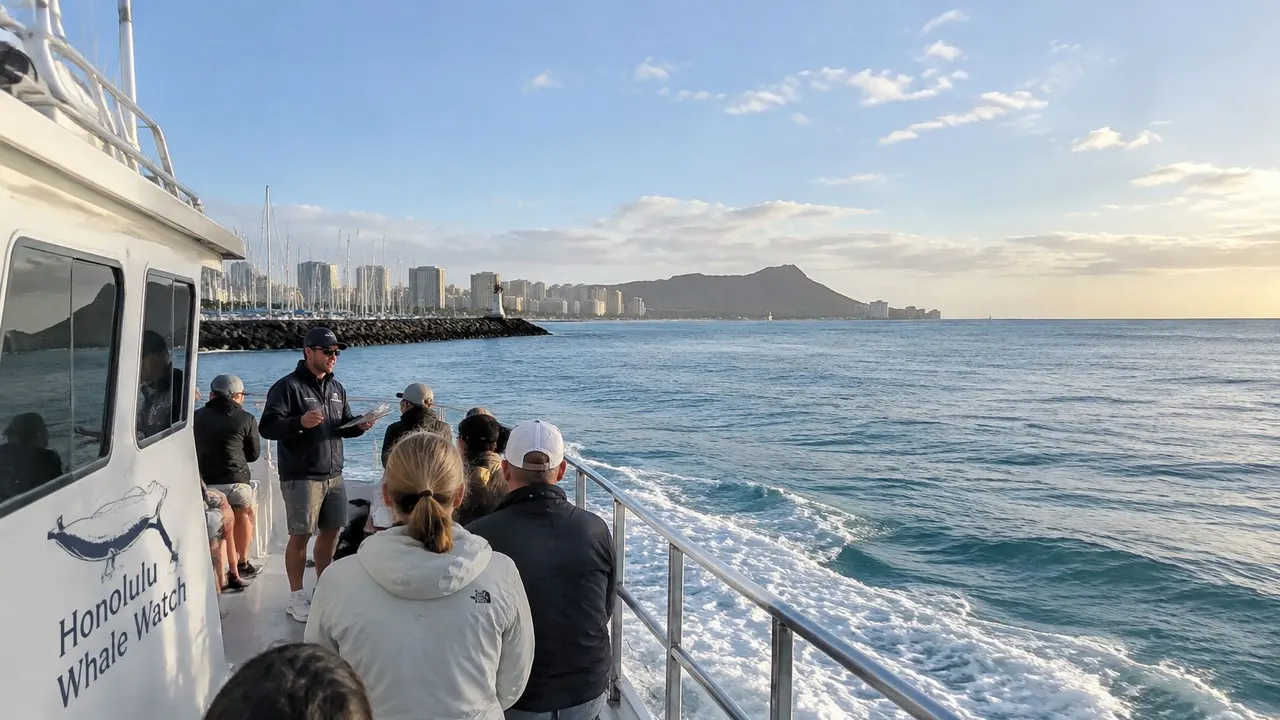
If a whale comes close to the boat, the correct response is to hold position and wait. The Hawaiʻi Division of Boating and Ocean Recreation's boating guidance says ocean users should remain stationary if a humpback comes within the restricted distance. Motorized vessels should shift the engine into neutral without turning it off, then allow the whale to move away. A captain shouldn't maneuver closer or follow it.
Morning departures often offer calmer seas and clearer visibility, though conditions can change. A whale-watch trip is relatively short, typically about an hour and a half, so it can fit into a Waikiki day without taking up the whole schedule.
Living Ocean Tours serves Oahu with tours departing from Kewalo Basin Boat Harbor near Waikiki Beach. The company is Oahu's top rated and most reviewed snorkel company. Its Waikiki whale-watching tour views humpbacks that winter in the Hawaiian Islands along the Waikiki coastline.
Wildlife Rules, Safety and Packing
Treat wildlife rules as firm limits. In Hawaiʻi, boats, kayaks, swimmers, and drones must stay at least 100 yards from humpback whales. Don't place a vessel or person in a whale's path, disrupt its normal behavior, or maneuver toward it if it surfaces nearby. The NOAA Fisheries approach regulations for humpback whales in Hawaiʻi explain these restrictions.
Aircraft have a separate distance rule: manned aircraft must remain at least 1,000 feet, or about 333 yards, from humpback whales in Hawaiian waters, according to NOAA Fisheries' humpback whale resources. For boats, NOAA's boating guidance recommends a maximum of six knots within 400 yards of whales. Use binoculars, camera zoom, and patience to improve your view, not a closer approach.
Check conditions before leaving
Check the morning forecast for wind, swell, and rain, then decide whether a boat or shore outing suits the conditions. Wind and chop can make distant blows harder to see and an exposed lookout less comfortable. If conditions are rough, consider a shore day or a stop at Kahe Point when the leeward coast is sheltered.
Pack for comfort and to protect your gear:
- Sun protection: Reef-safe sunscreen, a hat, and sunglasses.
- A warm layer: Bring a windbreaker or long-sleeve layer for spray and breezes.
- Water: Bring a refillable bottle and drink before you feel thirsty.
- Optics: Carry binoculars for shore scanning.
- Dry storage: Use a dry bag for phones and cameras.
- Motion preparation: If you use motion-sickness medicine, take it before boarding and follow its directions.
- Footwear: Wear closed shoes for lookout trails.
Keep the outing safe
Stay behind railings at cliff lookouts and avoid wet rocks. Never enter the water to get closer to a whale. If you have a medical issue that could affect your trip, tell the crew before boarding so they know what support you may need.
At Kewalo Basin Boat Harbor, parking costs $2 per hour and is paid by scanning the QR code on the lot signs. Have a payment method ready and allow time to park and check in. For additional local planning, see this Oahu whale-watching guide.
Tips for Families, Photographers and First-Time Watchers
Families: Prepare children for looking and waiting, not constant action. The Living Ocean Tours whale-watching cruise is for ages 3 and up. Pack snacks and sun protection, and give children a simple spotting job, such as calling out each blow they notice. If anyone in your group is prone to seasickness, take motion-sickness medicine before boarding according to its directions. More ideas for planning with younger guests are in this guide to whale watching with kids.
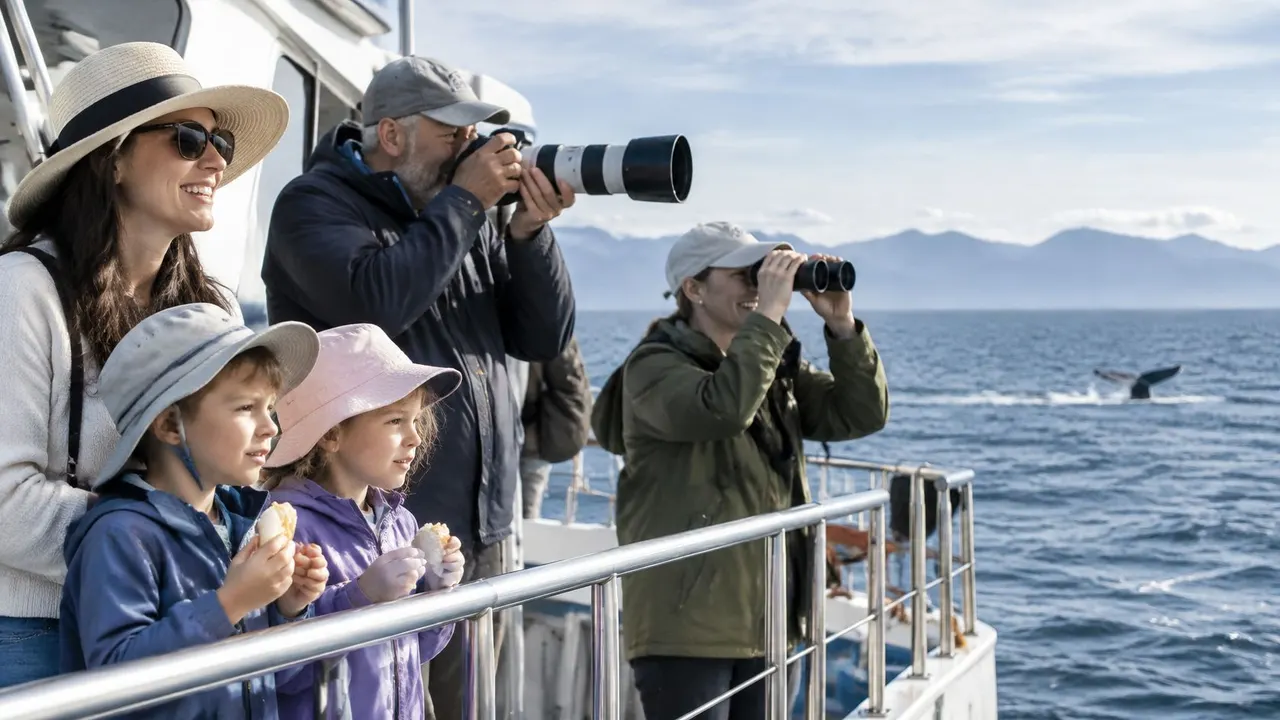
Photographers: A telephoto lens of at least 300mm, or a camera with strong zoom, gives you more reach for distant animals. Use burst mode when a whale surfaces or lifts its tail; those moments can pass quickly. Morning light can help with color and contrast, but keep the horizon in view and be ready to shoot without moving toward the whale. Drones fall under the 100-yard approach restriction, so never fly one toward whales.
First-time watchers: Arrive early enough to settle in without rushing. Choose a deck position with shade and a clear view of both sides if possible, then ask the crew to point out blows and explain what to watch for. You don't need to know every behavior before boarding. A guide can help make a brief surface appearance easier to understand.
For a multigenerational shore outing, bring folding chairs and shade, and plan a route that works for slower-moving relatives. A lookout is only useful if everyone can reach it comfortably. A distant blow seen clearly, with a guide or a good vantage point helping you understand it, is a good result for most groups.
Choose an Itinerary and Book Your Whale Trip
Give a whale outing room for changing conditions. These plans pair a focused viewing period with other Oahu stops, so the day still feels worthwhile if whales remain distant.
- Half-day Waikiki: Take a morning whale watch departing from Kewalo Basin, then spend the afternoon at Waikiki Beach and the seawall. Keep scanning the channel while you walk, but treat any distant blow as a bonus rather than scheduling the rest of the day around one.
- Family day: Choose a mid-morning boat trip, then take a snack break back on shore. Visit Diamond Head later for a slower-paced lookout stop, and give everyone time to enjoy the view without making the visit a race.
- Photographer's day: Start at Makapuu Lookout for sunrise light, then head to Kaena Point State Park for wide-open channel views. Finish with a boat trip if conditions allow, and protect your camera from spray while you're aboard.
For a Waikiki departure, Living Ocean Tours' Waikiki Whale Watching Cruise runs from January 2nd through March 31st, lasts 1.5 hours, welcomes ages 3 and up, and costs $49 per person. It departs from Kewalo Basin Boat Harbor near Waikiki Beach. Trip details are on the Oahu whale-watching page.
Living Ocean Tours is located at 1125 Ala Moana Blvd Slip B-01, Honolulu, HI 96814. Its office is open seven days a week to help with trip planning and operations. Contact the team at info@livingoceantours.com or +1 (808) 436-3483.
Living Ocean Tours offers a Waikiki whale-watching cruise from Kewalo Basin, a practical way to get out on the water with a crew helping you spot and interpret winter whale activity. Plan for a wildlife encounter, not a close approach, then visit Living Ocean Tours to explore the trip and choose a departure that fits your Oahu plans.


