Manta Ray Dive Hawaii: Where, When and How to Book
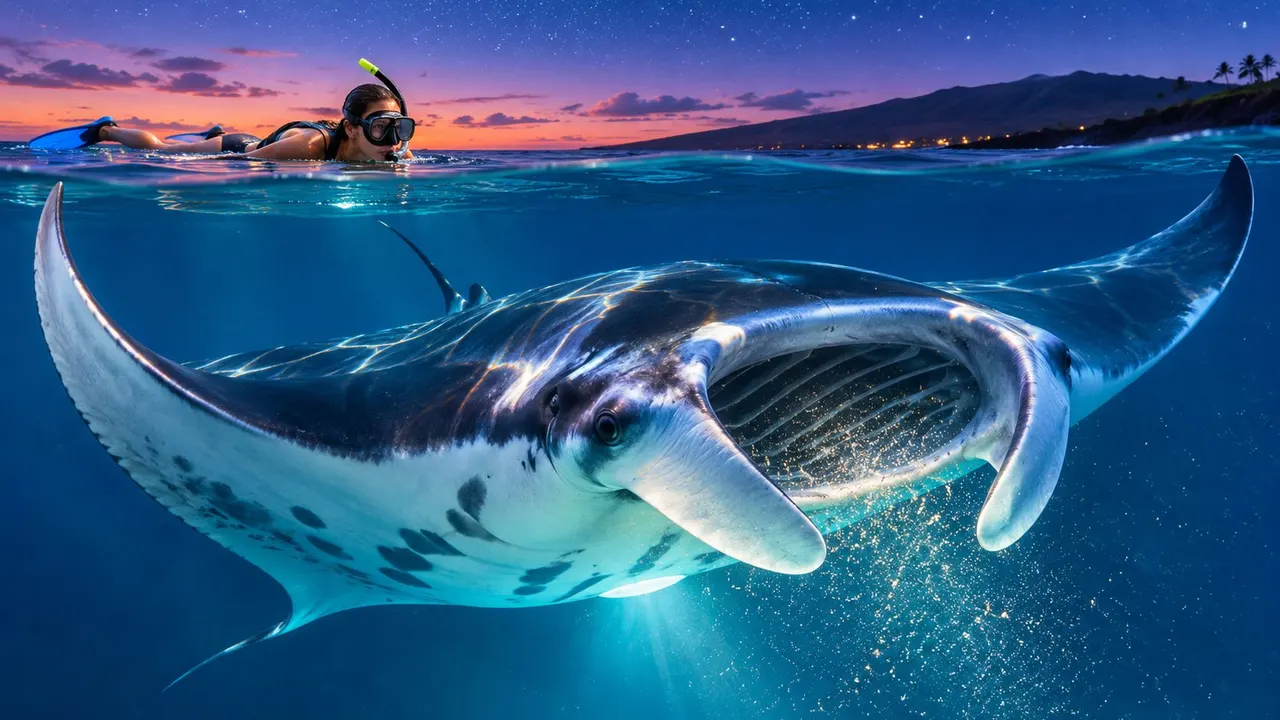
Table of Contents
- Manta ray sites and what each offers
- Choose the site before choosing the deal
- Night and daytime manta experiences compared
- Why a quiet evening isn't automatically a bad trip
- Requirements by manta experience
- Make the medical decision before departure
- Keep the feeding corridor clear
- Why local stewardship matters
- Choose daylight reef time or a dedicated wildlife outing
- Test the operation before reserving
- The Kona operator to start with
- Finish your booking in a sensible order
If a manta ray tour promises a sighting, what exactly is the operator promising: a well-managed wildlife encounter, or an animal's cooperation? That distinction matters more than the brightest lights or the most dramatic booking-page photograph.
A manta ray dive in Hawaii works best when you choose the right island, the right format for your swimming ability, and a crew that can explain when it won't enter the water. Kona is the place to start, but site selection, guest positioning, and realistic expectations determine how enjoyable the evening feels.
Where to See Manta Rays in Hawaii and When
Guided manta dives and night snorkels are concentrated along the Kona coast of the Big Island. For a scuba trip, I would choose Garden Eel Cove first because of its protected location, better viewing area, and better surrounding reefs. Those advantages make it a stronger overall dive destination, not a place to wait for mantas.
Say your family is splitting between certified divers and snorkelers. Start by finding an operator that accommodates both formats, then confirm its intended site rather than assuming every Kona departure offers the same experience. A protected location still needs a favorable forecast, and a responsible captain may change the plan.
Manta ray sites and what each offers
| Site | Island | Typical Experience | Best For |
|---|---|---|---|
| Garden Eel Cove | Big Island, Kona coast | Night snorkel or night scuba | Top pick for a protected location, better viewing area, and better reefs |
| Keauhou Bay | Big Island, Kona coast | Night snorkel or night scuba | A site with a long recreational and research track record |
| Hōna Bay | Big Island, Kona coast | Night scuba | Divers interested in a site with extensive survey history |
| Maui Nui | Maui, Molokaʻi, Lānaʻi, Kahoʻolawe | Night or day with a verified operator; fewer standard tours | Visitors who confirm a licensed operator first |
| Oahu | Oahu | Not a standard manta site | Travelers choosing an Oahu snorkel or whale-watching trip instead |
Kona's reputation has a substantial historical foundation. Recreational dive instructors conducted 3,208 manta surveys from 1992 through 2007, primarily at Keauhou Bay and Hōna Bay, as documented in the peer-reviewed global manta sighting analysis. That history establishes sustained observation, not a personal sighting guarantee.
Maui Nui has its own manta population, but it isn't interchangeable with Kona's established night-tour system. Verify the departure location, actual encounter format, licensing, and cancellation terms before building an itinerary around a Maui-area listing.
Choose the site before choosing the deal
Most Kona manta trips center on after-dark viewing. Seasonal feeding conditions and ocean conditions affect what guests see, so don't choose a travel month on the assumption that wildlife follows a nightly appointment.
Practical rule: Choose Garden Eel Cove for the strongest reef-and-viewing combination, Keauhou Bay for its established encounter history, and Maui Nui only after verifying the operator and format.
For a separate daylight outing, use this guide to Kona's best snorkeling beaches to plan around access and your swimming comfort. Don't treat a beach snorkel as a substitute for a guided night encounter.
Night Manta Dives Versus Daytime Viewing
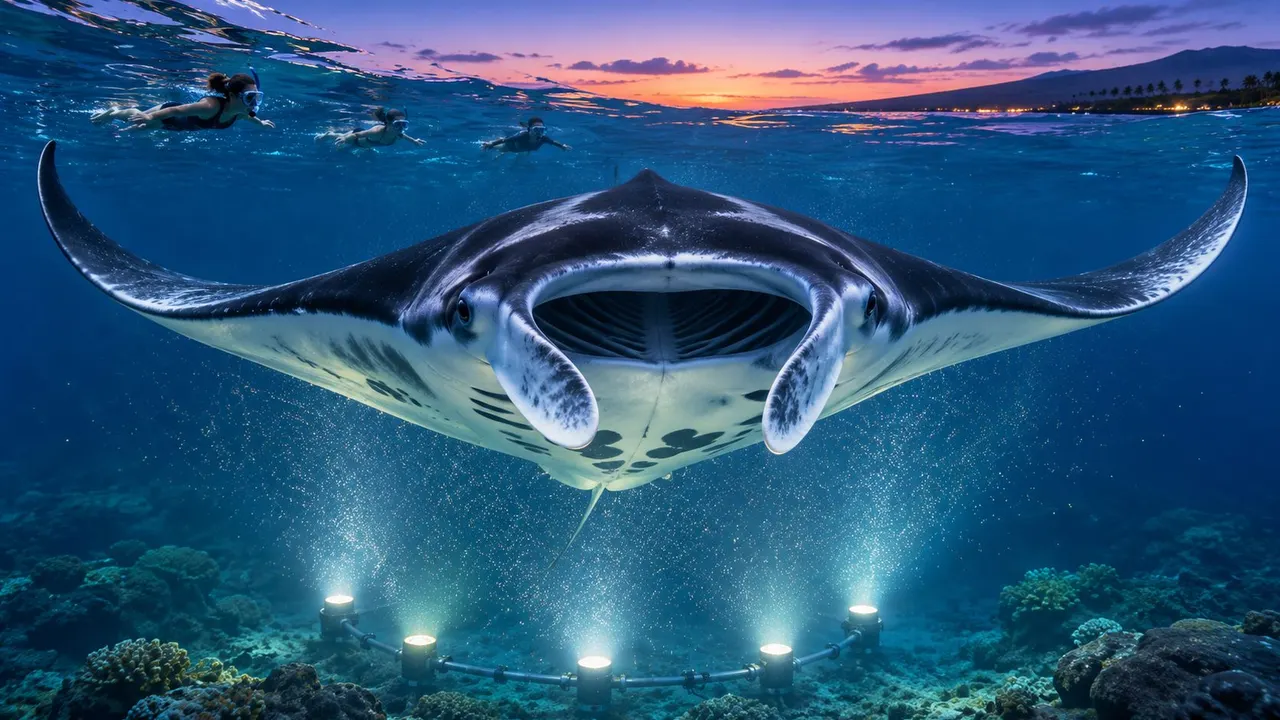
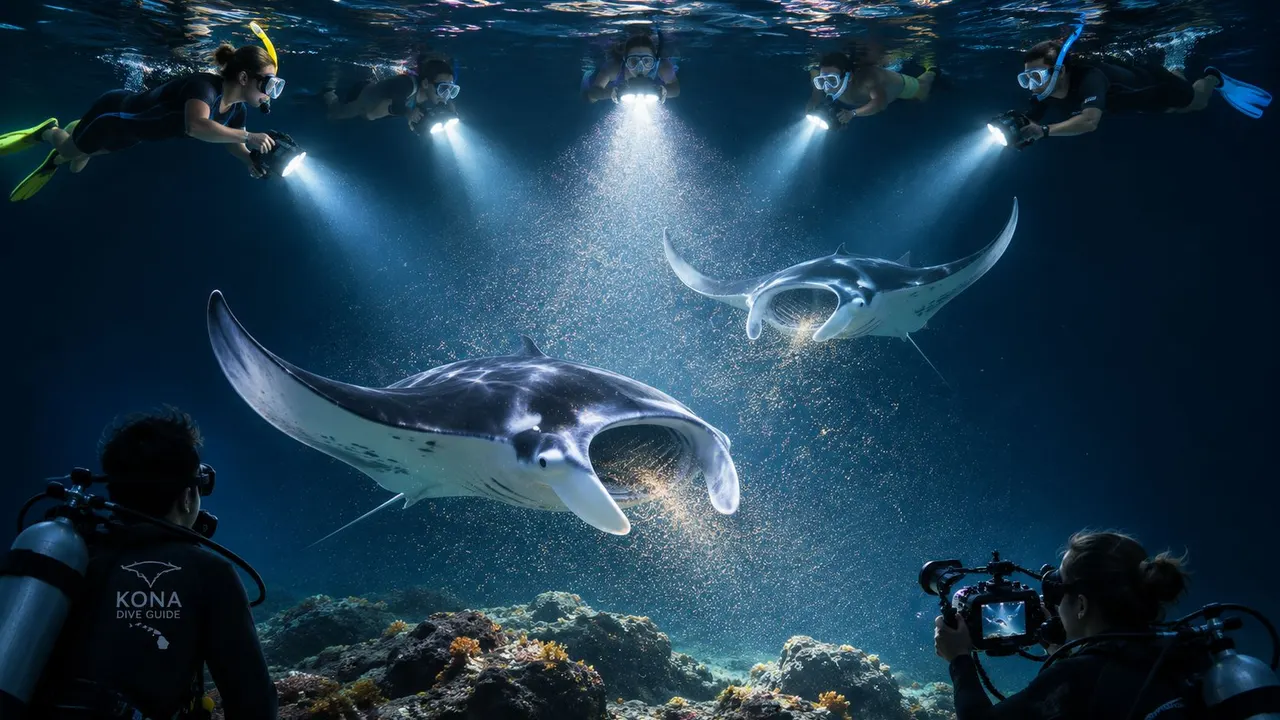
Night viewing works because artificial underwater lights attract zooplankton, concentrating food where reef mantas, Mobula alfredi, can filter-feed. The University of Hawaiʻi manta aggregation study describes these concentrated feeding areas and the positive relationship between manta abundance and zooplankton availability. The lights attract prey, not obedient animals.
Guests watch a bright feeding corridor against a dark reef. A manta may bank through the beam, turn, and pass again, but your job isn't to follow it. The better experience comes from choosing a position you can maintain comfortably.
Night and daytime manta experiences compared
| Format | Position in Water | Skill Needed | Light Setup | Reliability |
|---|---|---|---|---|
| Night snorkel | Surface, floating with a flotation vest | Comfortable floating in open water | Guide or boat lights attract plankton | Good when plankton is dense, never guaranteed |
| Night scuba dive | On or near the seafloor in a stable position | Certified diver with night-water competence | Diver lights held above the head | Strong viewing potential when conditions support feeding |
| Daytime viewing | Surface or an operator-selected viewing position near a site or cleaning station | Basic snorkel skills for surface viewing | Natural light only | Less predictable without light-concentrated prey |
Snorkeling offers a downward view without scuba equipment. It suits guests who can manage a mask and snorkel calmly, but floating in darkness can still feel unfamiliar. A flotation vest supports you; it doesn't remove the need to listen, control your breathing, and follow the guide's directions.
Scuba provides the lower perspective. Instead of swimming after rays, divers settle into an assigned viewing position and look upward. That can feel wonderfully unhurried, provided buoyancy, equalization, and regulator breathing already feel routine.
Why a quiet evening isn't automatically a bad trip
Tagged mantas spent more time near the surface from April to June and deeper from August to September, apparently following prey and thermocline changes, according to the NOAA-hosted manta status review. Those observations don't establish a simple best-month booking rule.
A capable guide can manage positioning and assess conditions, but can't manufacture favorable prey distribution. Judge the crew by its briefing, supervision, and safety decisions rather than the number of animals that arrive.
Choose snorkeling for an accessible surface experience and scuba for certified divers who want the view from below. Choose daytime viewing when natural-light reef exploration is worthwhile to you even without a manta encounter.
Who Can Go and What Certification You Need
Night snorkeling doesn't require scuba certification. You do need enough water confidence to float, breathe through a snorkel, and respond to instructions without panicking. A bright flotation vest adds support and helps the crew keep track of guests, but it isn't permission to ignore swimming requirements.
Night scuba requires Open Water Diver certification or an accepted equivalent. Operators may also review your recent dive history and night experience. Tell the booking team if your certification is recent, your last dive was a long time ago, or darkness makes you anxious.
Requirements by manta experience
| Experience | Certification | Swim and Fitness | Notes |
|---|---|---|---|
| Night snorkel | None required | Comfortable floating; vest recommended | Confirm the operator's minimum age |
| Night scuba dive | Open Water Diver or equivalent | Comfortable in water and able to equalize | Many operators request a recent dive log |
| Advanced or long-range diving | Advanced Open Water or higher, with logged dives where required | Fitness appropriate to longer trips and the planned conditions | Verify the particular trip's requirements |
| Health clearance | Physician review for pregnancy, heart or lung conditions, or recent surgery | Participate only when medically appropriate | Read the medical statement before paying |
Certification is the starting point, not the complete readiness test. A diver who struggles to clear a mask or maintain position should refresh those skills in daylight before adding darkness, lights, cameras, and wildlife excitement.
Make the medical decision before departure
Pregnancy warrants particular caution: don't scuba dive while pregnant. For snorkeling during pregnancy, or either activity with heart or lung conditions or recent surgery, discuss the planned activity with your physician and complete the operator's medical screening.
- Check swimming expectations. Ask whether guests must swim independently, manage current, or move between the boat and viewing float.
- Disclose limitations early. Mobility needs, seasickness concerns, and difficulty climbing a ladder affect trip suitability.
- Confirm family eligibility. Minimum ages and supervision requirements are operator-specific, not something to infer from photographs.
A non-swimmer shouldn't book a dark-water outing merely because the listing mentions flotation.
Strong-swimming family members may suit a guided snorkel, while non-swimmers need explicit operator acceptance and an appropriately supported format. If the crew can't accommodate someone safely, choose a different activity rather than improvising at check-in.
How to Behave Around Manta Rays and Protect Them
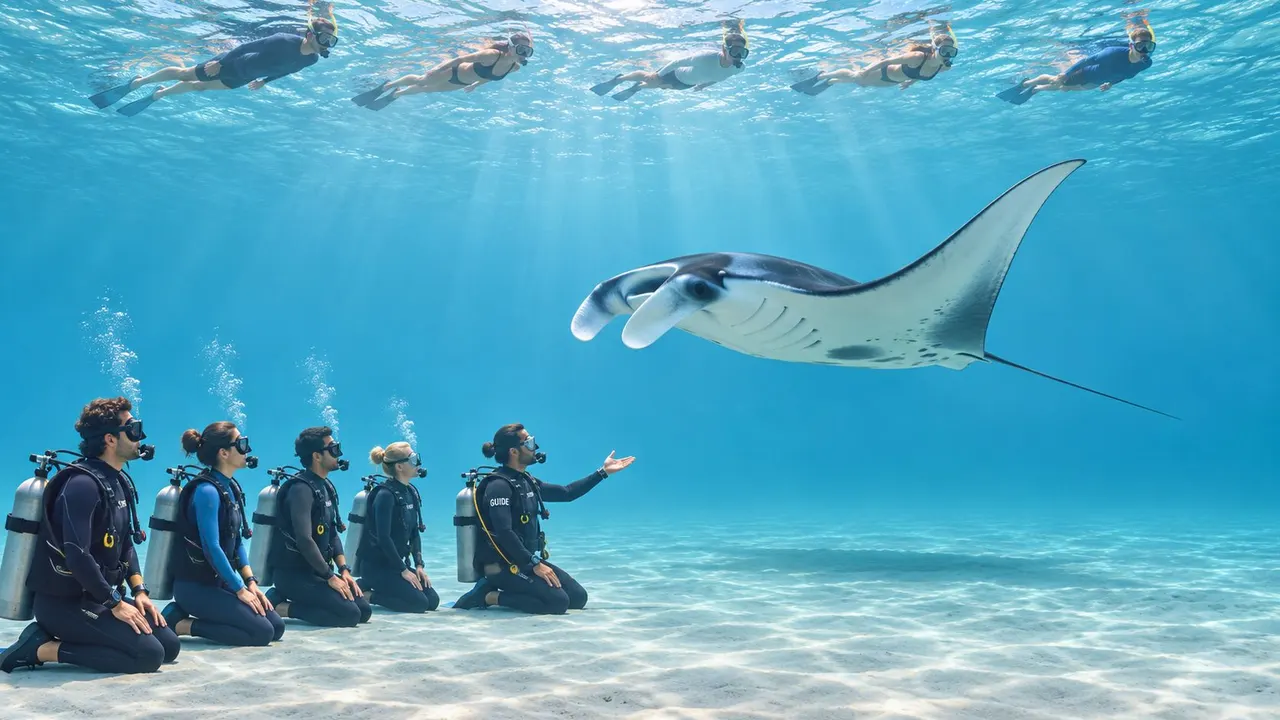
The NOAA voluntary manta viewing standard gives divers a practical framework: hold a stable position, keep feeding lanes open, manage lights, and avoid contact. Surface snorkelers need a compatible guide-led arrangement, not an invitation to dive down into the same space.
Keep the feeding corridor clear
- Hold your assigned position. Scuba divers stay on or near the seafloor in a stable formation; snorkelers float at the surface under guide direction. Predictable positioning reduces collisions.
- Leave the central water column open. Mantas need room to approach, turn, and feed without navigating around guests.
- Never descend into a feeding path. Duck-diving from the surface or rising from the bottom can put you directly in an approaching animal's route.
- Manage lights correctly. Divers hold lights above their heads, directed upward toward plankton. Snorkelers follow the crew's surface-light protocol rather than copying bottom-diver positioning.
- Observe without touching. Keep hands and camera extensions out of the animal's path, even during a close pass.
- Avoid coral, urchins, and other marine life. Use only the guide-designated viewing area and control your fins. The photograph isn't worth damaging the reef.
These aren't just courtesy rules. Consistent spacing and controlled equipment reduce collision and entanglement risks while allowing mantas to use the feeding corridor.
For habits that apply beyond a manta outing, our Oahu reef etiquette guide explains how to watch marine life without crowding it.
Why local stewardship matters
A genomic study estimated contemporary effective population sizes of 104 around Hawaiʻi Island, with a 95% confidence interval of 99–110, and 129 in Maui Nui, with a 95% confidence interval of 122–136, according to NOAA Fisheries' genetic study summary. The same summary reports 318 unique manta rays photo-identified around Hawaiʻi Island since 1979.
Effective population size measures breeding contribution, while a photo-identification catalog accumulates sightings of individuals over time. Neither is a current census count, but together they show why a locally structured population deserves careful treatment rather than assumptions of unlimited abundance.
A 13-year analysis of Kona community-sourced observations found that aggregation size changed seasonally and increased with zooplankton density, while predictable feeding aggregations persisted during sustained tourism and artificial lighting. Persistence isn't proof of no impact, and it doesn't establish long-term population health.
If another guest crowds a ray, don't join them. Signal the guide, maintain a safe position, and raise unresolved concerns with the operator afterward. A responsible operation corrects disruptive behavior instead of treating every close encounter as a marketing success.
Oahu Alternatives to a Manta Ray Dive
Oahu doesn't offer a standard Kona-style manta night dive. If your holiday is based entirely in Waikiki, choose an Oahu water experience on its own merits rather than expecting a local equivalent. Daylight snorkeling and seasonal whale watching offer different wildlife, different conditions, and a different pace.
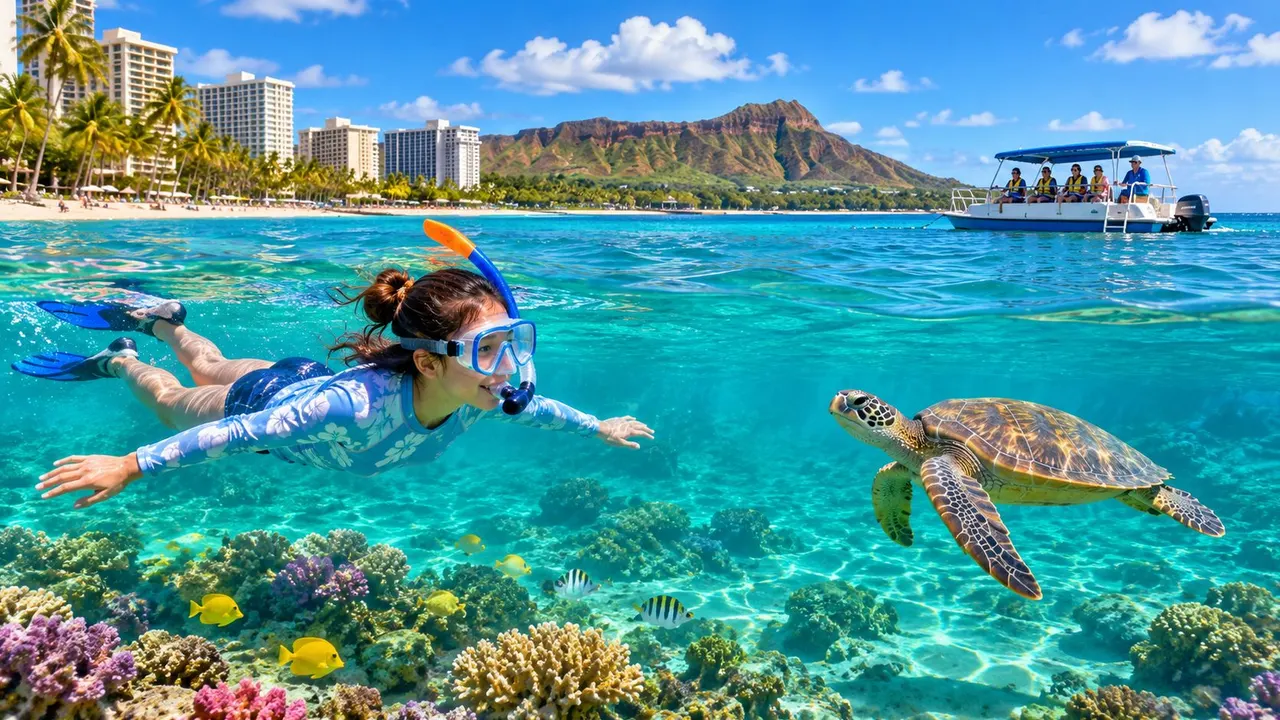
Living Ocean Tours is described as Oahu's top rated and most reviewed snorkel company, with daily departures from Kewalo Basin Boat Harbor near Waikiki. Our Oahu snorkeling guide can help you judge whether a guided reef outing fits your group's swimming confidence.
Choose daylight reef time or a dedicated wildlife outing
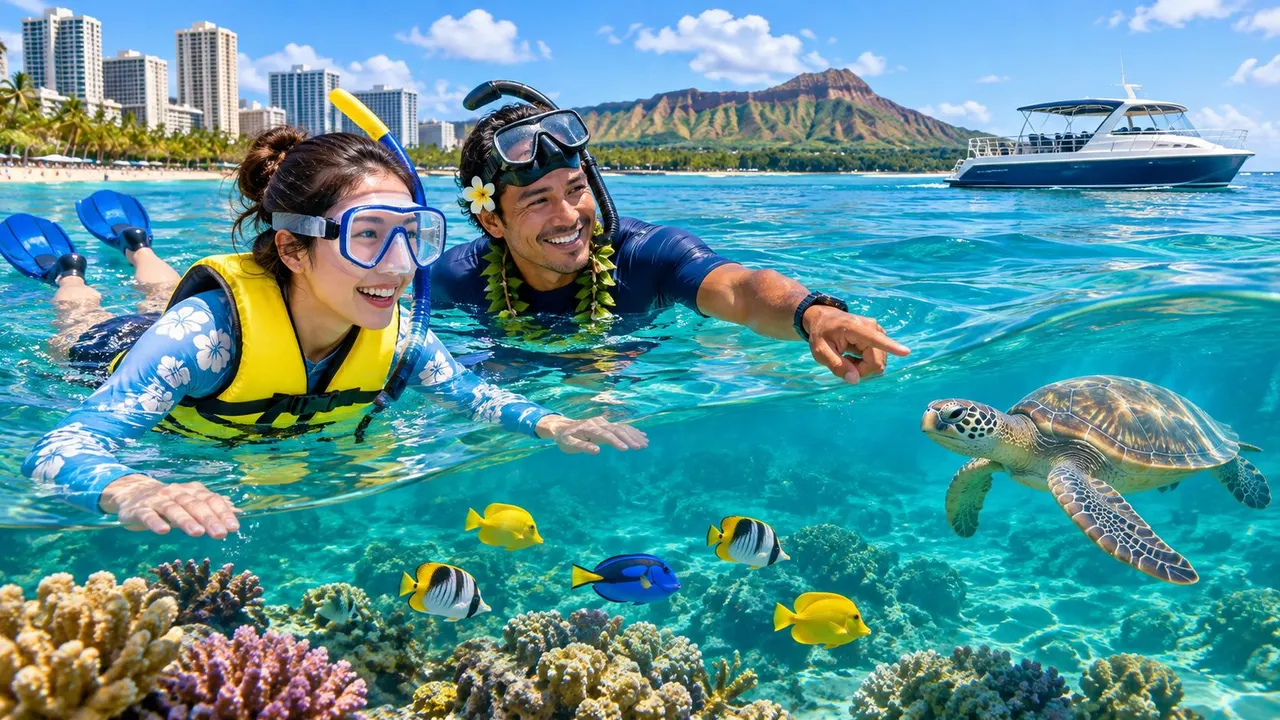
Our snorkeling trips feature tropical fish such as yellow tangs, Moorish idols, and triggerfish, with opportunities to see rays, eels, and other marine life. The Deluxe Waikiki Snorkel and Wildlife Cruise visits a reef away from the crowds and includes a waterslide, water trampoline, and lily pad, making the Waikiki snorkel and waterslide outing a practical choice for mixed-interest families.
For Hawaiian green sea turtles at a cleaning station, consider our Turtle Canyons Snorkel Excursion. Turtle Canyons is Waikiki's famous turtle cleaning station, and it is common to see up to 10 Hawaiian green sea turtles there. Snorkel Turtle Canyon is a great alternative to compare when planning that particular experience.
Our winter humpback whale watching runs in the winter months, with snorkeling kept separate from the dedicated Waikiki whale watch tour. Choose it for watching Humpback whales that winter in the Hawaiian Islands along the Waikiki Coastline, not entering the water with them.
Choose Oahu for the experience available there, not as a compromise version of a Kona manta night.
For Oahu-specific questions, contact us at info@livingoceantours.com or +1 (808) 436-3483. Describe your group's swimming ability and interests so we can help you choose a suitable outing.
Choose a Responsible Kona Operator and Book
Don't assume every good wildlife-viewing practice is a legally enforced operating rule. In its 2022 public notice, the Hawaiʻi Department of Land and Natural Resources stated that no state laws or rules specifically regulated manta-ray diving or viewing activities at that time.
The proposed framework described 24 commercial viewing permits in each of two zones, a vessel cap of 60 passengers for hire within a single 24-hour period, two-hour shifts, and viewing hours from 4:00 p.m. to 4:00 a.m. the following day, in that same notice. Those were proposed measures, not a blanket current statewide rule. Verify current permit and operating requirements before paying.
Test the operation before reserving
A useful booking conversation should produce concrete answers, not reassurance that the crew does this all the time. Ask how the evening runs from boarding through the return to the boat.
- Guide-led group management. Establish who supervises your group in the water and how the crew prevents guests from drifting out of position. A smaller boat load doesn't automatically mean better supervision.
- A defined lighting protocol. The crew should explain where lights go and who controls them. Guests shouldn't improvise their own competing setup.
- An explicit no-touching briefing. Look for instructions about cameras, fins, and feeding paths, plus a willingness to correct guests.
- Separate weather and wildlife policies. An unsafe departure and a safe trip without mantas are different situations. Read the cancellation, rescheduling, and any return-trip terms carefully.
- A clear site plan. Confirm whether the intended trip runs at Garden Eel Cove and what circumstances would require a different site.
Ask for the planned depth and dive profile for your actual departure. A broad description such as shallow doesn't tell you enough about descent procedures, bottom positioning, air management, or whether your recent experience suits the trip.
The Kona operator to start with
Compare Kona diving tours from Kona Honu Divers, then confirm the specific manta itinerary, certification requirements, included equipment, and intended site.
Experienced divers planning additional outings can compare the premium advanced long-range dive trip. Don't assume eligibility for an advanced charter follows automatically from being accepted on a stationary manta viewing dive.
Read reviews for operational details: whether guests understood the briefing, whether the crew handled nervous participants patiently, and whether weather decisions were communicated clearly. An enthusiastic account of many mantas tells you less about those procedures than a specific description of how the crew managed the evening.
If you're separating an Oahu stay from a Big Island dive trip, our Honolulu snorkel company overview helps keep the departure locations straight. Book Kona diving with the Kona operator rather than assuming a Honolulu-based trip includes interisland arrangements.
Finish your booking in a sensible order
- Choose night snorkel or night scuba. Base the decision on water comfort, not which photograph looks more dramatic.
- Confirm certification and medical suitability. Send the requested documentation and resolve screening questions before departure day.
- Check operating rules and weather policies. Save the written terms, including what happens if mantas don't appear.
- Pack for your format. Bring a warm layer, rash guard, and daytime sun protection. Confirm supplied flotation equipment for snorkeling; bring certification proof and your dive log for scuba.
- Book early and confirm directly. Use email or phone to verify the meeting point, check-in instructions, equipment needs, and final departure status.
Choose a crew that can explain both the plan and its limits. That's a better foundation for a memorable evening than any promise about what a wild animal will do.