
Honolulu United States Snorkeling Ultimate Guide
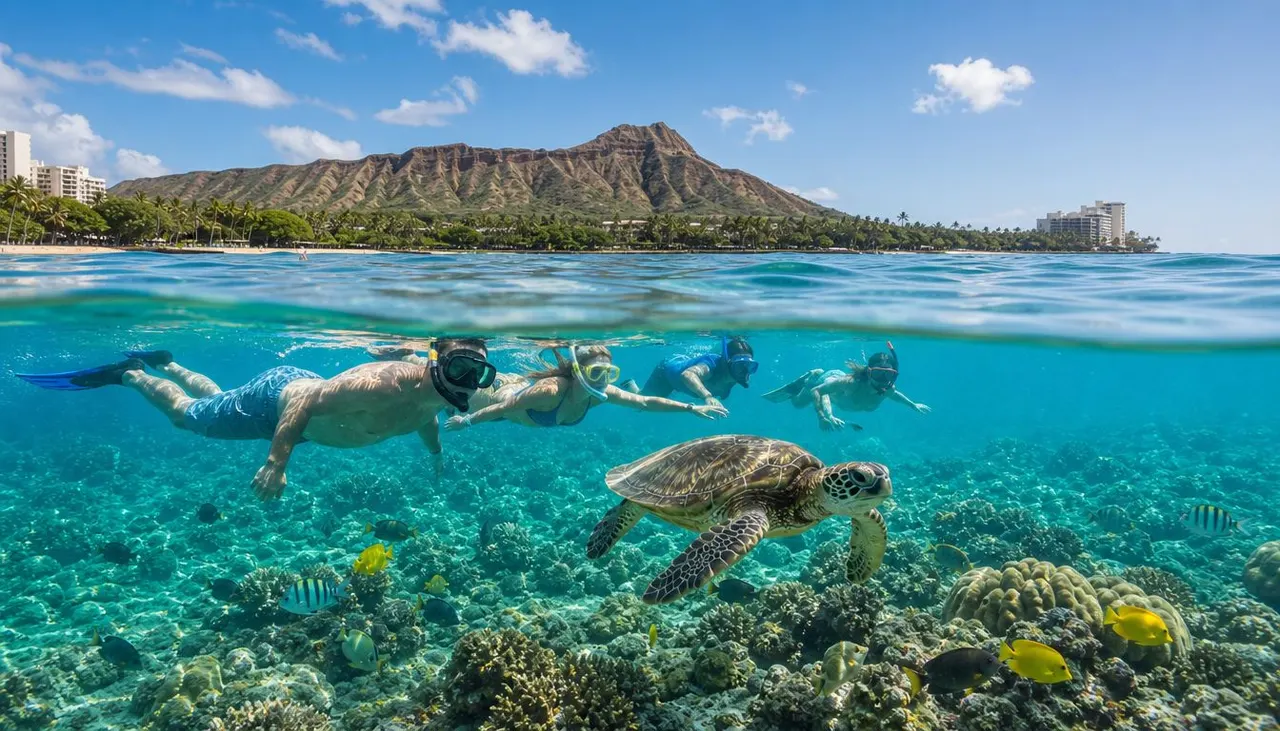
Your family has arrived in Honolulu with masks packed, swimsuits ready, and one urgent question: where can beginners snorkel safely today? The answer isn't based on a beach name alone. Wind, surf, rain, runoff, reef conditions, conservation rules, and swimming confidence all shape the experience.
Honolulu United States snorkeling offers access to sheltered lagoons, protected marine areas, and boat-accessible reefs where visitors may see Hawaiian green sea turtles and tropical fish. It also rewards travelers who plan carefully. Use this guide to choose a suitable site, read the weather window, prepare the right equipment, protect the reef, and build an itinerary that works for children, first-time snorkelers, and multi-generational groups.
Introduction and Core Concepts
A first Honolulu snorkeling day often starts easily. A family walks from a Waikiki hotel toward the beach, excited to see coral and turtles, then notices cloudy water, stronger wind, or waves breaking across the entry. The best decision may be to change locations rather than force the original plan.
That flexibility matters because snorkeling is an interaction between people and the ocean. A protected lagoon can feel calm while an exposed reef nearby becomes difficult, and rain inland can affect nearshore clarity later. Families should treat the forecast, surf, and water appearance as part of the destination, not as minor details.
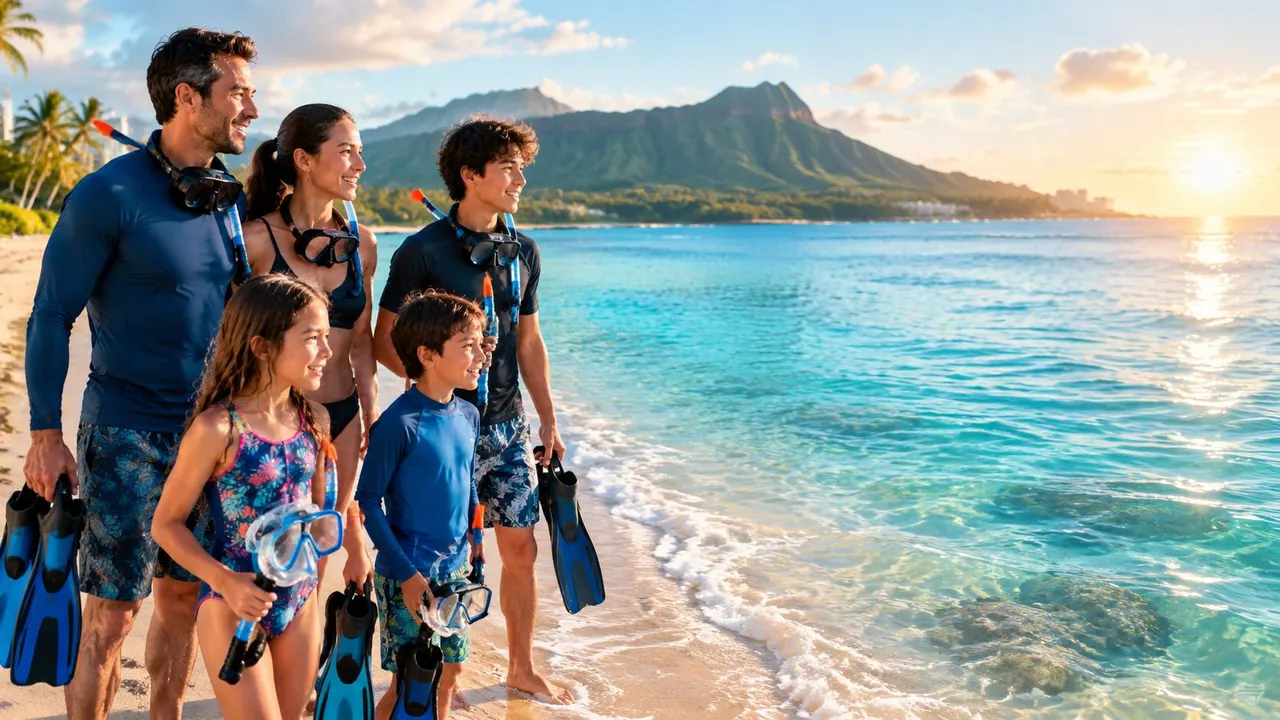
Hawaii has long been a major snorkeling market in U.S. marine tourism. A NOAA and DBEDT-based tourism survey reported that snorkeling trips averaged 7.8 per active person in Hawaii, while Hawaii-focused research estimated that roughly 40% of the state's approximately 9 million annual visitors take part in marine recreation such as snorkeling. The same research also noted that nearly 52% of U.S. tourists to Hawaii snorkel or dive.
The goal isn't to chase every possible site. It's to match your group with the right entry, conditions, supervision, and wildlife etiquette so the day feels memorable rather than stressful.
Top Honolulu Snorkeling Sites
Honolulu snorkeling sites fall into two practical categories: shore-access locations and boat-access reefs. Shore sites offer more control over arrival and departure, while boat trips can reach compact reef areas away from beach crowds and may provide guides, equipment, and structured instruction.
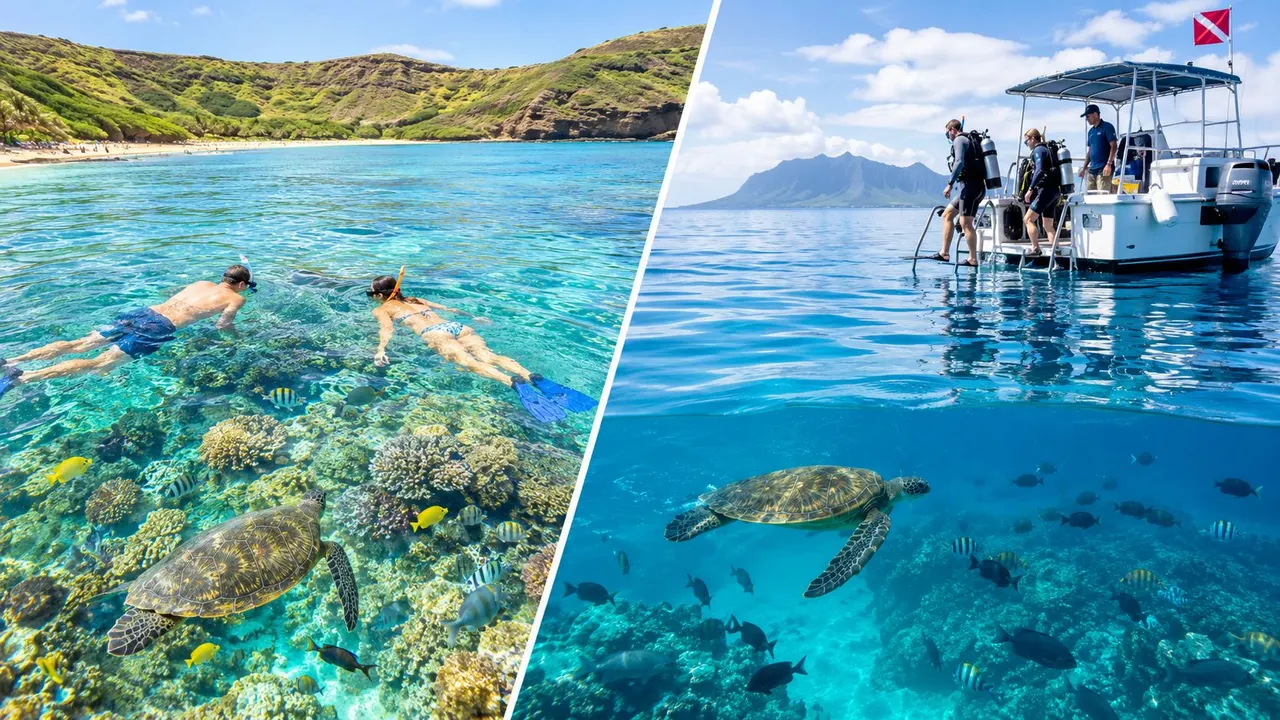
Hanauma Bay for structured shore snorkeling
Hanauma Bay is one of Oahu's most data-rich reference points for understanding snorkeling pressure and reef sensitivity. A Hanauma Bay carrying-capacity report recorded 60,163 visitors during summer sampling and 57,433 during winter sampling in its 2021/2022 survey period. The study found that 27% of observed visitors were swimming or snorkeling, with the channel area showing the highest concentration of activity.
The same report observed 327 snorkelers across all plots and documented 168 reef disturbances, approximately one disturbance for every two snorkelers. That doesn't mean every visitor causes serious harm, but it does show why education, controlled access, and careful fin technique matter.
Hanauma Bay can suit confident beginners who follow entry guidance and stay within comfortable shallow water. Arrive prepared for a structured visit, listen to safety information, and avoid standing on coral. If waves or visibility make the entry uncomfortable, choose a sheltered alternative instead of treating the bay as a test of endurance.
Turtle Canyon for boat-access reef viewing
Turtle Canyon is a boat-only snorkeling site about 15 boat minutes from Kewalo Basin near Diamond Head, according to local Turtle Canyon guidance. It functions as a natural cleaning station, where reef fish remove algae and parasites from Hawaiian green sea turtles that gather in the area.
Technical site-selection information describes this type of shallow, boat-accessible reef as favorable for snorkelers because turtles and reef fish may concentrate in a compact area. Typical visibility at the area is reported at 60 to 120 feet in suitable conditions, according to Honolulu scuba and snorkeling site information. Visibility isn't guaranteed, so calm seas and a clear forecast still matter.
For families, the main advantage is structure. A crew can explain how to enter, where to look, and how to float without chasing animals. The tradeoff is that boat motion and open-water conditions may challenge guests who are nervous swimmers or prone to seasickness.
Choosing between shore and boat access
Use shore access when your group wants a flexible, self-paced outing. Choose a guided boat experience when you want instruction, equipment support, and a chance to reach a reef that isn't accessible from the beach.
Practical rule: The best site is the one that matches the day's sea state and your least confident swimmer.
Planning Your Trip with Timing and Safety
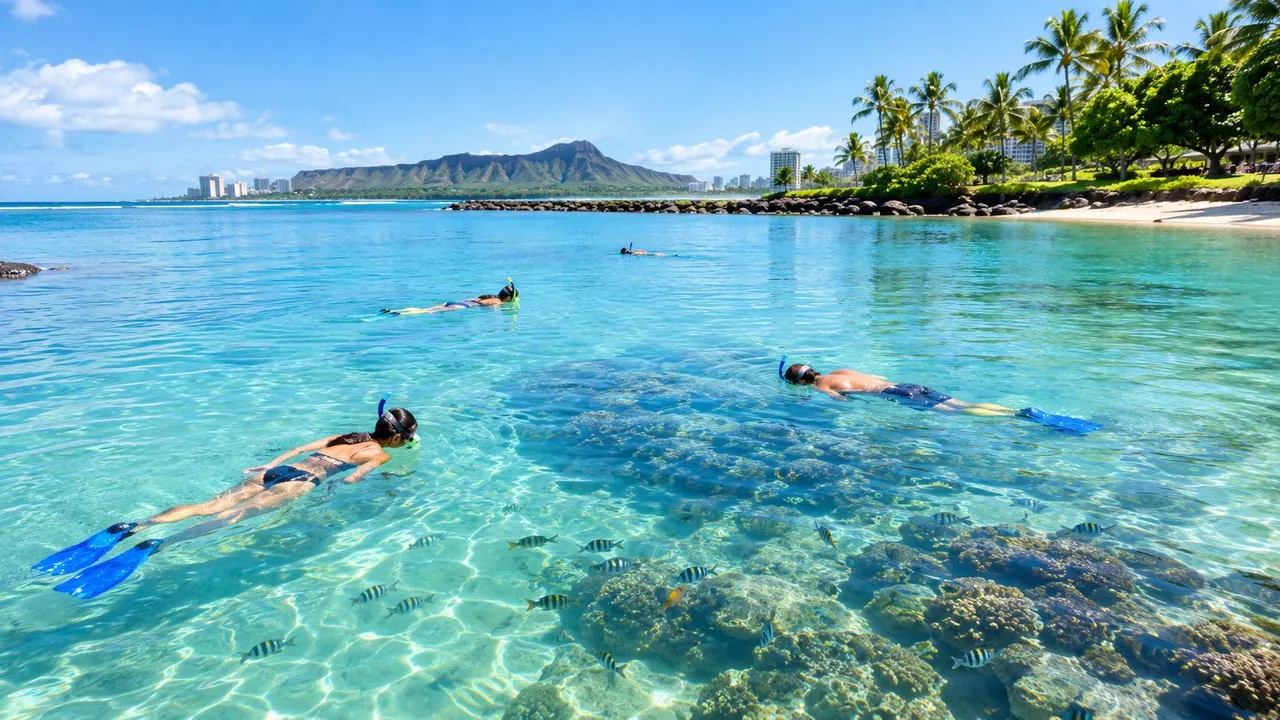
Water clarity and safety can change sharply across Oahu. A live Oahu snorkeling conditions report rated Waikiki MLCD visibility at 3.5 out of 10 during northeast trade winds of 15 to 20 mph with 8 to 12 foot surf, citing sand turbidity and active longshore currents. The same report rated protected Ko Olina lagoons at 7.5 out of 10, with 0 to 1 foot lagoon water and low inside currents.
Those figures illustrate a simple principle. A short drive can separate rough, cloudy open water from a calm, clearer lagoon. Beginners and children shouldn't judge conditions from the sky alone. Watch the entry, observe current movement, and ask an experienced operator whether the location suits your group.
Timing the weather window
Calmer summer conditions and reduced swell often improve reef clarity, while winter surf can make exposed shore entries more difficult. Conditions still vary by day, so season alone can't guarantee a safe swim.
Rain deserves special attention. Independent Honolulu-area guidance recommends waiting at least 72 hours after significant rainfall and avoiding water that looks brown or cloudy, because runoff and suspended sediment can reduce visibility and increase health concerns, particularly near Waikiki and the Ala Wai Canal. Check the rainfall and swimming safety guidance for Waikiki before entering after a storm.
Morning departures often make practical sense because wind and surface conditions may be calmer earlier. They also leave time to postpone, relocate, or choose a dry activity if the water fails the visibility check.
Packing for children and beginners
A properly fitted mask matters more than expensive equipment. The skirt should seal comfortably around the face, and the snorkel should stay secure without forcing the swimmer to lift the head.
Pack these essentials:
- Snorkel vest: Adds flotation and confidence for children, older travelers, and casual swimmers.
- Reef-conscious sunscreen: Apply before entering the water and follow local guidance about products that reduce harm to marine habitats.
- Fins that fit: Loose fins cause blisters and poor control, while tight fins make beginners uncomfortable.
- Water shoes: Useful for rocky entries, but never use them as permission to walk across living reef.
- A dry layer and water: Boat spray and wind can make a comfortable swimmer feel cold after leaving the water.
Never enter murky water because the reservation is nonrefundable. A safe delay is better than a frightening swim or an avoidable health risk.
Eco-Responsible Wildlife Viewing and Etiquette
Responsible snorkeling begins with buoyancy and distance. Coral may look like rock, but it is living habitat. A fin kick, hand placement, or careless step can break delicate structures that take a long time to recover.
Hawaiian green sea turtles are protected under U.S. wildlife law. Visitors to Turtle Canyon are advised not to touch, chase, feed, or block turtles, and to keep at least 10 feet away in the water or on shore, according to Turtle Canyon wildlife guidance.
Use the turtle cleaning station correctly
If a turtle approaches, stay still and let it choose the distance. Don't swim directly above it, surround it with other people, or position yourself between the animal and the reef. At a cleaning station, fish need access to the turtle, and the turtle needs space to rest and move naturally.
Protect the reef and conservation area
The Waikīkī Marine Life Conservation District rules prohibit fishing for, taking, injuring, or possessing marine life. They also prohibit taking or altering sand, coral, and other geological features, as well as using devices that could take marine life.
Follow four habits every time:
- Float above the habitat: Keep knees and fins off the bottom.
- Look, don't handle: Never collect coral, shells, rocks, or animals.
- Control your sunscreen: Apply it well before swimming and choose reef-conscious products.
- Follow guide instructions: A local crew can identify no-entry zones and show you how to observe without crowding wildlife.
Leave the reef exactly where it belongs, and take only photographs and memories.
Sample Snorkeling Itineraries
A good itinerary protects the snorkeling window instead of squeezing it between too many commitments. Keep the most condition-sensitive activity early, leave time for food and drying off, and avoid scheduling a nonrefundable attraction immediately afterward.
Early wildlife morning
Start with a morning boat trip to Turtle Canyon, then return to Waikiki for breakfast or an early lunch. This plan suits couples, confident swimmers, and families whose children are comfortable wearing masks in open water. Keep the afternoon flexible in case the group needs rest.
Family water day
Choose a guided Waikiki wildlife cruise with flotation support and water-play features, then reserve time for a shallow, protected swim or a lagoon-style stop. This option works well when children have different confidence levels because one child can enjoy the boat while another practices snorkeling with supervision.
Scenic evening cruise
Use the daytime for beach time or a cultural attraction, then board a Waikiki sunset cruise for coastal views and a relaxed finish. Treat this as a scenic ocean outing rather than a guaranteed wildlife session, since twilight visibility and sea conditions aren't the same as a morning snorkel.
| Itinerary | Duration | Highlights |
|---|---|---|
| Early wildlife morning | Half day | Boat access, turtle habitat, quieter start |
| Family water day | Day segment | Guided snorkeling, waterslide, flotation support |
| Scenic evening cruise | Evening | Waikiki coastline, sunset views, relaxed atmosphere |
Bring a change of clothes, keep motion-sensitive guests near the center of a boat when possible, and confirm what equipment the operator supplies before leaving the hotel.
Choosing a Guided Tour and Booking Advice
A guided tour can solve several beginner problems before anyone enters the water. The crew can choose a site suited to current conditions, demonstrate mask and fin use, and explain how to watch wildlife without crowding it. That support helps families, older travelers, and casual swimmers who may need more direction than a beach entry provides.
Among Oahu providers, Living Ocean Tours departs from Kewalo Basin Boat Harbor near Waikiki. Its Turtle Canyons Snorkel Excursion visits the turtle cleaning station. The Deluxe Waikiki Snorkel and Wildlife Cruise includes a waterslide and other water-play features, which can give children an activity while adults focus on snorkeling.
Independent Hawaii travel coverage gave Living Ocean Tours an average quality score of 89.3 out of 100 across six tours, according to this Living Ocean Tours provider review. Use that figure as one comparison point, then check whether the trip's timing, equipment, supervision, and cancellation terms fit your group.
Match the booking to your group
Ask these questions before paying:
- Who is swimming: Confirm age guidance, flotation options, and whether non-swimmers can stay comfortable aboard.
- What's included: Check whether masks, snorkels, fins, instruction, and in-water guides are provided.
- When does it depart: Morning trips may offer a better conditions window. Sunset trips focus more on scenery.
- How does the boat handle motion: Guests prone to seasickness should ask about seating and prepare before departure.
- Can the group charter privately: Private charters may suit celebrations, corporate outings, or families needing a slower pace.
- What is seasonal: Winter whale-watch options may run from January through March, so ask whether that add-on matches your dates.
After rain, ask whether runoff has affected the planned site. A responsible operator should explain any delay, relocation, or rescheduling rather than rush guests into cloudy water.
For snorkeling combined with play time, the Deluxe cruise is a practical fit. Guests focused on turtles may prefer the more direct Turtle Canyons excursion. Another option is Snorkel Turtle Canyon, which also specializes in turtle-focused snorkeling.
Conclusion and FAQs
A successful Honolulu snorkeling day starts before anyone enters the water. Choose a site that fits the forecast, wait at least 72 hours after significant rain when runoff is a concern, pack flotation and well-fitted equipment, and give turtles and coral plenty of space. The clearest water isn't always at the closest beach, and the most exciting wildlife encounter is never worth chasing.
What should we do if it rains?
Pause the plan and inspect the water later. If the water looks brown or cloudy after heavy rain, follow the recommended 72-hour waiting window and ask your operator about relocating or rescheduling.
How can we reduce motion sickness?
Eat lightly, hydrate, focus on the horizon, and tell the crew before departure. Guests who know they get seasick should discuss suitable medication with a healthcare professional before traveling.
Is snorkeling suitable for children?
It can be, provided the child is comfortable in the water, uses appropriate flotation, and remains under close adult supervision. A protected entry or guided experience usually works better than an exposed shore break for a first attempt.
Do we need to swim far to see turtles?
Not necessarily. Turtle Canyon's shallow reef setting can concentrate turtle and fish activity without requiring deep swims, but encounters and visibility depend on sea conditions. Keep the distance required by wildlife guidance and allow turtles to decide where they move.
Living Ocean Tours offers guided turtle snorkeling, a deluxe Waikiki wildlife cruise with water-play features, sunset cruises, and seasonal whale watching from Kewalo Basin. Visit Living Ocean Tours to compare the options and choose a Honolulu snorkeling experience that matches your family's confidence, schedule, and interest in responsible wildlife viewing.


