
Hawaiian cardinalfish: An Oahu Reef Identification Guide
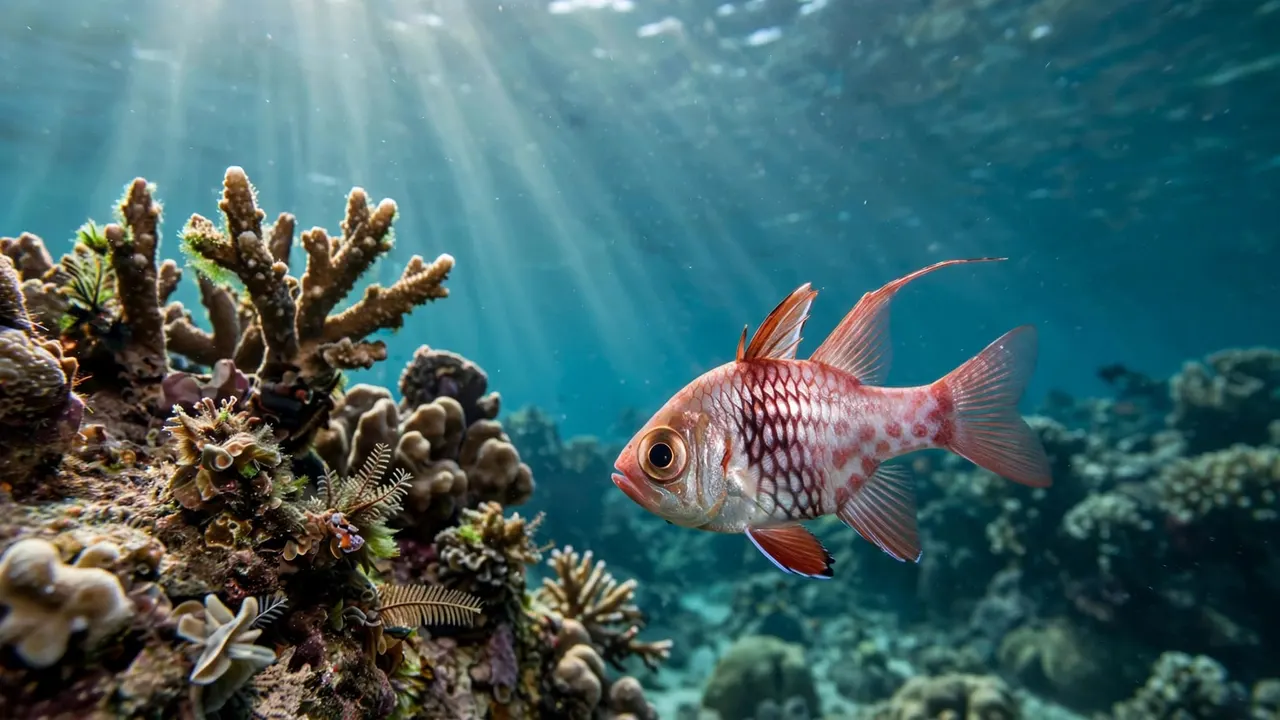
To recognize Hawaiian cardinalfish while snorkeling Oahu, start with the family’s two separate dorsal fins, then study the fish’s full profile. That combination gives you a useful starting point, although identifying the exact species requires more than one visible feature.
At Living Ocean Tours, we encourage you to make patient observation part of your reef adventure. You don’t need to chase a fish or squeeze closer to coral to learn something memorable. Start with what you can clearly see, and let the reef encounter develop at its own pace.
Key Takeaways for Your Reef Day
- Cardinalfish belong to the family Apogonidae, and their two distinct dorsal fins provide a useful family-level identification clue.
- A common name alone doesn’t identify every fish you encounter. FishBase lists Apogon erythrinus as the Hawaiian ruby cardinalfish.
- Your swimming control matters more than your camera’s zoom. Keep clear of coral, stay with your buddy, and let wildlife move freely.
A successful sighting can end with a family name rather than a species name. Learning to recognize that distinction makes your observations more accurate.
How to Recognize Hawaiian Cardinalfish
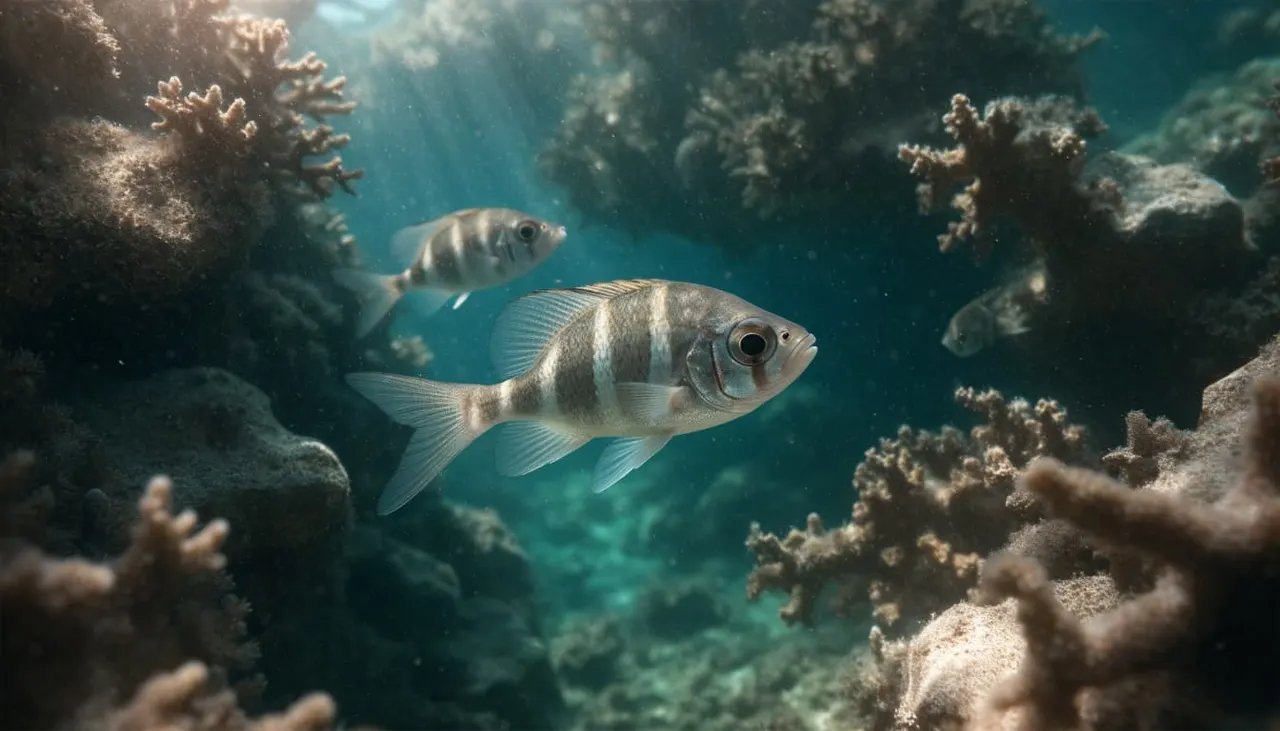
Illustrated reef scene, not a species-identification photograph.
Start with the dorsal fins
The dorsal fins sit along a fish’s back. In cardinalfish, you look for two distinct fins: a spiny front dorsal fin and a soft-rayed rear dorsal fin.
That separation is more useful than a quick impression of color. However, folded fins, viewing angle, and movement can hide the gap. Wait for an unobstructed side view rather than swimming closer to force a better look.
Two dorsal fins don’t establish a cardinalfish identification by themselves, because other fish families share that arrangement. You need the entire fish in view. An isolated fin or a partly hidden head leaves too much information missing.
Separate the family from the species
“Hawaiian cardinalfish” gives you a starting subject, but it isn’t enough to assign every sighting a scientific name. First recognize the family, Apogonidae. Then consider whether you saw enough detail to identify an individual species.
Kuiter and Kozawa’s illustrated Cardinalfishes of the World guide covers this family and its varied appearances.
For a concrete Hawaiian example, FishBase’s Apogon species list identifies Apogon erythrinus as the Hawaiian ruby cardinalfish. That name applies to a particular species, rather than every cardinalfish you might encounter around Hawaii.
Capture the Details That Help Identification
Your best identification record includes the fish’s outline, fin arrangement, and visible markings together. A sharply focused detail can still be misleading if the rest of the animal remains hidden.
Describe what you actually saw
When discussing Hawaiian cardinalfish with your guide, describe visible features before suggesting a name. Mention whether you saw both dorsal fins, the complete tail, and any markings that remained clear as the fish turned.
Separate observations from assumptions. A dark patch visible in one moment could be a marking, a shadow, or another fish behind your subject.
Also, describe the animal’s movement without treating it as proof of identity. Holding position, turning repeatedly, or swimming with other fish adds context. Those actions don’t establish a species on their own.
Take a wider photograph first
If you carry an underwater camera, begin with a side-on image that includes the whole fish. A wider photograph can preserve fin placement and surrounding context better than an extreme close-up.
Keep your camera close to your body, and secure its strap so nothing hangs toward coral. If getting the picture requires reaching into an opening or descending beyond your comfort, skip it.
Afterward, retain the original image alongside any crop. Cropping helps you examine details, but the wider frame preserves information you might otherwise lose. You can also share the photograph with your guide without needing to arrive with a species name.
Cardinalfish or Another Oahu Reef Fish?
You can improve identification by ruling out obvious mismatches. Instead of trying to memorize every reef resident, compare a few clearly visible features.
Use these observations as starting points, not final verdicts.
| Observation | What it helps you assess |
|---|---|
| Two distinct dorsal fins | A useful cardinalfish clue, shared with other fish families |
| One apparently continuous dorsal fin | A reason to reconsider, provided the entire fin is visible |
| A silvery fish with a conspicuously forked tail | A reason to compare flagtails |
| A pointed snout and bold eye band | A reason to compare butterflyfish |
| Only part of the fish visible | Too little information for a confident identification |
The strongest comparison uses several features together. Color alone is especially easy to misread underwater because light, distance, and shade change its appearance.
Our Hawaiian flagtail identification guide offers another useful comparison for silver fish with forked tails. Meanwhile, butterflyfish provide practice in noticing snout shape and eye bands.
Keep the fish you’re watching in view when possible. If several animals cross paths, it’s easy to combine one fish’s markings with another fish’s fins.
Watch Reef Life Without Disturbing It
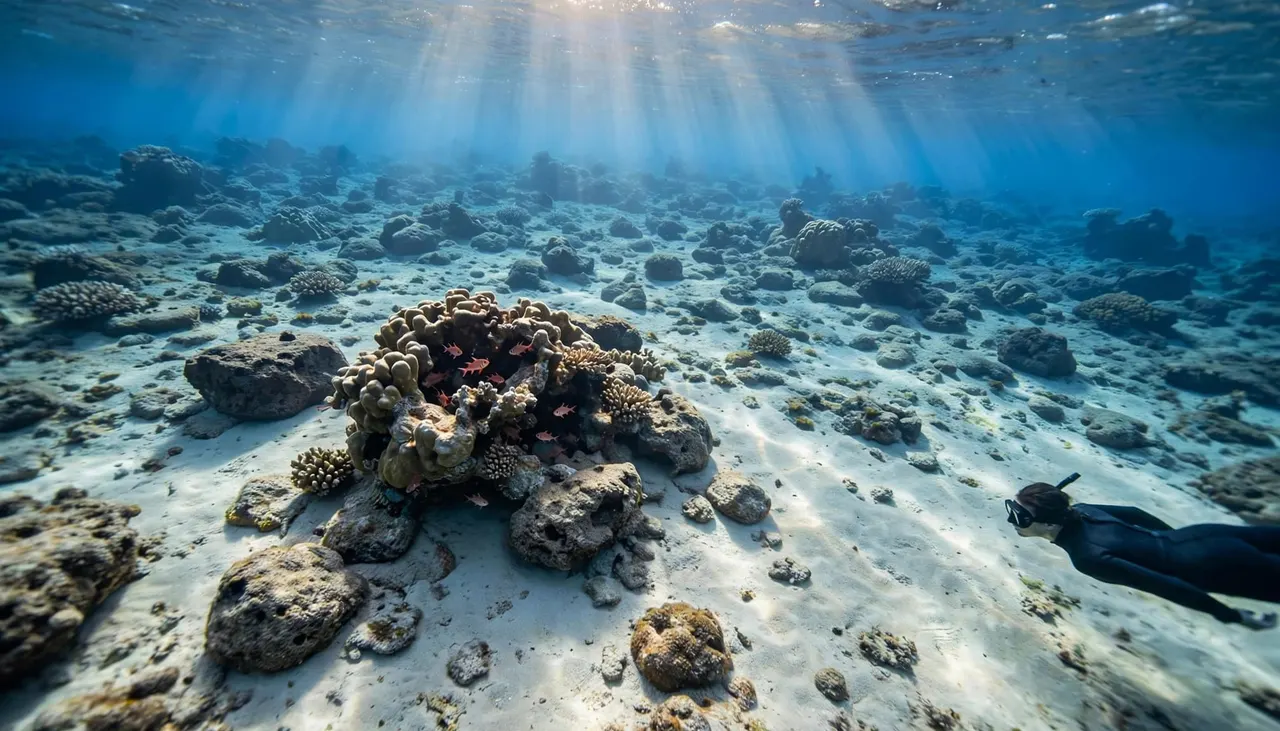
A search for Hawaiian cardinalfish should never require handling wildlife or altering its surroundings. Choose an observation position that leaves room for your body, fins, and camera.
Give coral and wildlife space
Float above the reef without touching, standing on, or kicking coral. If a fish disappears from view, leave its surroundings intact. Don’t lift rocks, reach into openings, or feed animals to draw them out.
NOAA explains that touching coral can damage its protective layer and expose it to bacteria and oils from your skin.
Your distance also affects the encounter. If a fish retreats as you approach, stop advancing and give it more room. At turtle-cleaning areas, keep travel paths open so animals can continue moving without obstruction.
Keep your swimming awareness
Small subjects can hold your attention so completely that you forget about drift. Look up regularly to locate your buddy, your guide, and the boat.
Before concentrating on identification, settle your breathing and equipment. Use the flotation support provided, and signal your guide if your mask or fins need attention. Never use coral as a handhold while making adjustments.
NOAA’s marine-life viewing guidelines reinforce keeping hands and fins clear of coral and other animals.
A rash guard also reduces the skin area needing sunscreen. However, a “reef-safe” label doesn’t guarantee zero environmental impact. Hands-off behavior remains essential throughout your swim.
Explore Waikiki With Professional Snorkel Guides
You can enjoy fish watching without managing every part of the outing yourself. At Living Ocean Tours, we’re Oahu’s only tour company with professional snorkel guides. You have in-water support while getting comfortable and learning to observe responsibly.
Our trips depart from Kewalo Basin Boat Harbor near Waikiki. Tell our crew about your swimming comfort before entering, especially if you’re bringing children or trying snorkeling for the first time.
You can use our guide to Oahu snorkeling excursions to understand how equipment, instruction, and in-water support fit together.
Our Turtle Canyon Snorkel Tour gives you an opportunity to observe a natural turtle-cleaning area with equipment and crew support. Keep your attention open to the wider reef community rather than expecting one particular fish.
When you’re ready to plan your reef outing, CHECK AVAILABILITY for Turtle Canyon.
Between observations, shaded seating, onboard restrooms, and dry storage give your group a comfortable place to regroup. Families can compare sightings while everyone rests.
Frequently Asked Questions
Can you identify Hawaiian cardinalfish from color alone?
Color alone doesn’t provide a reliable identification. Underwater lighting changes the appearance of markings, and different fish can share similar colors. Start with the complete fish and its fin arrangement instead.
A clear side view gives you more useful information than a brief flash of color. Even then, you may recognize the family without reaching a species-level answer. Keep that distinction when labeling photographs or discussing your sighting. A careful family-level identification is more useful than attaching an unsupported species name to an unclear image.
Do you need to dive below the surface?
You don’t need to dive to enjoy fish observation. From the surface, watch whatever reef activity is clearly visible within your group’s swimming boundaries. Let the available view determine what you study.
Diving closer doesn’t automatically produce a better identification, and it can bring you too near coral or beyond your comfort. If the details remain unclear, continue watching from a safe position or move on. For children and beginners, practicing relaxed floating and controlled kicks should come before concentrating on a small subject. Stay close enough to communicate with your buddy.
Make Your Next Reef Sighting Count
Recognizing Hawaiian cardinalfish begins with clear observation: notice the fin arrangement, keep the whole animal in view, and distinguish a family-level identification from a species name.
Give yourself permission to enjoy an encounter without naming every fish. With controlled swimming and hands-off viewing, you can learn more about Oahu’s reef life while leaving its animals and surroundings undisturbed.


