
Best Time to See Whales Morning or Afternoon in Oahu
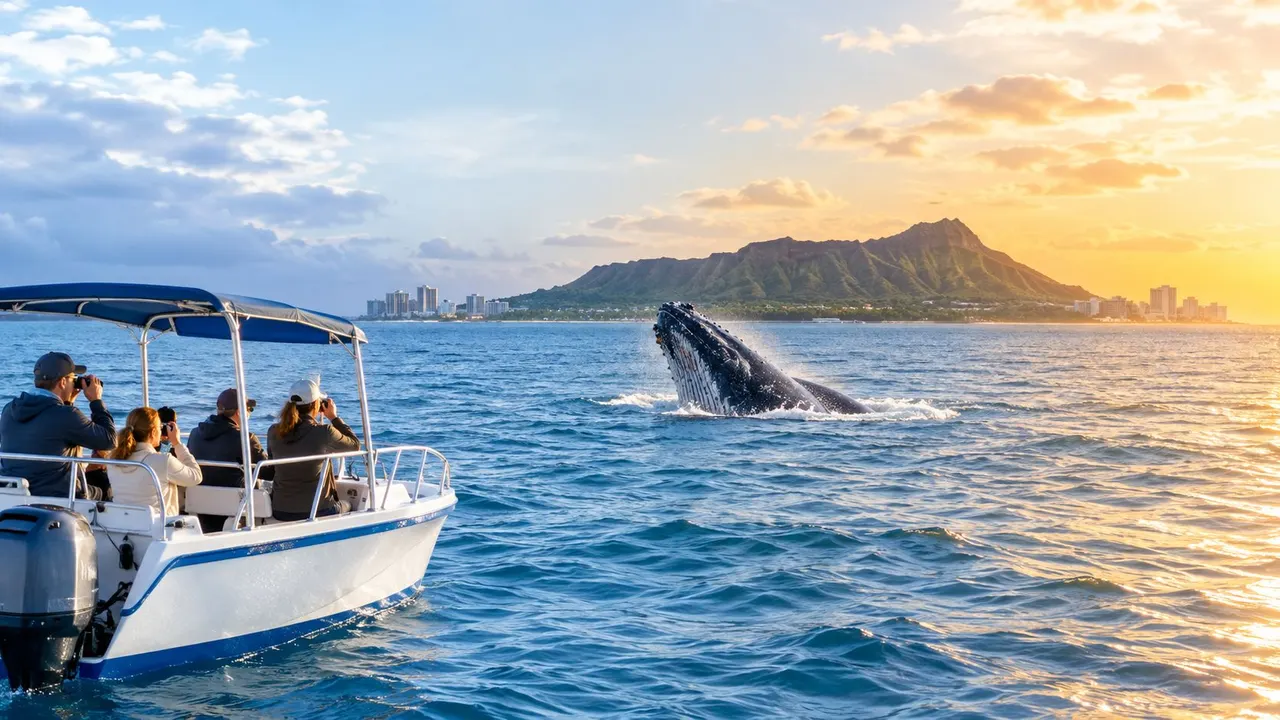
“Always go in the morning” is too simple for Oahu whale watching. An early departure can be a smart comfort choice, but it isn't a universal shortcut to more whales. I'd rather put my family on a calm afternoon ocean than book a rough morning just because somebody said earlier is better.
If you're asking about the best time to see whales, morning or afternoon, my recommendation is straightforward: compare the forecast first, then choose the departure that fits your priorities. When conditions are comparable, afternoon deserves serious consideration. When motion sickness or keeping children comfortable is the main concern, lean toward the gentler forecast, often in the morning.
Why Morning or Afternoon Is the Wrong Question
The mistake is treating a departure time like a wildlife appointment. You can reserve a place on a boat. You can't reserve a breach, a nearby blow, or a particular group of whales.
Hawaii research doesn't support a blanket morning advantage. One broad study found no overall relationship between daylight observation period and whale numbers, while a separate Oahu-area survey recorded more whales in the afternoon. Those findings aren't mutually exclusive, and neither justifies promising that a particular departure will deliver.
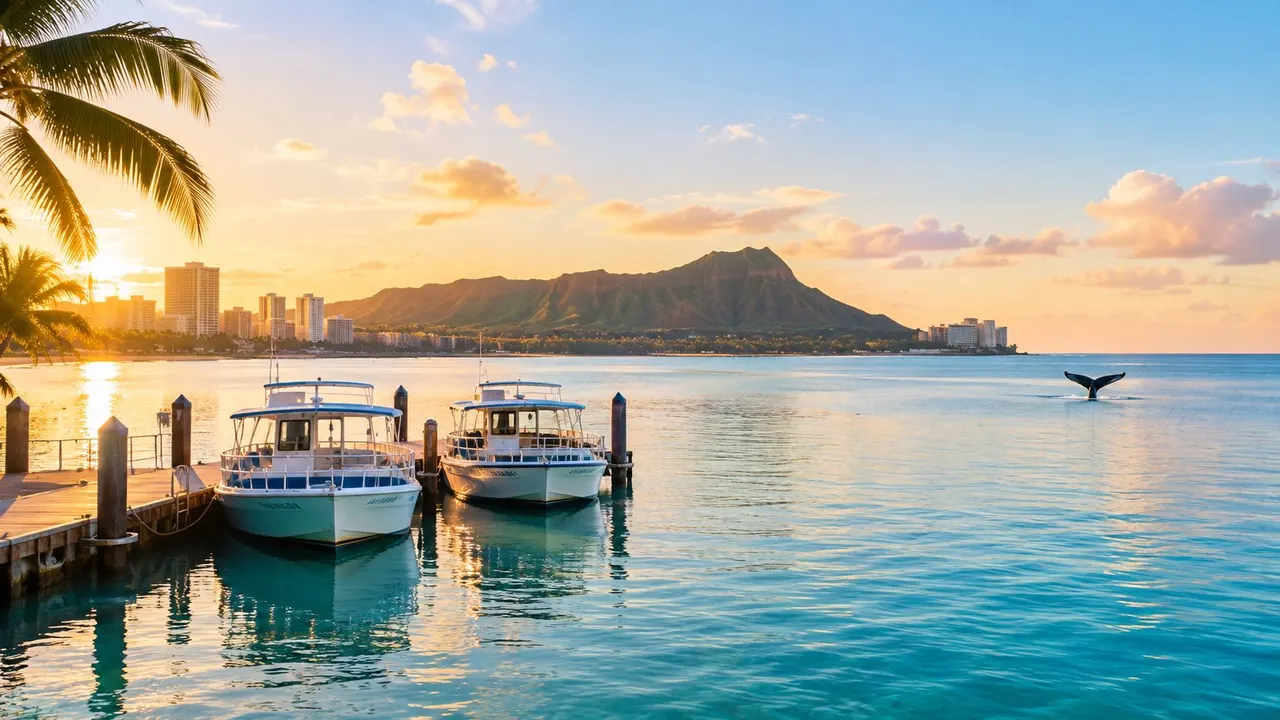
Start with the experience you actually want
A whale watch involves more than whether animals are somewhere offshore. You need conditions that let you stay comfortable, look outward, and notice what the crew is pointing out. A passenger concentrating on an unsettled stomach isn't getting the same viewing experience as someone comfortably scanning the water.
Use this order when comparing departures:
- Season first. Put your trip in the strongest seasonal window your vacation allows.
- Conditions next. Compare wind, swell, and visibility for the actual departure.
- Your priorities after that. Decide whether comfort, photography, or an unhurried schedule matters most.
- Clock last. Use morning versus afternoon as a tie-breaker, not your entire strategy.
Practical rule: Book the ocean conditions you want to ride in, not the time somebody says whales prefer.
That's a more useful approach than declaring a permanent winner. Morning can be right for a family that wants an earlier outing. Afternoon can be right for travelers who want a slower start and a later photography window.
There's also an important distinction between seeing more whales and seeing different behavior. A trip with fewer animals can still deliver a memorable surface encounter. Don't turn either possibility into a guarantee when you're choosing a ticket.
How Oahu Whale Watching Actually Works
Winter timing matters more than fine-tuning the hour. Hawaii's main humpback-viewing season runs through winter and early spring. The sanctuary's general window is November through April, with January through March the peak; Hawaii State Parks describes a broader possible arrival-and-departure window and identifies January and February as peak months, according to its seasonal whale-watching guidance.
That same guidance makes an important geographic distinction: Oahu has whales, but encounters are generally less frequent than in the waters between Maui, Lanai, and Molokai. Don't bring expectations from another island and assume the same concentration off Waikiki.
Shore viewing or a boat departure
A boat excursion and a shore session solve different trip-planning problems. A guided departure from Kewalo Basin Boat Harbor gives you a dedicated ocean outing and a crew to help interpret what you're seeing. Shore viewing lets you watch without committing to time aboard a vessel.
For the shore option, Makapuu Point Lighthouse Trail and the Kaiwi coastline provide elevated seasonal viewing opportunities. State Parks recommends binoculars, which are a sensible choice when your target may be a distant blow rather than a close surface display.
- Choose shore viewing if avoiding boat motion is your overriding concern.
- Choose a guided boat trip if you want a dedicated search and onboard interpretation.
- Keep expectations realistic whichever you choose. Wildlife presence isn't the same as a guaranteed visible encounter.
Responsible distance is part of the experience
Every departure operates within whale-protection requirements. No legitimate morning-versus-afternoon recommendation should depend on a captain pushing closer to an animal or cutting across its route.
That matters when you compare operators. Ask how the crew handles sightings and explains responsible viewing, not whether they can get you closer than another boat. A worthwhile encounter lets you observe the whale's behavior without demanding that the whale change it.
Your starting point is therefore simple: the right season, a suitable viewing platform, realistic Oahu expectations, and an operator who puts responsible observation ahead of a dramatic sales pitch.
Morning vs Afternoon on Seven Decision Factors
Use this comparison to identify your priority before choosing a departure. These are decision guides, not published tour schedules; check the actual sailing times offered on your date.
Morning vs Afternoon Whale Watching in Oahu
| Factor | Morning (10:00-12:00) | Afternoon (13:00-15:00) |
|---|---|---|
| Sighting probability | Scientifically reasonable choice | Local research gives afternoon a conditional edge |
| Sea state and wind | Starting preference when seeking lighter conditions | Strong option when the forecast stays settled |
| Surface visibility | Favor it when the surface is easier to scan | Equally worth considering with a clear horizon |
| Kewalo Basin crowds | Check the specific departure | Check the specific departure |
| Photography light | Choose around visibility and viewing direction | Later departures may suit warmer-light goals |
| Motion-sickness concerns | Sensible first choice if the forecast is gentler | Choose when expected conditions suit your tolerance |
| Family scheduling | Keeps the later day available | Allows a slower start or another morning commitment |
What those trade-offs mean aboard
Sighting probability. I wouldn't reject a morning departure on wildlife grounds. If both trips have similar conditions and your main goal is an encounter, though, the local afternoon finding deserves weight.
Treat afternoon as a reasonable tie-breaker, not a sighting guarantee.
Sea state and wind. Morning is a useful starting preference for comfort, not a weather forecast. If the captain expects a smoother afternoon, follow that advice rather than the general rule.
Surface visibility and scanning. Choose the departure that gives you the best chance of comfortably watching the water. Being able to keep looking matters more than winning an argument about the clock.
Crowds at Kewalo Basin. There's no supported basis here for declaring either slot consistently quieter. Ask about expected boat occupancy and check-in arrangements instead of assuming an early harbor means an empty boat.
Photography. Later light can be appealing, but a departure in the afternoon isn't automatically a golden-hour outing. Compare the listed timing with the light you want, and don't sacrifice usable conditions for a hoped-for photograph.
Motion-sickness risk. Give comfort veto power. If you know boat movement bothers you, don't choose the rougher forecast merely because a particular time sounds more promising for wildlife.
Family scheduling. Pick a departure your group can reach without rushing. A relaxed check-in and children who are ready to pay attention are more useful than squeezing a whale watch between incompatible reservations.
The practical distinction is between a better theoretical slot and a better trip for your passengers. Choose the latter.
What the Research Actually Says About Whale Counts
The strongest local afternoon result comes from a Kalaeloa-area survey, not from a universal rule about Oahu. Researchers recorded 25 humpback whales: 18, or 72%, during afternoon surveys, and 7, or 28%, during morning surveys, with a statistically significant difference reported as χ² = 4.84, df = 1, p = 0.028, in the Kalaeloa marine observation report.
That is a legitimate reason to consider afternoon. It is not a personal sighting probability, an island-wide forecast, or evidence that every afternoon boat will outperform every morning boat.
Why the broader result differs
A separate Hawaii study used weekly scans across 07:00-09:00, 10:00-12:00, 13:00-15:00, and 16:00-18:00, averaging 18.3 whales per scan, with individual scans ranging from 1 to 55; it found that whale numbers did not change as a function of time of day, according to Frankel and colleagues' humpback distribution research.
Different study locations and observation designs can produce different results without either being wrong. The local survey describes what researchers observed in its particular area. The broader work tests a different geographic and observational picture.
Neither study directly measures your chances from a specific passenger seat on a specific departure.
Evidence check: A share of observed whales isn't the same thing as a tour's success rate.
Counts and behavior are different questions
The behavioral evidence adds another layer. Research on Hawaiian humpback social behavior found increasing adult-group activity across the day, stronger male-male competition in the afternoon, and high rates of behaviors such as breaching around noon.
That supports interest in later viewing for the kind of activity you might witness. It doesn't establish that a later trip must encounter more whales, and it doesn't promise a breach.
For planning, I'd interpret the findings this way: afternoon has a defensible local argument, while morning remains a sound wildlife choice. Use the Oahu whale-watching planning guide to organize your trip, then let the day's marine conditions decide whether that afternoon preference still makes sense.
Why Sea State and Forecast Beat the Clock
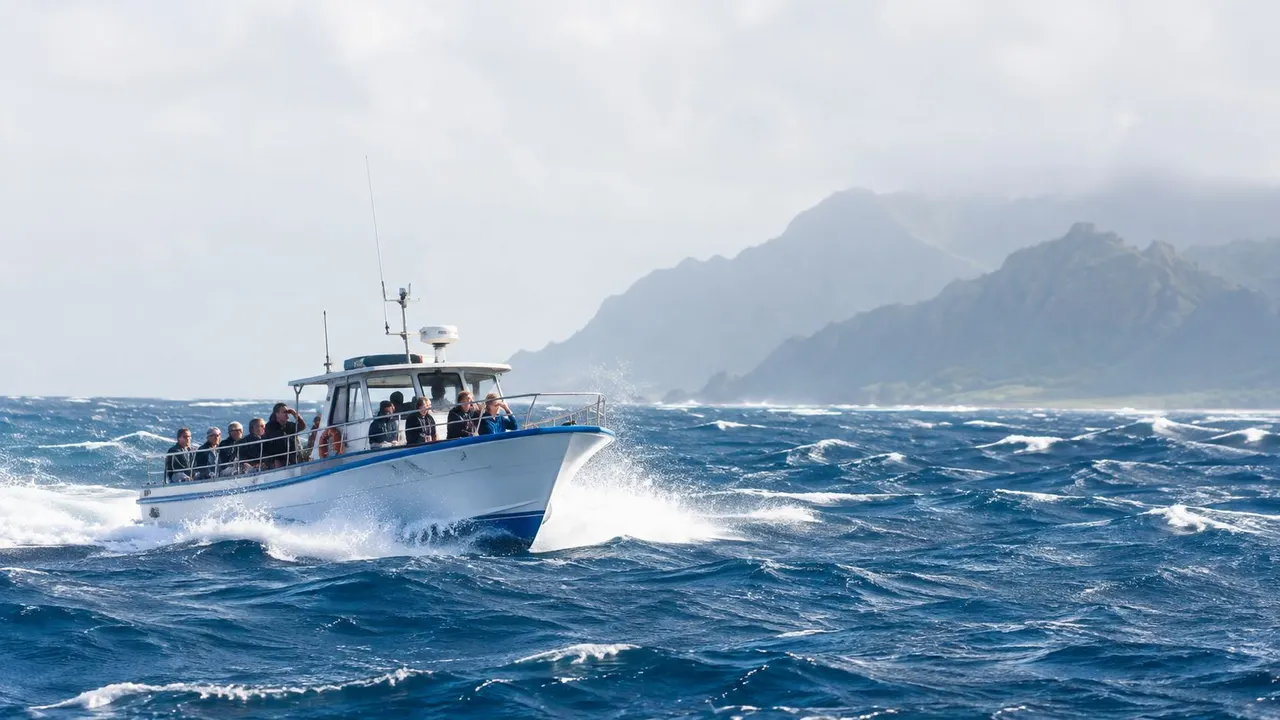
A calm afternoon is a better comfort-and-visibility bet than a rough morning. That's my practical recommendation, not a claim that the ocean produces more whales whenever the surface smooths out.
Wind-driven chop can hide small surface cues, including blows, and make sustained horizon scanning harder. The BoatBooker whale-watching season guide discusses the practical trade-offs between morning conditions, later light, and sighting information. For a family trip, those trade-offs matter because passengers need to remain comfortable enough to watch.
Ask a better booking question
Don't stop at asking which departure is best. Ask what the crew expects for wind, swell, visibility, and recent sightings on your date.
Those are separate questions. A lighter breeze doesn't answer everything about swell, and a whale report doesn't tell you how comfortable the ride will be. A useful answer describes the expected conditions rather than steering you toward whichever departure still has seats.
Use this departure-day checklist:
- Wind outlook. Ask whether conditions are expected to build, ease, or remain steady during your trip.
- Swell and ride. Ask how the forecast is likely to feel aboard, especially for your least comfortable passenger.
- Viewing conditions. Check whether visibility and the viewing horizon are expected to be favorable.
- Recent reports. Ask what the crew has seen lately without treating yesterday's encounter as today's appointment.
- Operational updates. Follow the operator's instructions if conditions affect the sailing.
Make the decision for your actual group
An experienced ocean traveler and a grandparent worried about motion may make different choices from the same forecast. Neither is wrong. The right booking leaves your group able to enjoy the outing rather than merely tolerate it.
The guide to planning an Oahu whale watch is a useful place to continue organizing your questions. Keep the final question personal: which available departure gives our group the most comfortable, attentive time on the water?
Matching the Time Slot to Your Traveler Type
Families and multigenerational groups
For families with young children, I'd start by considering morning. That recommendation is about managing the day, not claiming children somehow get better wildlife odds before lunch.
Choose it when an earlier activity suits your children's energy and the marine forecast supports it. For a multigenerational group, let the person least comfortable aboard have a real say.
Family-first choice: Pick the departure your whole group can enjoy, not the one your keenest photographer wants most.
Photographers and wildlife enthusiasts
Lean later if your priority is warm light, but check the actual departure and return window. The comparison-table afternoon period and the light near sunset aren't interchangeable.
For wildlife enthusiasts, separate the wish for an active encounter from the demand for a particular photograph. The behavioral research gives later viewing a rationale, but individual whales aren't obliged to perform for the camera.
Travelers who worry about seasickness
Choose the gentlest expected conditions, even if that means abandoning your preferred time. Morning is a reasonable starting point for this traveler, but it shouldn't become an inflexible rule.
Ask the operator about the likely ride before booking. If you need personal advice about motion-sickness prevention, get it from an appropriate healthcare professional rather than improvising aboard.
Couples and tightly scheduled visitors
Couples may prefer an afternoon departure because it leaves the morning unhurried. That's a perfectly good reason to choose it, provided you don't assume a whale watch is also a sunset sailing.
Cruise-day visitors and travelers with packed itineraries should work backward from their nonnegotiable return commitments. Don't squeeze a boat outing into a gap that leaves no room for check-in or getting back to your next stop.
The Oahu whale-watching trip guide can help you organize the outing around your vacation. My preference is simple: choose a workable day before chasing an idealized hour.
Responsible Viewing and Booking Smart on Oahu
A good whale-watch operator doesn't sell proximity as a prize. Before comparing departure times, make sure you understand what responsible viewing allows and what it doesn't.
Hawaii prohibits approaching humpback whales within 100 yards, intercepting their path, or disrupting their normal behavior; the restrictions extend through waters within 200 nautical miles of the islands, while sanctuary boating guidance recommends a maximum transit speed of 15 knots, or a safe planing speed, during whale season, according to the Hawaiian Islands Humpback Whale National Marine Sanctuary's recreation guidance.
Distinguish rules from recommendations
The approach restriction is a legal protection. The transit-speed guidance is a boating recommendation, and it shouldn't be misrepresented as an identical legal requirement.
Neither changes with your departure time. You're booking an opportunity to observe whales responsibly, not permission for a boat to pursue a closer encounter.
- Ask about viewing practices. The crew should explain how it avoids interfering with whales.
- Check current departure details. Confirm availability, check-in instructions, and the listed trip timing.
- Read the booking terms. Understand cancellation and weather-related arrangements before paying.
- Leave room for variability. Don't build your expectations around a particular image or previous guest's encounter.
Book the actual seasonal offering
The strongest seasonal window is the sensible starting point, but visitors traveling near its edges shouldn't try to compensate with an allegedly magical hour. Put more emphasis on current reports and whether conditions suit the people aboard.
Use the current tour listing for what is being offered, rather than assuming a comparison table represents the operator's schedule.
The Oahu whale-watching overview offers another planning reference. Before you commit, make sure everyone understands the same bargain: the crew provides the outing and responsible viewing effort, while the whales determine the encounter.
Our Verdict and How to Book With Living Ocean Tours
When conditions are comparable, I'd lean afternoon for an Oahu whale watch. The local evidence and behavioral findings justify that preference. Choose morning instead when an earlier outing or a gentler expected ride matters more to your group.
Living Ocean Tours is the top rated & most reviewed snorkel company on Oahu, and it also offers seasonal whale watching from Honolulu.
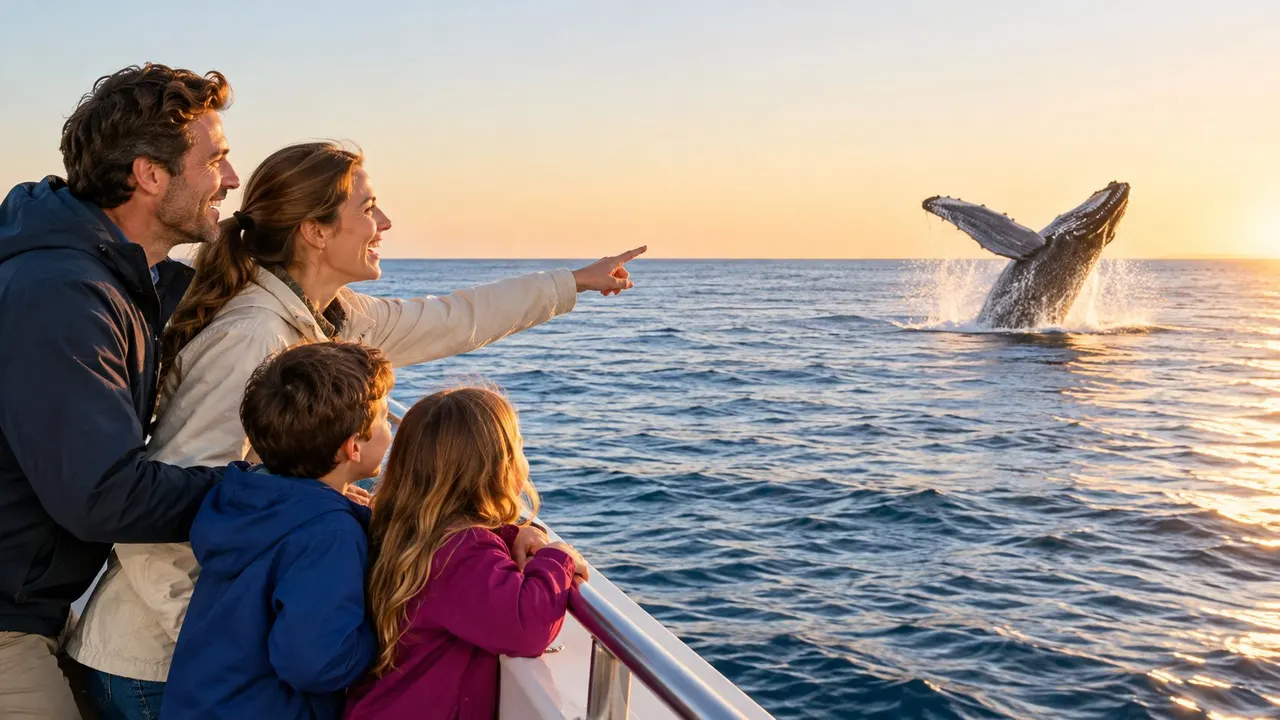
Check the Waikiki Whale Watching Tour page for current seasonal availability. Then ask about the expected ride and choose the departure that fits your passengers, not a blanket rule about the clock.
Plan a seasonal Waikiki whale watch with a guided departure from Kewalo Basin Boat Harbor. Visit Living Ocean Tours to check your dates, compare available departures, and ask which sailing best suits your family's comfort and schedule.


