
Yellow Tang or Convict Tang? Your Waikiki ID Guide
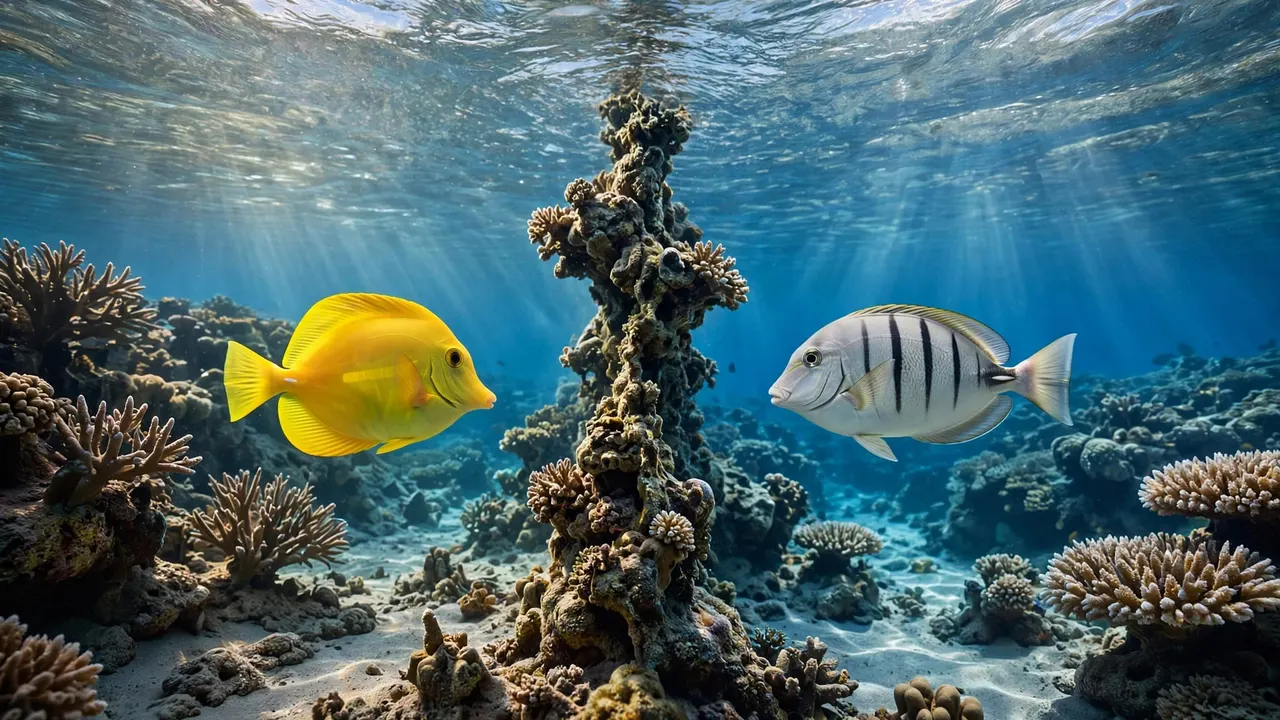
A yellow tang is solid yellow, while a convict tang has a pale body crossed by black vertical bars. When you’re deciding “Yellow Tang or Convict Tang?” off Waikiki, those markings give you the fastest answer.
At Living Ocean Tours, we help you explore reef habitat with curiosity and respect. However, color alone can fool you when sunlight shifts or a fish turns sideways.
Start with the overall pattern, then use body shape and behavior to strengthen your identification.
Key Takeaways
- Look for an almost entirely yellow body on a yellow tang, versus dark vertical bands on a convict tang.
- Use the fish’s outline as a second clue: yellow tangs have a taller profile and a more pointed snout.
- Watch feeding behavior without chasing the fish, touching coral, or separating from your buddy.
- Treat Waikiki wildlife sightings as opportunities, never guarantees of seeing either species.
Yellow Tang or Convict Tang: The Fast Comparison
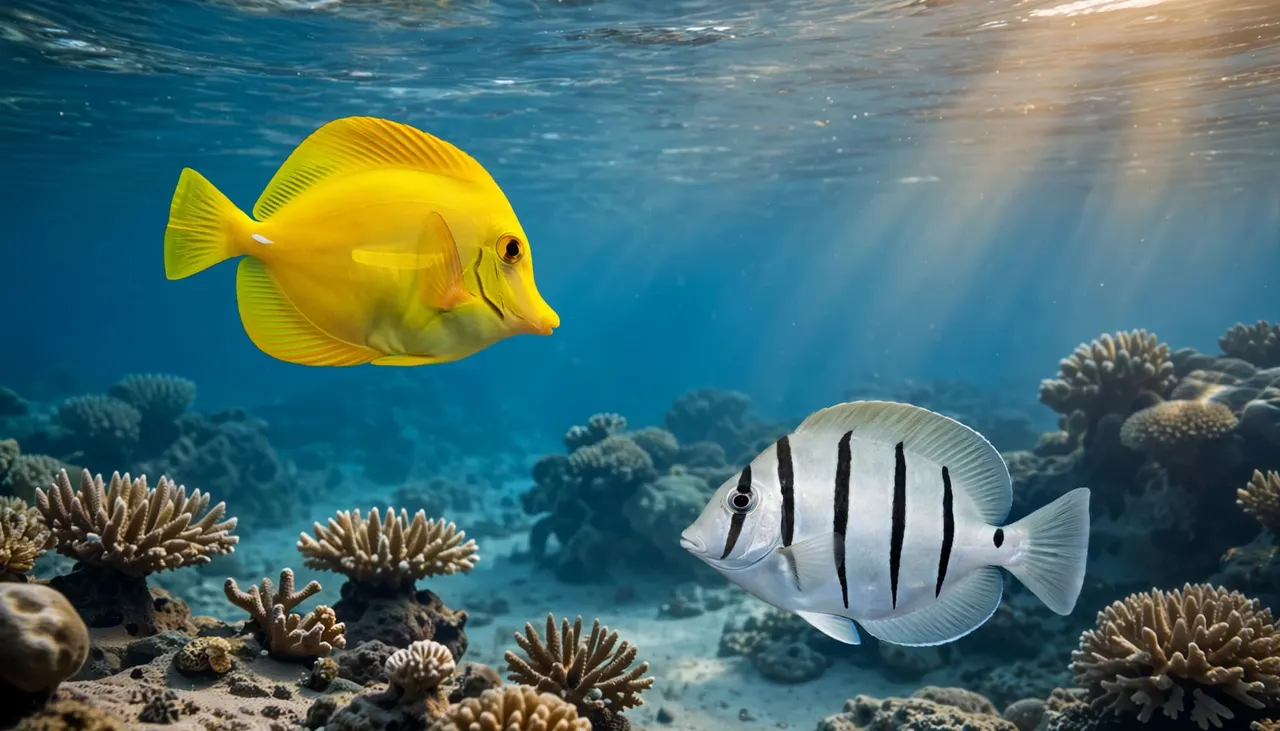
Your best first view is a side profile. Both fish look thin when swimming directly toward you, so their markings become easier to read as they turn.
Use these differences while floating comfortably above the reef.
| Feature | Yellow tang | Convict tang |
|---|---|---|
| Scientific name | Zebrasoma flavescens | Acanthurus triostegus |
| Main color | Bright yellow | Pale silver or whitish |
| Pattern | Largely uniform color | Six dark vertical bands |
| Body outline | Tall oval with prominent fins | Oval with a lower-looking profile |
| Snout | More pointed | Shorter and rounder |
| Hawaiian name | Lau’ipala | Manini |
The pattern gives you the quickest answer; the outline helps when glare makes colors harder to judge.
Neither species is exclusive to Hawaii. Both are native reef fish, so seeing one in Hawaiian waters doesn’t mean you’ve found a Hawaiian endemic.
Also, avoid identifying a fish from its companions alone. Different species can feed near one another, and a passing school may briefly hide your subject.
How to Recognize a Yellow Tang
Look for uniform yellow and a pointed snout
A yellow tang’s yellow color extends across its body and fins. Its tall dorsal and anal fins create a rounded, almost disk-like silhouette when fully extended.
Then look toward the head. The projecting snout gives you another useful clue, especially when the fish pauses beside the reef.
You’ll find Zebrasoma flavescens among the species documented in Bishop Museum’s Hawaiian fish checklist. Learning that scientific name helps you match the same fish across field guides, aquarium displays, and educational resources.
Notice the white tail-base spine without approaching
Yellow tangs have a small white spine on each side near the base of the tail. You may notice that detail when a fish turns broadside in good light.
However, you don’t need to see the spine to make a confident identification. Overall color and shape are more practical from normal snorkeling distance.
A yellow fish with blue horizontal stripes and a longer snapper-shaped body is a different identification problem. Don’t let one bright color outweigh the rest of the animal’s appearance.
How to Recognize a Convict Tang
Follow the vertical bars, including the eye band
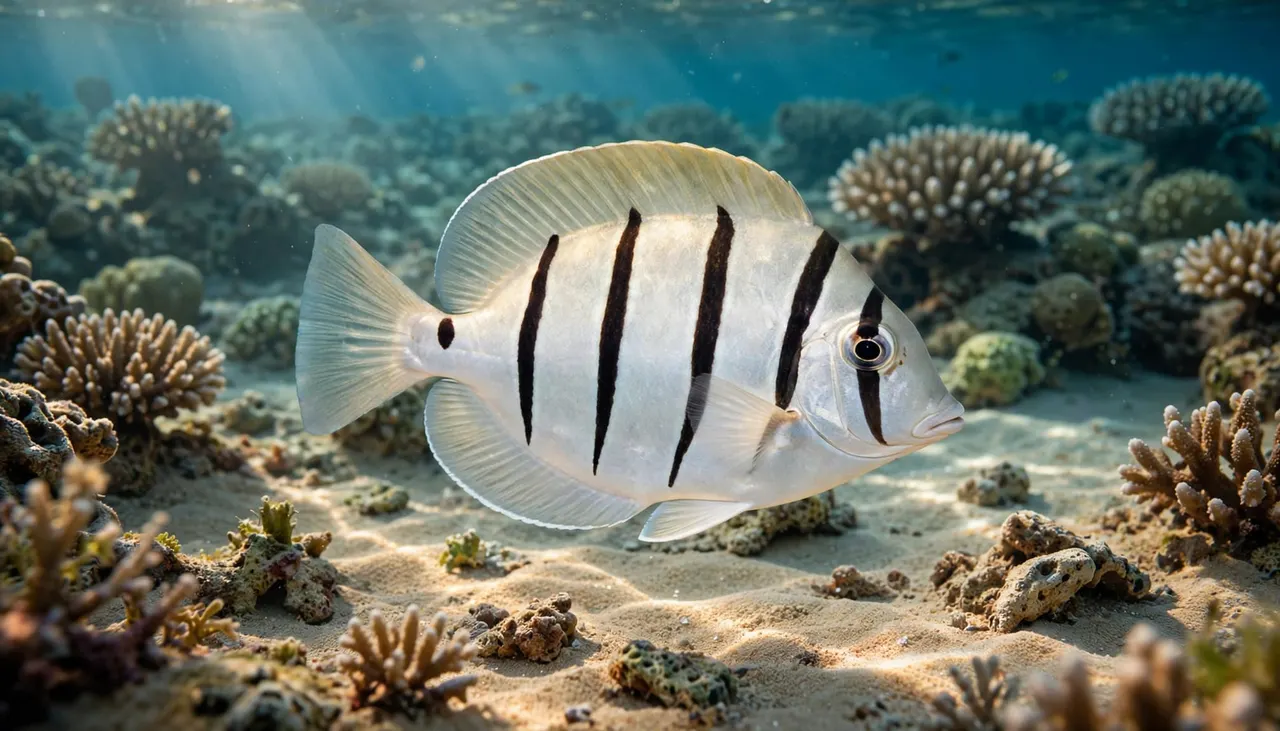
A convict tang has six dark vertical bands, including one through the eye. Those upright stripes explain its familiar English name.
Underwater, the pale body may look silver, cream, or slightly yellowish because of changing light. Therefore, prioritize stripe direction over the exact background shade.
You don’t have to count every band while the fish is moving. First establish that the bars run vertically across a pale, oval body. Then watch another broadside turn if conditions allow.
Watch for grazing groups
Convict tangs often gather in groups while feeding on algae. You may see several fish lower their mouths toward the reef, lift away, and repeat the movement nearby.
John E. Randall’s study of convict surgeonfish examined the species’ life history and ecology in Hawaii.
For your own identification, behavior remains supporting evidence. Yellow tangs graze too, and a solitary convict tang still has the same striped pattern. Let the markings lead your decision rather than assuming every school contains one species.
Where to Look Around Waikiki’s Reefs
When you’re weighing “Yellow Tang or Convict Tang?”, look at the habitat as well as the fish. Reef edges and algae-covered surfaces give grazing fish places to feed.
However, don’t swim into very shallow water simply because you can see fish there. Wave surge can push you toward coral, and a promising-looking patch may offer little clearance for your fins.
Your location and visibility also affect what you notice. Sand stirred by waves can hide details, while surface glare can make a pale fish disappear against the bottom.
Pause over one manageable reef patch
Give yourself 20 to 30 seconds to watch a small area before moving farther. You’ll have time to notice repeated feeding routes and fish emerging beside ledges.
Meanwhile, keep your buddy and group in view. A useful observation spot is one where you can float comfortably without constant correction.
Keep expectations open
Neither tang is guaranteed on a particular Waikiki outing. Fish move, conditions change, and other species may dominate the reef you visit.
Our Waikiki snorkeling tours give you opportunities to observe marine life, but the reef determines the day’s sightings.
Get a Better View Without Disturbing the Reef
Let the fish move into view
If your “Yellow Tang or Convict Tang?” question remains unresolved, wait for a clearer angle instead of swimming after the fish. A broadside turn often reveals more than a close approach.
Keep your movements slow and your hands relaxed. Also, leave space for fish to continue feeding rather than blocking their route.
A wider photograph can preserve useful markings without requiring you to close the distance. You can crop the image later.
For photos, prioritize a readable side view over a dramatic close-up. A fish disappearing into shelter is your cue to leave that space undisturbed.
Protect your clearance and swimming comfort
Never touch, stand on, or kick coral. Keep your fins clear of the bottom, and use the flotation support recommended by your crew.
Both tangs belong to the surgeonfish family. The University of Hawaii’s surgeonfish identification guide describes the scalpel-like spine near the tail, another reason to observe without handling.
Don’t feed fish to draw them closer. Feeding changes the encounter and interrupts the natural behavior you’re trying to understand.
Finally, end your observation if you’re tired, uncomfortable, or losing track of your buddy. Fish identification should never compete with breathing comfortably and staying aware.
Practice Fish Identification With Our Snorkel Guides
You don’t need to memorize a field guide before joining us. At Living Ocean Tours, we’re Oahu’s only tour company with professional snorkel guides, so you have in-water support while learning.
Our trips depart from Kewalo Basin Boat Harbor, near Waikiki. You receive equipment and instruction, while our guides reinforce respectful wildlife viewing.
You can explore our Honolulu ocean tour options to choose an outing that suits your group.
For a turtle-focused outing, our Turtle Canyon Snorkel Tour visits a natural cleaning-station area. Smaller reef fish clean Hawaiian green sea turtles while you observe without touching or interrupting them.
The two-hour excursion starts at $79 per person and welcomes guests ages 3 and older. Tell your guide you’re interested in reef fish, and share your swimming comfort before entering.
You can CHECK AVAILABILITY for your preferred Turtle Canyon outing.
Frequently Asked Questions
Can you identify a Yellow Tang or Convict Tang from a photo?
Yes, when the photograph shows the side of the fish clearly. Look for uniform yellow versus dark vertical bands first. Then compare the snout and body outline. However, a blurred image or head-on view may not contain enough information for a reliable identification.
Are yellow tangs and convict tangs dangerous to snorkelers?
You can observe either species without approaching or handling it. Both have defensive tail-base spines, so avoid contact and never try to catch one. Give feeding fish room, keep your hands to yourself, and follow your guide’s directions throughout the encounter.
Are convict tangs always in schools?
No. Although you may see groups grazing together, you can also encounter individual fish. Group size isn’t a dependable identification feature. Similarly, several yellow fish swimming together don’t automatically become convict tangs. The body pattern remains the stronger clue, even when fish mix around the same reef patch.
Make Your Next Reef Sighting Easier to Identify
Your “Yellow Tang or Convict Tang?” decision starts with one clear distinction: solid yellow versus vertical black bars. Body shape and feeding behavior then help you build confidence.
Give yourself time for a broadside view, keep your fins clear of coral, and stay connected with your buddy. Patient observation gives you a better look while leaving the fish free to continue its day.


