
Wheelchair Accessible Snorkeling Oahu: Plan Your Day
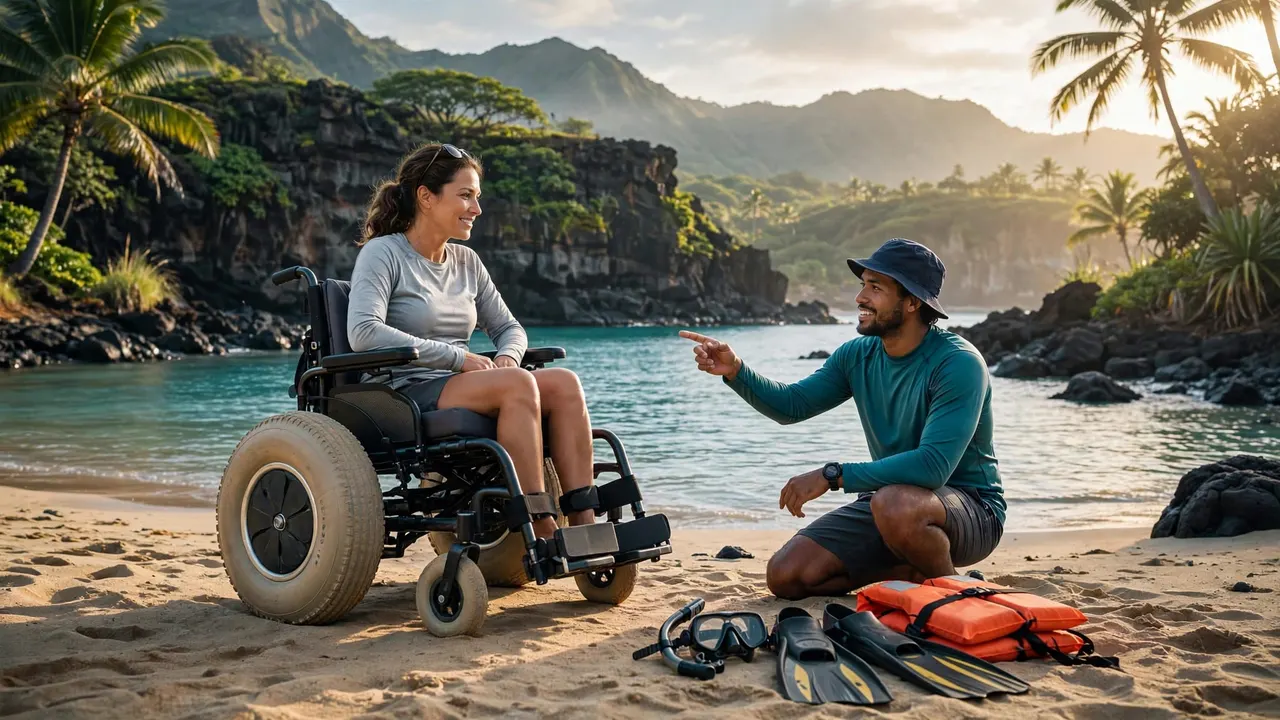
A day in the water should begin with clear answers, not assumptions at the shoreline. wheelchair accessible snorkeling Oahu takes more planning than finding a beach with a paved path, because beach access, water entry, and a safe return are different needs.
Living Ocean Tours operates snorkeling and sightseeing trips from Kewalo Basin Boat Harbor near Waikiki. However, public listings for its snorkeling trips state that they are not wheelchair accessible, so you should confirm every part of your plan before you book.
With the right beach, the right equipment, and an honest conversation with an operator, you can build an Oahu ocean day around your comfort and abilities.
Start With the Access You Need
A beach wheelchair, paved route, or accessible restroom can make an outing more enjoyable. Still, those features do not confirm that you can independently enter the ocean, float safely over a reef, or transfer back to your chair after swimming.
For wheelchair accessible snorkeling Oahu, separate your day into practical stages: getting from transportation to the sand, moving across the beach, transferring near the water, managing flotation, and returning while wet and tired. Each stage deserves a clear plan.
If you use a power chair or scooter, ask whether it can stay safely on shore. You may need a manual beach chair, an assistant, or a second mobility device for sand.
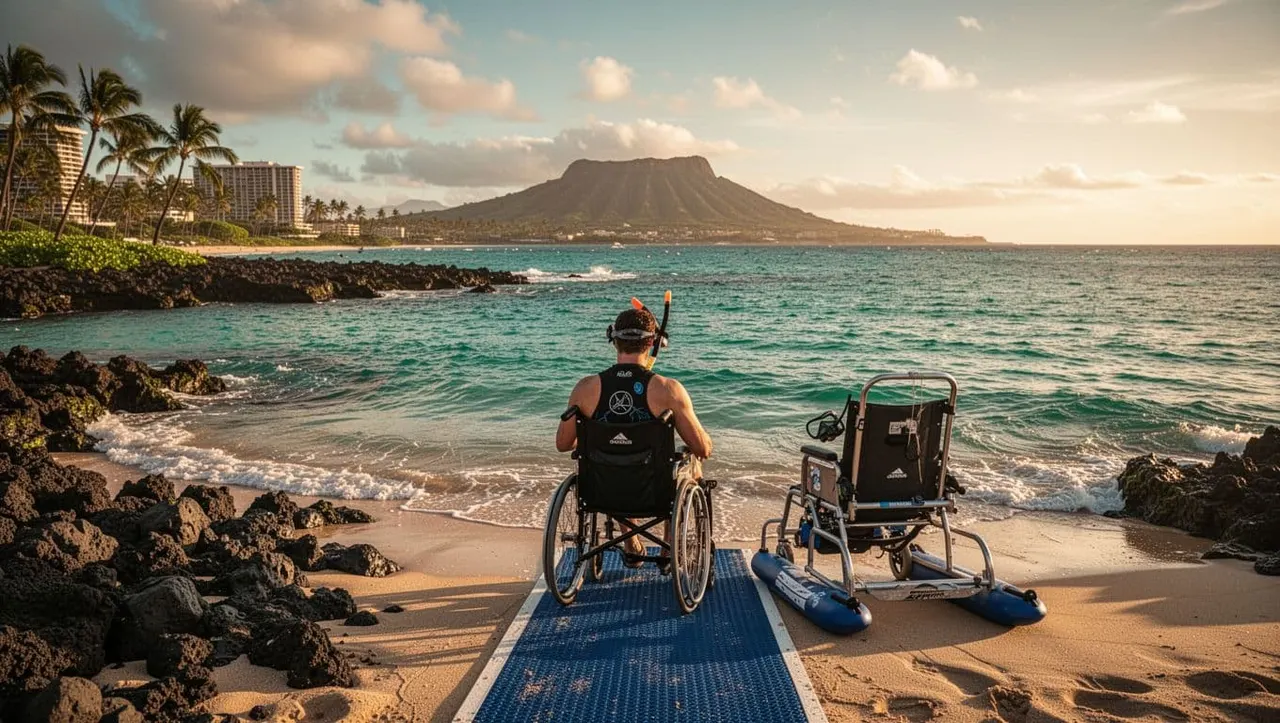
A beach access mat helps you reach the shoreline. It does not remove changing surf, shifting sand, or the need for a safe transfer into the water.
You should also be comfortable with the swimming portion of any snorkel outing. If you cannot swim independently, contact the site or operator before making plans. A boat ride or beach visit may be a better fit than entering the water.
Choose Oahu Shorelines With Confirmed Beach Access
Ala Moana Beach Park offers practical shoreline support
Ala Moana Beach Park is close to Waikiki and has generally calmer nearshore water than exposed surf beaches. The City and County of Honolulu provides free all-terrain beach wheelchairs and access mats at Ala Moana Regional Park.
The city lists beach wheelchair pickup at the Diamond Head-side and Ewa-side L&L Food Concessionaires, typically from 8 a.m. to 5 p.m. Call ahead at (808) 941-8882 because weather, maintenance, and availability can change. You can review current details through Honolulu’s park and recreation resources.
Use an all-terrain chair to reach the water’s edge, not as proof that snorkeling conditions are safe. You still need to assess wind, waves, water clarity, and your transfer plan.
Waikiki beaches can work for a relaxed ocean day
Fort DeRussy Beach and Sans Souci Beach are among the Oahu locations identified in GoHawaii’s accessibility information. Their proximity to Waikiki hotels can reduce transportation stress, especially when you need to return for medication, a dry change of clothes, or a rest break.
Conditions vary even along the same stretch of coast. Arrive early, look for a gentle entry, and skip the water if shorebreak or crowding makes your transfer feel rushed. A calm, shorter float near shore can be more rewarding than forcing a long snorkel.
Plan Hanauma Bay Before You Leave Your Hotel
Reserve early and leave room for delays
Hanauma Bay Nature Preserve has reef snorkeling and more formal visitor infrastructure. Reservations open two calendar days before your visit at 7:00 a.m. Hawaii Standard Time. A reservation can cover up to 10 people, with no more than five adults and five children.
Your reservation does not hold a parking stall. If the lot is full, you may need to wait for a space or use legal street parking. Build extra time into your morning, particularly if you use accessible transportation or need help moving gear.
Hanauma Bay can be a strong option for wheelchair accessible snorkeling Oahu when you have confirmed equipment and assistance. Yet the bay’s slope, beach conditions, and changing water still require a realistic entry plan.
Use the tram and beach wheelchair as part of the route
The Hanauma Bay tram has a ramp and accommodates wheelchairs. It travels between the education center and beach about every 10 minutes. The preserve also makes all-terrain beach wheelchairs available at the Beach Information Kiosk.
Official pages list different wheelchair availability hours, either ending at 3 p.m. or 4 p.m. Confirm the current time directly before you go. Bring a companion who can push and assist, since beach wheelchairs are not self-propelled across soft sand.
A beach day can still be a success if you decide to enjoy the views, facilities, and protected bay without entering the water.
Ask Snorkel Operators Direct Questions
Confirm boarding, seating, and mobility-device storage
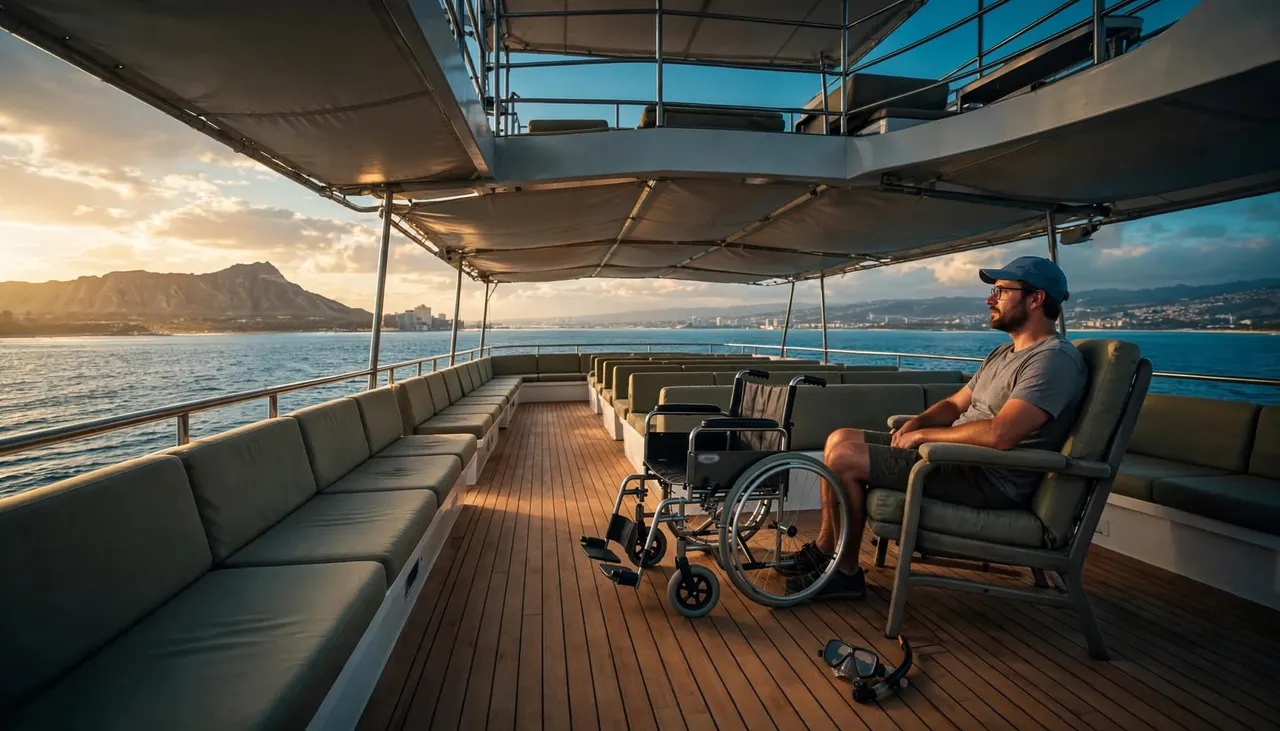
Do not rely on a boat photo or a general statement about spacious decks. Ask how you will travel from the harbor curb to the gangway, whether the gangway changes angle with the tide, and if crew can safely assist with a transfer.
Share your chair’s dimensions, weight, battery type, and whether it folds. Then ask whether it can come aboard, remain on the dock, or needs separate storage. Confirm aisle widths, seating, shaded areas, and restroom access before paying.
For wheelchair accessible snorkeling Oahu trips, you also need to know whether you can remain onboard if water conditions or your energy level changes.
Discuss the water entry and return in detail
A swim ladder with handholds can help some guests. It does not work for everyone. Ask whether the operator provides a lift, a transfer method, flotation devices, staff assistance, and a clear procedure for getting back aboard.
Tell the crew if you need extra time, prefer to stay close to the boat, or may need to end your swim early. Ask about their response if you become cold, dizzy, fatigued, or anxious in the water.
A direct answer is more useful than an encouraging guess. If the operator cannot describe a safe process for your needs, choose a shore outing or a sightseeing cruise instead.
Living Ocean Tours and Wheelchair Access
Living Ocean Tours offers Waikiki reef outings aboard Coast Guard-inspected double-decker boats. Its vessels include shaded seating, onboard restrooms, dry storage, and heavy-duty ladders. The company also says it is the only tour company with professional snorkel guides in the water.
Those features can support confident swimmers who can independently manage the required transfers and ladder. However, Living Ocean Tours’ public snorkeling listings state that the activity is not wheelchair accessible. Neither an open deck nor in-water guide support confirms accessible boarding or a wheelchair transfer.
The Turtle Canyon Snorkel Excursion is a two-hour Waikiki reef trip with about an hour in the water. The company reports a 95% turtle-sighting rate, although wildlife and ocean conditions always vary. Contact the company before booking if you use a wheelchair, even if you can transfer independently.
If the crew confirms that the outing fits your personal mobility and water-entry needs, you can CHECK AVAILABILITY.
Prepare for a Comfortable Water Session
Test your mask against dry skin before you enter. Press it gently to your face and inhale through your nose. A mask that holds briefly without the strap usually has a better seal.
Use a flotation device if it helps you relax and conserve energy. Keep your body horizontal, move slowly, and stay within the range you agreed on with your companion or guide. You do not need to swim far to see fish.
Keep fins away from coral and never stand on the reef. If your mask leaks, you feel tired, or the water becomes choppy, return to shore or the boat early. A comfortable exit is part of a successful snorkel.
Pack a dry cover-up, drinking water, medication, sunscreen that has time to absorb, and a towel you can reach without searching through a crowded bag.
Key Takeaways for Wheelchair Accessible Snorkeling Oahu
- Confirm shoreline access, transfers, water entry, flotation, and exit plans as separate parts of your outing.
- Use Ala Moana or Hanauma Bay beach-wheelchair programs as shoreline support, not as a promise of independent snorkeling access.
- Bring a companion if you need someone to push an all-terrain beach wheelchair or help with transfers.
- Ask boat operators about gangways, device storage, seating, restroom access, ladders, and in-water assistance before booking.
- Treat Living Ocean Tours snorkeling trips as not wheelchair accessible unless the company confirms a safe plan for your specific needs.
- Give turtles, fish, and coral plenty of space. You can enjoy the reef without touching it.
Frequently Asked Questions
Can you snorkel on Oahu if you use a wheelchair?
You may be able to, depending on your swimming ability, transfer needs, companion support, equipment, and ocean conditions. Accessible beach routes and all-terrain chairs help you reach the shoreline, but they do not guarantee safe water entry.
A shore visit with a short float may fit your needs better than an offshore reef tour. Make that decision based on confirmed access details, not the name of the beach.
Should you choose a boat tour or a beach snorkel?
A boat tour avoids crossing sand with snorkel gear and brings you to an offshore reef. However, it also requires harbor access, gangway boarding, a transfer to seating, and a ladder-based return from the water.
A beach snorkel gives you more control over timing and lets you leave whenever you want. Still, you must manage sand, surf, and an uneven shoreline. Choose the option with the clearest support for your own mobility needs.
A Better Ocean Day Starts With Clear Answers
wheelchair accessible snorkeling Oahu is possible when you plan for the full route, rather than focusing only on the reef. Your safest choice is the one that gives you reliable support, enough time, and the freedom to stay on shore or aboard if conditions change.
The Pacific will set the pace. When your plan respects that reality, you can spend more of the day enjoying Oahu’s water and less time managing avoidable obstacles.


