
Whale Watching Waikiki in November: What to Expect
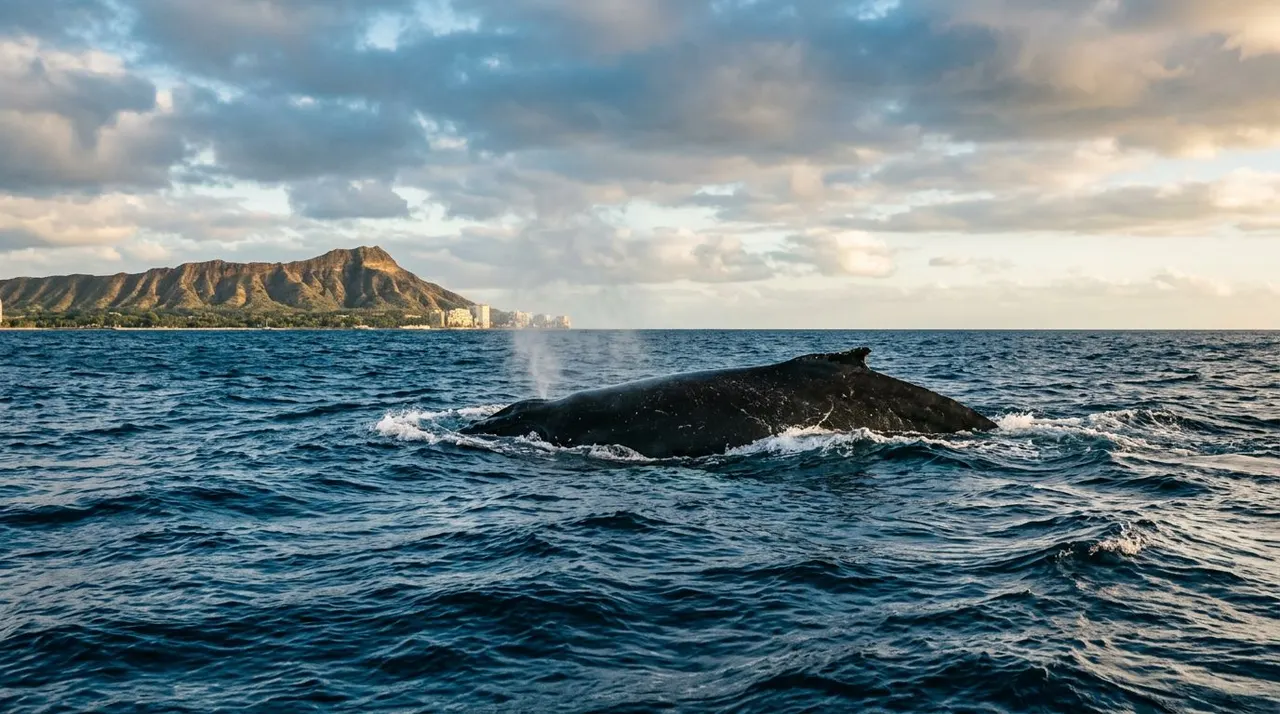
November gives you a chance to see the first humpback whales returning to Hawaii, but it is still the beginning of the season. If you’re researching whale watching Waikiki trips, expect possible sightings rather than the steady whale activity found later in winter.
You may see a distant blow, a rolling back, or a breach near the horizon. You may also spend the trip enjoying clear ocean views without a whale appearing. Knowing how early-season conditions work helps you choose the right date, boat, and expectations before leaving Waikiki.
What whale watching Waikiki looks like in November
Humpback whales migrate thousands of miles from feeding grounds near Alaska to Hawaii’s warm waters. Some early arrivals can appear in October, and rare sightings happen even earlier. However, November is an early-arrival month, not the peak viewing period.
Numbers build gradually because the whales don’t reach the islands all at once. By mid-November, you may encounter the first adults moving through Oahu waters. These early visitors are often adults without calves, while larger concentrations develop later in the season.
The strongest viewing period usually runs from January through March. December can bring more activity, but January and February often offer the best chance of seeing repeated surface behavior. If your vacation dates are fixed in November, you can still enjoy a worthwhile trip, but you should book for the experience of being on the ocean rather than a guaranteed whale performance.
The route and sea conditions also affect what you see. A whale may surface briefly several hundred yards away, then disappear for several minutes. Humpbacks spend much of their time underwater, so patience matters. A professional crew can scan a wide area, identify distant blows, and explain the behavior you notice.
For another perspective on early-season timing, you can review late October and early November sightings shared by travelers. Individual reports can vary, so use them as helpful context rather than a promise for your specific date.
How to plan your November whale-watching trip
Your best strategy is to build flexibility into your schedule. If you can choose between several November dates, keep at least one backup day available. A calm ocean and good visibility can improve the experience, although neither guarantees a sighting.
Boat trips often take place in open water, where conditions can feel different from the shoreline. Wear a light jacket or windbreaker, even if Waikiki feels warm. Bring sunscreen, sunglasses with a secure strap, and a hat that fits well. You should also keep your camera ready, since a whale may surface without warning.
Binoculars can help you follow distant activity, but they aren’t essential. Your captain and crew usually have a better view from the boat’s higher deck and know where to look for blows, flukes, and groups of seabirds that may signal activity below the surface.
If you get motion sickness, plan ahead. Eat a light meal, drink water, and consider an over-the-counter option after checking that it is suitable for you. Choosing a larger, more stable vessel can also make a noticeable difference.
Responsible viewing matters throughout the trip. Humpbacks are protected marine mammals, and boats must follow rules about distance and approach. You should never expect a captain to chase a whale or move too close for a photograph. The best encounters happen when you observe calmly and allow the animal to control the interaction.
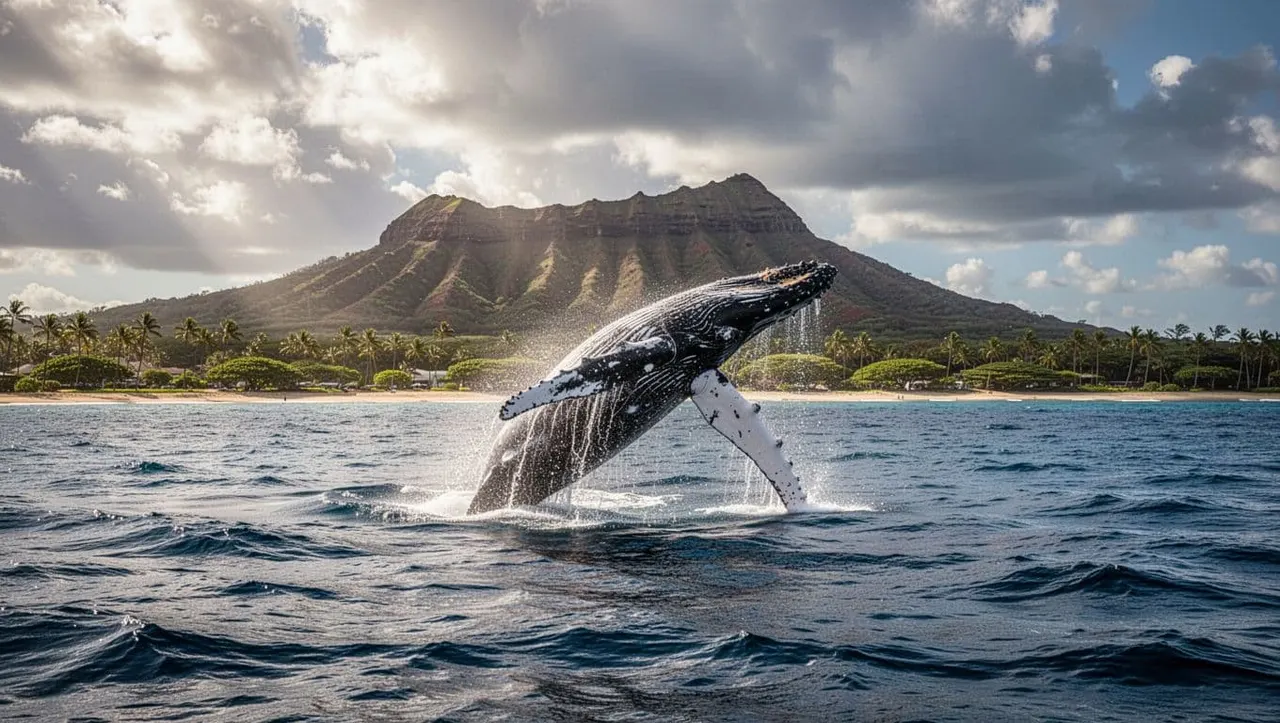
November rewards patience. You may see one unforgettable breach, but the value of the trip also comes from learning how whales move through their habitat.
Departure location matters, too. Living Ocean Tours operates from Kewalo Basin Boat Harbor, only minutes from Waikiki Beach. That short transfer helps you spend more time on the water and less time traveling across Honolulu.
Choosing a Waikiki whale-watching boat
Living Ocean Tours is a Honolulu-based ocean adventure company with Coast Guard-inspected, custom-built double-decker vessels. The Coral Kai offers broad open-deck space, while the Lokahi includes shaded seating, restrooms, dry storage, heavy-duty boarding ladders, and a SeaKeeper stabilization system.
That stabilization system helps reduce side-to-side rolling, which can make the ride more comfortable for families, first-time boat passengers, and anyone concerned about seasickness. You can also move between shaded and open areas as the weather changes.
Living Ocean Tours is the only tour company with professional snorkel guides. Although whale watching doesn’t require snorkeling, that crew experience adds value when your trip includes broader marine-life interpretation or when you choose another ocean activity during your stay.
The company offers seasonal humpback whale-watching trips from January through March, when sightings are more consistent. November availability can change, so check the current calendar before planning your day around a whale excursion. You can also browse the company’s Honolulu ocean tours to compare available experiences.
A good whale-watching boat should give you room to scan the water without crowding the rails. It should also provide clear safety instructions, comfortable seating, accessible restrooms, and a crew that respects wildlife. These details matter more when you’re spending several hours offshore.
For current dates, departure times, and seasonal availability, you can CHECK AVAILABILITY for the whale-watching trip.
What to do if whales don’t appear
No responsible whale-watching operator can promise a sighting. Whales are wild animals, and early November has fewer arrivals than the heart of winter. A strong plan gives you something enjoyable to do even when the ocean stays quiet.
Watch for other wildlife during the cruise. Hawaiian waters can bring seabirds, flying fish, spinner dolphins, and seasonal marine activity near the surface. Your guide can help you identify what you see instead of leaving you to scan the water alone.
You can also schedule whale watching early in your vacation. That choice gives you time to try another ocean activity later if conditions change. Families may prefer a snorkeling or wildlife cruise, while couples might choose a sunset trip along the Waikiki coastline.
Snorkeling is a particularly good backup for water-loving travelers. Even if humpbacks remain out of sight, you can still spend time in Hawaii’s warm water and see tropical reef fish. Remember to observe marine life without touching it, and keep your fins away from coral.
A flexible itinerary also protects the rest of your vacation. Avoid placing a whale trip immediately before an important flight or fixed reservation. Ocean conditions can affect return times, and you should leave enough room to enjoy the day without rushing.
November can be a smart choice if you prefer smaller crowds and an early-season atmosphere. If your main goal is to maximize whale activity, January through March gives you stronger odds. The right month depends on whether you value flexibility, peak sightings, or the chance to combine whale watching with other Waikiki activities.
November compared with the peak whale season
This quick comparison can help you match your expectations to your travel dates.
| Travel period | What you can generally expect | Best approach |
|---|---|---|
| November | Early arrivals and increasing activity | Keep your schedule flexible |
| December | More whales begin reaching Hawaii | Check dates and recent conditions |
| January to February | Stronger, more consistent activity | Choose this period for the best odds |
| March | Good viewing with the season continuing | Plan a whale trip early in your stay |
| April to May | Activity gradually tapers | Confirm the seasonal schedule |
The key difference is consistency. In November, one trip may produce an exciting sighting while another offers only distant activity. Later in winter, more whales are present, so you have better chances of seeing repeated blows, tail lifts, or surface movement.
You should also consider your priorities beyond whale numbers. November may fit better if you want a quieter vacation period or already plan to enjoy snorkeling, beaches, and Honolulu attractions. Peak season makes more sense when whale watching is one of the main reasons for your visit.
November whale watching is about timing and patience
Whale watching Waikiki in November can give you an early look at Hawaii’s humpback season, but you need realistic expectations. The first whales may already be present, while the largest concentrations usually arrive later.
Choose a comfortable boat, book with a crew that respects wildlife, and leave room in your schedule for changing ocean conditions. Living Ocean Tours gives you a convenient Kewalo Basin departure, professional snorkel guides, and a stable platform for viewing the Pacific.
If you see a whale in November, the moment may be brief. That is part of the experience. You are witnessing a wild animal on its own schedule, and patience can turn a quiet stretch of ocean into a memory you carry home.


