
Whale Watching Waikiki: Winter Packing Checklist
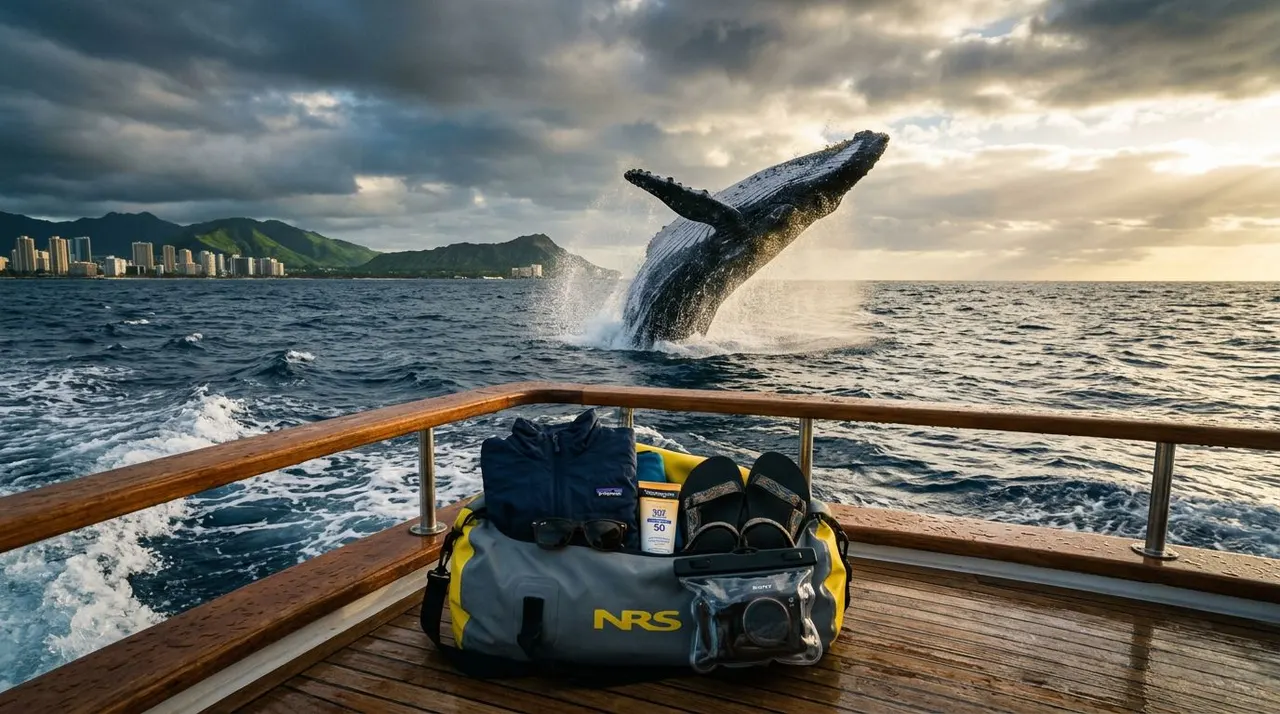
A whale watching Waikiki outing can feel warm on the beach and cool once your boat reaches open water. Winter sunshine, ocean spray, wind, and sudden showers all deserve a place in your bag.
You don’t need heavy winter clothing. You do need lightweight layers, sun protection, secure footwear, and a few items that keep your phone and camera dry. Use this whale watching Waikiki checklist before you leave your hotel, then enjoy the Pacific without worrying about your gear.
What winter feels like on the Waikiki coast
Honolulu’s winter weather is mild, but the conditions on a moving boat differ from those on land. A breeze that feels pleasant on Kalakaua Avenue can feel sharp on an exposed upper deck. Ocean spray may also reach you even when the sky is clear.
Humpback whales visit Hawaiian waters during the cooler months. NOAA’s Hawaiian Islands Humpback Whale National Marine Sanctuary states that whales arrive between November and May. For a helpful month-by-month planning reference, you can also review Oahu’s seasonal whale-watching overview.
Living Ocean Tours runs seasonal whale watching trips from January through March. During this period, you may see whales surface, slap their tails, breach, or raise their enormous flukes before disappearing below the water. Sightings involve wild animals, so every trip has its own pace.
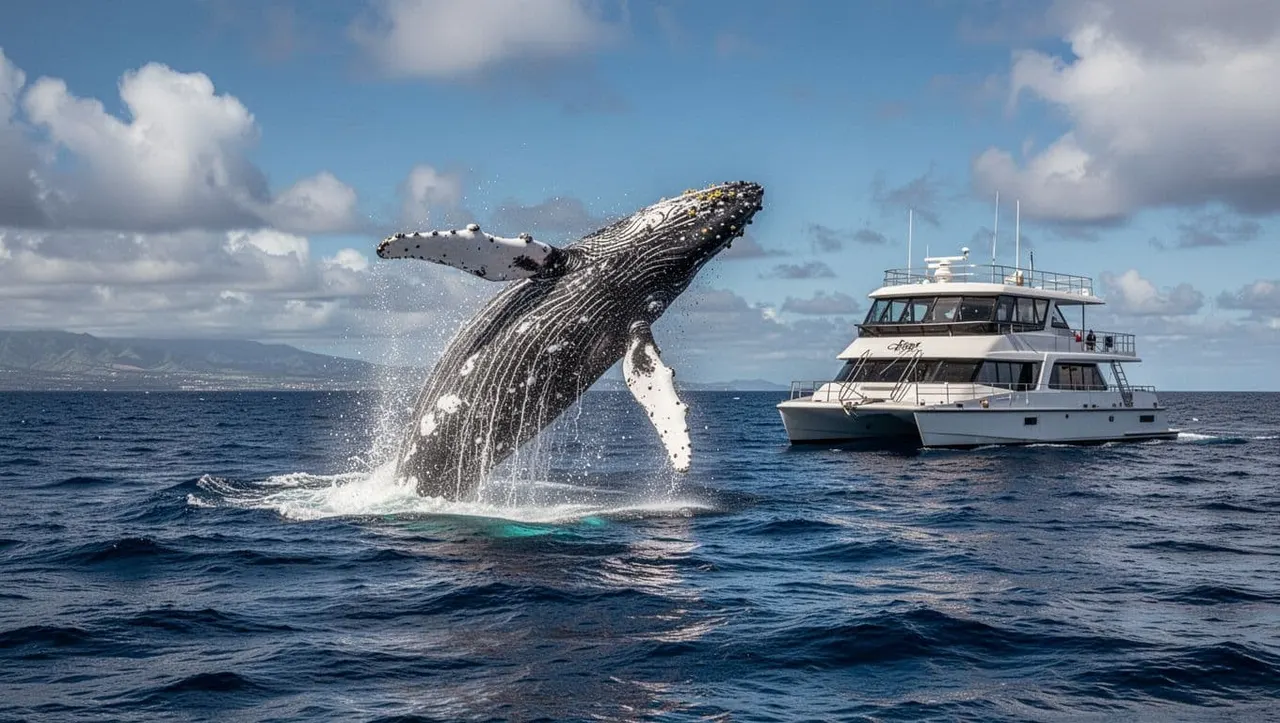
Pack for changing conditions rather than a cold climate. A fleece jacket or heavy coat will take up space and may feel uncomfortable in Honolulu. A thin windbreaker, quick-dry shirt, and light long-sleeve layer give you more flexibility.
Check the forecast before you leave, but don’t rely on it alone. A small rain shell fits easily into your bag and can make a short shower much less frustrating.
Your whale watching Waikiki packing checklist
Your main goal is to stay comfortable while keeping your belongings secure. A small daypack or personal tote is enough for most guests.
Choose layers you can remove easily
Wear a breathable shirt as your base layer. Synthetic athletic fabric or lightweight merino wool dries faster than cotton after spray or rain. Add a long-sleeve shirt if you tend to feel cold in wind.
A lightweight windbreaker is one of the most useful items you can bring. Choose one with a hood if you have it, but make sure the hood fits securely so it doesn’t block your view. A thin fleece layer works well for early departures or breezy rides.
Your footwear matters more than you might expect. Select secure shoes with good traction, such as athletic shoes or water shoes. Flip-flops can slide around on wet decks, so wear them only if the operator allows them and you feel stable in them.
Bring a swimsuit underneath your clothing only if your plans include another ocean activity. A whale watching cruise doesn’t require swimwear, but quick-dry shorts can still feel comfortable in warm weather.
Protect yourself from sun and spray
Hawaii’s winter sun can burn you even when clouds cover part of the sky. Apply sunscreen before boarding, then bring it along for reapplication if the crew permits. Mineral sunscreen with zinc oxide or titanium dioxide is a practical ocean-conscious choice.
Add sunglasses with a retainer or strap. Without one, a gust of wind can send your glasses into the water. A hat with a chin cord also stays useful when the boat picks up speed.
Your lips and the backs of your hands often receive more sun than you notice. Pack lip balm with SPF and a small amount of hand lotion if saltwater dries your skin.
Keep electronics dry
A phone dry pouch or waterproof case protects your device from spray. You can also bring a compact camera, but use a wrist strap and keep it secured when you’re not taking photos.
A small dry bag works well for your phone, wallet, room key, medication, and spare charging cable. Avoid carrying loose items in open pockets. Whale watching can become exciting quickly, and a sudden movement can send sunglasses or phones across the deck.
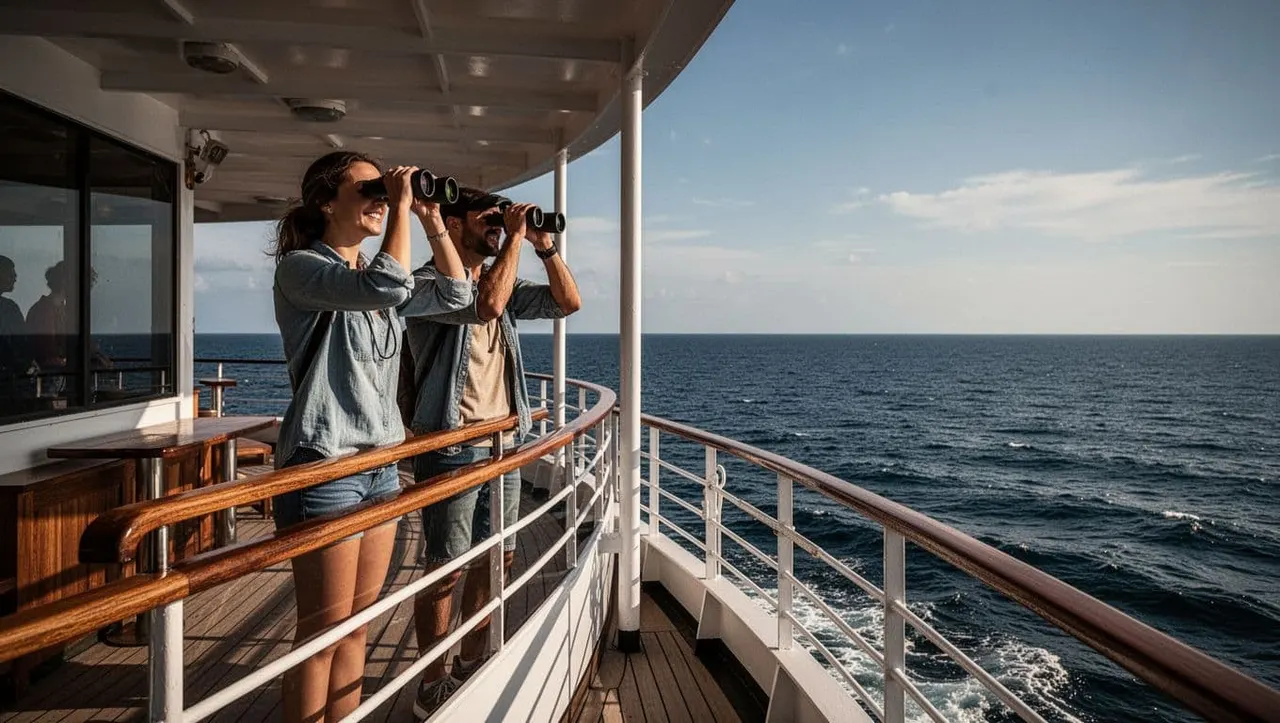
A compact pair of binoculars can help you scan the water between sightings. Choose a pair you can hold comfortably, and don’t spend the entire cruise looking through them. Your eyes give you a wider view of the ocean and make it easier to notice movement near the boat.
Pack for the boat, not only the beach
Living Ocean Tours departs from Kewalo Basin Boat Harbor, located a short distance from Waikiki Beach. You should plan enough time to reach the harbor, find the correct meeting point, and follow the crew’s check-in instructions.
Bring your booking confirmation on your phone, along with your hotel information and transportation details. If you’re using a rideshare or taxi, save the harbor address before leaving. A fully charged phone helps with navigation, communication, and photos.
Large suitcases don’t belong on a whale watching boat. Bring one manageable personal bag that fits beside your seat or in the available dry storage. Keep the contents light enough to carry without assistance.
Families should pack a spare shirt for each child, a small towel, and snacks if the operator permits outside food. Children may also appreciate familiar sunglasses or a hat that fits well. Avoid bringing toys with small loose parts because they can fall overboard.
Motion comfort deserves attention, even on a stable vessel. Living Ocean Tours’ Lokahi features a SeaKeeper stabilization system that reduces side-to-side roll. No stabilization system removes every movement, however. If you know you get seasick, ask your doctor or pharmacist about appropriate medication before your trip. Follow the product directions and take it at the recommended time.
Follow wildlife rules and prepare for real ocean conditions
A whale watching trip is a wildlife experience, not a guaranteed performance. Whales choose when and where they surface. You may watch one animal for several minutes, or you may see activity spread across the horizon.
Listen to the crew when they point out a whale or ask guests to remain seated. Professional guidance helps everyone see more while reducing sudden movements on deck. Never throw food into the water, call wildlife closer, or attempt to touch an animal.
NOAA’s boating guidance for Hawaiian humpback whales explains responsible behavior around these protected animals. Leave drones at your hotel unless the operator gives clear permission and you understand the applicable rules. A drone can disturb wildlife and distract other guests.
Bring patience along with your camera. The most memorable moment may be a whale’s blow rising in the distance, a calf surfacing beside its mother, or a fluke disappearing beneath the waves. You don’t need perfect photographs to enjoy those moments.
Keep your camera ready, but watch the water with your own eyes. A whale may surface outside the frame and vanish before you adjust the lens.
If you feel uncomfortable, tell a crew member early. Staying hydrated, eating a light meal, and focusing on the horizon can help. Avoid boarding on an empty stomach, but skip heavy or greasy food right before departure.
Why Living Ocean Tours fits a winter Waikiki outing
When you book with Living Ocean Tours, you board at Kewalo Basin Boat Harbor instead of traveling far from Waikiki. The company’s Coast Guard-inspected double-decker vessels, Coral Kai and Lokahi, include shaded seating, onboard restrooms, dry storage, and sturdy ladders.
The Lokahi adds a cash bar, an upper-deck waterslide, and SeaKeeper stabilization. The Coral Kai offers open deck space for guests who want a broad view of the coastline and horizon. Both boats give you practical comfort during a longer ocean outing.
Living Ocean Tours is also the only tour company with professional snorkel guides. That matters if you plan to add a Turtle Canyons snorkel trip during your vacation. First-time snorkelers and families can receive clear instruction, safety support, and guidance on observing marine life without touching it.
You can browse the company’s Waikiki whale watching cruise along with its snorkeling, sunset, fireworks, and other ocean experiences. Seasonal whale trips operate January through March, so check your travel dates before building your itinerary.
For a dedicated whale watching Waikiki experience, review the available dates before your vacation schedule fills. You can also CHECK AVAILABILITY online.
Your five-minute departure check
Before leaving your hotel, confirm that you have:
- A breathable shirt, light layer, and windbreaker.
- Secure shoes with traction.
- Sunglasses with a strap and a hat that fits.
- Mineral sunscreen and SPF lip balm.
- A waterproof phone pouch or small dry bag.
- Your booking confirmation and transportation details.
- Motion sickness supplies, if you need them.
- A spare shirt and permitted snacks for children.
Dress for comfort, keep your bag compact, and leave room for the unexpected. A brief shower or splash won’t matter when your essentials stay dry.
A better winter whale watching Waikiki experience
You don’t need a suitcase full of cold-weather gear for a winter whale watching Waikiki trip. Lightweight layers, sun protection, secure footwear, and a waterproof pouch cover the essentials.
The ocean sets the schedule, so stay patient and follow your crew’s instructions. With the right preparation, you can spend less time managing the weather and more time watching Hawaii’s humpback whales surface along the coast.


