
Whale Watching Waikiki: Why Humpbacks Roll at the Surface
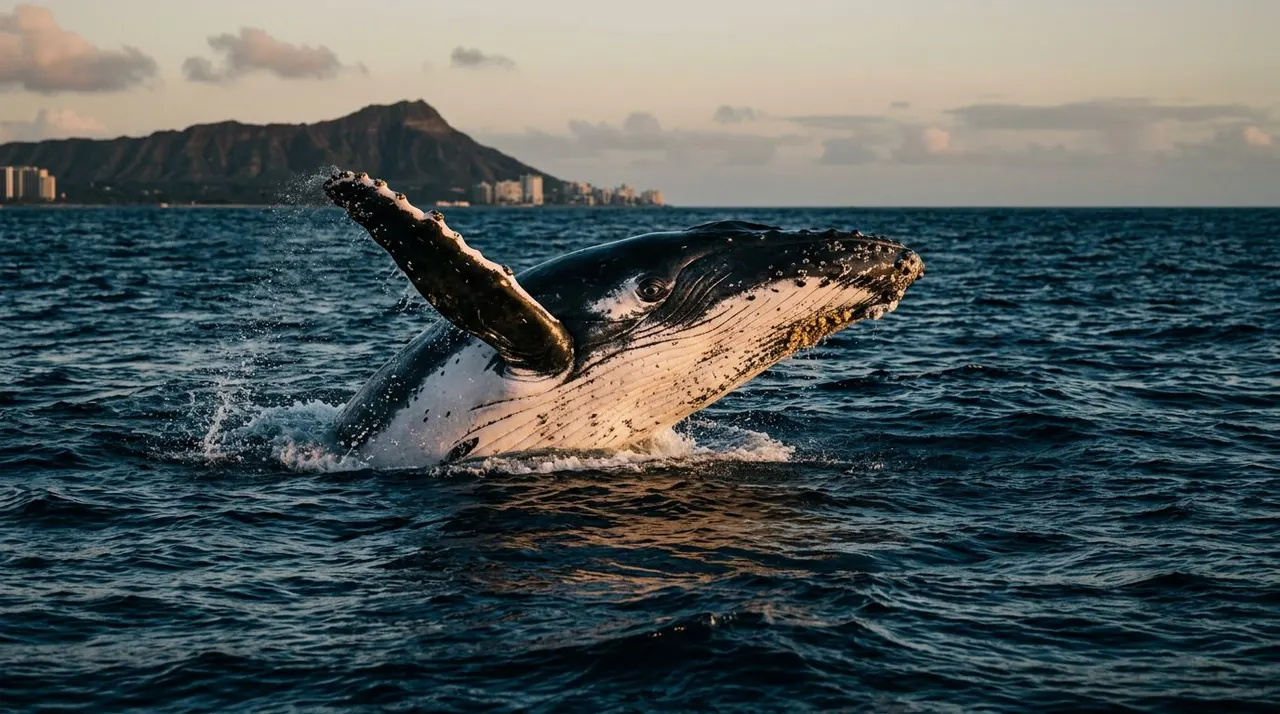
A humpback whale doesn’t need to breach to create an unforgettable moment. One slow roll can reveal its eye, pectoral fin, pale belly, or broad back before the animal slips beneath the Pacific.
When you search for whale watching Waikiki tours, you may expect dramatic jumps. However, surface rolls often reveal more about a whale’s movement and mood. Living Ocean Tours gives you a comfortable way to watch these behaviors along the Waikiki coast, with experienced crew members who help you understand what you’re seeing.
Why Humpbacks Roll at the Surface
A surface roll is a controlled body movement. The whale turns onto its side or back, exposes part of its body, then returns below the surface. You might see only a fin, or you may get a full view of the whale’s head and belly.
The behavior can happen for several reasons. A humpback may roll to adjust its position, inspect activity near the surface, interact with another whale, or prepare for another dive. You shouldn’t assume that every roll has one fixed meaning, but each movement gives you a closer look at the animal’s natural behavior.
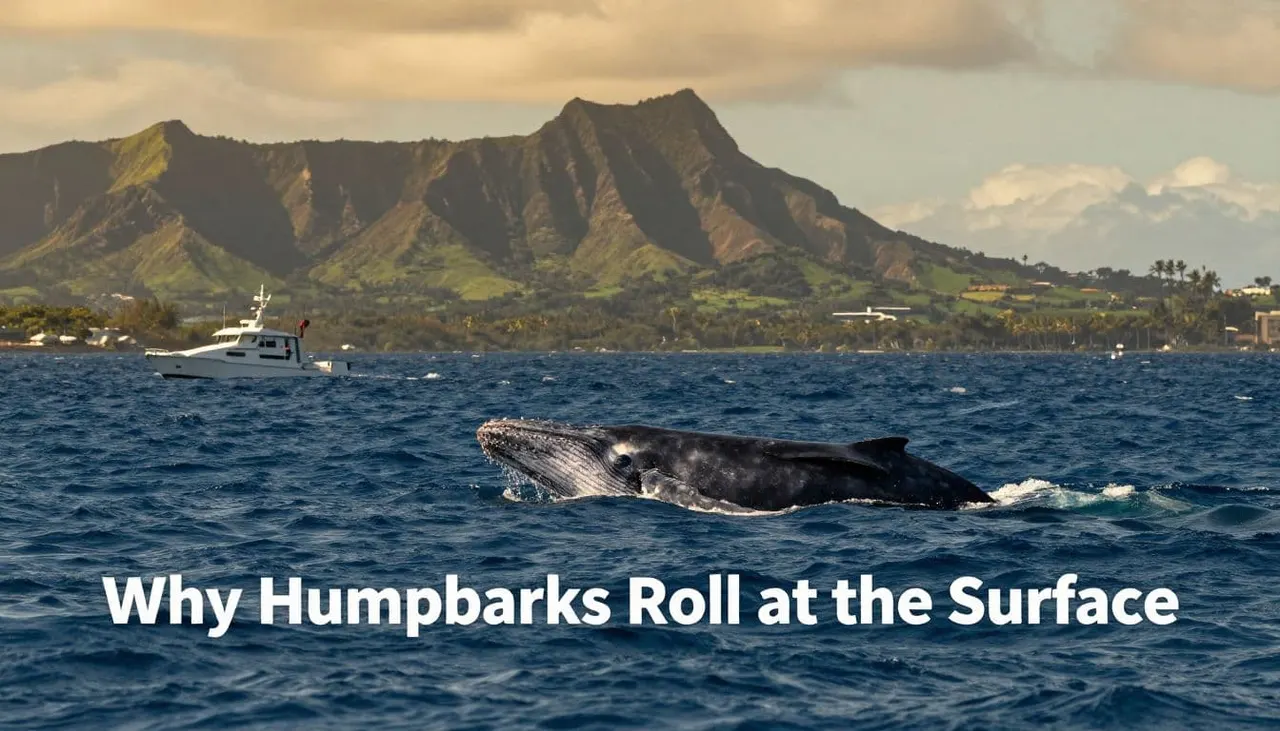
A roll reveals more than a breach
A breach lasts only a few seconds. A roll can develop slowly, giving you time to notice the whale’s shape and movement.
You may see the whale rotate until one eye faces the boat. Sometimes its long pectoral fin rises above the water. In other cases, the animal rolls belly-up and remains near the surface before turning again.
These moments help you identify a humpback’s long body, knobby head, and distinctive fins. The whale’s behavior also tells you where to look next. If the animal rolls and then disappears, watch the water around the last visible point rather than scanning the entire horizon.
Surface behavior can include other movements
Rolling is only one part of a humpback’s surface display. You may also see a blow, tail lift, flipper slap, spyhop, or a full breach during your trip.
A spyhop happens when a whale rises vertically with its head above the water. The animal may appear to pause and look around before sinking again. NOAA’s guide to whale behaviors explains how these movements differ and what you can look for during a sighting.
Pay attention to the rhythm between behaviors. A whale that surfaces, rolls, and dives may follow a different pattern than one that remains active near the boat. Your crew can help you read those changes without disturbing the animal.
The Humpback Season Around Oahu
Humpback whales visit Hawaii’s warm waters during their annual migration. They arrive to mate, give birth, and nurse their calves. Adults spend much of the year feeding in colder waters, so Hawaii provides important breeding and nursery habitat.
The Hawaiian Islands Humpback Whale National Marine Sanctuary lists the general season as November through May, with the greatest number of whales usually present between January and March. You can review the NOAA boating guide for seasonal information and responsible viewing guidance.
Why winter offers strong viewing opportunities
Living Ocean Tours operates seasonal humpback whale-watching trips from January through March. That timing matches the peak part of Hawaii’s whale season, when you have a strong chance of seeing active adults and mothers with calves.
Still, wild animals follow their own schedule. One trip may bring a rolling whale close to the surface, while another may offer distant blows and tail dives. A responsible crew never promises a specific behavior or guarantees a sighting.
You can improve your experience by keeping your eyes on the water between sightings. Look for a fresh blow, a patch of disturbed water, or a dark back appearing ahead of the boat.
Calves create a different kind of sighting
When a mother and calf travel together, the calf may surface more often. Young whales need frequent breaths and may practice rolling, flipper movement, or short dives near the mother.
A calf can also change direction quickly. The mother may remain below while the calf surfaces nearby, so listen closely when your captain or guide points out a new location.
Give every whale group plenty of room. A calm viewing approach protects the animals and gives you a better chance to observe natural behavior rather than a reaction to the boat.
What you see on whale watching Waikiki tours
Waikiki offers a memorable viewing backdrop. As you leave the harbor, you may see Diamond Head, the hotels along the shoreline, and the Ko’olau mountains beyond the city. Once the boat reaches open water, the horizon becomes your main viewing area.
Living Ocean Tours lists its seasonal whale watching in Waikiki alongside its other Honolulu ocean experiences. The company departs from Kewalo Basin Boat Harbor, located minutes from Waikiki Beach.
Watch for the signs of a nearby whale
A whale’s blow is often the first sign that it has surfaced. The plume may appear before you can see the body, so scan the water in the direction your guide indicates.
Next, look for the back. Humpbacks have a small dorsal fin set behind the center of the body, along with long pectoral fins that can appear during a roll or flipper slap. A raised tail usually means the whale is beginning a deeper dive.
You may also notice birds gathering over the water. Birds don’t prove that whales are present, but they can draw your attention to areas where fish and other marine activity are concentrated.
Respectful distance improves the encounter
You should never expect a whale to approach the boat on command. The captain’s job is to provide a clear view while following wildlife protection rules and allowing the whale to choose its direction.
Keep your hands, swim gear, and cameras inside the boat unless your crew gives different instructions. Hawaii’s whales are wild marine mammals, not interactive attractions. Watching without touching, feeding, or calling to them protects both you and the animal.
A good whale-watching trip feels unhurried. You get time to notice the blow, body position, dive pattern, and return to the surface.
Choose a Comfortable Whale-Watching Boat
Boat comfort matters when you’re spending time on open water. A stable deck helps you keep your eyes on the horizon, especially when you move around to view a whale.
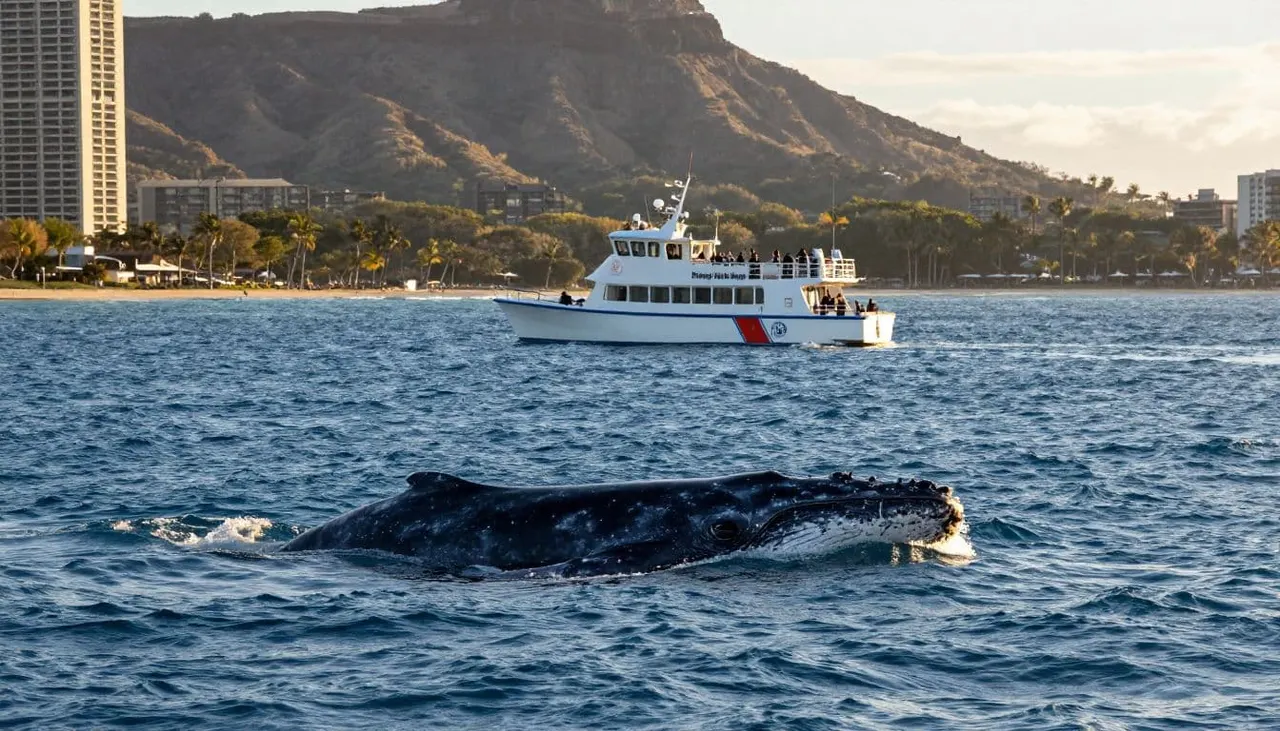
Kewalo Basin keeps your day convenient
Living Ocean Tours operates from Kewalo Basin Boat Harbor, just minutes from Waikiki. That location makes it easier to reach your boat without spending a large part of your day in transportation.
The company uses Coast Guard-inspected, custom-built double-decker vessels called the Coral Kai and the Lokahi. Both boats include shaded seating, restrooms, dry storage, and sturdy ladders for safe movement around the vessel.
The Coral Kai offers broad open-deck space for viewing the coastline and ocean. The Lokahi includes a SeaKeeper stabilization system that reduces side-to-side rolling, which can help you feel more comfortable during a longer cruise.
Experienced guides make the trip easier
You don’t need whale-watching experience to enjoy the cruise. The crew explains what to watch for, helps you follow whale movements, and answers questions throughout the trip.
Living Ocean Tours is the only tour company with professional snorkel guides. While a whale-watching cruise doesn’t include snorkeling with whales, that marine experience supports the company’s broader knowledge of Oahu’s ocean environment.
The company also welcomes families and first-time ocean visitors. If you’re sensitive to motion, choose a seat with a clear view of the horizon, drink water, and follow your healthcare provider’s advice about motion-sickness medicine.
For current dates and open seats, you can CHECK AVAILABILITY.
What to bring for a better whale-watching day
You don’t need a large equipment bag. A few practical items can make the cruise more comfortable:
- Bring polarized sunglasses if you have them, because they can reduce surface glare and help you spot movement.
- Wear light layers that handle wind and spray. Even a sunny Hawaiian day can feel cooler on the water.
- Apply reef-conscious sunscreen before boarding and bring a hat with a secure fit.
- Carry a phone or camera with a wrist strap, but keep your attention on the ocean instead of watching the screen.
- If you are prone to motion sickness, plan ahead and follow medical guidance before departure.
Arrive ready to look in every direction. A whale may surface off the bow, beside the boat, or behind you after a long dive.
The Hawaiian Islands Humpback Whale National Marine Sanctuary encourages visitors to observe whales without changing their behavior. Its official sanctuary information is a useful reference before your trip, especially if you want to understand why distance and patience matter.
How to watch whales responsibly
Your choices on the boat affect the quality of the encounter. Stay seated or hold a secure rail when the crew asks you to do so. Keep noise reasonable, and avoid shouting at a whale to make it surface.
Never attempt to swim toward a humpback. These are powerful animals that can move quickly, even when they appear calm. Your guide will position the boat for viewing while respecting the whale’s path.
If you travel with children, give them a simple job. Ask them to watch for the next blow, count seconds between surfaces, or look for a tail dive. These activities keep young guests engaged without encouraging them to chase or distract the animals.
The best photographs often come after you lower the camera. Watch the water first, then capture a few moments when the whale rolls or surfaces. You may miss a perfect frame, but you’ll experience the full movement instead of seeing it through a screen.
Conclusion
A humpback’s surface roll is more than a random splash. It can reveal the whale’s eye, fins, belly, and body position while showing how naturally it moves through Hawaii’s warm winter waters.
When you choose whale watching Waikiki tours during the January through March peak, you give yourself a strong opportunity to see these behaviors with an experienced crew. Choose a stable boat, keep your distance, and let the whale decide what happens next. That patience is what turns a brief roll at the surface into a lasting Oahu memory.


