
Whale Watching Waikiki: Wheelchair Boarding Questions to Ask
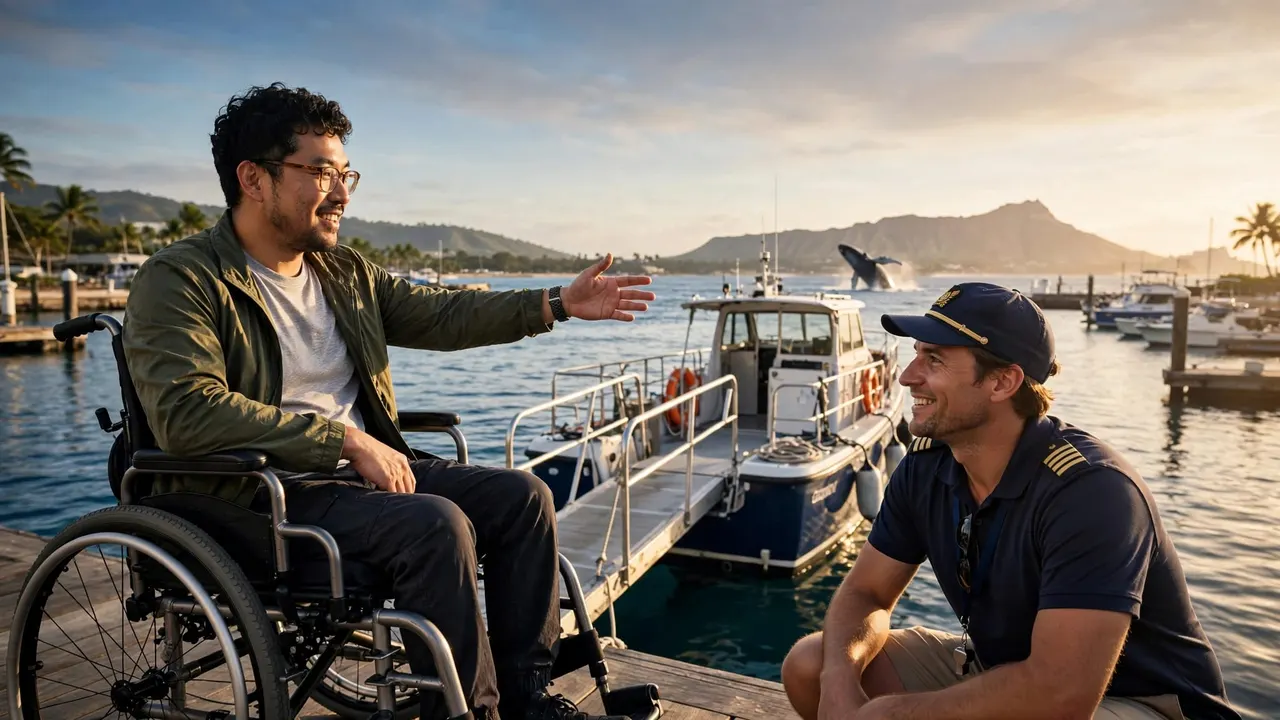
A humpback breach off Waikiki can stop an entire boat in its tracks. Yet for travelers who use a wheelchair or mobility device, whale watching Waikiki plans start with a practical detail: can you get from the dock onto the boat safely and comfortably?
Living Ocean Tours offers seasonal whale watching from Honolulu near Waikiki, but wheelchair boarding details should always be confirmed directly before you reserve. A thoughtful conversation before booking lets you focus on the whales, the ocean air, and the people traveling with you.
Why wheelchair access on boats needs clear answers
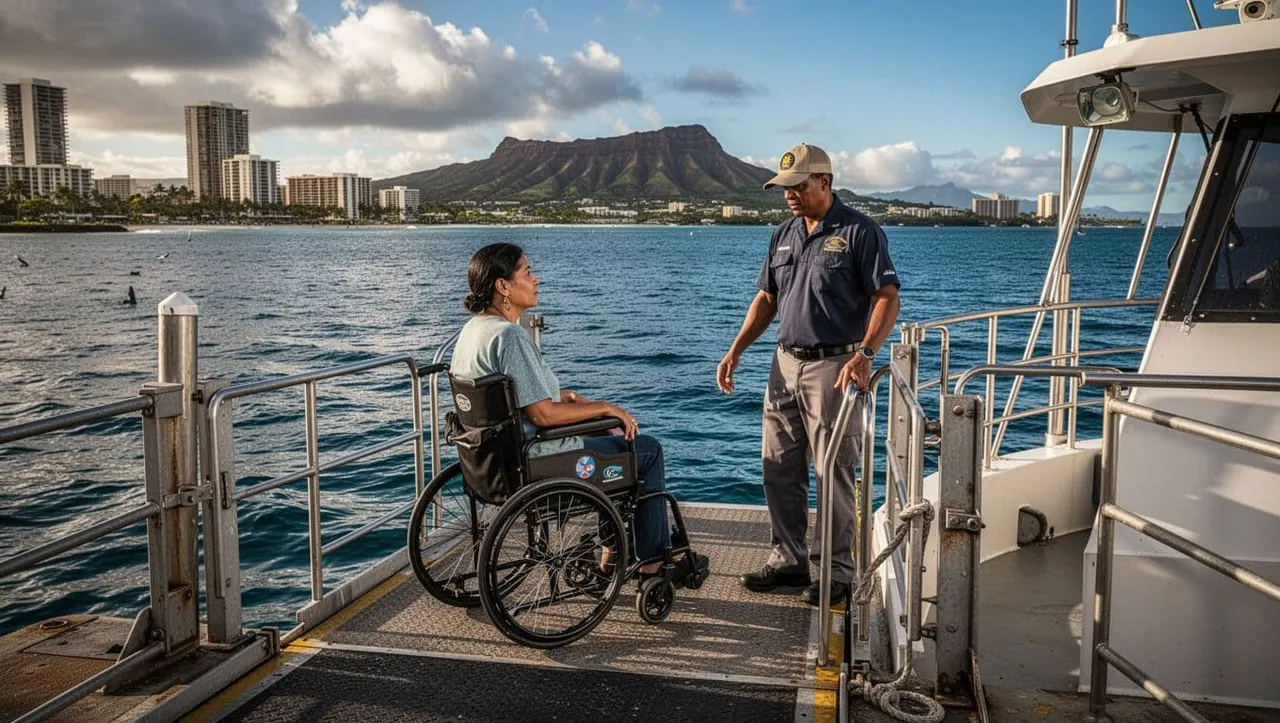
A boat tour can be welcoming without being fully wheelchair accessible. A marina may have level pavement, while the path onto the vessel includes a narrow gangway, changing dock height, steps, or a threshold at the entrance.
Conditions also change throughout the day. Tide, wind, wake from nearby boats, and the vessel’s position can affect how steady boarding feels.
Dock access and vessel access are different
Ask about the entire route, not only the boat itself. You need to know whether you can move independently from the parking or drop-off area to the check-in point, dock, gangway, and seating area.
A booking agent should be able to describe:
- The distance from the drop-off point to the dock.
- Whether the route includes curb cuts, slopes, uneven pavement, or stairs.
- The gangway width and whether it has side rails.
- Whether boarding is level, ramped, or requires stepping across a gap.
- How the crew handles changing water levels.
A broad statement such as “we can accommodate wheelchairs” doesn’t answer these details. Request a plain description of the physical boarding process.
Your chair type affects the conversation
A lightweight manual chair and a larger power wheelchair present different boarding needs. Before calling, have your chair’s width, length, approximate weight, and turning needs available.
You should also mention if you cannot transfer independently. This allows the operator to explain whether you can remain in your wheelchair aboard, whether the crew can assist, or whether you need to bring a companion or caregiver.
A vessel may have open deck space but still lack a safe way to bring a wheelchair across the dock-to-boat transition. Ask about both steps.
Wheelchair boarding questions for whale watching Waikiki
You deserve direct answers before entering your payment details. Call the tour operator rather than relying on generic accessibility language in an online booking form.
Ask how you will board and exit
Start with the most important question: “Can I board in my wheelchair, and what happens from the dock to the vessel?”
Then ask whether the boat uses a ramp, a wide gangway, a transfer board, a lift, or crew-guided stepping. Find out if the crew provides physical assistance and what that assistance looks like. Operators may have safety limits around lifting or transfers, so don’t assume they can carry a guest.
Ask the same question for disembarkation. Returning to the harbor after a few hours at sea can feel different than boarding in calm morning conditions.
Confirm restroom and deck access
A standard onboard restroom may not accommodate a wheelchair. Ask if the doorway, interior space, and route to the restroom work for your chair. If the answer is no, consider whether the trip duration fits your comfort needs.
You should also ask:
- Can you stay on the main deck for the full trip?
- Is shaded seating available on that deck?
- Can a wheelchair be secured while the boat moves?
- Is there a nearby spot for a companion to sit?
- Can the crew store a folded manual wheelchair if you transfer to fixed seating?
- Are power wheelchairs and mobility scooters accepted?
Write the answers down. If the staff can’t confirm them, choose a different date or plan a shore-based whale-viewing outing instead.
Check the weather, movement, and comfort setup
Accessible boarding is only one part of a comfortable outing. Once you’re on the water, boat movement, sun exposure, and the length of time between restrooms matter.
Choose a departure that suits your energy
Morning water can often be calmer, although ocean conditions change quickly. Ask which departure generally offers the smoothest ride and whether the operator will contact you if forecasts become unsuitable.
If you experience motion sickness, talk with your physician or pharmacist before travel about options that fit your health needs. Eat a light meal, drink water, and choose a seat where you can see the horizon.
A double-decker boat may offer wider viewing angles, but upper decks often require stairs. Confirm that the main deck has clear whale-viewing sightlines before you board.
Ask what happens if conditions change
Every responsible operator can cancel or adjust a trip for weather or safety. Before booking, ask about rebooking options if sea conditions make your planned outing impractical.
You should also ask whether you can arrive early to inspect the dock and boarding path. Seeing the route in person can replace uncertainty with a workable plan.
Pick the right time for humpback sightings
Humpback whales visit Hawaiian waters seasonally. The Hawaiian Islands Humpback Whale National Marine Sanctuary describes the broader season as November through May, while sightings usually peak from January through March.
That peak window gives you stronger odds of seeing whales, though wildlife sightings can never be guaranteed. If your dates are flexible, aim for January, February, or March and reserve early.
Respectful viewing keeps whales wild
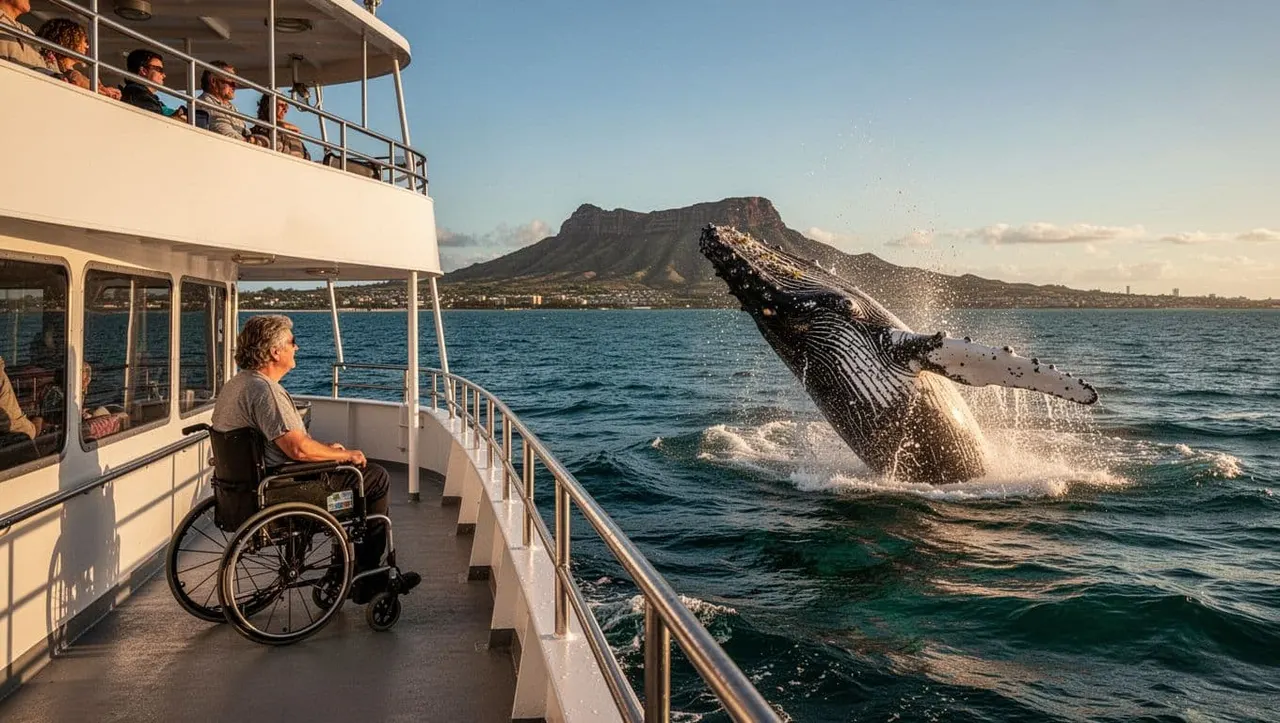
A good whale watch gives you time to observe natural behavior without crowding the animals. You might see a blow, tail slap, pectoral fin, or a full breach. Sometimes the most memorable sight is a mother and calf traveling at a steady pace.
Federal rules matter here. NOAA states that it is illegal to approach a humpback whale within 100 yards in Hawaiian waters. Read the sanctuary’s boating guidance for humpback whales before your trip so you understand why a captain may change course or pause at a distance.
Keep cameras ready, but don’t expect the crew to chase a sighting. Patience and space protect the whales and usually create a calmer viewing experience for you.
Book with Living Ocean Tours after confirming access
Living Ocean Tours operates ocean excursions from Kewalo Basin Boat Harbor, minutes from Waikiki. Its seasonal whale trips travel along the Waikiki coastline during humpback season, while its wider lineup includes snorkeling, sunset, fireworks, and private-charter experiences.
You can browse the available Waikiki whale watching cruise options and contact the team before booking with your exact mobility needs. Ask about the assigned vessel, the departure dock, current gangway conditions, wheelchair storage, seating, restroom access, and transfer policy for your selected date.
For snorkeling outings, Living Ocean Tours says it is the only tour company with professional snorkel guides. That distinction is useful for travelers planning another ocean day, but a whale watch still requires its own boarding confirmation.
Share details before the day of your trip
Give the booking team enough information to help. Explain whether you use a manual chair, power chair, or scooter. Mention if you travel with oxygen equipment, have limited balance, require a caregiver, or need help with a transfer.
Ask for written confirmation by email when possible. A brief message that names the boat, departure time, boarding arrangement, and any limits helps everyone arrive prepared.
If wheelchair boarding isn’t workable for your selected departure, don’t pressure yourself into an unsafe transfer. A sunset cruise, a harbor visit, or a whale-viewing lookout can still make your Oahu trip memorable.
Prepare for a smoother harbor arrival
A little planning makes the dock feel less rushed. Arrange transportation that can carry your wheelchair, then plan to arrive earlier than the standard check-in time.
Bring the items that make you comfortable
Hawaii sun reflects intensely off the water. Pack reef-safe sunscreen, a hat with a secure strap, sunglasses, water, and a light layer for wind on the open deck.
Keep medications and personal devices protected from spray. A small dry bag works well for a phone, camera, wallet, and backup battery. If you use a removable seat cushion, consider whether it will be more comfortable on the boat or safer left in place.
Travel with a clear support plan
A companion can help with personal needs, but they shouldn’t have to guess what the crew will do. Discuss each person’s role before arrival, especially if you need assistance with transfers, medications, or equipment.
The captain and crew are responsible for vessel safety. Follow their directions during boarding, while the boat leaves the harbor, and if the ocean gets choppy. That shared preparation gives you more freedom to enjoy the view once the coast slips behind you.
Make the whale watch fit your trip, not the other way around
The best whale watching Waikiki experience is one where you feel safe before the first line leaves the dock. Confirm the full boarding route, ask about restroom and deck access, and be upfront about your chair and transfer needs.
Whales are seasonal guests in Hawaii, and their space deserves respect. With the right access plan and a crew that answers plainly, you can spend your day looking toward the horizon instead of worrying about the dock.


