
Whale Watching Oahu: Male or Female Humpback?
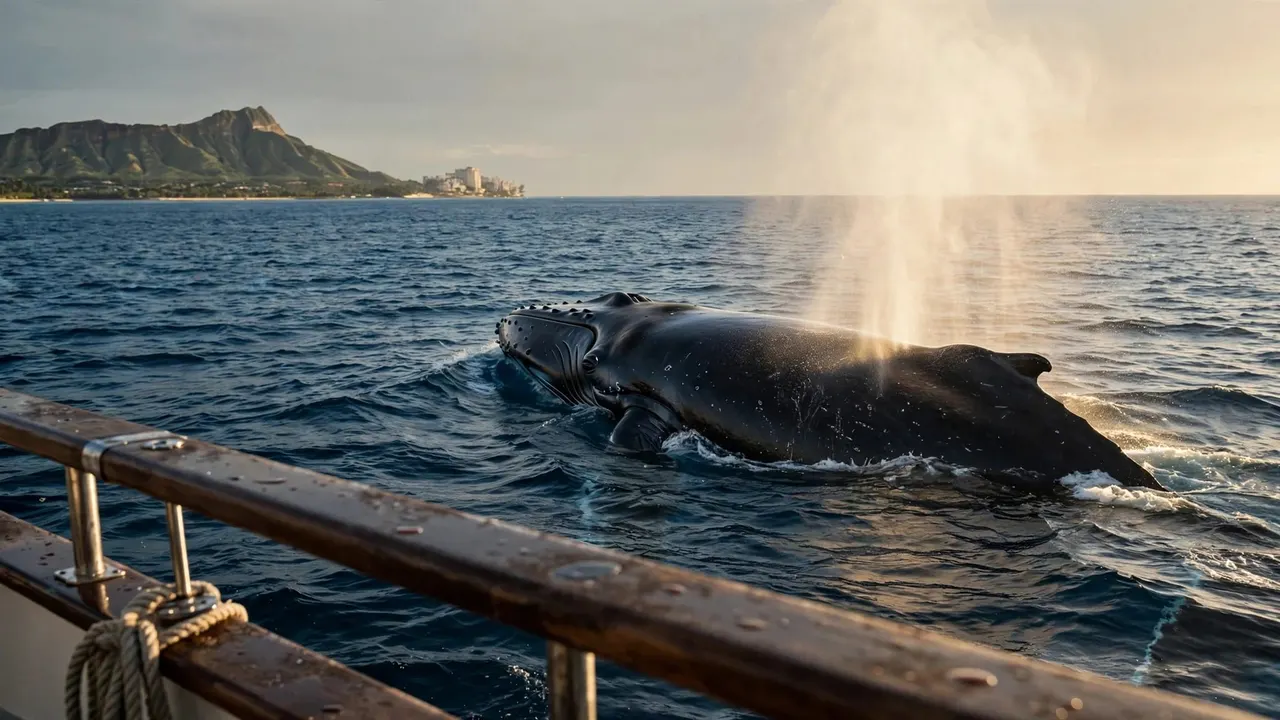
You usually can’t tell whether a humpback is male or female from a whale-watching boat. On your whale watching Oahu trip, treat body size and surface behavior as clues, not proof.
When you join us at Living Ocean Tours, understanding those limits makes each sighting more rewarding. Our Oahu ocean tours depart from Kewalo Basin Boat Harbor near Waikiki. Start with the biological differences, then separate them from what you can see above the water.
Key Takeaways for Your Whale Watch
- Female humpbacks are generally larger than males, but their sizes overlap.
- Breaching, splashing, and tail markings don’t reveal a whale’s sex.
- Humpback singers are male, although hearing a song doesn’t identify the whale beside your boat.
- A calf beside an adult provides context, but one brief sighting doesn’t establish their relationship.
You can appreciate a sighting without assigning every whale a sex. Watching how animals travel and interact often tells you more.
Why Size Won’t Give You a Reliable Answer
Females tend to be slightly larger
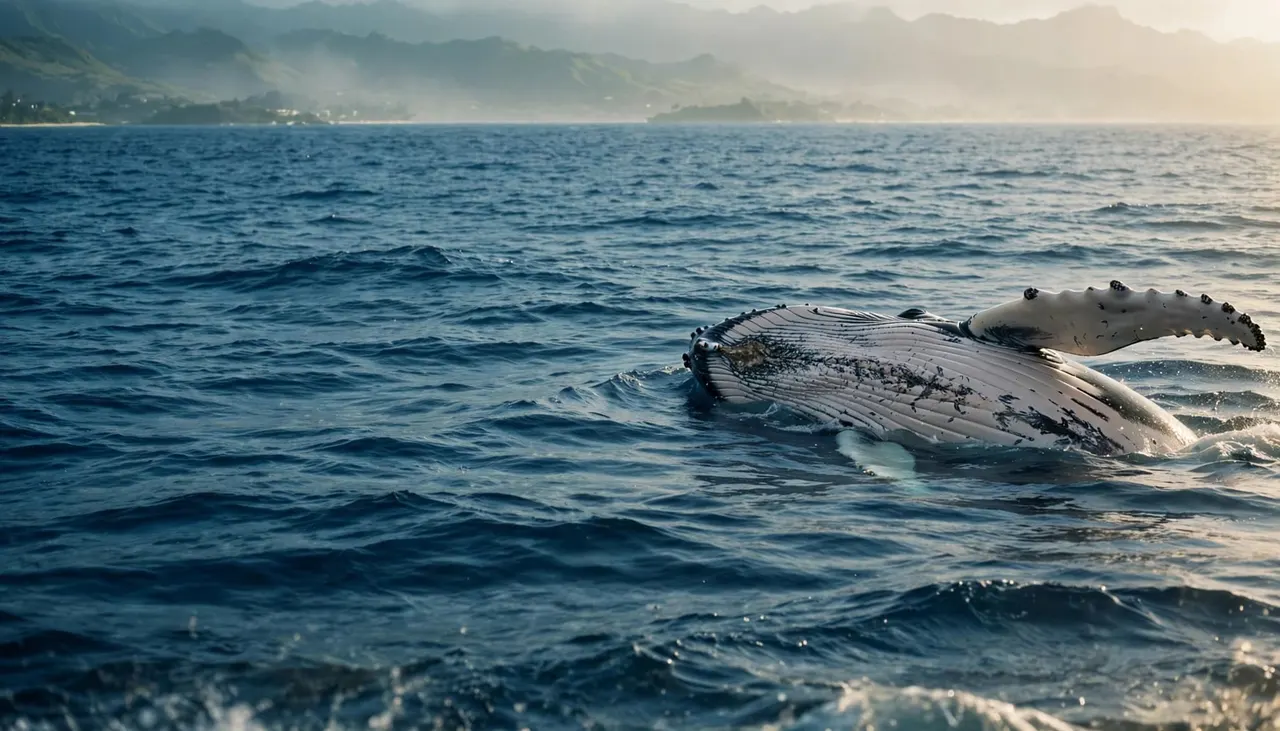
Unlike many familiar land mammals, humpbacks generally have larger females. The Waikiki Aquarium’s humpback guide gives adult male lengths of 38 to 42 feet and female lengths of 40 to 45 feet.
Notice the overlap. A 41-foot humpback fits both ranges, so length alone can’t settle the question.
During a whale watching Oahu outing, estimating length is difficult anyway. Water hides most of the animal, while perspective changes its apparent size. A whale nearer the boat can look much larger than another farther offshore.
Age makes comparisons harder
You also need to consider whether you’re looking at a fully grown adult. A younger female may be smaller than an older male.
Even two whales swimming together don’t provide a dependable measuring scale. Different body angles and surfacing positions can distort your comparison. One animal might expose a long section of back while the other barely breaks the surface.
Enjoy the impression of scale, but avoid turning “that whale looks bigger” into a confident identification. Binoculars help you see details; they don’t solve the biological overlap.
What Researchers Look for Below the Surface
Anatomy provides stronger evidence
Researchers use evidence that a typical sightseeing view rarely provides. Sex-specific anatomy can help when they obtain a suitable view of an animal’s underside.
NOAA’s marine mammal observer manual describes mammary slits beside the genital slit as a female characteristic in cetaceans. That guidance covers cetaceans broadly.
For you aboard a boat, the practical obstacle is visibility. These structures are underwater and aren’t comparable to a dorsal fin or a raised tail. A glimpse of pale belly during a roll usually won’t provide enough detail for a reliable conclusion.
A breach isn’t an identification opportunity
A breaching humpback may expose much of its body, but the view lasts seconds. Spray, movement, distance, and the animal’s angle all limit what you can see.
Therefore, a dramatic photograph doesn’t automatically contain useful sex-identification evidence. An unclear patch or shadow shouldn’t become an anatomical claim.
You should never seek a closer approach or enter the water to inspect a whale. Researchers work under appropriate authorizations and methods. Your role as a visitor is to watch from a respectful distance and enjoy whatever the whale naturally reveals.
What Singing and Social Behavior Can Tell You
The most useful whale watching Oahu clues come with limits. Behavior provides context, but only certain behaviors have a clear connection to sex.
A singing humpback is male
According to NOAA’s explanation of humpback song, male humpbacks produce the elaborate songs associated with breeding activity.
However, hearing a song doesn’t mean the whale you see is the singer. Sound travels through water, and the source may be beyond your view. Without locating that source, you can’t attach the song to a particular surfacing animal.
Also, silence tells you nothing about sex. A male doesn’t sing constantly. Both sexes produce other sounds, so every underwater call shouldn’t be described as a male’s song.
A calf changes the context
Hawaii’s winter waters are breeding and nursery habitat. NOAA’s Hawaiian humpback condition report identifies mating and calving as primary winter activities for adults.
A small calf repeatedly traveling beside a larger whale may suggest a mother-calf relationship. Still, an adult appearing near a calf in one photograph isn’t enough to establish that relationship.
Another whale may accompany the pair, and that additional adult shouldn’t automatically receive a label either. Watch the group over time instead. Repeated close association gives you more context than a single splash, although it still doesn’t replace research-level evidence.
Tail Patterns Identify Individuals, Not Sex
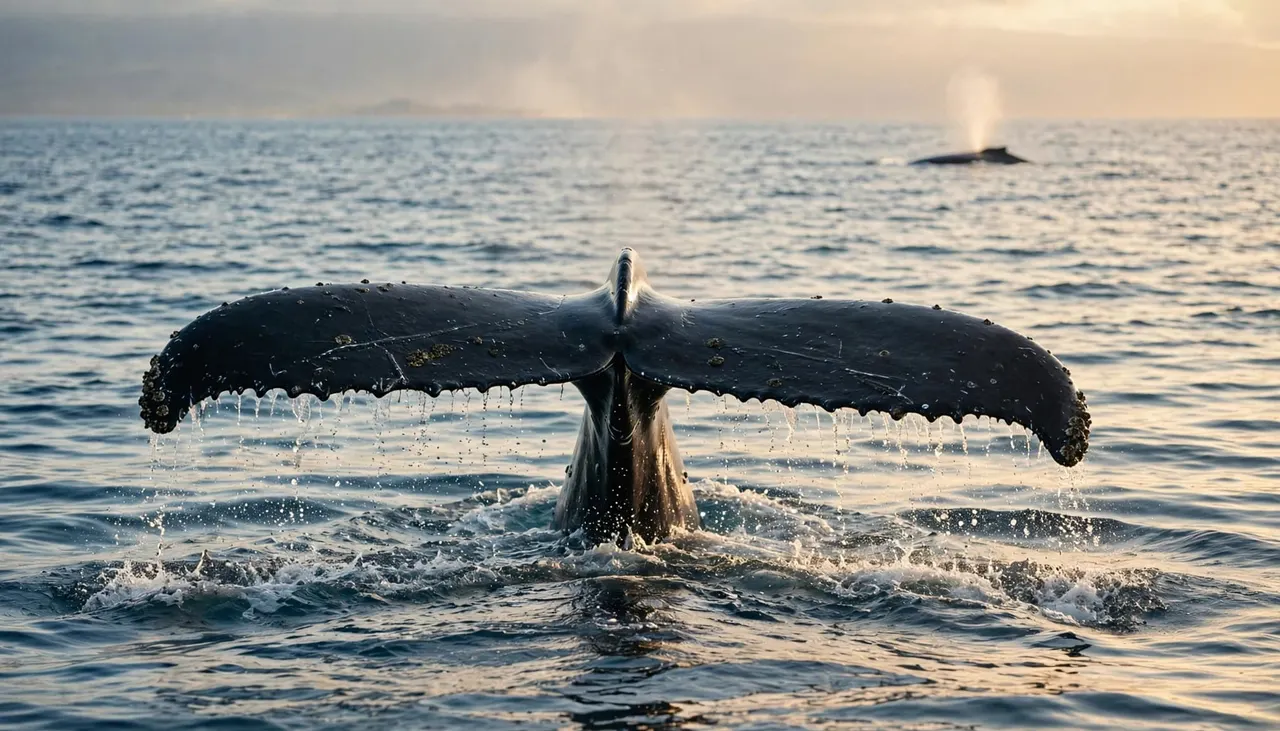
The underside of a humpback’s flukes can carry distinctive black-and-white patterns, scars, and trailing-edge shapes. Researchers use those features to recognize individual whales across sightings.
Your whale watching Oahu photos may capture a useful identifying view when a whale raises its tail before diving. However, a mostly white tail doesn’t mean female, and a mostly dark tail doesn’t mean male.
The same caution applies to dorsal-fin shape, pectoral-fin color, and visible scars. Those features can distinguish animals without revealing their sex.
A fluke photograph can help researchers recognize a whale. Any known sex associated with that individual comes from other evidence, not the tail’s color pattern.
If you’re photographing a dive, keep the whole fluke in frame. Then lower the camera occasionally so you don’t miss the wider scene.
Breaches and Tail Slaps Don’t Belong to One Sex
A powerful breach can tempt you to describe a whale as an aggressive male. Yet both male and female humpbacks breach, and a splash alone doesn’t explain an animal’s motivation.
Likewise, tail slaps and pectoral-fin slaps don’t provide a dependable male-or-female distinction. You can describe the action accurately without inventing its purpose.
For families, this makes a useful observation game. Name what you see first: a blow, a rolling back, a raised fluke, or a leap clear of the water. Then separate that observation from your interpretation.
If several whales surface together, notice their spacing and direction of travel. Those details help you follow the encounter without assuming every energetic group is competing for a mate.
The most memorable moment may be a quiet surface interval rather than an acrobatic display.
Watch Naturally and Give Humpbacks Space
Responsible whale watching Oahu experiences let the animals control the encounter. You get a more honest view of their behavior when boats don’t crowd them.
In Hawaii, federal rules prohibit approaching humpback whales within 100 yards. That restriction applies to approaches by boat and by swimming. Your captain manages the vessel’s position, so follow crew directions if whales surface nearby.
Meanwhile, keep scanning beyond the last splash. A whale may change direction underwater or remain submerged while another animal appears elsewhere.
Bring sunglasses, sun protection, and a light layer for wind. Secure your camera or phone before moving around the deck, and keep walkways clear.
If motion sickness affects you, ask a pharmacist or healthcare professional about suitable prevention before departure. Comfort helps you stay attentive enough to notice the small details.
Plan Your Winter Outing With Living Ocean Tours
Build your whale watching Oahu plans around the experience of observing wild animals, rather than a promise to identify their sex. Our seasonal cruises give you time offshore along the Waikiki coastline while our captain and crew handle the search.
On our Waikiki whale-watching tour, you may encounter traveling adults, calves, or surface displays. Weather, visibility, and whale movement shape each departure, so no particular behavior belongs on a guaranteed checklist.
Our vessels have shaded seating and onboard restrooms, giving you comfortable places between sightings. If you’re adding snorkeling to your visit, we’re also the only tour company on Oahu with professional snorkel guides.
You can browse departures through CHECK AVAILABILITY.
Choose an outing for the ocean time and wildlife opportunity. Whether you see a distant blow or a slowly rising tail, the encounter remains worthwhile without a male-or-female label.
Frequently Asked Questions
Can your guide tell whether every humpback is male or female?
You shouldn’t expect a guide to identify every whale’s sex. A knowledgeable explanation includes the limits of the sighting. If the animal is a previously documented individual, researchers may already know its sex through other evidence. Otherwise, “unknown” is often the accurate answer.
Does the larger whale in a pair have to be female?
Size alone doesn’t establish sex, even though females are generally larger. Age, distance, and body position complicate the comparison. Unless you have reliable measurements and additional evidence, describing one whale as larger is more accurate than calling it female.
Can you hear a male whale singing from the boat?
Humpback songs occur underwater. A hydrophone can make those sounds audible aboard a vessel, but you shouldn’t assume every tour includes that equipment or a singing whale. Even when you hear a song, the visible whale may be a different animal.
Enjoy the Sighting Without Forcing an Answer
You don’t need to identify a humpback’s sex to understand something meaningful about its life. Size, song, and social behavior become more useful when you recognize their limits.
Bring your curiosity and give the whales space. The strongest takeaway from your trip is careful observation, whether you’re watching a calf surface beside an adult or a fluke disappear beneath the Pacific.


