
Whale Watching Oahu: How Calves Learn to Communicate
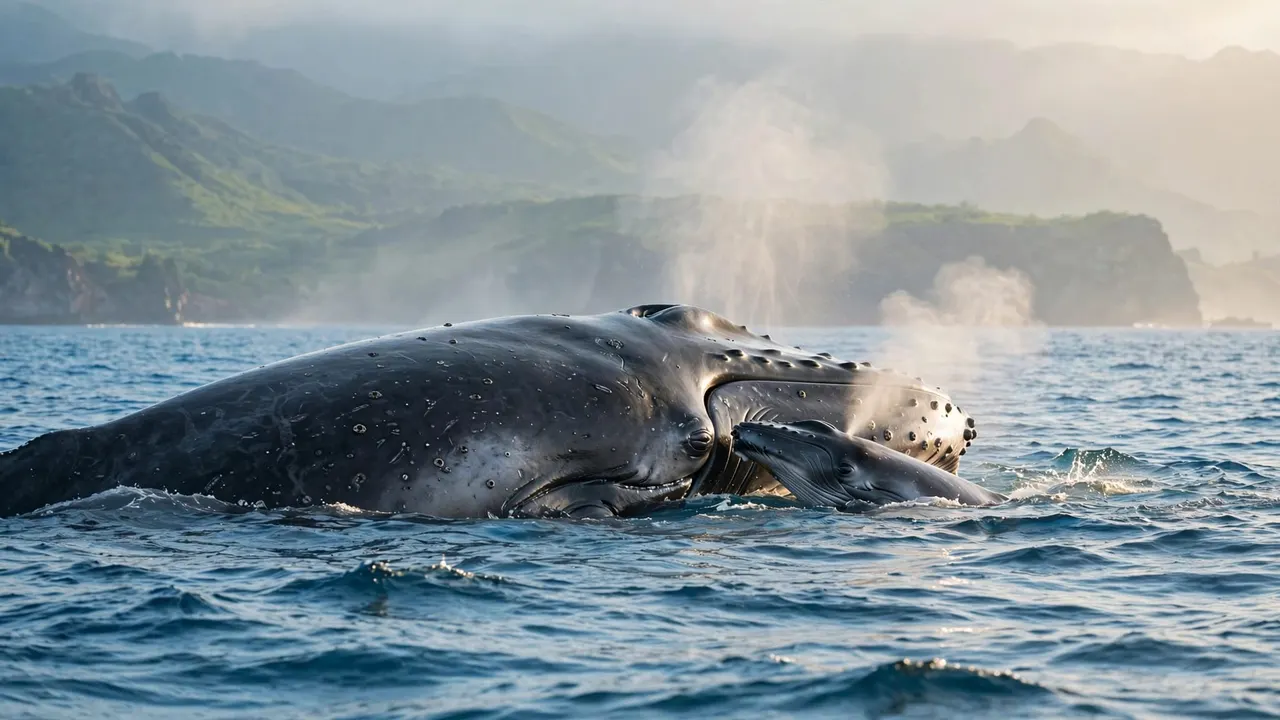
Humpback calves communicate early with short calls, and their vocal repertoire develops as they grow. During whale watching Oahu season, a mother and calf surfacing together gives you a glimpse of that development, even when you can’t hear what happens underwater.
At Living Ocean Tours, we help you appreciate these quieter encounters alongside the big splashes. Start with the mother-calf connection, where sound and close contact shape a young whale’s earliest months.
What whale watching Oahu reveals about young calves

Hawaii’s winter waters are breeding and nursery habitat. Humpbacks travel here after spending their feeding season in colder northern waters. As NOAA’s humpback whale overview explains, migration connects their feeding and breeding areas.
For a calf, these first months include nursing, swimming, and staying near its mother. Communication develops within that daily relationship, rather than through anything resembling human language lessons.
Although whales may appear around Hawaii from November into May, January through March is the strongest planning window. Those months overlap with our seasonal departures near Waikiki.
You might see a small back beside a much larger one, followed by two separate blows. However, a surface encounter reveals only part of their interaction. Underwater sounds require acoustic recording equipment to study.
How mothers and calves use sound
Short calls provide an early starting point
Young humpbacks produce relatively short vocalizations, including sounds researchers describe as grunts and squeals. These differ from the long, patterned songs associated with adult males.
For you, the useful distinction is between a call repertoire and a complete song. A repertoire is the range of sound types an animal produces. Calves already vocalize while that range is developing.
Researchers study these sounds alongside behavior because a recording alone doesn’t reveal every caller’s identity or purpose. Even when two whales remain together, you shouldn’t assume every sound passes between them.
Close contact gives calls their context
A mother and calf spend substantial time near each other while traveling, resting, and nursing. That closeness makes their relationship central to understanding early communication.
However, physical proximity doesn’t prove the meaning of a particular call. Researchers combine underwater recordings with observations to investigate when sounds occur and which animals might produce them.
During your outing, watch the pair’s spacing. A calf surfacing beside its mother offers something you can observe directly, without assigning a hidden message to either animal.
Calf calls are different from adult song
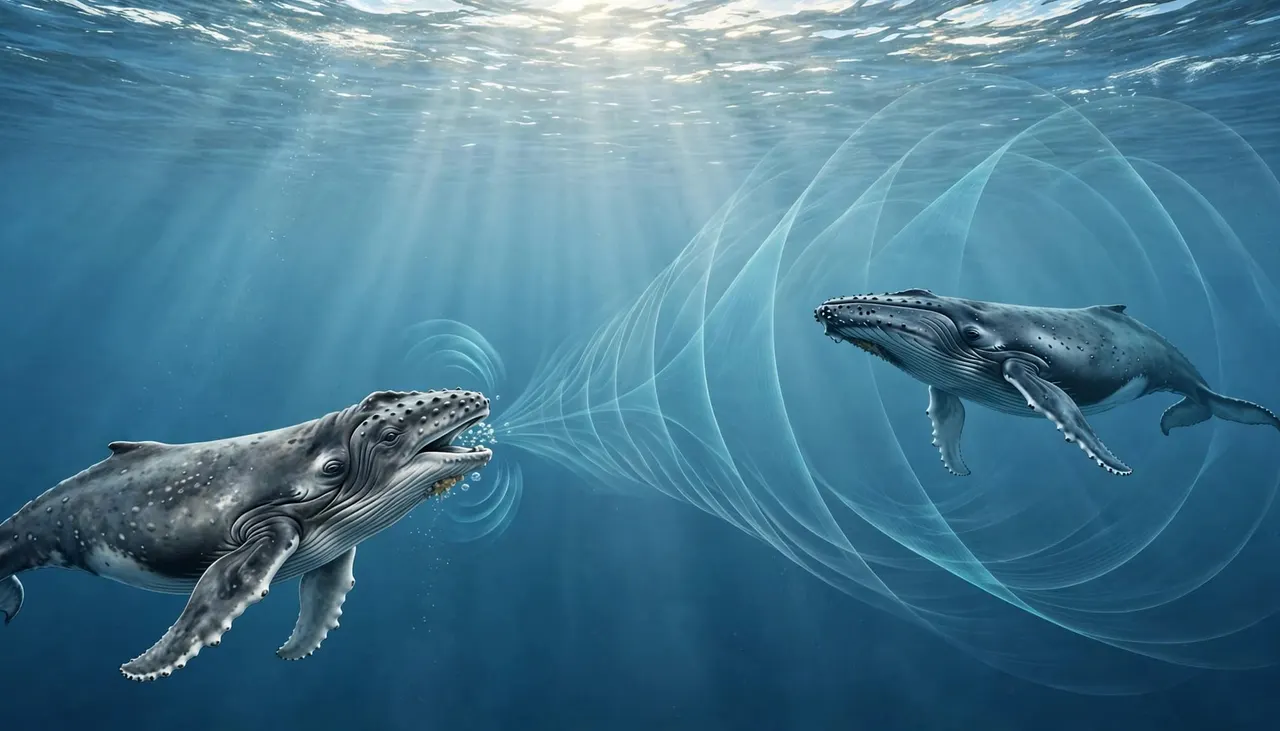
The famous humpback soundtrack largely comes from males producing structured songs. Research on male humpback chorusing in Hawaii describes how those songs dominate the local underwater soundscape during winter.
A calf’s brief grunt belongs to a different category. It isn’t a miniature performance of an adult male’s full song.
This distinction matters when you hear whale recordings. A dramatic, repeating sequence may demonstrate adult singing rather than mother-calf communication.
Also, underwater sound doesn’t automatically become audible to passengers above the surface. A hydrophone converts underwater sound into a signal people can listen to through equipment. You can enjoy an encounter without hearing the whales or assuming a nearby singer is the animal you see.
What research shows about vocal development
Hawaiian studies recorded young calves calling
A University of Hawaii at Hilo account describes research by Zoidis and colleagues that documented calf vocalizations during Hawaiian winter fieldwork from 2004 through 2008.
The work included observations around Maui and Kauai, using underwater recordings and video. Researchers recorded short, simple sounds, including grunts and squeals.
For your understanding, the important finding is that young calves already contribute sounds to their surroundings. They aren’t silent passengers beside their mothers.
However, these Hawaiian observations don’t provide a word-for-word translation. A sound’s timing can suggest a possible function without establishing one fixed meaning.
Older calves show a broader repertoire
A separate 2024 feeding-ground study found that calves produced most, if not all, of the adult call repertoire by about six months of age.
That finding broadens the picture of development beyond the Hawaiian nursery season. It describes older calves on feeding grounds, rather than newborns off Waikiki.
Taken together, the studies show early vocal activity followed by a broad repertoire later in calfhood. They don’t establish a single sequence that every calf follows.
You can understand communication development as a combination of growing physical abilities and experience around other whales. Researchers are still working out how maturation and learning contribute to individual sounds.
What you can notice from the boat
Watch surfacing and spacing
Your most useful observations often begin with a blow. Then look for a rolling back and, if a calf is present, a smaller body nearby.
Calves may surface more frequently than adults, so keep watching after the larger whale disappears. Still, whales don’t follow a reliable timer, and you shouldn’t expect both animals to surface together.
Tell children to watch for differences in size rather than chase every splash with a camera. This gives them a concrete way to follow the encounter.
You may also notice the pair traveling steadily or remaining in one general area. Describe what you see without assuming you know their next move.
Read splashes cautiously
Breaches, tail slaps, and pectoral-fin slaps create striking sights and underwater sound. However, a splash doesn’t come with a confirmed translation.
You can’t tell from one calf breach whether it is practicing a movement, responding to another whale, or doing something else.
A visible behavior is evidence of an action, not proof of the message behind it.
That distinction makes your observations more meaningful. You can appreciate an energetic calf without turning every movement into a lesson taught by its mother.
Planning your whale watching Oahu outing
Our seasonal Waikiki whale watching tour departs from Kewalo Basin Boat Harbor, minutes from Waikiki. We run humpback cruises from January through March, when winter whale activity is strongest around Hawaii.
You can settle into shaded seating or enjoy open viewing areas aboard our double-decker vessels. Onboard restrooms and dry storage also make the outing more comfortable for families.
Bring sunglasses with a secure strap and a light wind layer. Keep your camera attached when moving around the deck, and follow your crew’s directions.
Our wider Honolulu ocean adventures also give you options beyond whale season. For reef outings, we’re the only tour company with professional snorkel guides.
You can CHECK AVAILABILITY for a winter whale watch. Seasonal timing improves opportunity, but weather and whale movement shape every departure.
Give mothers and calves room
Federal rules prohibit approaching humpbacks within 100 yards in Hawaiian waters. That restriction applies to people in the water as well as vessels, including kayaks and paddleboards.
For whale watching Oahu visitors, respectful viewing means staying aboard and allowing the animals to choose their course. Never enter the water to approach a mother and calf.
A watercraft should never come between the pair. Mothers and calves need room to travel, rest, and nurse without people trying to arrange a closer encounter.
If a whale moves toward the vessel, follow your crew’s instructions. Your captain must respond to the situation, while passengers should avoid encouraging a closer approach.
Distance also keeps your expectations grounded. A small blow beside a larger one can be a rewarding sight without a close-up photograph.
Key Takeaways
- Calves produce short calls early in life, while their vocal repertoire develops as they grow.
- Adult male songs and calf calls are different types of vocal behavior.
- Plan whale watching Oahu experiences for January through March, while allowing for unpredictable wildlife.
- Watch spacing and surfacing, but avoid assigning a definite meaning to every movement.
- Keep at least 100 yards away when approaching humpbacks, and never separate a mother and calf.
Frequently Asked Questions
Can you hear calves during whale watching Oahu trips?
You generally won’t hear their underwater calls directly from the deck. Researchers use hydrophones to record them. Even with recordings, identifying a caller requires care, especially when several whales are nearby. Surface sightings and acoustic observations provide different information.
Do humpback mothers teach their calves to sing?
Research doesn’t establish a simple mother-led singing lesson. Calves produce calls, while the elaborate songs heard in Hawaiian winter waters are associated with males. Vocal development shouldn’t be reduced to a calf copying its mother’s song.
Can you guarantee a mother-and-calf sighting?
We can’t guarantee a particular whale or behavior. January through March offers a strong seasonal opportunity, but whales choose their own routes and surface schedules. Your encounter might include a traveling pair, distant activity, or a few brief blows.
Make Room for the Quiet Encounters
A calf’s early communication happens mostly beyond your view, but understanding it changes how you watch. Short calls and an expanding repertoire add depth to the sight of a young whale beside its mother.
Bring patience and respectful curiosity aboard. When you give the pair space and watch without assigning every movement a meaning, even a quiet surfacing can become a memorable part of your Oahu visit.


