
Whale Watching Oahu: What Humpback Throat Grooves Do

A humpback’s throat grooves let the tissue beneath its mouth expand, creating room for a large mouthful of seawater and prey. During your whale watching outing on Oahu, those long pleats can help you recognize an important feature of the animal’s feeding anatomy.
At Living Ocean Tours, we welcome you aboard with a simple approach: observe carefully and let the wildlife set the pace. Understanding the grooves adds another layer to your encounter, even when you see only a rolling back or a brief flash of the underside.
Start with where those folds sit and what happens when they expand.
Key Takeaways About Humpback Throat Grooves
- The long folds beneath a humpback’s mouth allow its throat region to expand during a feeding lunge.
- You may hear these structures called ventral grooves, throat pleats, or part of the ventral groove blubber.
- A surface appearance doesn’t necessarily expose the underside, so the grooves aren’t visible during every encounter.
- Hawaii’s broad whale-viewing window runs from November through April, but individual movements and ocean conditions shape what you see.
What Are a Humpback’s Throat Grooves?

Where to look beneath the jaw
If you study a clear underside photograph, you’ll notice long, roughly parallel lines running backward beneath the lower jaw. These are the throat grooves. They continue along the underside rather than appearing as isolated creases around the mouth.
The term “ventral” means the belly side of an animal. Once you know that word, descriptions of humpback anatomy become easier to follow. Ventral grooves refer to the folds underneath the whale, not markings along its back.
The Group for Research and Education on Marine Mammals describes these expandable ventral grooves as folds extending beneath the mouth toward the belly.
Why the folds have a purpose
Those lines are more than surface wrinkles. They form part of a flexible throat region that can enlarge when the whale takes in a mouthful.
Humpbacks belong to a group of whales called rorquals. Their expandable throat tissue is a defining part of how they collect food during a lunge.
For your whale watching Oahu experience, the useful distinction is between appearance and function. You might recognize the grooves in a photograph without seeing them expand. A visible set of pleats tells you about the animal’s anatomy, but it doesn’t establish what the whale was doing at that instant.
How Throat Grooves Help During a Feeding Lunge
Making room for a mouthful
During lunge feeding, a humpback opens its mouth as it moves into a concentrated patch of prey. The flexible tissue underneath expands, allowing the mouth cavity to hold substantially more than its resting outline suggests.
That temporary change in shape is the central job of the grooves. Without expandable tissue, the whale wouldn’t have the same capacity to accommodate a large mouthful.
American Scientist’s explanation of rorqual lunge-feeding anatomy describes how ventral groove blubber allows the oral cavity to enlarge enormously. The visible folds are the outside clue to that capacity.
You don’t need an expansion measurement to understand the advantage. The animal can temporarily create more room when it needs it.
Reading a feeding photograph accurately
A still image captures only one moment. Depending on its timing, you may see a narrow throat outline, an enlarged pouch, or an angle that hides the grooves altogether.
Researchers therefore study sequences rather than relying on a dramatic single frame. In a 2019 study of humpback feeding, A. J. Werth and colleagues analyzed video of surface and near-surface lunges.
That distinction matters when you’re comparing wildlife photographs. Different throat shapes don’t automatically mean different species or unusual anatomy. The viewing angle and the stage of the movement can change what you see.
When you look at an expanded throat, you’re seeing a flexible body region doing its job.
Why This Anatomy Matters During Whale Watching Oahu
Your whale watching Oahu encounter takes place in an important seasonal habitat, but seeing feeding anatomy doesn’t mean you’re watching a feeding event.
Hawaii’s waters are primarily breeding and nursery habitat for humpbacks. An animal you observe may be traveling, resting, socializing, or accompanying a calf. Its throat grooves remain part of its body regardless of its current activity.
A breach can briefly expose the underside. However, a leap alone doesn’t show that the throat pouch is expanding to collect a mouthful. Similarly, an open-mouth photograph needs context before you assign a feeding explanation.
Visible throat grooves identify a body feature. They don’t, by themselves, prove that a whale is feeding.
Keep that distinction in mind when someone aboard notices an unfamiliar movement. First describe what you can see: a roll, a raised head, an exposed underside, or a splash.
Then leave room for what the surface view doesn’t reveal. You’ll get more out of the encounter by separating a clear observation from an appealing explanation.
What You Can Realistically See From the Boat
Why the underside can be hard to spot
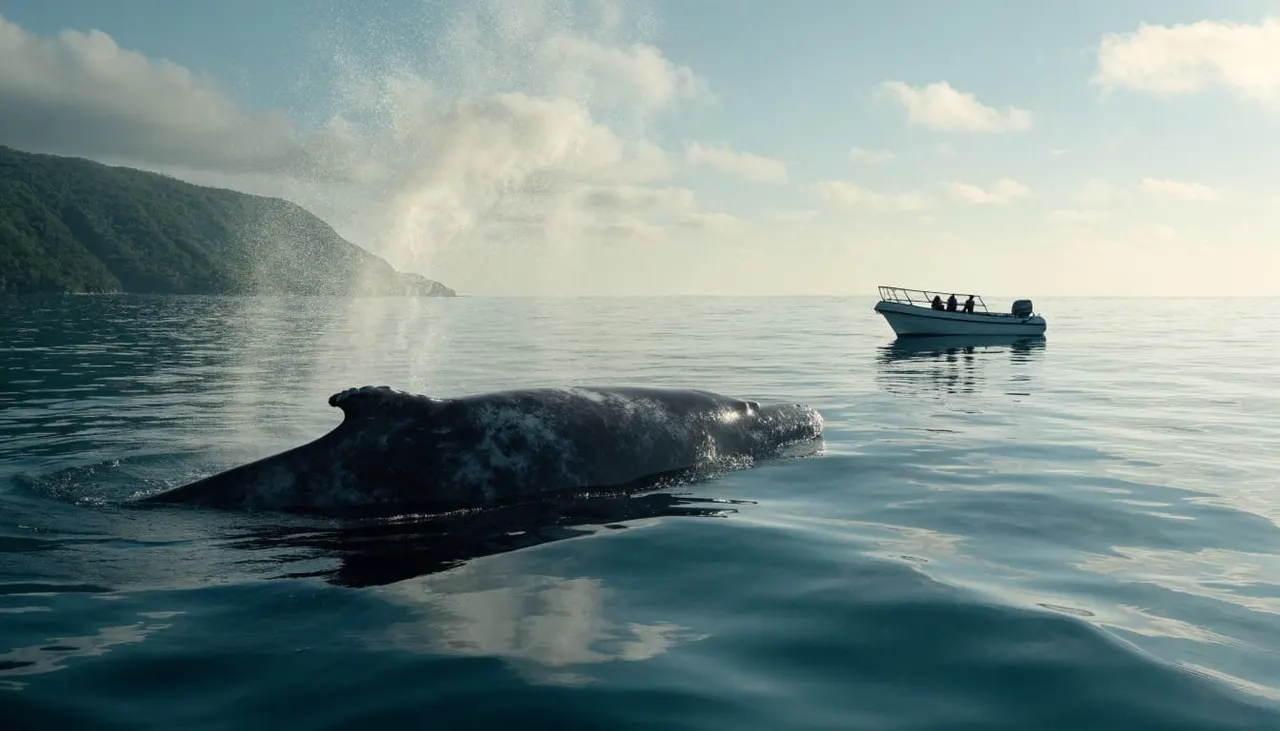
Most straightforward surfacing views show the top of the whale. You may notice a blow, a rounded back, and a dorsal fin before the animal disappears beneath the water.
The throat grooves sit underneath, so those ordinary surface moments often conceal them. A roll or an exposed underside may offer a better angle, but the view can last only seconds.
During whale watching Oahu, sunlight, spray, distance, and the whale’s orientation all affect the details you can recognize. Even a large animal can reveal surprisingly little of its body above water.
Treat a clear underside view as an opportunity, rather than the standard you expect every sighting to meet.
Watching without losing the wider encounter
If you’re taking photographs, begin with the whale’s whole visible body rather than zooming immediately into one small area. A wider frame can preserve useful context about its position and movement.
Once the animal submerges, lower the camera and scan again. Watching only through a screen can make it harder to notice a new blow elsewhere.
For families, give children a simple observation task: identify which part of the whale is visible. Couples can take turns photographing and watching without a device.
You don’t need a close-up of throat pleats to appreciate the animal. Recognizing why they remain hidden is also part of understanding its shape.
Plan Your Oahu Whale Watch With Living Ocean Tours
The Hawaiian Islands Humpback Whale National Marine Sanctuary identifies November through April as a period when visitors can see whales from shore and at sea. That broad window gives your whale watching Oahu plans a seasonal starting point.
It doesn’t describe a fixed route or surfacing timetable. Wind, swell, visibility, and animal movement affect each outing, so bring patience alongside your camera.
Our family-friendly Oahu ocean tours depart from Kewalo Basin Boat Harbor, close to Waikiki. On our Waikiki whale-watching tour, you can watch for winter visitors while enjoying time along the coastline.
You can explore departure options and CHECK AVAILABILITY for your wildlife outing.
Alongside our whale experiences, we’re Oahu’s only tour company with professional snorkel guides for separate reef adventures. Across our ocean experiences, our approach centers on observing wildlife respectfully.
Bring sunglasses with a secure strap, sunscreen, and a light layer for wind. Keep your camera or phone secured when moving around the deck. If you’re prone to motion sickness, a pharmacist can advise you about suitable prevention before departure.
Most importantly, choose the outing for the chance to observe wild animals on their terms. A brief surface appearance can be fascinating when you understand the body moving beneath it.
Frequently Asked Questions
Are throat grooves the same as wrinkles?
The grooves are purposeful folds in an expandable body region, rather than ordinary skin creases. When you see them beneath the jaw and along the underside, you’re looking at part of the anatomy that accommodates a large mouthful during lunge feeding. Their appearance changes with the whale’s position and activity.
Will you see expanded throat grooves near Oahu?
An expanded throat pouch isn’t something to expect on every outing. Your view usually depends on whether the whale exposes its underside and whether conditions allow you to distinguish the detail. Hawaii’s breeding and nursery context also matters: a surface display doesn’t automatically indicate a feeding lunge.
Can you recognize the grooves without a close photograph?
You may recognize the long folds when the underside is clearly exposed, but a brief or distant view can hide them. Start by identifying the head, underside, back, or tail. That broader orientation helps you interpret photographs afterward without mistaking shadows, reflections, or splashes for anatomical details.
See More Than a Splash
A humpback’s throat grooves reveal how much function can sit beneath a familiar outline. Those expandable folds create room during a feeding lunge, even though you may never see them in action during your Oahu encounter.
Bring that understanding aboard, but keep your expectations grounded in what the whale reveals. Your most rewarding view may be a brief roll or a quiet surfacing, appreciated with a clearer understanding of the animal beneath the water.


