
Whale Watching Oahu: Report an Entangled Humpback
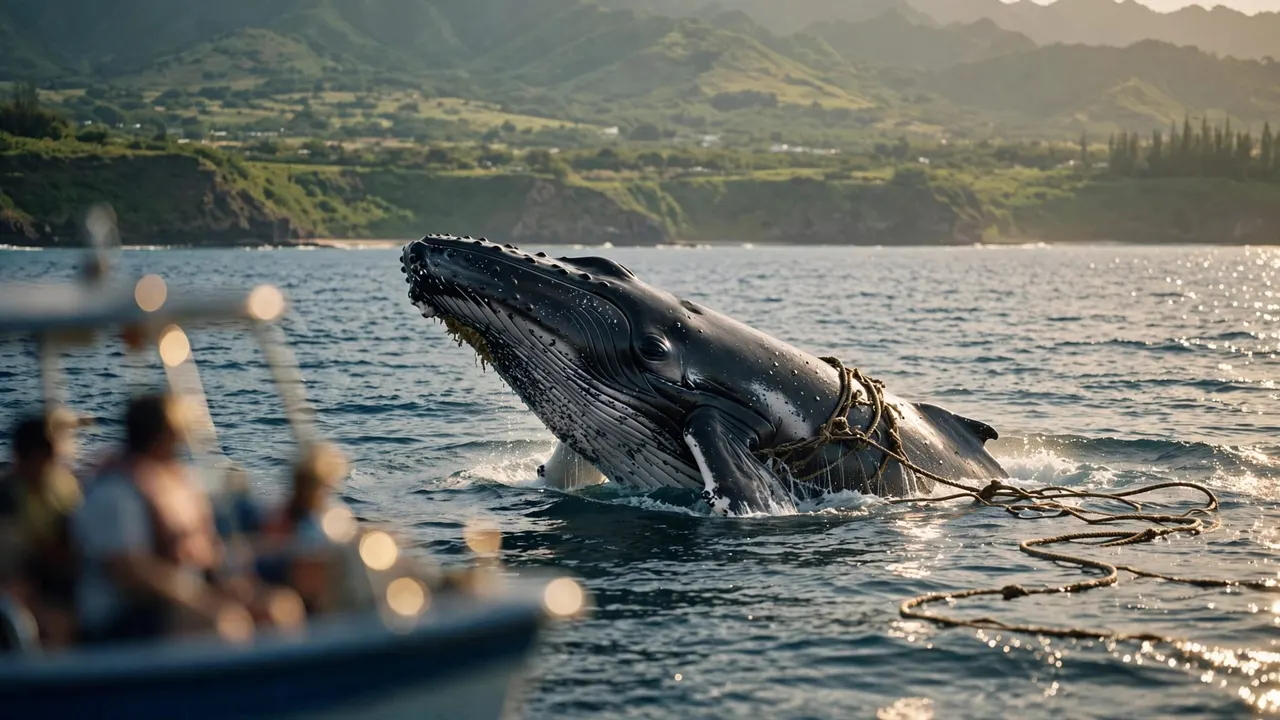
If you spot a humpback tangled in rope or fishing gear, call NOAA at (888) 256-9840 immediately. During a whale-watching outing on Oahu, you can help connect an animal in trouble with trained responders without putting anyone in the water.
At Living Ocean Tours, we encourage you to observe wildlife without touching, chasing, or interrupting its movement. When a whale appears entangled, your most useful contribution is a prompt report and a clear location.
Start with the call, then gather details from a safe distance.
Report an Entangled Whale Immediately
You don’t need to identify every piece of gear before reporting a suspected entanglement. Give responders what you know while the sighting is current.
Call the NOAA hotline
The 24-hour NOAA hotline is (888) 256-9840. NOAA’s marine animal reporting information lists this number for injured, stranded, or entangled marine wildlife in Hawaii.
Tell the dispatcher you’re reporting a potentially entangled humpback off Oahu. Start with its location, the sighting time, and your callback number.
If you’re aboard a tour boat, alert the captain or crew immediately. They can manage vessel positioning and communications while you describe what caught your attention. Don’t assume another passenger has already reported the whale.
Use VHF Channel 16 if you can’t call
If a telephone call isn’t possible, hail the U.S. Coast Guard on VHF Channel 16. Explain that you’re reporting an entangled whale and provide your position.
As a passenger, ask the captain to handle the radio. Keep the message factual and concise so the receiver understands the animal’s location and the suspected problem.
From shore, call with the best location description you have. You can still make a useful report without boat electronics, photographs, or a precise estimate of how far offshore the whale is.
Recognize Warning Signs Without Moving Closer
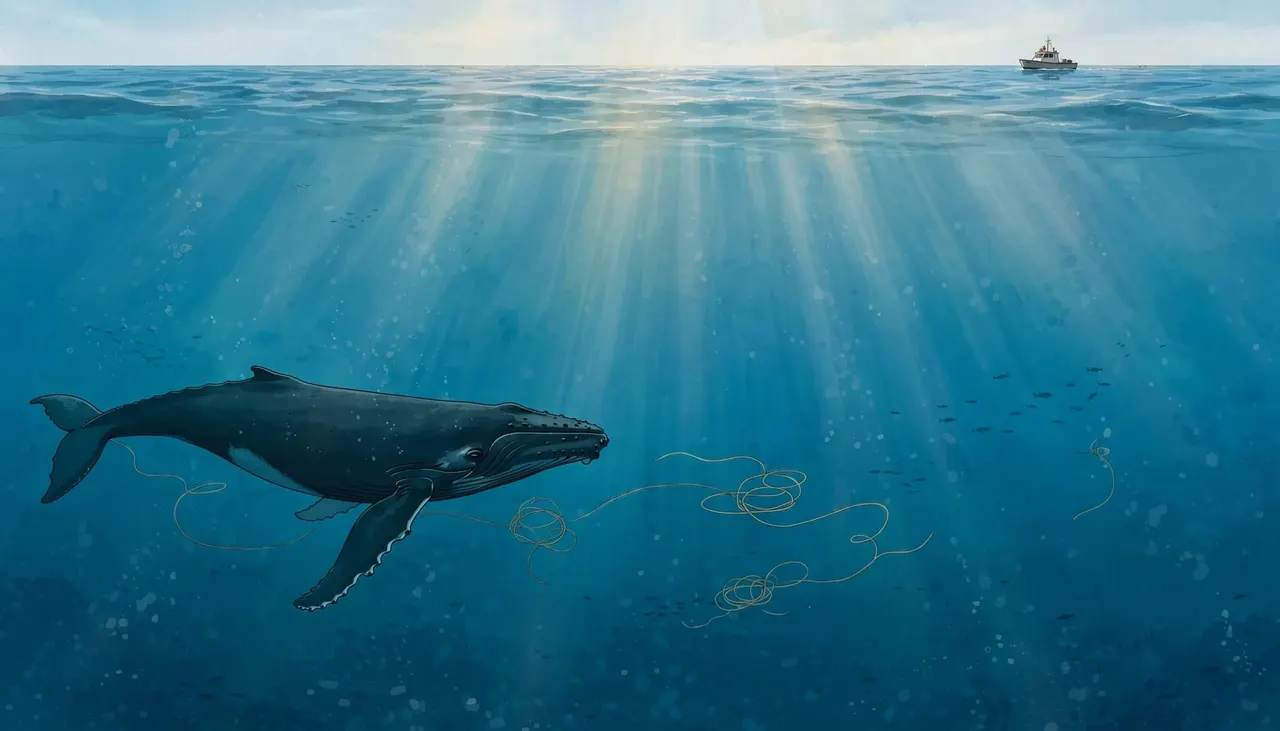
Entanglement can be difficult to recognize during a brief surface appearance. You may see the whale clearly while most of the attached gear remains underwater.
Look for attached or trailing material
Possible warning signs include rope crossing the body, line around a flipper or tail, or fishing gear trailing behind the whale. A buoy that repeatedly travels with the animal also deserves attention.
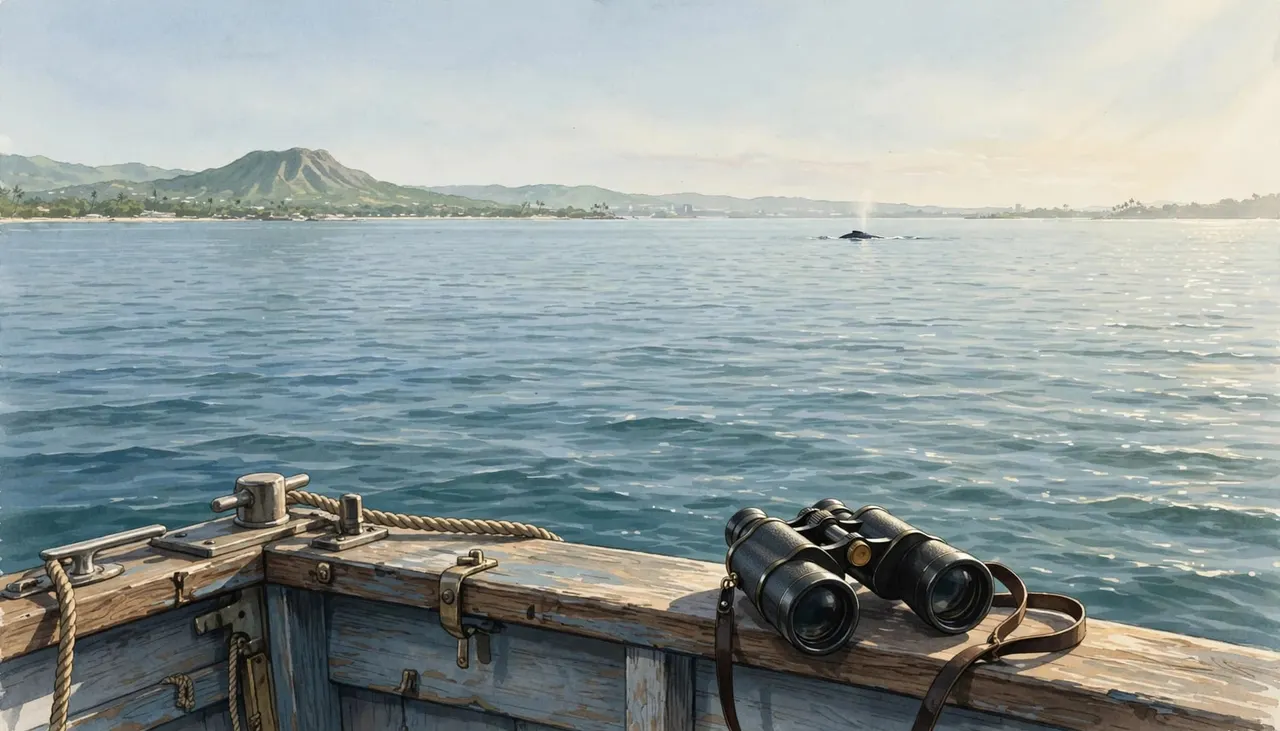
Use binoculars or your camera’s zoom from your existing position. Describe where the material appears attached rather than guessing how tightly it wraps around the animal.
Meanwhile, note whether the whale changes direction, struggles to move, or carries visible injuries. Those observations can help responders understand the situation, but you shouldn’t approach to inspect them.
Report uncertainty instead of diagnosing the whale
A whale can keep swimming while entangled. Movement alone doesn’t establish that it’s healthy or able to free itself.
Likewise, unusual behavior doesn’t prove entanglement. A tail slap, long dive, or sudden turn can occur during an ordinary encounter.
Report what you saw and make your uncertainty clear. Say that you observed a possible line or buoy rather than declaring the whale trapped. You don’t need a complete diagnosis to call.
If the animal submerges before you obtain a photograph, report it anyway. The time and last known location remain useful information.
Your whale watching Oahu Reporting Checklist
A useful report gives responders a starting point and a way to contact you. Call first, then collect additional details without changing your distance.
Have these observations ready when possible:
- Give the sighting time and location, preferably latitude and longitude from the vessel’s GPS.
- Provide your name, callback number, and whether you’re observing from a boat or shore.
- Describe the whale’s direction of travel, approximate speed if known, behavior, and whether it appears alive or dead.
- Explain the gear’s appearance, where it seems attached, and whether you have photographs or video.
Hawaii DLNR’s marine species reporting guidance identifies Option 3 on the hotline menu for an entangled large whale.
If you’re aboard a vessel, give the whale’s location when available. Your boat’s coordinates may help, but explain when they describe the observer’s position rather than the animal’s.
From land, name the shoreline location and describe the whale’s direction relative to recognizable landmarks. Avoid inventing coordinates or presenting a rough estimate as an exact measurement.
Photos are useful when they show the gear, affected body area, or identifying features. Keep the original files and follow the dispatcher’s instructions for sharing them.
You should never delay the call while organizing images, editing video, or posting the sighting online.
Keep the 100-Yard Buffer and Leave Rescue to Responders
An entangled whale needs professional help. Your concern for the animal doesn’t make a closer approach safe.
Follow Hawaii’s humpback approach rule
Federal rules prohibit approaching humpback whales within 100 yards, equivalent to 300 feet, in Hawaiian waters. The sanctuary’s humpback whale approach regulations also prohibit interception and disruption of normal behavior.
That protection applies to boats, swimmers, kayaks, and other ways of approaching. A suspected entanglement doesn’t give you permission to move inside the buffer.
Don’t block the whale’s path to keep it nearby. If it approaches your vessel, stay calm and let the captain manage the situation. As a passenger, leave the helm and working areas clear.
Don’t cut, pull, or handle the gear
Never enter the water, grab a trailing line, attach equipment, or attempt to remove gear. Only trained, authorized responders should attempt whale disentanglement.
A large whale can move suddenly, and tensioned lines create additional hazards. What looks like a simple loose rope may connect to gear you can’t see.
Removing one visible section may also leave the main entanglement in place. Responders need to assess the full situation before choosing an approach.
A whale that swims away may still be entangled. Report its last known location and direction instead of assuming the problem has resolved.
Your role is observation and communication. Keep family members aboard, away from loose gear, and attentive to crew instructions.
What to Do After You Make the Report
If conditions allow safe, lawful observation, keep the whale in sight from a distance. Follow the dispatcher’s guidance and relay changes in location or direction.
Don’t chase it when it dives or leaves the area. Instead, record the last sighting time and where it was heading. Explain when you’ve lost visual contact.
A report doesn’t guarantee an immediate response or a successful disentanglement. However, accurate information gives authorized responders a better basis for deciding what happens next.
Keep your phone available for a callback. If you have photographs, retain the original files rather than deleting them after sending a compressed version.
Also, distinguish an animal emergency from a rules violation. For a suspected federal marine-resource violation, the separate NOAA Fisheries Enforcement Hotline is (800) 853-1964. The sanctuary’s wildlife protection information lists both reporting routes.
An entangled whale belongs on the marine wildlife hotline. If you also witnessed someone harassing or approaching it illegally, describe that separately through the enforcement channel.
Responsible Whale Watching With Our Crew
You can plan a whale watching Oahu outing with conservation built into the experience. Our seasonal Waikiki whale watching cruises depart from Kewalo Basin Boat Harbor, close to Waikiki.
Aboard our Coast Guard-inspected, custom-built double-decker vessels, you have broad viewing areas, shaded seating, onboard restrooms, and dry storage. You can watch comfortably while our captain manages responsible vessel positioning.
We’re also the only Oahu tour company with professional snorkel guides. Your whale watch remains a boat-based wildlife experience, with no swimming toward humpbacks.
If you notice suspicious gear, tell our crew right away. Explain what you saw and where, then give them space to handle the boat and communications.
For your whale watching Oahu trip, bring binoculars, sun protection, and a secure camera strap. Let wildlife choose its course, and accept that surface activity happens on the animal’s schedule.
You can CHECK AVAILABILITY for a seasonal whale-watching departure.
Key Takeaways for a Whale in Trouble
Keep your whale watching Oahu experience safe by remembering the difference between helping responders and attempting a rescue.
- Call (888) 256-9840 promptly, or hail the Coast Guard on VHF Channel 16 if you can’t telephone.
- Report the location, time, travel direction, visible gear, and your contact information.
- Stay at least 100 yards away, never handle the gear, and leave disentanglement to authorized professionals.
A clear report matters more than a close photograph. You can help without touching the whale or altering its path.
Frequently Asked Questions
Should you report a whale if you’re unsure it’s entangled?
Yes. Explain that you’re reporting a possible entanglement and describe the material or behavior you observed.
You don’t need to establish whether the gear is fishing line, netting, or another type of debris. Responders can assess the information you provide. However, be clear about what you saw directly and what you’re unsure about.
Can you help if you’re watching from shore?
Yes. Call the same NOAA hotline and provide your shoreline location, sighting time, and the whale’s direction offshore.
Binoculars may help you describe visible gear without moving toward the animal. If you have safe access to photographs or video, tell the dispatcher.
Don’t launch a kayak, paddleboard, or boat to get closer. When the whale disappears, report its last visible position and direction. A shore-based report can still give responders useful information about where to begin assessing the situation.
Help the Whale Without Adding Risk
A responsible whale watching Oahu trip gives humpbacks room to move and gets the right people involved when something looks wrong. Your best contribution is a prompt report, a useful location, and patient observation from a legal distance.
Save (888) 256-9840 before heading out. If you spot a possible entanglement, alert the crew or call NOAA, then let authorized responders handle the rescue.


