
Whale Watching Oahu: How Humpback Courtship Groups Form
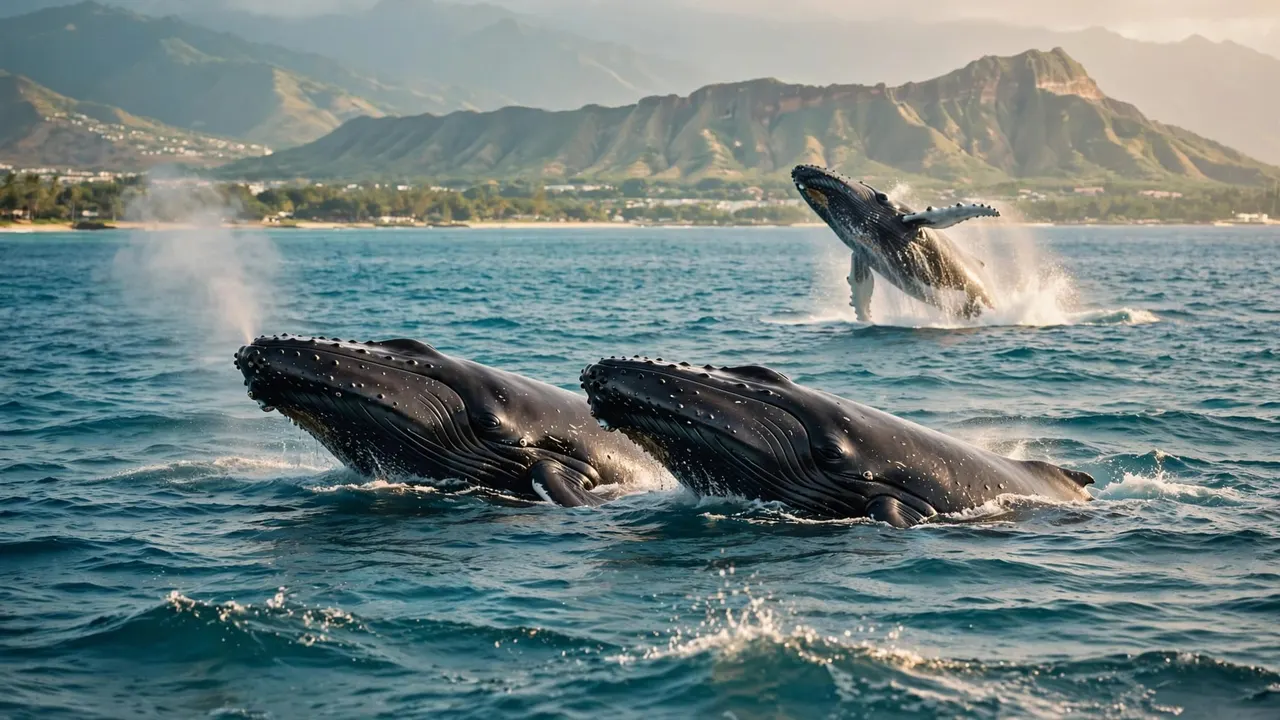
Several humpbacks surfacing together can turn your whale watching Oahu outing into a glimpse of courtship competition. Living Ocean Tours takes you offshore from Kewalo Basin Boat Harbor, near Waikiki, where winter visitors gather in Hawaii’s breeding waters.
A busy cluster of whales may include males competing for access to a female, but splashes alone don’t reveal every animal’s role. Understanding group behavior helps you appreciate the encounter without guessing at relationships you can’t see.
Start with why humpbacks gather here, then follow how a quiet pairing can become an active competitive group.
What whale watching Oahu reveals about breeding season
Hawaii brings breeding whales together
Humpbacks spend much of their feeding season in colder, productive northern waters. During winter, many travel to Hawaii, where mating, birth, and early calf care shape their activities.
That seasonal gathering creates opportunities for whales to encounter potential mates and competitors. However, breeding habitat also contains resting animals, traveling whales, and mothers nursing calves.
When you see several humpbacks nearby, consider that wider context. Their presence in Hawaii supports a courtship interpretation, but it doesn’t prove every gathering involves competition.
For your whale watching Oahu trip, the useful starting point is simple: watch what the animals do before assigning them roles.
The season offers opportunity, not certainty
The Hawaiian Islands Humpback Whale National Marine Sanctuary identifies November through April as a period when visitors can see whales from shore and at sea.
Those months describe a broad viewing window around Hawaii. They don’t establish a daily schedule near Waikiki or guarantee a competitive group on your departure.
Wind, swell, visibility, and whale movement affect what you can observe. Even within breeding season, your encounter might involve one distant blow rather than several active whales.
How humpback courtship groups form
An escort relationship can draw competitors
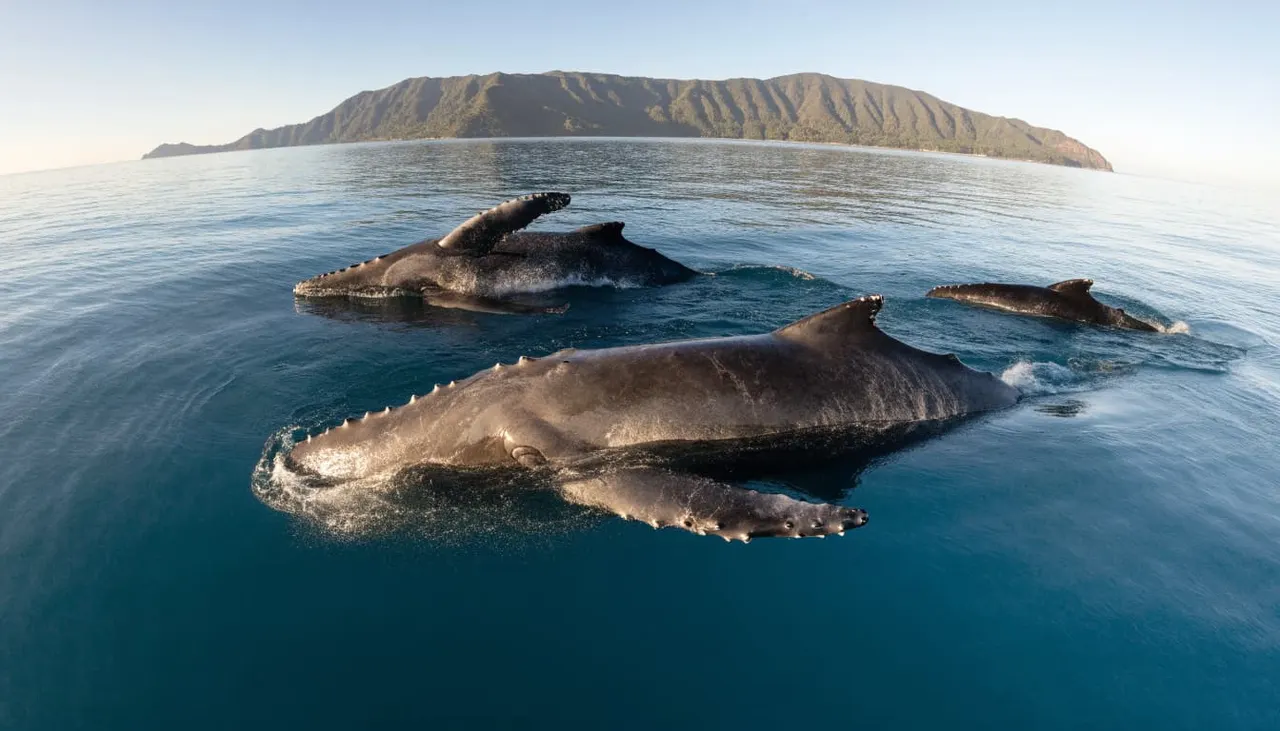
A courtship-related gathering can develop around a female accompanied by a male, often called an escort. Additional males may join, creating competition over access to the female.
Researchers use “competitive group” for this familiar breeding-season pattern. A 2021 humpback chorusing study describes the traditional group as two or more males competing for access to one female.
That description gives you a useful framework, rather than a formula for every sighting. Group size varies, and researchers need more evidence than a few surface appearances to identify individuals and their roles.
From your boat, you may see the gathering without witnessing its beginning.
Membership changes as whales join and leave
Competitive groups are temporary associations. Whales can approach, separate, or change position as the encounter develops.
A male traveling closest to the female is commonly described as the primary escort. Other males may challenge that position, so the arrangement can change during observation.
You might notice clustered blows, abrupt turns, or repeated close surfacing. Those movements become more informative when you follow the group over time.
However, distance and submerged activity limit your view. A whale disappearing beneath the surface hasn’t necessarily left the group, and a newly visible back may belong to an animal already nearby.
Why an escort doesn’t tell the whole story
Accompanying a female isn’t a permanent partnership
An escort is a description of association, not proof of a lasting pair bond. The male may accompany a female for a period, but that observation doesn’t establish mating or future relationships.
Nor does the closest whale automatically become the calf’s father. You can’t determine parentage from traveling position, synchronized surfacing, or apparent proximity.
During whale watching Oahu excursions, this distinction keeps your interpretation grounded. You can describe one whale accompanying another without turning a short encounter into a complete family story.
Your crew can help identify observable patterns while leaving uncertain relationships open.
Mothers and calves can also have escorts
A female with a calf may be accompanied by an adult escort. Therefore, three whales traveling together aren’t automatically three adults in a competitive group.
Look for a noticeably smaller animal surfacing beside a larger whale. A calf’s repeated appearances may help you recognize a mother-calf association, although viewing conditions can make size comparisons difficult.
If other adults are present, their relationship to the pair may remain unclear.
Give these groups particular patience and space. Mothers and calves need room to travel and rest, whether or not an escort is nearby. Frequent surfacing is an opportunity to observe, never an invitation to approach.
Reading surface activity without overinterpreting it
A competitive group can look energetic, but no single splash confirms courtship. During whale watching Oahu outings, repeated patterns tell you more than one dramatic moment.
These observations help you separate visible behavior from assumptions.
| What you notice | What you can reasonably conclude |
|---|---|
| Several blows close together | Multiple whales are surfacing nearby. |
| Repeated close travel and position changes | The whales are interacting or moving together. |
| A breach or tail slap | A surface display occurred, but its purpose remains uncertain. |
| A small whale beside a larger one | You may be observing a calf accompanying its mother. |
Use the group pattern as context, rather than treating each display as a signal with one fixed meaning.
Bubble blowing needs the same care. Whale Trust’s mating-behavior research explains that males may release bubbles to discourage competitors. Bubbles may also have roles in courtship, mating, or birth, but those possibilities remain tentative.
You may not see bubbles clearly from the deck. Surface foam can also come from movement or breaking waves, so avoid assuming every patch of whitewater has the same origin.
Several whales surfacing together can suggest a social group. Their sex, reproductive status, and relationships still require evidence beyond a brief deck-level view.
Keep watching after the biggest splash. The next turn or separation may reveal more about the interaction than the display itself.
Responsible whale watching protects natural behavior
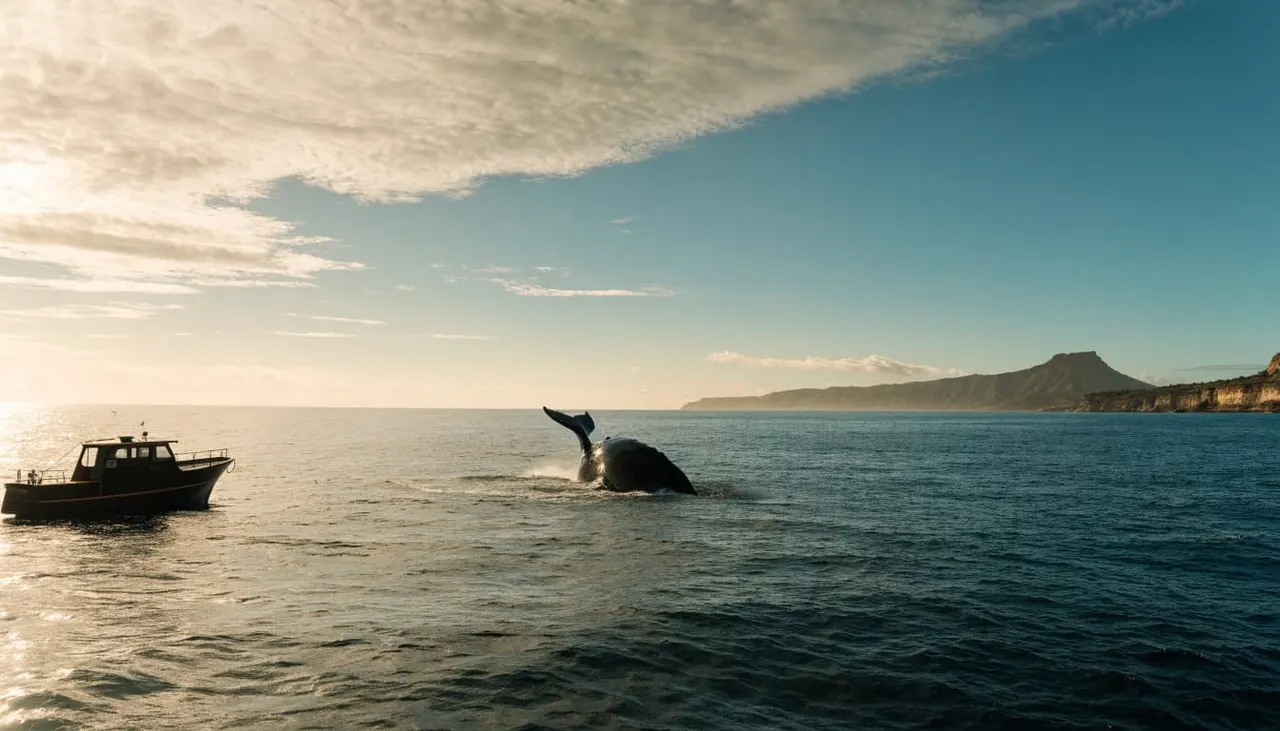
An active group can change direction quickly. Let your captain manage the vessel’s position instead of asking for a closer pass or a tighter photograph.
The sanctuary’s responsible-recreation guidance advises staying more than 100 yards from whales. That space matters when several animals are interacting, and it matters just as much around a quiet mother and calf.
Your whale watching Oahu experience becomes more informative when the animals can continue their behavior without pressure.
Never swim toward, touch, feed, chase, or attempt to interact with a humpback. If a whale moves toward the vessel, follow crew instructions and allow the captain to respond.
On deck, keep your camera secure and move carefully. A sudden sighting can send everyone toward one side, so follow the crew’s directions about viewing positions.
Binoculars can help you appreciate distant details without reducing the separation. Also, lower your camera occasionally. Watching the whole group makes it easier to notice another whale surfacing outside your frame.
Respectful observation protects the encounter you’re hoping to understand.
Plan your outing with Living Ocean Tours
You can explore Living Ocean Tours ocean excursions when planning your time offshore. The family-owned Honolulu company departs from Kewalo Basin Boat Harbor, conveniently located near Waikiki.
For couples and families, that departure point makes an ocean outing easy to fit into a Honolulu stay. Once aboard, follow the crew’s guidance and keep your expectations flexible.
Living Ocean Tours describes itself as the only tour company with professional snorkel guides. That distinction concerns its snorkeling experiences; whale watching remains an above-water wildlife encounter.
You can review available ocean experiences before choosing your outing.
If humpbacks are your priority, CHECK AVAILABILITY for a whale-watching departure.
Bring sun protection, sunglasses, a light layer, and a secure camera strap. For children, turn the search into observation: count visible blows and compare surfacing positions without assuming each appearance belongs to a different whale.
A crew can search carefully, but nobody can promise a courtship group, breach, or sighting. Choose the outing for the opportunity to observe wild animals on their own terms.
Key takeaways for observing courtship groups
Keep these distinctions in mind as you scan the water:
- A traditional competitive group includes two or more males competing for access to one female, but every gathering needs careful interpretation.
- Escort position describes an association, not a permanent partnership or proof of parentage.
- Surface displays and bubbles have several possible functions, so avoid assigning one meaning to every splash.
- Responsible distance lets whales continue their activities while you follow the group’s movements.
Your most useful observation may be a changing formation rather than a spectacular breach. Watch who stays close, who separates, and how the group moves.
Frequently asked questions
Can you identify males and females from the boat?
Usually, surface views aren’t enough to identify sex reliably. Researchers use additional evidence, including underwater observations and individual identification. You can follow movement and association without claiming to know each whale’s sex.
Does a competitive group mean you’ll see mating?
A competitive group doesn’t guarantee a mating observation. Much of the interaction occurs underwater, and competition for access doesn’t establish what happens afterward. Enjoy the visible behavior without assuming you’ve witnessed the entire reproductive encounter.
How long does a courtship group stay together?
There isn’t one dependable duration you can apply to every group. Membership and activity can change during observation. Your boat may also leave while the whales remain together, so the length of your sighting doesn’t reveal the group’s full history.
Watch the relationships unfold, not just the splashes
A cluster of humpbacks offers a glimpse into Hawaii’s breeding season, but the most rewarding view combines curiosity with careful observation. Follow changing positions and repeated surfacing while recognizing what remains hidden underwater.
Give the whales space and let your captain guide the encounter. Whether you see an active group or a quiet pairing, you can leave with a clearer understanding of humpbacks behaving freely in their winter habitat.


