
Whale Watching Oahu: How Humpbacks Hear Underwater
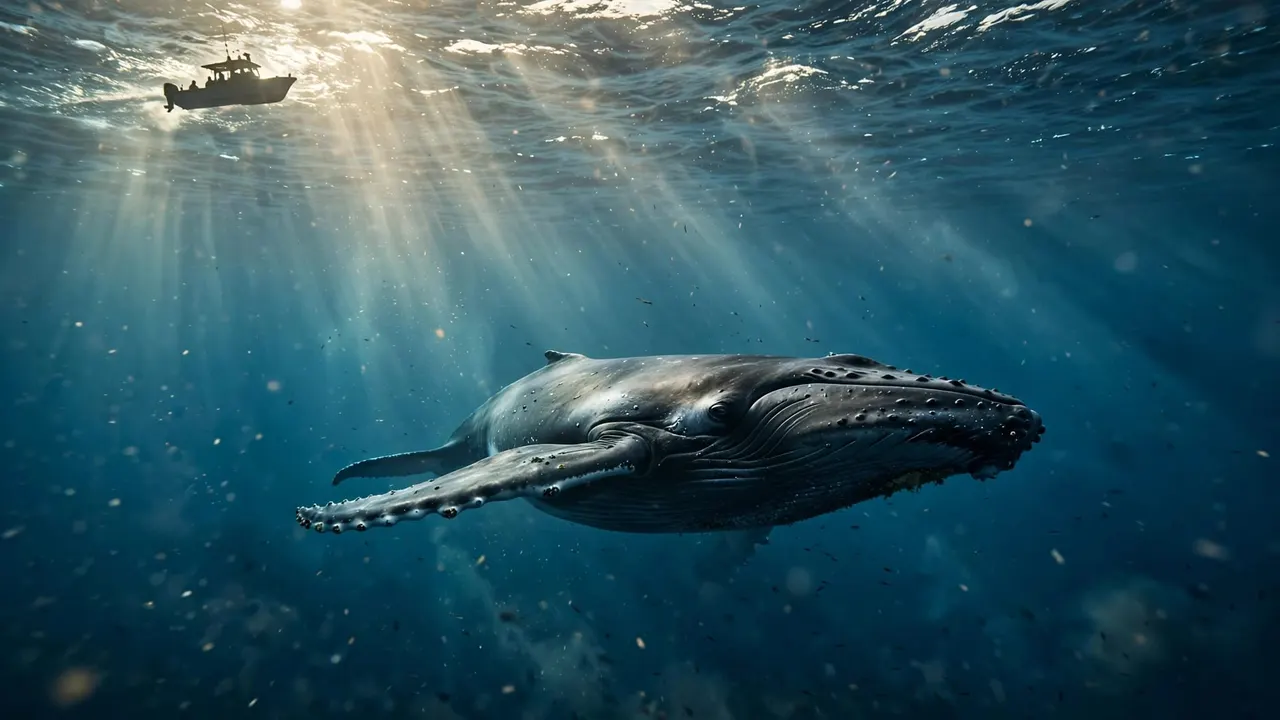
A humpback can slip beneath your boat’s view while remaining part of an active underwater world of sound. When you compare whale watching Oahu options, understanding that hidden activity gives every surface sighting more meaning.
Living Ocean Tours takes you offshore from Kewalo Basin Boat Harbor near Waikiki during winter whale season. Yet even a clear view reveals only part of the encounter: sound travels beyond sight.
Start with how seawater carries sound, then consider what scientists can learn about the whales listening below.
How Sound Travels Through Hawaiian Waters
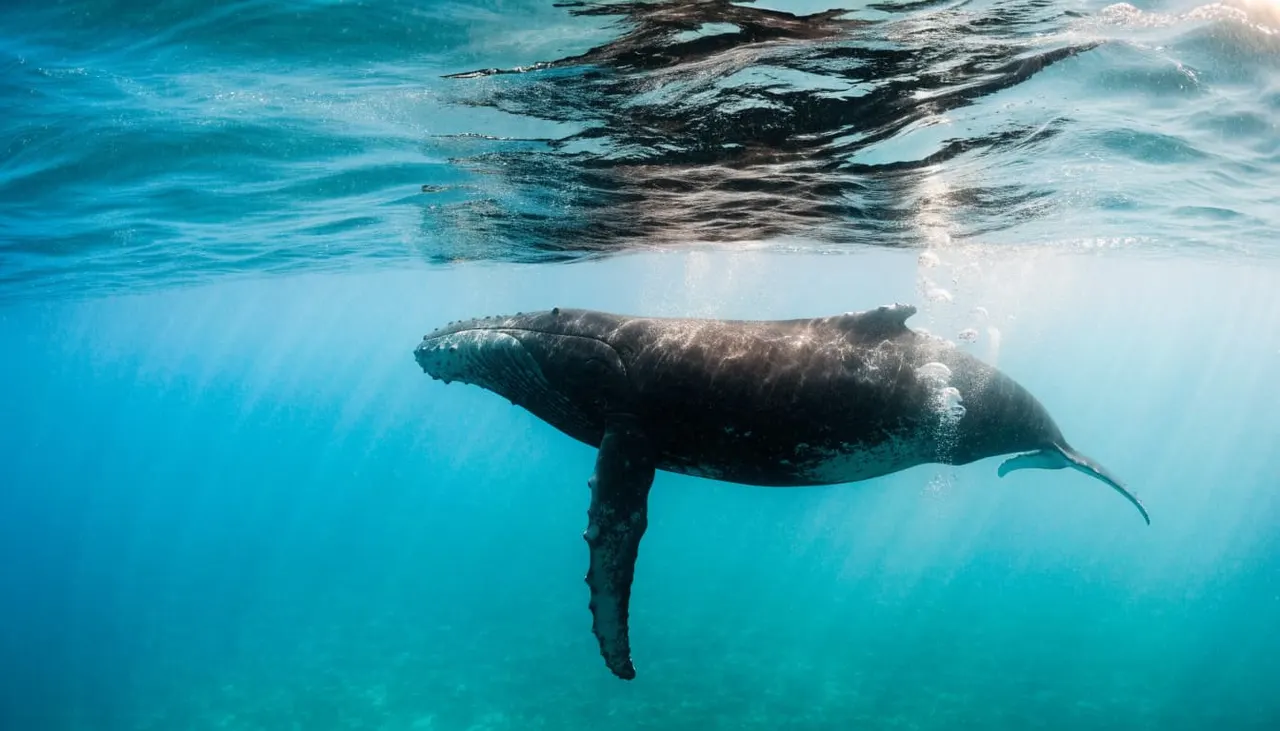
Sound moves as pressure changes
Underwater sound travels as pressure waves. A vibrating source creates changes in pressure that move through seawater, even though you can’t see them.
Sound travels roughly four times faster in seawater than in air. However, faster transmission doesn’t mean every sound reaches every whale. Water conditions, distance, frequency, and background noise affect how sound travels.
For your whale watch, this creates an important distinction. The patch of ocean you can scan from the railing is only a small part of the surrounding acoustic environment.
The ocean already has a soundtrack
Beneath the surface, waves, rain, vessels, marine mammals, and reef life contribute sound. A smooth-looking ocean can still contain considerable underwater noise.
Because these sounds overlap, listening involves more than detecting one isolated call. The background matters, too.
You might see a rounded back disappear below a swell without knowing what sounds surround that animal. Surface activity and underwater acoustic activity offer different information, so neither gives you a complete picture alone.
What You Can Know About Humpback Hearing
Hearing and vocalizing are different abilities
A whale produces sound, while hearing involves detecting sound. Recording a humpback’s vocalizations tells researchers what sounds were captured, but it doesn’t establish everything that whale can hear.
According to NOAA’s explanation of whale sound, marine mammals use underwater sound as a primary way to communicate and assess their environment.
That gives you the broad answer: humpbacks inhabit an environment where acoustic information matters. However, you shouldn’t turn that general understanding into an unsupported claim about their exact hearing sensitivity.
A recording isn’t a hearing test
A humpback’s recorded song doesn’t provide a complete hearing range. Likewise, a whale changing direction near a vessel doesn’t prove which sound it detected.
Researchers must separate observations from interpretations. Sound recordings, animal behavior, and environmental measurements answer different questions.
A recorded whale song tells you what a microphone captured, not the full range of sounds a humpback hears.
For you, this means avoiding neat explanations that assign every movement to a particular noise. A whale may surface, turn, or dive while several things happen around it.
You can appreciate the animal’s reliance on sound without claiming to know exactly what it heard at that moment.
Whale Watching Oahu Reveals a Winter Soundscape
Hawaii’s winter whale season brings more than visible blows and breaches. It also brings elaborate humpback songs into the underwater environment.
Mature male humpbacks produce the long, patterned vocal displays researchers call songs. These contain repeated sounds and phrases rather than one continuous note. Their patterns can also change over time.
When several singers occupy an area, their overlapping vocalizations create a chorus. Hawaiian acoustic monitoring has documented substantial seasonal chorusing, even when the surface gives you little indication of that activity.
Meanwhile, the whales are visiting a winter habitat connected to a much larger migration. NOAA’s humpback whale profile describes their movement between feeding and breeding areas.
Your view off Waikiki therefore captures one portion of an animal’s annual journey. A distant tail lift can be memorable, even when most activity remains underwater.
Hydrophones Help Researchers Listen Below the Surface
A hydrophone is an underwater microphone. Instead of relying on a whale being visible, it records sound reaching its location in the water.
Researchers can examine recordings for vocal patterns, timing, and background noise. Repeated recordings also help compare acoustic activity across different places or periods.
NOAA describes equipment such as SoundTrap in its ocean noise research. These underwater recorders help scientists listen for whales and other marine mammals.
However, a hydrophone recording has limits. Equipment placement, recording settings, distance, and surrounding noise affect what gets captured. An absence of recorded calls doesn’t automatically establish an absence of whales.
If underwater audio interests you, ask your operator about the equipment available on your departure. Don’t assume that a whale-watch cruise includes hydrophone listening.
Your boat trip can still help you recognize the difference between seeing wildlife and studying its acoustic environment. Both offer information, but they aren’t interchangeable.
Respect the Whales’ Listening Environment
Vessel noise adds to the background
A whale shares its habitat with natural sounds and human activity. Vessel engines and propellers contribute underwater noise, which can interfere with the detection of other sounds.
That doesn’t mean every passing boat causes the same response. Noise effects depend on the sound, the animal, and the circumstances.
For your outing, choose responsible wildlife viewing rather than demanding a closer encounter. Let the captain manage the vessel’s position, and avoid asking the crew to follow a whale aggressively.
A patient approach also leaves room for observation. You can watch the animal’s course without making proximity the measure of a successful trip.
Distance is part of responsible viewing
In Hawaii, federal law prohibits approaching humpback whales within 100 yards, approximately 91 meters. NOAA explains this requirement in its Hawaii marine wildlife viewing guidance.
Keep your encounter aboard the vessel. Don’t enter the water to approach, touch, or interact with a humpback.
If a whale moves toward the boat, follow the crew’s instructions. Your captain must respond to the situation; passengers shouldn’t try to arrange a closer photograph.
Plan Your Winter Whale Watch With Living Ocean Tours
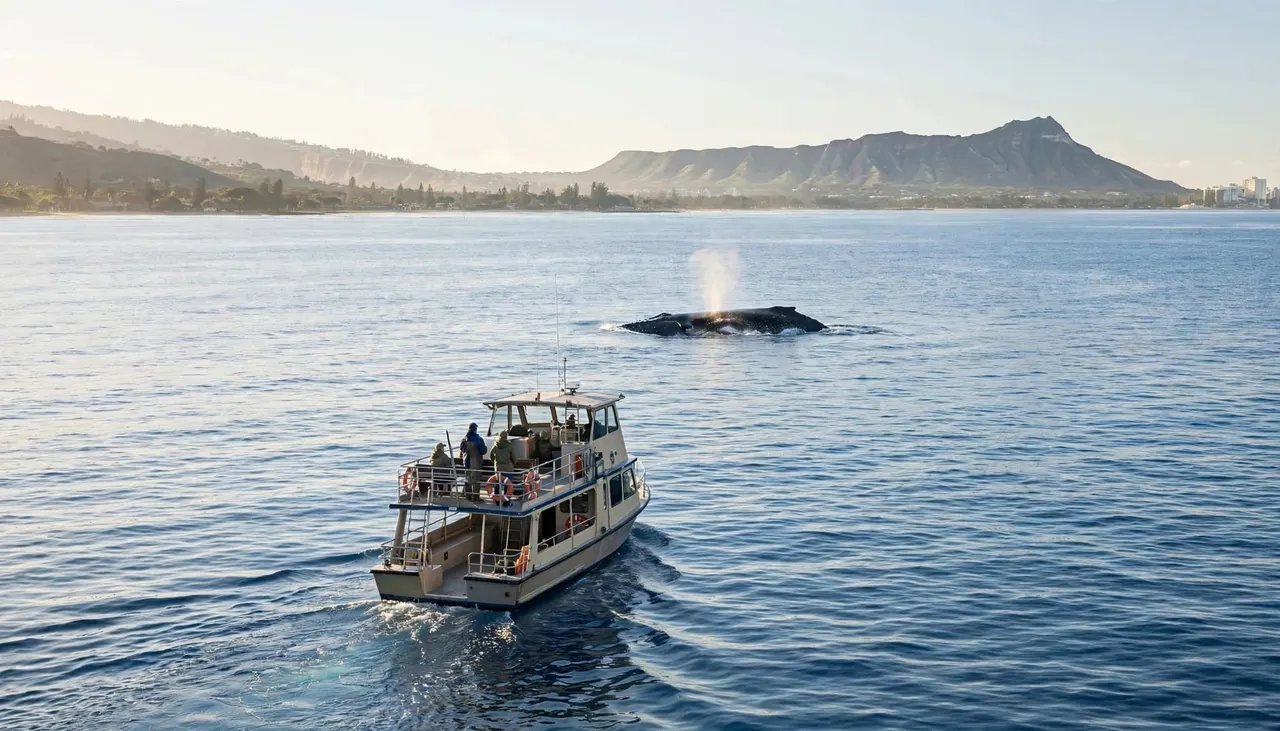
January through March is a practical planning window for whale watching Oahu excursions. Living Ocean Tours lists its seasonal whale-watch schedule as January 2 through March 31.
You can review its Waikiki humpback whale watching tour for current departure details before choosing your date.
The family-owned company departs from Kewalo Basin Boat Harbor, close to Waikiki. Its Coast Guard-inspected, custom-built double-decker vessels provide open viewing areas, shaded seating, onboard restrooms, and dry storage.
Those comforts matter when you’re watching patiently with children or enjoying an ocean outing as a couple. You have space to scan the water without needing to swim or use snorkel equipment.
For separate reef outings, Living Ocean Tours describes itself as Oahu’s only tour company with professional snorkel guides. Whale watching remains an onboard wildlife experience.
Book early in your vacation if whales are a priority. That leaves more flexibility if weather changes your plans.
You can CHECK AVAILABILITY for a seasonal whale-watch departure. Choose your trip for the opportunity to observe wild humpbacks, rather than a promised breach or sighting.
Arrive Ready to Watch Patiently
Bring sun protection, secure sunglasses, and a light layer for wind. Keep your phone or camera attached to a strap, especially when moving around the deck.
If you experience motion sickness, ask a pharmacist or healthcare professional about appropriate options before traveling. Tell the crew early if you begin feeling unwell.
Once aboard, scan slowly rather than watching one fixed spot. A brief blow may appear before a back, dorsal fin, or tail becomes visible.
For families, encourage children to describe what they see. A small splash, dark shape, or puff of mist can become part of the search.
Also, give yourself permission to lower the camera. Weather, visibility, sea conditions, and whale movement affect every outing, so patient observation keeps quieter moments rewarding.
Key Takeaways for Your Oahu Whale Watch
- Underwater sound travels as pressure waves, while the visible surface reveals only part of a whale’s environment.
- Recordings document sounds, but they don’t establish a humpback’s complete hearing range.
- January through March is the main planning window for Living Ocean Tours’ seasonal cruises.
- Respectful whale watching Oahu experiences keep wildlife encounters aboard the vessel and follow Hawaii’s 100-yard approach rule.
Frequently Asked Questions
Can you hear humpback songs from the boat?
Don’t assume your departure includes an underwater listening experience. Ask whether hydrophone equipment is available. Researchers use underwater microphones to record sounds that your view from the deck can’t reveal.
How far can a humpback hear?
There isn’t one reliable distance you can apply to every sound and situation. Sound transmission varies with frequency, background noise, water conditions, and distance. Avoid treating a recording’s reach as a measurement of a whale’s hearing ability.
Does whale watching Oahu guarantee a sighting?
Seasonal timing improves your opportunity, but it doesn’t control wild animals. Whales choose their routes and surface schedules. Weather and visibility also affect your trip, so arrive ready for a wildlife search rather than a scheduled performance.
Can you identify a singing whale by watching it?
You shouldn’t identify an individual singer from surface behavior alone. A recording captures sound at the microphone’s location, while your eyes follow animals that may enter and leave view. Connecting the two requires more evidence than a casual sighting.
See the Surface, Respect the Sound Below
Your Oahu whale watch offers a visible glimpse of animals living in an acoustic environment. A blow or tail lift tells you where to look, while underwater recordings answer different questions.
Choose winter dates, stay comfortable, and follow the crew’s guidance. Above all, give humpbacks room to behave naturally, including during the moments you can’t see.


