
Whale Watching Oahu: How Humpback Blowholes Work
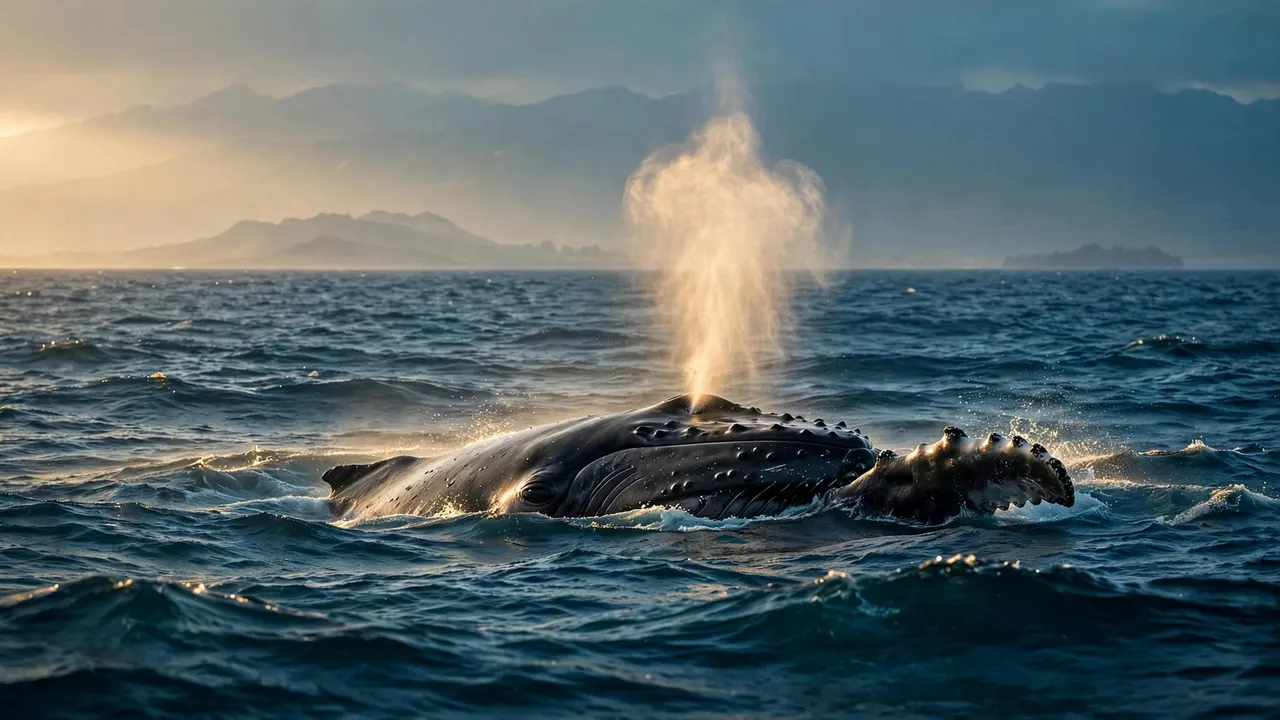
The first sign of a humpback may be a pale puff above the water, visible for only a second. If you’re planning a whale-watching trip on Oahu, knowing what that puff means can help you spot the whale before its back appears.
Living Ocean Tours runs seasonal cruises from Kewalo Basin Boat Harbor, minutes from Waikiki. Out on the Pacific, a blow is your first clue that a whale has surfaced to breathe. Once you recognize it, the wide horizon becomes easier to watch.
How a Humpback’s Blowholes Work
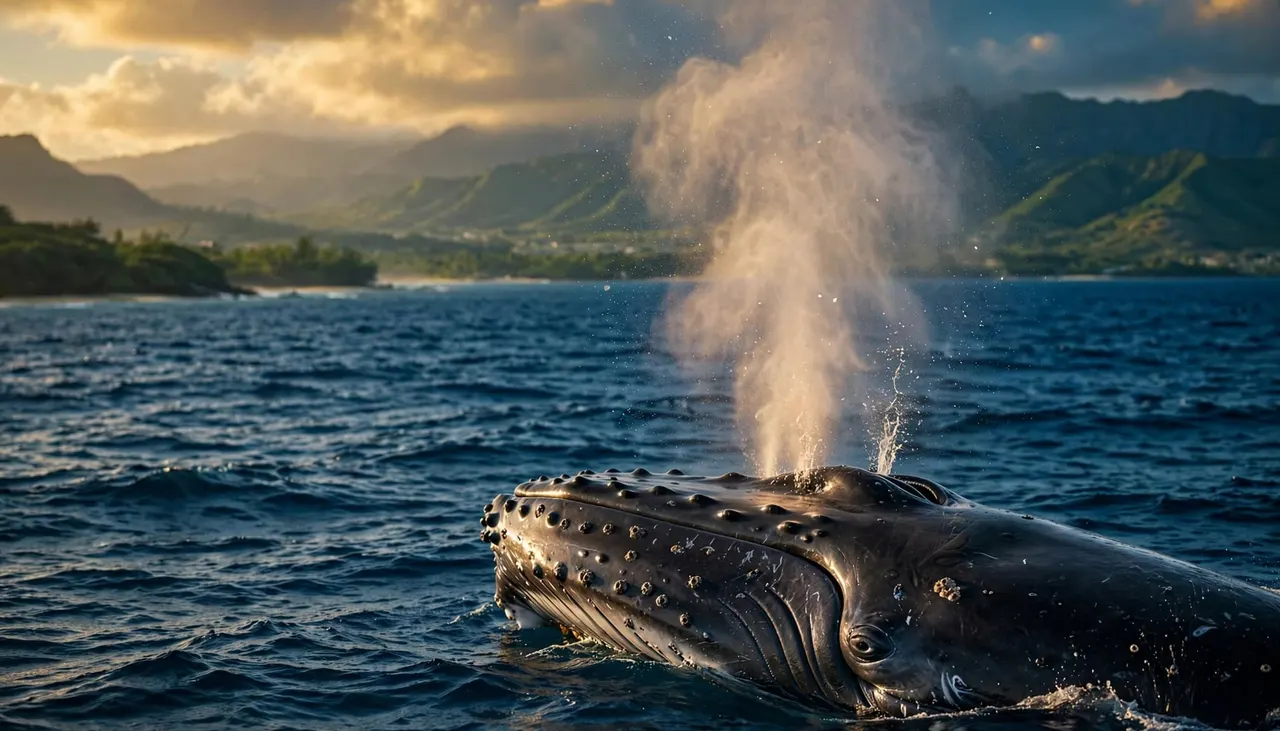
Two openings on top of the head
A humpback is a mammal, so it needs air from above the surface. Its two blowhole openings sit together on top of its head and connect to its lungs. That placement lets the whale breathe while most of its body remains underwater. The Smithsonian’s guide to whales explains how blowholes function as whales’ nostrils.
Those openings are easy to miss from a boat. They appear briefly as the whale rolls through the surface, and a distant observer may only see the plume above them. You don’t need a close view of the anatomy to follow what happens next.
A fast breath between dives
When a humpback surfaces, it exhales through its blowholes, takes in fresh air, and closes the openings before submerging. You may see its broad back rise behind the blow as it moves forward. If it lifts its tail flukes, it may be starting a deeper dive.
Whales don’t breathe through their mouths like you do. Their breathing openings are on top of the head, where they can reach air without raising the whole head clear of the water. That simple arrangement helps explain why the blow often appears before you notice any other part of the animal.
The Mist Above the Water Isn’t a Fountain
What makes a blow visible
The white puff you see is a whale’s exhaled breath becoming visible as it leaves the blowholes. Warm, moisture-rich air meets the surrounding air, and droplets can join the mist as the breath bursts through the wet surface. A NOAA educational glossary describes a whale’s expired air as the visible “blow.”
The whale isn’t pumping a column of seawater out of its lungs. From a distance, though, a strong exhale can look like a little geyser. Sun angle, wind, humidity, and your viewing position all change how clearly the plume stands out.
Why every blow looks a little different
One blow may appear tall and bright against darker water. Another may flatten in the breeze or disappear against a pale sky. A nearby splash can add to what you see, so don’t judge a whale’s size or distance by plume height alone.
Calves can make smaller, subtler blows than adults. If you notice a small puff near a larger one, keep watching the same area. You might see a mother and calf surface together. Stay patient if they vanish: the next breath could appear farther along their route, rather than at the same spot.
Whale Watching Oahu: Spot the Breath, Then the Whale
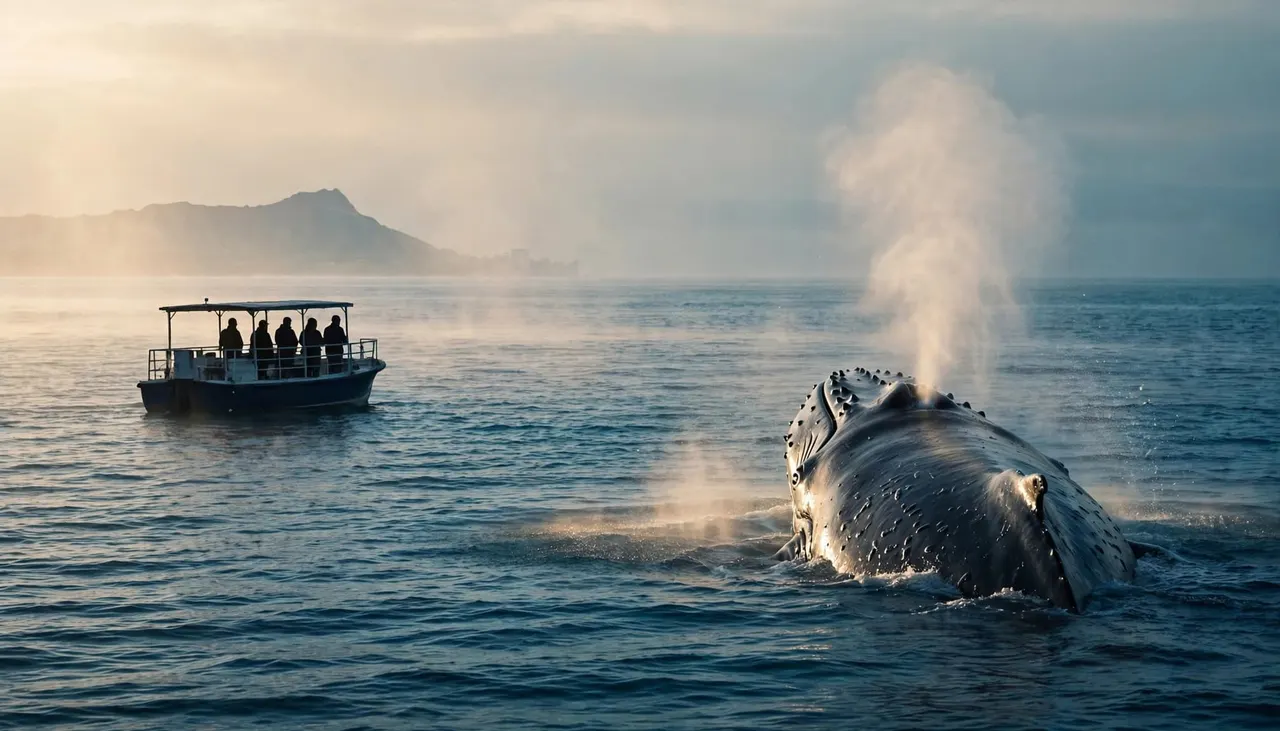
Scan slowly across the horizon
When you look for whales off Waikiki, give your eyes time to settle on the water. Sweep across a manageable stretch of horizon, pause, and sweep back. You’re looking for a brief change in shape or color, not a permanent white marker.
If the crew calls out a blow, follow the direction they give before raising your phone. Finding the whale with your eyes first is usually easier than searching through a screen. Binoculars can help with distant activity, but a steady view of the open water matters more than magnification.
Follow the surface pattern
After a blow, watch for the curve of a dark back and a low dorsal fin. A tail lift may follow, but a whale can also slip underwater without showing its flukes. A second blow nearby might come from the same animal or another whale traveling alongside it.
Don’t fix your gaze on one point after the whale dives. Humpbacks change direction underwater, and you can’t predict their next surfacing spot from a single breath. During whale watching Oahu outings, the most satisfying sightings often begin with a small puff that someone watched long enough to notice.
When Oahu’s Humpbacks Are Easiest to Seek
Humpbacks come to Hawaii’s warmer waters during their breeding and calving season. NOAA’s marine mammal habitat overview describes humpbacks’ use of warm waters near reefs and shores. For you, winter is the practical time to look offshore from Oahu.
The Hawaiian Islands Humpback Whale National Marine Sanctuary describes a broad viewing window of November through April. Living Ocean Tours identifies December through April as months when whales may be seen, with January through March as the peak period. Its scheduled whale cruises run from January 2 through March 31 each year.
If whale watching Oahu is a priority on your vacation, those scheduled winter departures give you a sensible starting point. They don’t guarantee a blow on the horizon. Visibility, swell, weather, and the whales’ own movements can change what you see from one day to the next.
A Comfortable Place to Watch Off Waikiki
Choose the cruise for the wildlife, not a promised display
Living Ocean Tours’ seasonal Waikiki whale watching cruise departs from Kewalo Basin Boat Harbor. Its Coast Guard-inspected, double-decker vessels offer open viewing areas alongside shaded seating, restrooms, and dry storage. You can watch the water while enjoying views of the Honolulu coast and Diamond Head.
The company says it’s the only Oahu tour company with professional snorkel guides. On a whale watch, you remain aboard; the crew’s clear safety guidance and wildlife knowledge help you settle in and observe without crowding the rail. Living Ocean Tours also offers other ocean tours from Honolulu if your plans include more time on the water.
Arrive ready for open water
Bring sunglasses, sun protection, and a light layer for the breeze offshore. A strap helps keep your phone or camera secure as you move around the deck. If you’re prone to motion sickness, ask a pharmacist or doctor about an option before the trip rather than waiting until you’re aboard.
Give yourself time to reach the harbor and listen to the crew’s boarding and safety directions. Then pick a comfortable place with a clear view. When you’re ready to plan a winter cruise, you can CHECK AVAILABILITY for a whale-watching departure.
Give Humpbacks Room to Breathe
Let the captain manage the distance
A visible blow can make a whale seem close even when it’s far across the water. Leave the vessel’s position to the captain, who can watch for the animals and follow the rules that protect them. A responsible trip gives a whale space to travel, surface, and dive without a boat pressing toward it.
This matters around mothers and calves. A calf may come up beside its mother several times, but frequent surfacing isn’t an invitation to approach. Watch their pattern from where the boat can safely remain.
Keep the encounter observational
Stay aboard, follow crew instructions, and never try to touch, feed, or swim toward a humpback. You can enjoy a breach or tail slap without closing the distance. Even a far-off blow gives you a genuine glimpse of a wild animal going about its day.
On a whale watching Oahu cruise, patience and distance work together. The crew can help you look in the right direction, while the whales decide when and where they appear.
Key Takeaways
- A humpback breathes air through two blowhole openings on top of its head.
- Its visible blow is exhaled, moisture-rich breath, not seawater sprayed from its lungs.
- Look for a brief plume first, then a rolling back, dorsal fin, or possible tail lift.
- January through March is Living Ocean Tours’ scheduled whale-watch season, but sightings and behaviors remain unpredictable.
- Give whales room to move, especially when you see a mother with her calf.
Frequently Asked Questions
Do humpbacks have one blowhole or two?
Humpbacks have two adjacent blowhole openings. From a boat, you usually see their combined exhale as one plume rather than two separate puffs. The openings sit on top of the head, allowing the whale to breathe at the surface.
Is a whale’s blow made of seawater?
The blow is primarily visible exhaled breath. Moisture in that breath, along with droplets at the wet surface, can make it look like a spray of water. It isn’t seawater forced out of the whale’s lungs.
Can you predict where a humpback will surface again?
You can watch its direction of travel for clues, but you can’t predict the next breath reliably. A whale may turn underwater or stay submerged longer than you expect. Keep scanning a wider area after it disappears.
What if you don’t see a breach?
A breach is only one possible behavior. You may instead see a blow, the rise of a back, a tail lift, or a mother and calf traveling together. If you’re whale watching Oahu for the first time, learning to notice those smaller signs makes every sighting easier to follow.
The Next Puff Could Be Easy to Miss
That pale puff above the Pacific is a humpback taking a breath, not a fountain rising from the sea. Once you know how its blowholes work, you can follow the signs that appear before the whale slips underwater again.
Keep your eyes on the horizon, listen to the crew, and give the whales space. The best view is the one they choose to give you.


