
Whale Watching Oahu: How Humpback Calves Nurse
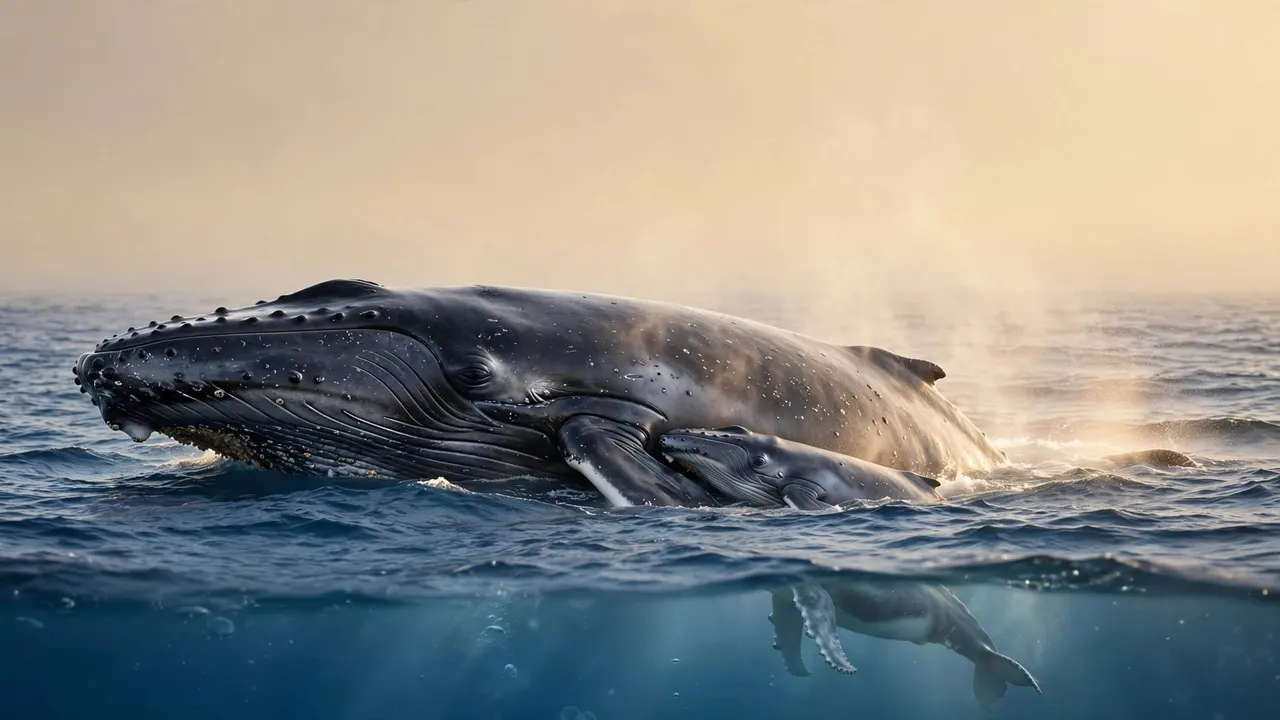
A humpback calf can be longer than many cars at birth, yet it depends completely on its mother. During whale watching Oahu season, you may spot a smaller whale surfacing beside a much larger adult, taking quick breaths before both disappear beneath the Pacific.
Those quiet mother-and-calf sightings often feel more personal than a dramatic breach. They offer a glimpse of a demanding first season in Hawaii’s warm winter waters, where calves must grow, travel, and nurse while staying close to their mothers.
Whale Watching Oahu and Hawaii’s Winter Nursery
Humpbacks visit the Hawaiian Islands to breed, give birth, and care for their young. Hawaii is a winter nursery, not a major feeding destination, so mothers arrive with energy reserves built in northern feeding grounds.
The Hawaiian Islands Humpback Whale National Marine Sanctuary protects habitat used by these whales and stresses that responsible wildlife viewing matters for their well-being. Your best encounter is one that lets a mother and calf keep moving naturally.
Warm water supports a calf’s early months
A newborn humpback may measure roughly 13 to 16 feet long. Even at that size, the calf needs its mother for nourishment, protection, and help handling changing ocean conditions.
Warmer Hawaiian water gives young whales a more favorable place to build strength before heading north. A calf has less body insulation than a mature whale, so those early months are an important period of growth.
Mothers carry the bigger energy burden
A mother humpback spends the Hawaiian winter traveling, resting, protecting her calf, and producing milk. She generally isn’t here to feed heavily, which makes every interruption from boats or people more serious.
You may see the pair move at an even pace, surface together, then vanish for several minutes. That rhythm isn’t a performance for visitors. It is part of a mother’s daily work.
How Humpback Calves Nurse in Hawaii
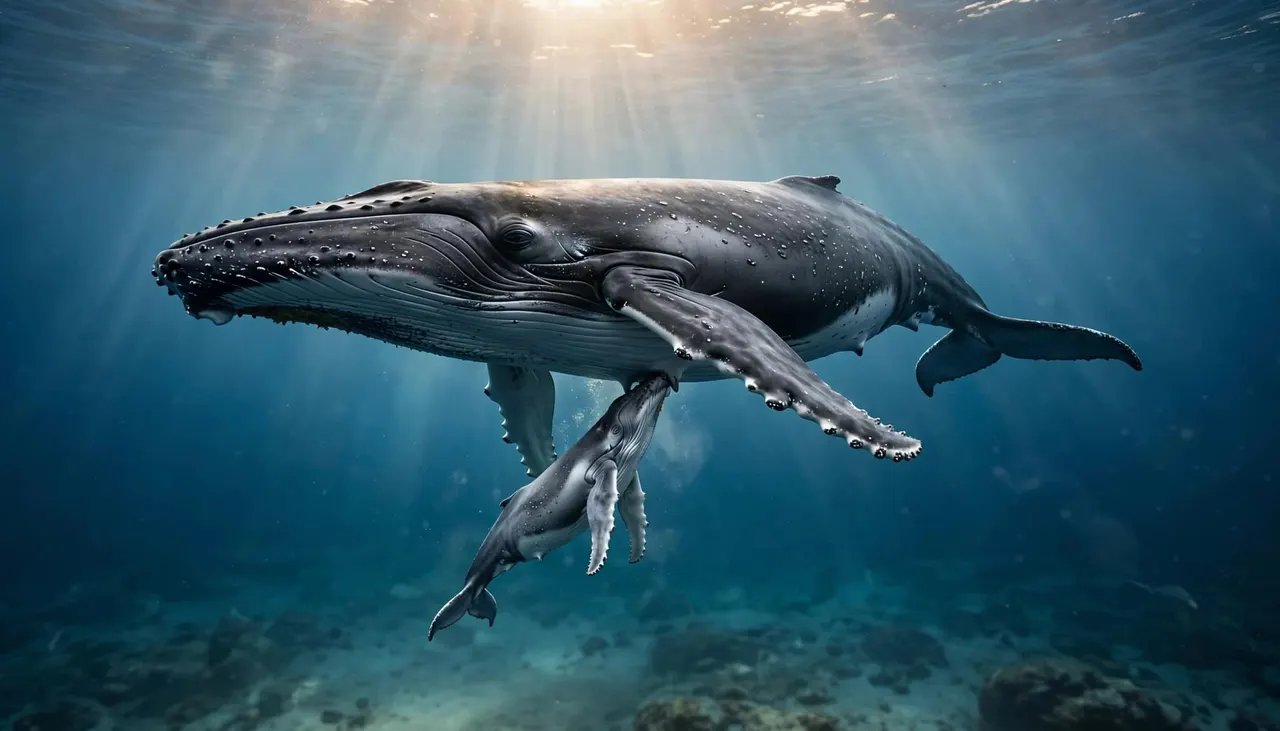
Humpback calves nurse underwater, beyond what you can see from a boat deck. What you can observe is the relationship around that feeding, a calf remaining close to its mother and surfacing frequently as both whales travel through Hawaiian waters.
NOAA notes that mother humpbacks can produce rich, nutritious milk for up to a year. That long period of maternal milk production supports a calf long after its first weeks near Oahu.
Milk fuels rapid growth
A calf needs enormous energy to grow, breathe, swim, and keep pace with its mother. Nursing supplies that energy during a period when the young whale is still developing the strength needed for longer dives and steady travel.
NOAA also confirms that whale calves drink their mothers’ milk, which can be remarkably rich. The agency’s account of a rescued calf offers useful context on whale-calf milk, while reminding you how dependent a young whale remains.
Surface behavior cannot prove nursing
A calf’s frequent surfacing may make it easier to notice beside an adult. However, you can’t tell when nursing is happening just by watching a pair roll, breathe, or travel at the surface.
Avoid turning one sighting into a fixed story. A knowledgeable crew can point out a calf’s size, behavior, and travel pattern while being honest about what remains unknown.
A mother-and-calf pair deserves room to rest, nurse, and travel without being pushed into a different route or pace.
What You May Notice in a Mother-and-Calf Pair
A calf often appears as a smaller dark shape near its mother’s broad back. Because the younger whale may surface more often, you might first spot a small puff of mist, followed by the larger adult’s exhale.
During whale watching Oahu season, patience gives you a better chance of recognizing those small details. Keep watching the horizon after a pair dives, since their next surfacing may be farther away.
Look for the pair’s shared rhythm
Mother and calf pairs often rise and dive together. The calf may roll, splash, or make short, energetic movements while the adult maintains a steadier pace.
Another adult can sometimes travel nearby. These whales are often called escorts, although a single sighting cannot tell you exactly why every whale is present or how long it will remain with the pair.
A breach is never the only highlight
Tail slaps, pectoral-fin waves, spyhops, and breaches can be thrilling. Still, a calm mother guiding her calf through the swell reveals a different kind of strength.
No responsible captain can promise a breach or a calf sighting. Humpbacks choose their own direction, timing, and behavior, so each trip unfolds differently.
Whale Watching Oahu With a Respectful Crew
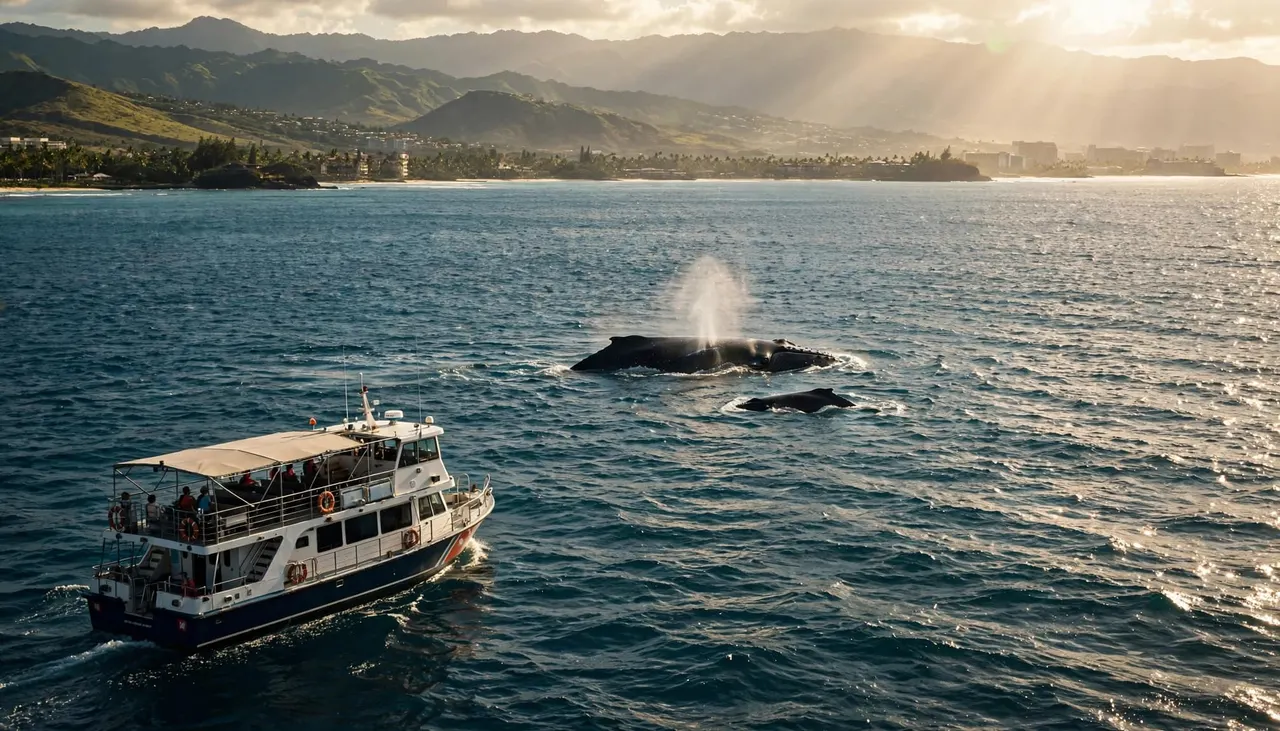
A boat gives you a wider view of the water than the shoreline, with Waikiki, Diamond Head, and the south coast often visible in the distance. However, the quality of whale watching Oahu depends on the crew’s restraint as much as the boat’s viewing space.
Living Ocean Tours runs seasonal whale outings from Kewalo Basin Harbor, close to Waikiki. Its Waikiki whale watching cruise operates from January through March and welcomes up to 49 passengers aboard a double-decker vessel with shaded seating, restrooms, and open viewing areas.
Give whales control of the encounter
A respectful captain watches a whale’s direction of travel and leaves space for the animal to choose its route. The crew may slow down, reposition, or move away if a group changes behavior.
You can help by listening to instructions, keeping the deck balanced, and avoiding loud calls or splashing toward wildlife. A distant view can still be a powerful one when the whales remain relaxed.
Comfort helps you stay focused on the water
Living Ocean Tours is the only tour company with professional snorkel guides, bringing valuable water-safety awareness and marine knowledge to its ocean experiences. That same calm, attentive approach helps families, couples, and first-time boat guests enjoy a whale trip with confidence.
If you want to compare seasonal cruises with snorkeling, sunset sails, and family wildlife experiences, browse the available Oahu whale watching tours.
When your Hawaii dates are set, CHECK AVAILABILITY for a seasonal departure.
Plan Your Winter Whale Outing Around Real Conditions
Living Ocean Tours publishes a January through March whale-watching schedule, which gives you a practical window for planning a winter trip. February and March can be appealing travel months, but daily conditions and wildlife activity always change.
Whale watching Oahu works best when you leave room for uncertainty. You may see a distant blow, a mother and calf traveling steadily, or an unforgettable breach near the horizon.
Choose a departure that fits your day
A morning cruise leaves your afternoon open for the beach, Honolulu sightseeing, or a Waikiki dinner. An afternoon departure can suit families who prefer a slower hotel morning.
Neither time guarantees flatter water, better photography, or more active whales. Pick the departure that lets you arrive rested and enjoy the experience without rushing.
Bring the right expectations and gear
Wear a light layer for the boat ride, apply reef-conscious sun protection before boarding, and secure your phone or camera with a strap. If motion sickness affects you, eat lightly and speak with a pharmacist or doctor about suitable options before your trip.
Once you spot whales, keep your camera ready but don’t stare only through a screen. A calf’s small blow beside a mother’s larger exhale can be easy to miss.
Key Takeaways for Seeing Humpback Calves
- Humpbacks visit Hawaii to breed, give birth, and care for calves during the winter season.
- A newborn calf may already be 13 to 16 feet long, but it still depends fully on its mother.
- Mothers can produce rich milk for up to a year, supporting the calf through its early development.
- A calf may surface more frequently than its mother, yet surface behavior alone cannot confirm nursing.
- January through March is Living Ocean Tours’ published seasonal window for whale watching Oahu.
- Your most meaningful sighting comes when you give the whales space and let them set the pace.
Frequently Asked Questions
When is the best time to see humpback calves on Oahu?
January through March is the most dependable period for Living Ocean Tours’ seasonal departures near Waikiki. Mother-and-calf sightings are possible during that window, but no trip can promise them.
Whale locations shift with daily conditions, behavior, and movement between islands. Book the dates that work for your vacation, then treat every wildlife sighting as a gift.
Can you swim with humpback whales in Hawaii?
No. You should never swim toward, touch, feed, chase, or attempt to interact with a humpback whale. This is especially important around mothers and calves.
Watching from a properly operated vessel protects you and leaves the whales free to travel, rest, and nurse without pressure.
Will every whale-watching trip include a breach?
No. Breaches are memorable, but they are not scheduled events. One outing may bring tail slaps and flipper waves, while another offers only a few distant blows.
A quiet sighting still has meaning. Seeing a mother and calf surface together is a rare look at an early chapter of humpback life in Hawaii.
A Winter Encounter Worth Watching Slowly
Whale watching Oahu gives you a chance to see humpback mothers care for calves against the backdrop of Waikiki’s coast. A huge breach may command attention, but a calf surfacing close to its mother tells the more lasting story.
Bring patience, follow the crew’s guidance, and protect the whales’ space. Your respectful distance helps keep Hawaii’s winter nursery wild for the next mother and calf.


