
Whale Watching Oahu: How Humpback Calves Learn to Swim
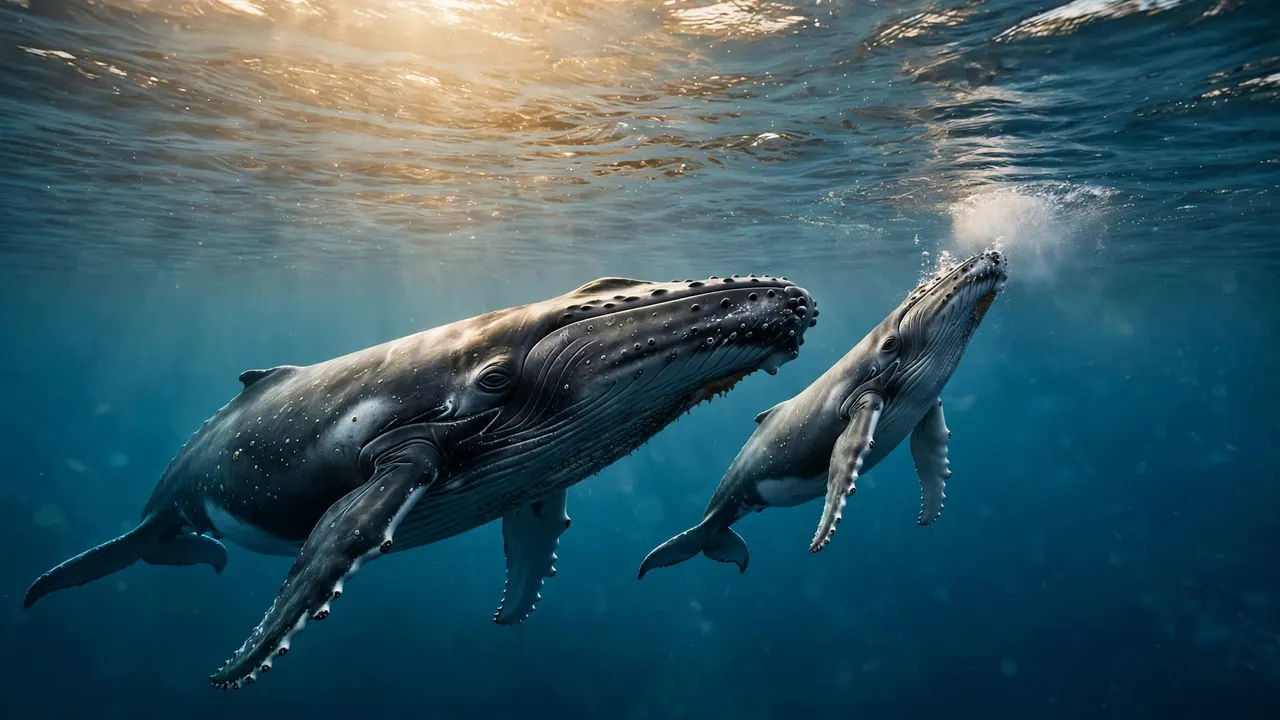
A humpback calf may already be longer than many cars at birth, yet it begins life completely dependent on its mother. During whale watching Oahu season, you may spot a small calf surfacing beside a much larger adult, taking quick breaths and keeping close as the pair moves through the Pacific.
Those brief appearances offer a rare view of early whale development in Hawaii’s warm winter waters. A breach is exciting, but a mother calmly guiding her calf across the surface can be the sight you remember most.
Why Hawaii Is a Winter Nursery for Humpbacks
North Pacific humpbacks travel to Hawaii to breed, give birth, and nurse calves. They don’t come for a major feeding season. Instead, mothers rely largely on energy stored before leaving northern feeding grounds.
The Hawaiian Islands Humpback Whale National Marine Sanctuary identifies Hawaii as a winter destination where humpbacks breed, give birth, and care for their young. Around Oahu, that seasonal migration places these animals within reach of Waikiki’s south shore.
A demanding journey happens before birth
Many North Pacific humpbacks leave Alaska in fall and swim for nearly six to eight weeks before reaching Hawaii, according to Wild Hawaii’s humpback overview. Pregnant females may arrive after that long migration with a calf still on the way.
A female carries her calf for about 11 months. Birth occurs underwater, so you won’t witness it from a boat. However, you may see the first visible chapter of the calf’s life when it surfaces beside its mother.
Warm water helps young calves conserve energy
Newborn calves have little body fat compared with adults. Hawaii’s warm water reduces the challenge of staying warm while a calf grows, nurses, and gains strength.
A newborn humpback can measure roughly 13 to 16 feet long. Even at that size, it needs its mother for food, protection, and steady travel through changing ocean conditions.
How Humpback Calves Learn to Swim
A calf doesn’t learn to swim through a single dramatic moment. Its strength develops through constant movement, frequent breathing, nursing, and staying in close contact with its mother.
The mother often sets a measured pace. Her calf travels beside her or slightly behind her, where it can conserve effort and stay connected as the pair moves through swells.
Frequent surfacing builds an early rhythm
Young calves surface more often than adult whales because their lungs and diving ability are still developing. You may first notice a smaller, quick blow near a larger whale’s exhale.
That repeated pattern helps you identify a mother and calf pair. The calf may rise, breathe, roll at the surface, and disappear alongside its mother before returning a few minutes later.
Movement strengthens coordination
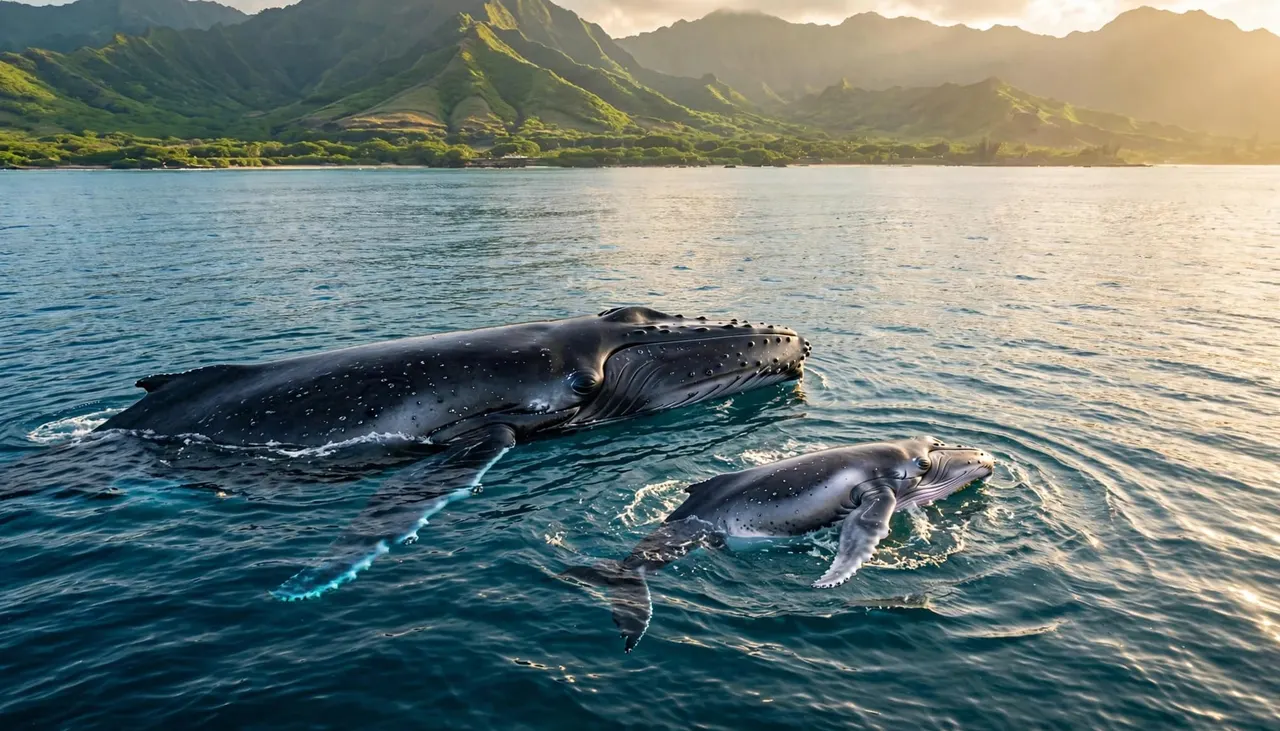
You might see a calf roll, splash, lift a flipper, or make a small leap. These actions can look playful, yet they also give a young whale practice moving a huge body through the water.
Its mother stays close during these early weeks. She can guide the calf through rougher water and keep it near during rest periods. The calf gradually becomes stronger, but its Hawaiian winter is only the beginning of a relationship that can last up to a year.
A calf sighting is most meaningful when you watch the pair’s rhythm without expecting them to perform for the boat.
What You May See From a Boat Near Waikiki
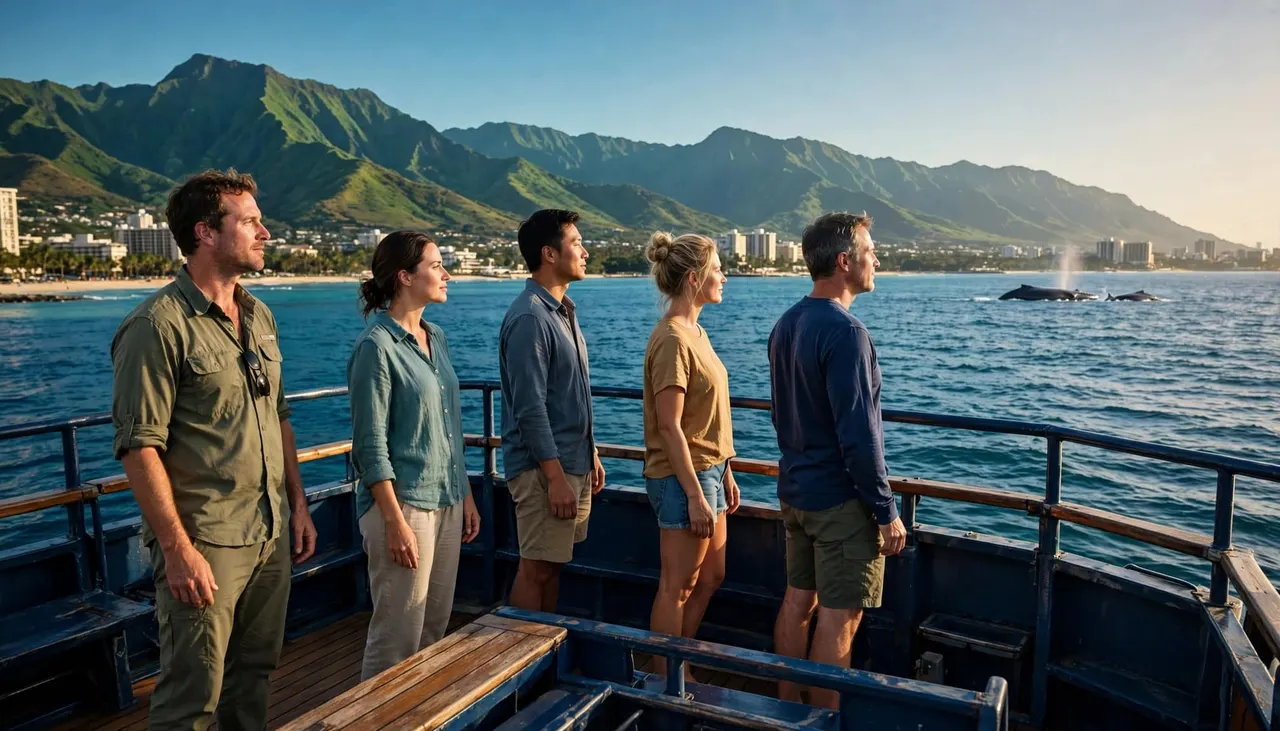
Every whale encounter follows the whales’ schedule. One outing may bring a series of distant blows. Another may include a mother and calf traveling steadily across the surface.
The quiet stretches matter, too. Keeping your eyes on the horizon helps you catch the small signals that appear before a larger display.
Look for the signs before a breach
A whale’s blow often appears first as a misty puff above the water. Then you may see a dark back, dorsal fin, or the smooth arch of a body moving through a swell.
A raised fluke can signal a deeper dive. Tail slaps, pectoral-fin waves, spyhops, and breaches are possible, but no responsible captain can promise any one behavior or a calf encounter.
A mother-calf pair moves differently
A calf usually appears smaller and surfaces more often beside its mother. The pair may travel at an even pace, then disappear together for several minutes.
You may also spot another adult nearby. These whales are often called escorts, though their role can vary. A single sighting can’t tell you exactly why every whale is present, so the best guides describe what they observe without turning it into a fixed story.
The NOAA Ocean Podcast episode on Hawaii’s humpback season offers helpful context for the larger migration taking place beneath the views of Waikiki and Diamond Head.
Whale Watching Oahu Requires Patient, Respectful Viewing
Humpbacks are wild animals raising calves, resting, traveling, and interacting with other whales. Your best view comes from a crew that gives the animals room to choose their own direction and pace.
Close encounters might sound exciting, but they can interrupt natural behavior. A mother with a calf deserves extra space because she is managing a demanding season on stored energy.
Let the captain manage the encounter
A responsible captain watches a whale’s direction of travel and keeps the vessel predictable. The crew may slow down, reposition, or leave an area when whales change course.
That choice protects the animals and often improves your view. A calm boat allows you to watch longer without pressuring the whales to move away.
Federal humpback approach regulations explain that vessel interactions can cause behavioral changes or physical injury. Respectful distance helps protect the whales’ energy and keeps a sighting natural.
Keep your own presence low-impact
Stay clear of crowded railings, secure loose belongings, and follow crew instructions. Don’t attempt to call to whales, splash toward them, fly a drone nearby, or reach for wildlife.
The same care applies if you spend another day snorkeling. You protect Hawaii’s reefs and animals when you observe rather than touch, chase, or feed them.
Plan a Comfortable Whale-Watching Trip From Waikiki
January through March is the strongest window for whale watching Oahu visitors. Living Ocean Tours operates seasonal outings from Kewalo Basin Boat Harbor, only minutes from Waikiki, with views that can include Diamond Head and the city coastline.
You can explore Oahu whale watching and snorkeling tours if you want to add more time on the water during your vacation.
Choose a boat built for time on the horizon
Living Ocean Tours uses Coast Guard-inspected double-decker vessels with open viewing areas, shaded seating, restrooms, dry storage, and sturdy ladders. The Lokahi also has a SeaKeeper stabilization system that helps reduce boat roll.
The seasonal Waikiki whale watching tour welcomes guests ages 3 and up and typically spends 1.5 hours searching the waters off the south shore. The boat accommodates up to 49 passengers, so you can bring children, grandparents, or your favorite ocean-loving travel partner.
Living Ocean Tours is the only tour company with professional snorkel guides. That attentive approach carries into its wildlife cruises through clear safety guidance, thoughtful guest care, and respect for Hawaii’s marine environment.
Bring what helps you stay comfortable
Pack lightly, but prepare for sun, wind, and salt spray.
- Wear reef-safe sunscreen, sunglasses with a secure strap, and a light layer for the ride home.
- Eat a light meal before departure if motion affects you, and ask a pharmacist or doctor about suitable remedies before your trip.
- Keep your phone secured, then watch the whales with your eyes before trying to capture a photo.
The listed 2026 whale-watch price was $49, although tour dates and rates can change. Reserve your seasonal cruise through CHECK AVAILABILITY.
Key Takeaways for Your Oahu Whale Watch
- Hawaii’s winter waters are important for humpback breeding, calving, and nursing.
- A calf learns through repeated movement while staying close to its mother for food and protection.
- Frequent surfacing can make a calf easier to spot beside a larger adult.
- January through March gives you the strongest seasonal opportunity to search for whales near Waikiki.
- A respectful boat crew gives mother-calf pairs the room they need to travel naturally.
Frequently Asked Questions
When is the best time to see humpback calves on Oahu?
January through March is the most reliable period for seasonal whale watching around Oahu. February can be especially active, but whale behavior and locations change daily. A mother-calf sighting is always possible, never guaranteed.
Can you swim with humpback whales in Hawaii?
No. You should never swim toward, touch, feed, or attempt to interact with a humpback whale. Watching from a properly operated vessel protects both you and the whales, especially when calves are present.
Will every whale-watching trip include a breach?
No. Breaches, tail slaps, and flipper waves are memorable, yet they are not scheduled events. You may see a dramatic leap, a distant fluke, or a quiet mother and calf surfacing together. Each is a real wildlife encounter.
A Meaningful Look at a Calf’s First Season
Whale watching Oahu gives you more than a chance to spot a spectacular breach. You may witness a mother helping her calf build strength through each breath, surface roll, and steady mile through Hawaii’s winter waters.
Bring patience, protect the whales’ space, and let the ocean set the pace. A small blow beside a mother’s larger exhale can tell an unforgettable story.


