
Whale Watching Oahu: How Humpbacks Communicate Without Singing
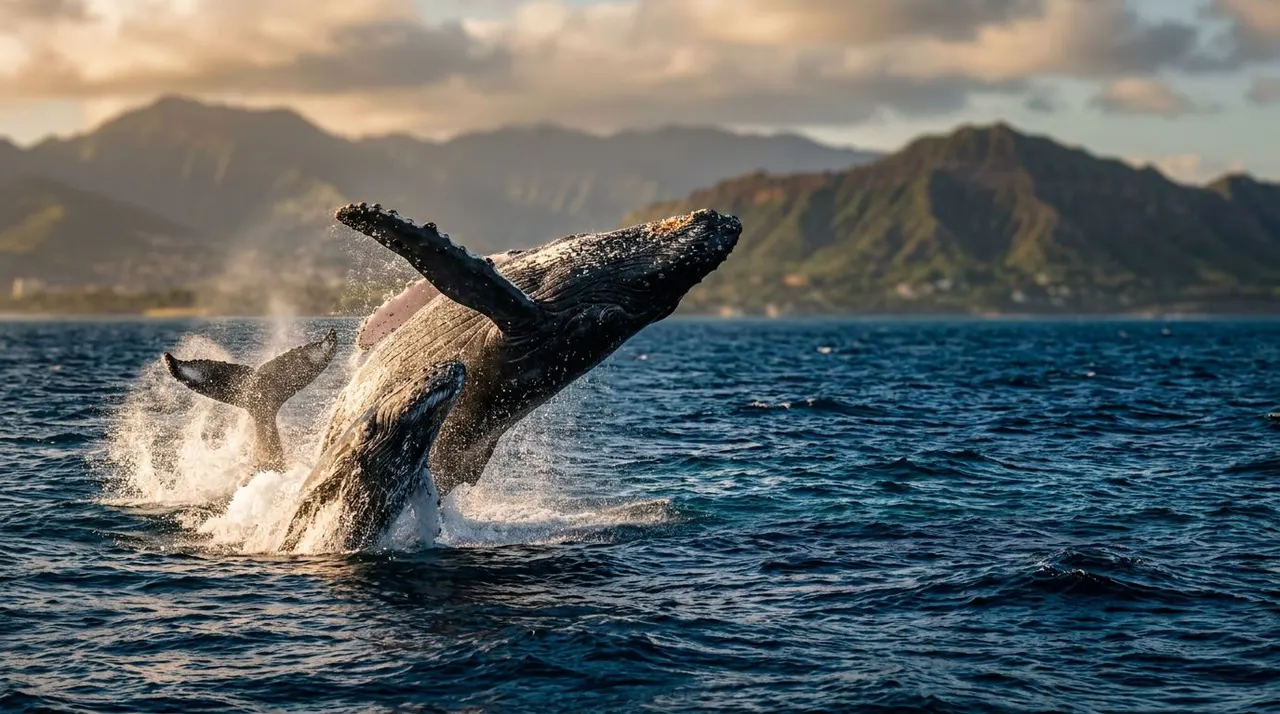
Whale watching Oahu tours give you more than a chance to spot a tail. They let you observe one of the ocean’s most expressive animals as it travels, surfaces, and interacts without making the famous songs people often associate with humpbacks.
During Hawaii’s winter season, you may see a whale slap the water, roll beside another whale, or lift its tail before a deep dive. These actions can carry information, even when the ocean around you sounds completely quiet. To understand what you’re seeing, start with the seasonal patterns that bring humpbacks near Oahu.
Why humpbacks visit Oahu each winter
Humpback whales spend part of the year in colder feeding grounds, then migrate to warm tropical waters. Hawaii provides sheltered conditions for breeding, giving mothers a safe place to nurse calves during their first months of life.
The Hawaiian Islands Humpback Whale National Marine Sanctuary reports that visitors can see whales in sanctuary waters from November through April. Living Ocean Tours offers seasonal whale watching trips from January through March, when your chances of seeing active whales are often strong.
Warm water helps mothers and calves
Newborn humpback calves lack the thick blubber they need for long periods in cold water. Hawaii’s warm ocean helps them conserve energy while they nurse and learn essential skills.
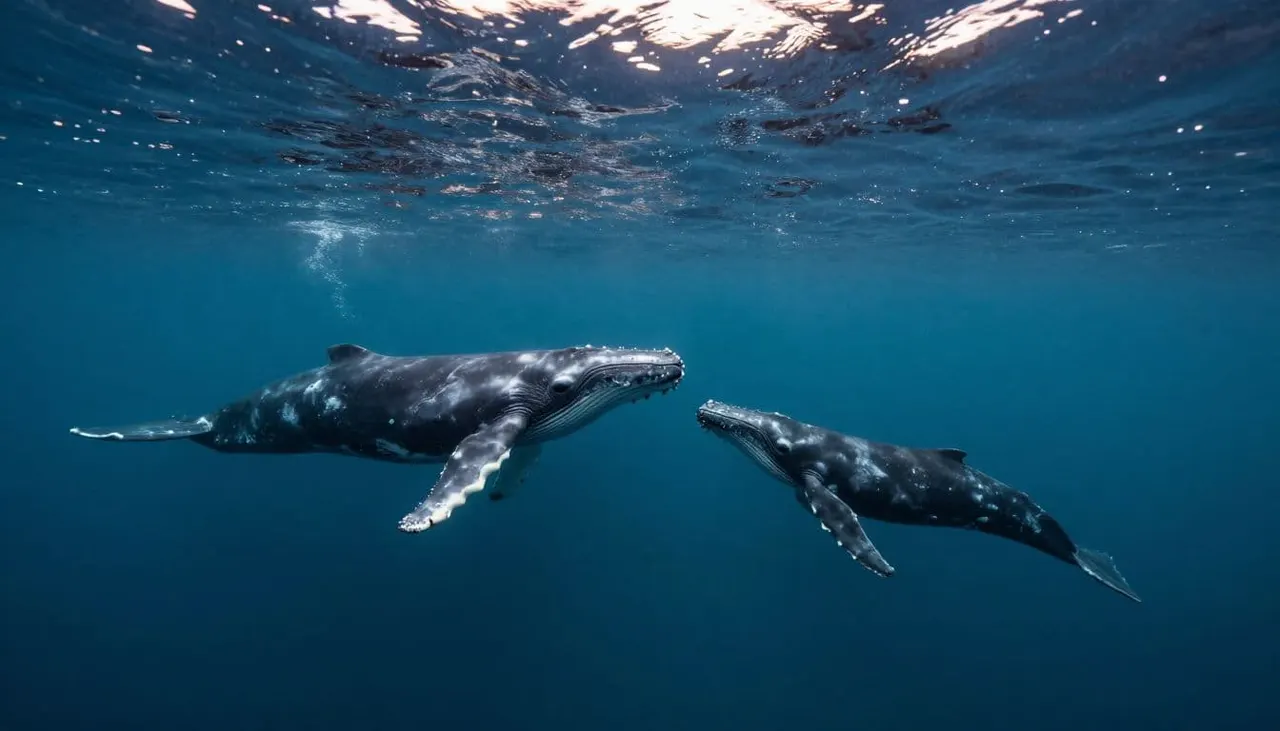
A mother and calf may travel close together for hours. The calf copies the mother’s surfacing rhythm, swimming direction, and diving behavior. You might see the young whale rise first, roll near its mother, or practice lifting its tail before a deeper dive.
Those movements aren’t random. Close spacing helps the pair stay together in water where sound, visibility, and currents change constantly.
Where you may spot whales near Waikiki
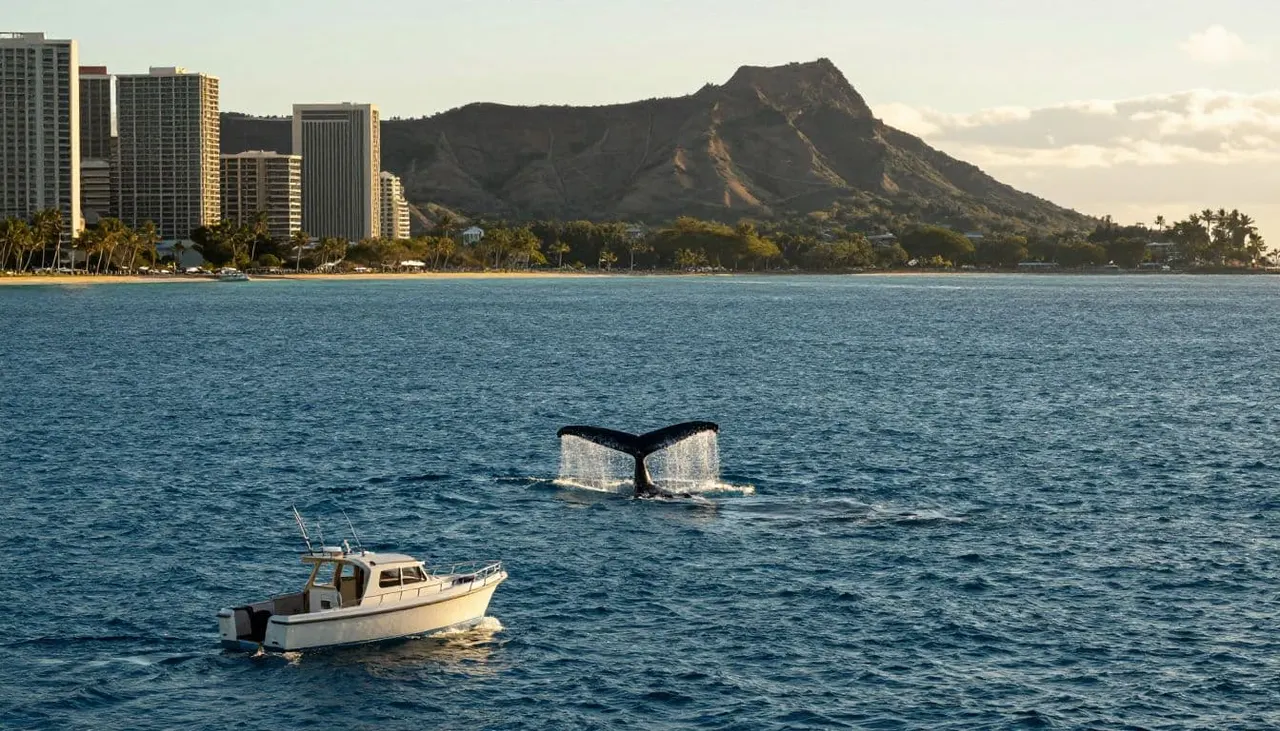
When you leave Kewalo Basin Boat Harbor, you can view the Waikiki coastline from the water while scanning for blows on the horizon. A humpback’s exhalation can appear as a short white plume before its back breaks the surface.
Look for several signs:
- A blow may appear before you see the whale’s body.
- A dark back can roll slowly across the surface.
- A tail may rise as the whale begins a longer dive.
- Repeated surfacing in one area can reveal a traveling or resting whale.
The best viewing position changes with wind, current, and whale movement. A skilled captain doesn’t chase a whale. Instead, the boat settles into a respectful position and lets the animal decide where to go.
How humpbacks communicate without singing
The long songs linked with humpback whales are most closely associated with males on breeding grounds. However, communication doesn’t depend on song alone. Humpbacks also use posture, movement, physical contact, and sounds created by striking the water.
Scientists can’t assign one fixed meaning to every breach or splash. A display may support social interaction, attract attention, show agitation, or simply result from play and movement. Your guide can help you notice the behavior without pretending to know more than the evidence supports.
Body position sends a clear signal
A whale’s direction and spacing can tell you plenty. Two whales traveling parallel to one another may be maintaining contact as they move. A calf that stays close to its mother reduces the risk of separation.
Rolling, turning, and surfacing at an angle can also change how one whale presents its body to another. Pectoral fins are especially noticeable because they are long, bright underneath, and easy to see when a whale rolls near the surface.
When one whale mirrors another’s movement, the pair may be engaged in social behavior. Still, you should treat the moment as an observation rather than a translation exercise. You can describe what the whale does with confidence, but its exact intention remains uncertain.
Slaps, breaches, and splashes create attention
A pectoral slap happens when a whale lifts a fin and brings it down against the water. A tail slap uses the flukes, while a breach sends much of the whale’s body above the surface.
These movements create visual signals for whales nearby. They also create strong underwater pressure waves and sounds that can travel beyond what you can see from a boat. The NOAA humpback whale behavior sheet identifies pectoral slapping as a possible communication signal.
A surface display may last only a second, yet it can change the entire mood of your trip. You might first notice a splash, then see another whale surface in the same direction. Your guide will watch the pattern, the spacing between animals, and the length of each dive.
What whale behavior means during whale watching Oahu
Reading whale behavior starts with patience. Humpbacks spend far more time underwater than at the surface, so a quiet stretch doesn’t mean the animals have disappeared.
Your guide may mark the location of the last blow, watch the direction of the wind, and estimate where the whale could surface next. The experience feels less like waiting for a staged performance and more like following clues across a moving ocean.
Calm travel often reveals the most
A whale that surfaces in a steady rhythm may be traveling. You may see its blow, rounded back, and dorsal ridge before it disappears for another breath. If the whale moves in a straight line, the crew will usually keep the boat clear of its path.
Mothers and calves often need more time at the surface. A calf may take shorter dives, change direction, or swim close beside its mother. You can often see their relationship more clearly during these calm moments than during a dramatic breach.
The NOAA humpback whale profile explains why these animals remain popular with whale watchers. Their surface activity includes breaching, pectoral-fin slapping, and tail slapping, but every sighting has its own pace.
Active behavior needs extra space
A whale that repeatedly slaps the water or changes direction may be interacting with another whale. It may also be responding to nearby activity or showing short-term agitation. You can’t determine the reason from one movement alone.
That uncertainty is part of responsible whale watching. Give the animals room, keep noise low, and avoid treating a close approach as a better sighting. A whale that surfaces at a distance can offer a more meaningful encounter because it remains in control of the interaction.
The NOAA acoustic research overview also shows why sound matters in whale research. Scientists use recordings to study vocalizations over time, while your boat-based experience lets you notice the visible side of whale communication.
How to choose a responsible Oahu whale tour
The right tour gives you a better view without placing pressure on the animals. Look for an operator that follows sanctuary guidance, trains its crew to interpret behavior, and treats wildlife as more than a photo opportunity.
You should also consider comfort. Winter ocean conditions can change quickly, and a stable boat makes it easier to stay focused on the horizon instead of worrying about every roll.
Choose local knowledge and a stable boat
Living Ocean Tours operates from Kewalo Basin Boat Harbor, just minutes from Waikiki Beach. Its Coast Guard-inspected, custom-built double-decker vessels, the Coral Kai and Lokahi, include shaded seating, restrooms, dry storage, and ladders for easy boarding.
The Lokahi also has a SeaKeeper stabilization system that reduces side-to-side rolling. That feature can help families, first-time boat passengers, and anyone concerned about seasickness enjoy more time watching the water.
Your crew should explain what to expect before departure. Beginners don’t need special wildlife knowledge. You only need warm layers, sun protection, and the patience to let the ocean set the pace.
Practice observing without touching
Humpbacks are protected marine mammals, so you should never attempt to touch, feed, swim toward, or block one. Keep your hands, boat, and personal watercraft away from the animal’s path.
Responsible whale watching also means respecting Hawaii’s wider marine environment. Avoid litter, follow crew instructions, and leave reef areas and shoreline habitats undisturbed. The goal is a clear encounter that doesn’t change the whale’s behavior.
Whale watching with Living Ocean Tours
Living Ocean Tours combines wildlife viewing with the comfort of a well-equipped Waikiki departure. Its seasonal whale-watching cruise gives you a chance to look for humpbacks along the coast while the professional crew explains surfacing patterns, body language, and responsible viewing practices.
Living Ocean Tours is the only tour company with professional snorkel guides. That experience matters if you want to add a reef adventure to your Oahu plans, especially as a first-time snorkeler or a family traveling with young swimmers. Guides provide safety instruction and help you observe marine life without touching it.
The company also offers Turtle Canyons snorkeling, deluxe wildlife cruises, Waikiki sunset cruises, Friday night fireworks cruises, and private charters. You can compare current Oahu whale watching and snorkeling tours before choosing the experience that fits your group.
For the seasonal whale trip, expect open-water viewing rather than a guaranteed performance. Bring a light jacket, sunglasses, reef-safe sun protection, and a camera with a secure strap. Keep your attention on the crew, then scan the water for the next blow.
The Hawaiian Islands Humpback Whale National Marine Sanctuary offers additional information about whale season, research, and conservation in Hawaii.
Check the seasonal schedule before you plan your day on the water:
Give the ocean time to speak
Whale watching Oahu becomes more rewarding when you look beyond the biggest splash. A tail slap may draw your attention, but the quiet details often tell you more: a calf holding close to its mother, two whales matching direction, or a slow roll that reveals a bright pectoral fin.
Choose a crew that respects those moments and keeps wildlife in control of the encounter. When you watch patiently, you don’t need a song to recognize that humpbacks are communicating.


