
Whale Watching Oahu: Humpback Breath-Holding Facts
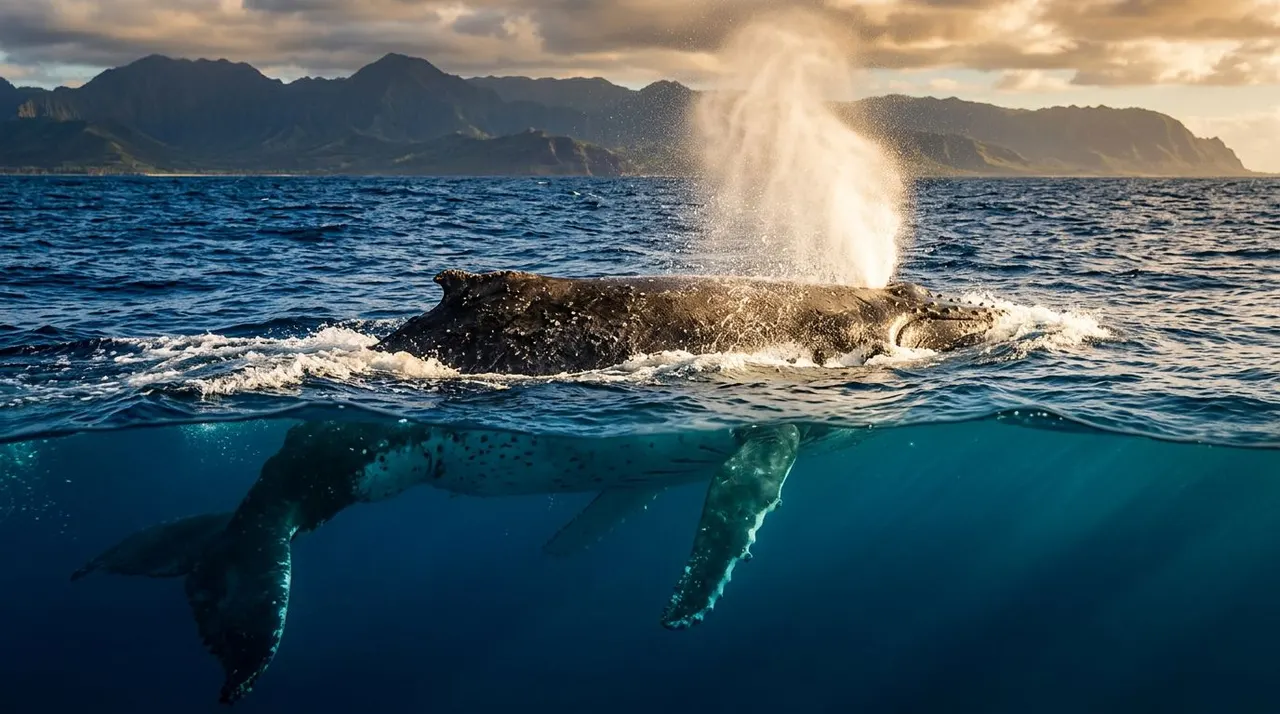
A humpback whale can vanish beneath Oahu’s blue water for several minutes, then return with a powerful blow that carries across the sea. If you’re searching whale watching Oahu, you may want to know how long that underwater wait can last before you book a boat.
Living Ocean Tours departs from Kewalo Basin Boat Harbor, only minutes from Waikiki Beach, for seasonal humpback whale watching from January through March. Once you understand breath-holding behavior, you can read each sighting with more patience and excitement.
How Long Can Humpbacks Hold Their Breath on whale watching Oahu trips?
The short answer is several minutes, but there isn’t one fixed time for every humpback. Many routine dives last around four to seven minutes. Active dives can last 15 to 30 minutes, while exceptional dives may approach an hour.
The Wild Dolphin Project’s breath-holding overview explains that humpbacks can remain underwater for long periods, although their average dives are usually much shorter. The whale’s activity, age, health, and surroundings all affect the length of a dive.
A humpback might surface repeatedly while traveling along the coast. During that time, you’ll see the blow, the curved back, and sometimes the tail flukes. Then the whale may arch its body, lift its tail, and disappear.
A long dive doesn’t automatically mean the whale has left the area. It may be traveling below the surface and could reappear farther along its route.
The time between sightings can feel longer when you’re waiting on open water. Your crew tracks the whale’s last position and watches for the next blow, while you scan the surface for movement.
Why humpback dives vary
A mother and calf often surface more frequently than a lone adult. Calves need more regular breaths, so you may see a smaller whale roll at the surface several times before diving again.
Adult humpbacks also change their breathing pattern based on what they’re doing. A whale that has breached or slapped its tail may take several breaths to recover. Another whale might travel underwater for a longer stretch before returning.
Hawaii’s winter humpbacks are focused on breeding, giving birth, nursing, and social behavior rather than feeding close to shore. You may see adults traveling together, males competing for access to a female, or a mother resting beside her calf. Each behavior produces a different rhythm at the surface.
How Humpbacks Store Oxygen Underwater
Humpbacks breathe air through blowholes on top of their heads. They choose when to breathe, and their bodies are built to make each breath count.
Before a dive, a whale may exhale forcefully through its blowholes. It then takes in a large breath and begins its descent. Unlike humans, humpbacks can direct oxygen to the parts of the body that need it most during a dive.
Their blood contains oxygen-carrying hemoglobin, while their muscles contain myoglobin, a protein that stores oxygen for working muscle tissue. This supply supports swimming while the whale remains below the surface.
Humpbacks also use a diving response found in many marine mammals. Their heart rate slows, blood flow changes, and oxygen is preserved for the brain and heart. The University of Miami’s marine mammal diving research describes how these adaptations help whales and other marine mammals manage long underwater dives.
That physiology explains why a humpback doesn’t need to surface every minute. Still, a whale doesn’t stay underwater indefinitely. Carbon dioxide gradually builds in the body, and the animal eventually returns for another breath.
You can also learn a lot from the whale’s breathing pattern. Several quick blows usually come before a longer dive. The whale may remain at the surface while it exchanges air and prepares for another descent.
What You Can See During a Whale Watching Oahu Excursion
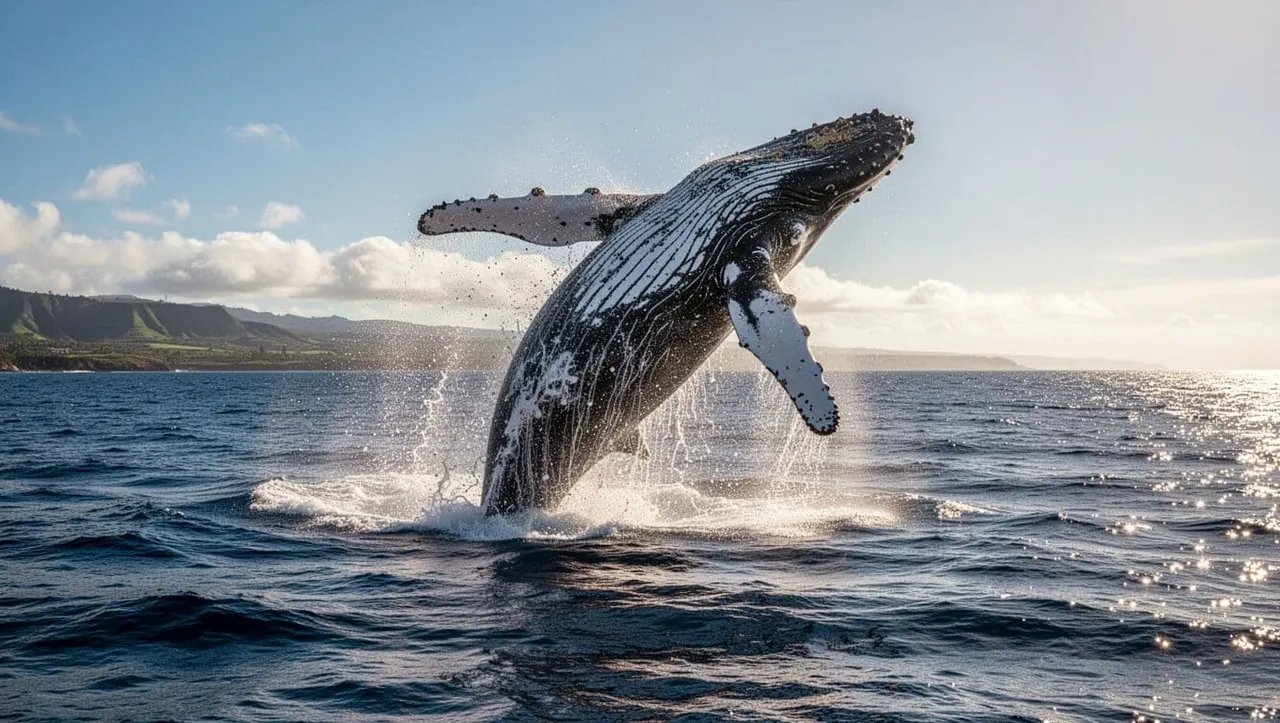
Your most memorable sighting may last only a few seconds. A breach, pectoral-fin slap, or tail throw happens quickly, so it’s better to watch the whole animal than stare at one spot through a phone screen.
Start by looking for a blow. A humpback’s exhalation appears as a misty plume above the surface. The shape and direction can help your guide identify where the whale surfaced and where it may travel next.
Next, watch the whale’s back. A smooth, rounded back often appears before the animal dives. When the tail flukes rise clearly above the water, the whale is usually beginning a deeper descent.
You may also notice long periods of calm between active displays. Humpbacks don’t breach on demand, and a quiet sighting can still show you natural behavior that most people never see from land.
For the best view, keep your eyes moving across the water rather than staring at the last spot. Whales can surface hundreds of feet away from where they disappeared. Your guide may point out a blow before you see it, which helps you follow the action.
Responsible viewing matters as much as the sighting itself. Keep voices low when the boat is near wildlife, follow crew directions, and never expect the captain to chase a whale for a closer look. The goal is to observe natural behavior without changing it.
Planning Your Whale Watching Trip from Waikiki
Humpback season in Hawaii generally runs through the winter, and Living Ocean Tours offers seasonal whale watching trips from January through March. Ocean conditions and whale activity can change by day, so give yourself enough time to enjoy the ride without rushing to another reservation.
Living Ocean Tours operates from Kewalo Basin Boat Harbor, a convenient departure point near Waikiki. Its Coast Guard-inspected double-decker vessels, the Coral Kai and Lokahi, include shaded seating, restrooms, dry storage, and sturdy ladders for easy movement around the boat.
The Lokahi also features a SeaKeeper stabilization system that helps reduce side-to-side rolling. That added stability can make the ride more comfortable for families, first-time boat passengers, and anyone concerned about seasickness.
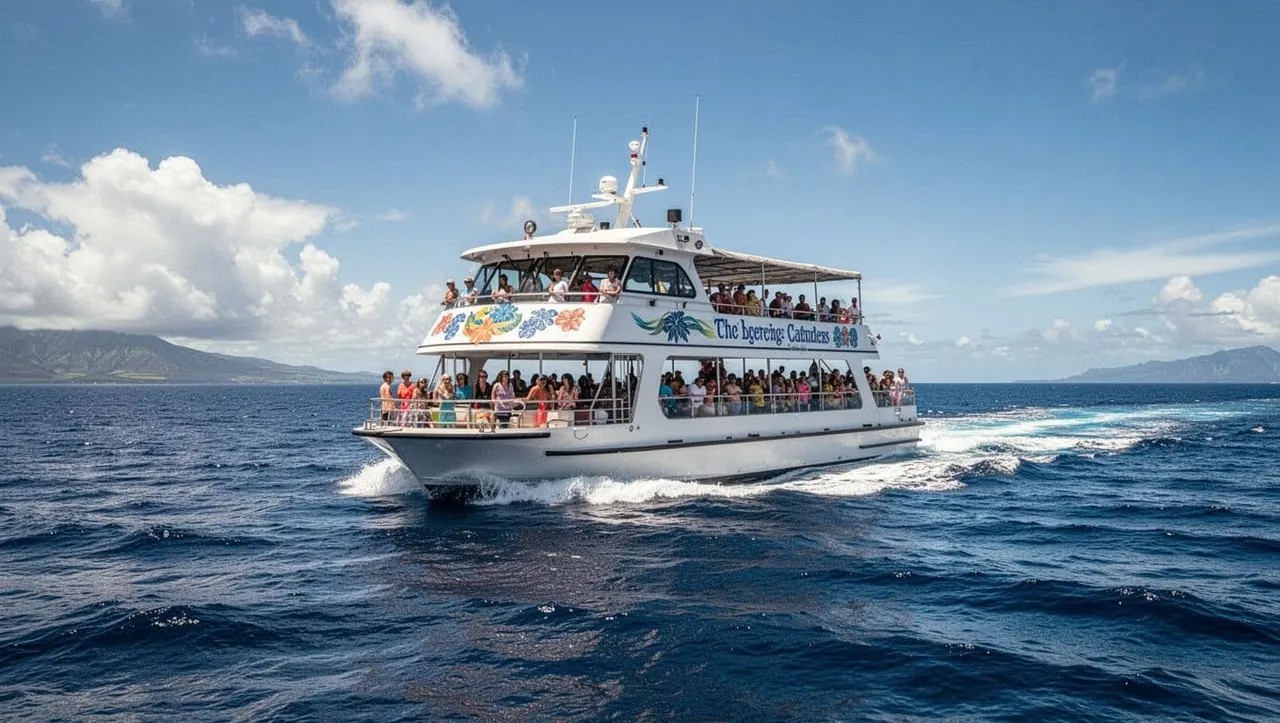
Living Ocean Tours is also the only tour company with professional snorkel guides. If you want to pair whale watching with a reef adventure during your Oahu vacation, the crew can help you choose an experience that fits your comfort level. You can browse the full selection of Waikiki boat tours and cruises before choosing your date.
The company welcomes beginners and families with children ages 3 and older. Professional crew members explain what to expect, help you stay comfortable onboard, and remind you to observe wildlife without touching, feeding, or disturbing it.
When you compare whale watching Oahu options, look for a tour that gives you more than a boat ride. A knowledgeable crew can explain breathing patterns, point out distant blows, and help you understand why a whale may disappear for several minutes.
Living Ocean Tours’ seasonal whale watching tour gives you a direct way to experience humpbacks along the Waikiki coastline.
How to Make the Most of Each Sighting
Bring polarized sunglasses because glare can hide a whale’s blow and back. A light jacket can also help when the boat moves beyond the protection of the shoreline.
Keep your camera ready, but don’t let the screen take over. Watch the water with your own eyes first. If a whale surfaces near the boat, your guide can help you focus on the animal instead of adjusting camera settings.
You should also expect pauses. A humpback may surface three times in a row, then remain underwater for 10 minutes. Another whale may stay visible for several minutes, especially when traveling with a calf.
The most useful habit is to keep scanning after the first sighting. A whale can resurface behind the boat, off the bow, or farther along the same path. Staying alert gives you a better chance of seeing a second blow or a full breach.
Above all, follow the principle of observe, don’t touch. Humpbacks are wild animals, and respectful distance protects both the whales and your experience.
Why Breath-Holding Makes Whale Watching More Meaningful
Once you know how humpbacks manage their dives, the waiting feels different. A few quiet minutes on the surface aren’t empty time. They are part of the animal’s normal rhythm.
You may see a whale take several breaths, arch its back, and slip below the Pacific. The next appearance could happen moments later, or it could take half an hour. That uncertainty is part of observing a wild whale instead of watching a scheduled performance.
Whale watching Oahu experiences give you a chance to notice details that are easy to miss, including the changing blow pattern, the rise of the flukes, and the distance between surfacings. A professional guide adds context without taking away the sense of discovery.
Conclusion
Humpbacks commonly hold their breath for several minutes, while active dives may last 15 to 30 minutes. Rare dives can last much longer, so you shouldn’t judge a trip by how quickly a whale resurfaces.
When you join a whale watching Oahu tour, patience helps you appreciate the full behavior, not only a dramatic breach. With an experienced crew, comfortable boat, and respect for marine life, every blow and dive becomes part of a much bigger story.


