
Whale Watching Oahu: Humpbacks or Dolphins?
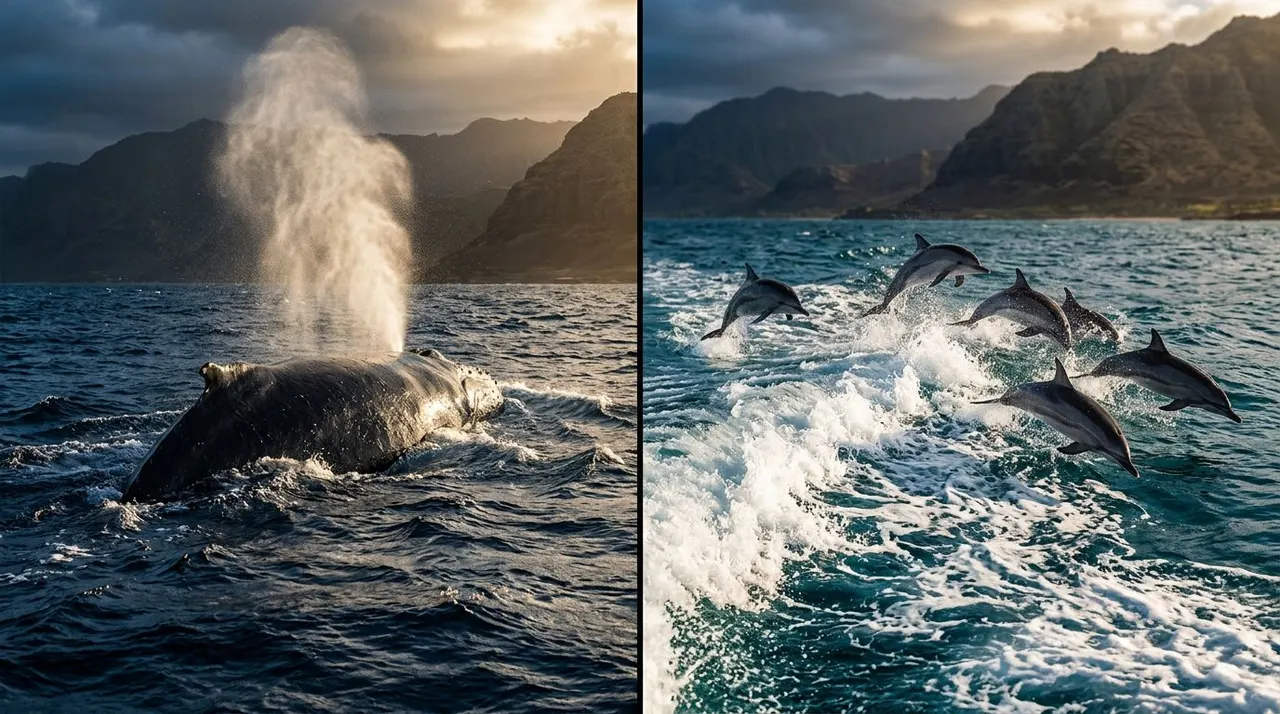
A dark shape breaks the surface, a burst of spray rises, and you have only seconds to identify it. During whale watching Oahu excursions, humpback whales and dolphins can appear in the same blue Pacific waters, yet their size, movement, and breathing patterns are easy to separate once you know what to watch.
Your first sighting may be brief. Look at the animal’s overall shape before focusing on a single splash. The height of the blow, the length of the dive, and the way the animal travels will usually tell you whether you are watching a humpback or a dolphin.
Why Humpbacks and Dolphins Can Look Similar
Both animals belong to the cetacean family, so they share several features. You may see a dorsal fin, a smooth back, a blow at the surface, and an arched body as the animal dives. From a distance, bright sun and rolling water can make a small dolphin pod look surprisingly whale-like.
Size is your first reliable clue. An adult humpback whale can reach roughly 40 to 50 feet in length. Most dolphins near Oahu are much smaller, often between 6 and 12 feet long. A dolphin may look large when it leaps high above the water, but its body disappears quickly after the jump.
The shape of the blow also helps. Humpbacks breathe through two blowholes and often produce a tall, visible plume. Dolphins breathe through one blowhole, creating a smaller puff that may appear as a quick mist. Wind can scatter either blow, so use this clue alongside the animal’s behavior.
You can also watch how long the animal stays underwater. Humpbacks often surface several times, then take a longer dive. Dolphins usually keep moving with their pod and may surface in a steady rhythm.
Hawaii’s Division of Aquatic Resources explains that whales and dolphins belong to different cetacean groups, with humpbacks using baleen to filter food while dolphins have teeth. That distinction won’t help during a fast sighting, but it explains why their body shapes and feeding habits differ.
A whale’s blow gives you a height clue, while a dolphin’s travel pattern gives you a group clue.
Whale Watching Oahu: How to Spot a Humpback
Humpback whales visit Hawaii during the winter months. On Oahu, the main viewing season usually runs from January through March, although sightings can vary with ocean conditions and the whales’ movements.
Start by scanning beyond the nearest waves. Humpbacks are large, but they may spend most of a sighting below the surface. Watch for a vertical blow, then keep your eyes on the same area. The whale may surface again nearby before lifting its tail and beginning a longer dive.
A humpback’s back looks broad and rounded. Its dorsal fin is small compared with its body, and its long pectoral fins may appear as pale flashes beneath the surface. When the whale dives, its wide tail, called a fluke, often rises clearly above the water.
The fluke is one of the best features for identification. Each humpback has distinctive markings and scars on the underside of its tail. If you capture a clear photo, compare the pattern later with recognized photo-identification resources. The humpback whale photo-ID guide explains why the fluke is such a useful identifying feature.
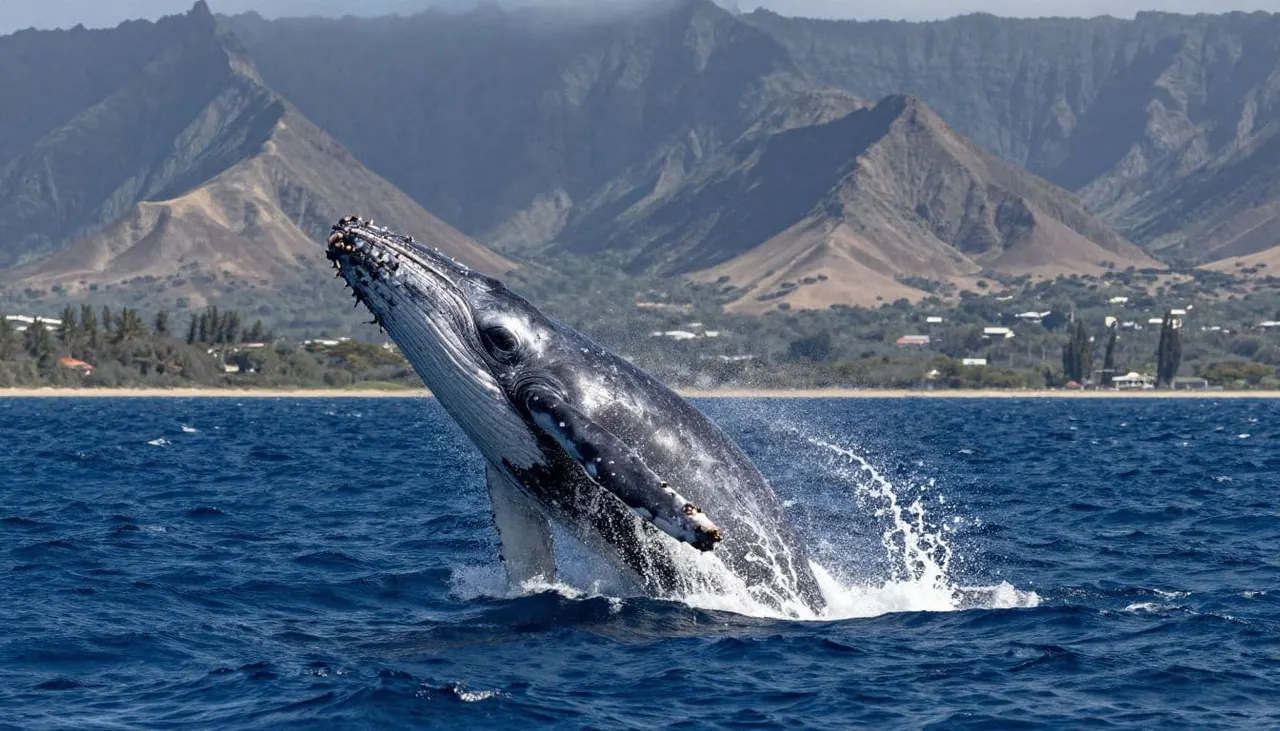
Humpbacks also create memorable surface displays. You may see a breach, tail slap, pectoral fin slap, or a cloud of spray caused by a forceful exhalation. These behaviors can happen quickly, so keep your camera ready without staring through the screen the entire time.
A useful field sequence looks like this:
- Spot a tall blow.
- Track the broad back as it surfaces.
- Watch for several breaths in the same area.
- Look for the fluke during the dive.
- Note whether the animal travels alone, with a calf, or beside another whale.
A calf may surface more often than its mother. The young whale is smaller, but you can still identify the pair by the adult’s larger blow and broader body.
How to Recognize Dolphins Around Oahu
Dolphins usually give you more movement to follow. Instead of one large animal surfacing after a long pause, you may see several sleek bodies traveling together. A pod can cross your view quickly, so watch the direction of travel and scan ahead of the group.
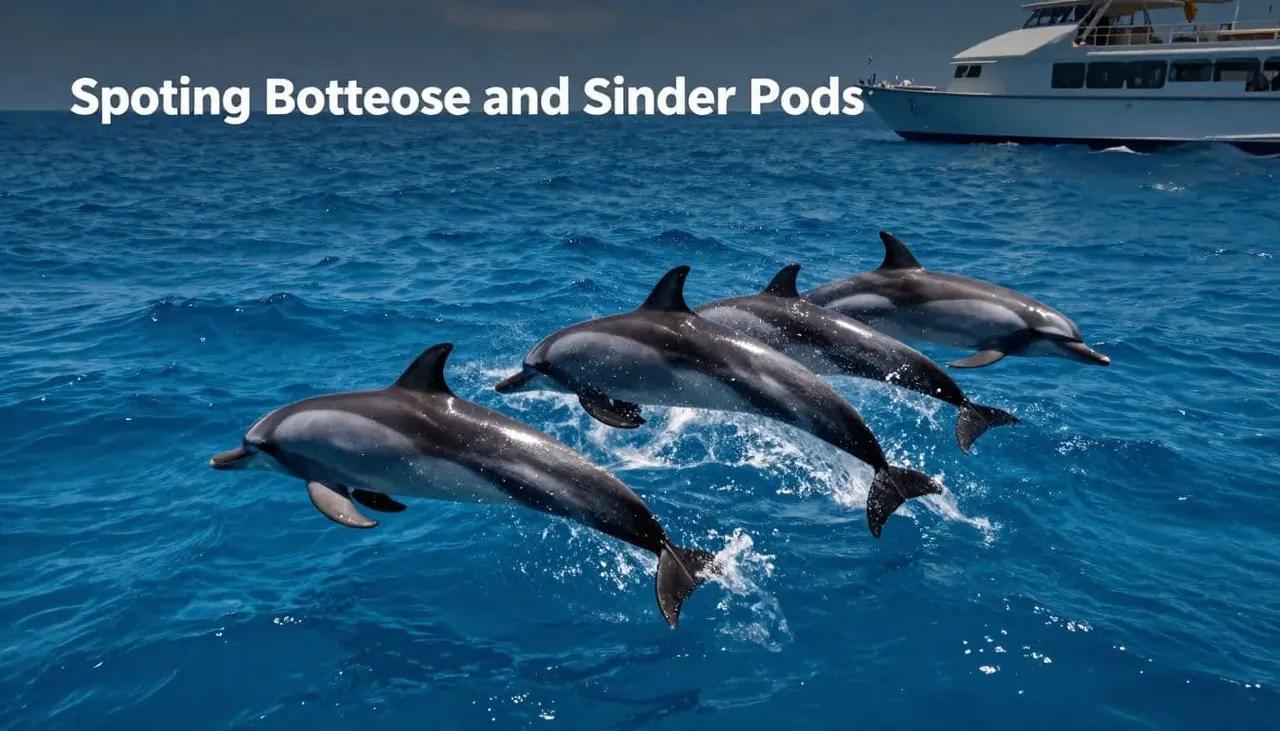
Spinner dolphins are known for quick leaps and twisting jumps. Their bodies are slender, with a pointed snout and a curved dorsal fin. A spinner dolphin may leap, rotate, and land in almost the same spot, although you shouldn’t expect every pod to perform this behavior.
Bottlenose dolphins have a heavier body and a wider, rounded snout. Their dorsal fin is also curved, but the body looks more powerful than the slender profile of a spinner dolphin. Rough-toothed dolphins have a longer, narrower snout and may be harder to identify from a moving boat.
Dolphins often ride the pressure wave at a boat’s bow. They may surface in pairs or groups, leap repeatedly, and change direction together. Their blows are small and quick. You may see a dark back, a fin, and a splash in one smooth motion.
Unlike a humpback, a dolphin usually doesn’t raise a broad tail above the water before diving. The animal’s back and dorsal fin remain your strongest visual clues. If several fins appear in a line, you are likely watching dolphins rather than a single whale.
Humpbacks vs. Dolphins: Quick Identification Guide
Use this comparison when you need a fast answer on the water.
| Feature | Humpback whale | Dolphin |
|---|---|---|
| Typical size | About 40 to 50 feet | About 6 to 12 feet |
| Blow | Tall, broad plume | Small, quick puff |
| Back | Wide and rounded | Sleek or compact |
| Dorsal fin | Small relative to body | Prominent curved fin |
| Tail display | Broad fluke may rise during a dive | Fluke rarely shows above the surface |
| Travel style | Repeated blows, then a longer dive | Continuous movement with a pod |
| Common behaviors | Breaching, tail slapping, fin slapping | Leaping, bow riding, synchronized travel |
The table gives you the broad pattern, but ocean wildlife doesn’t follow a script. A humpback may show only its back, while dolphins may vanish beneath a patch of glare. Give yourself time to observe several surfacings before deciding.
You can also use the horizon and nearby objects to estimate scale. A whale beside a tour vessel will look far larger than a dolphin, even when both animals appear at a similar distance. Never judge size from a single splash.
Where to Go Whale Watching on Oahu
Your viewing experience depends on more than the animals. Departure location, boat stability, visibility, and crew experience all affect how easily you can follow a sighting.
Living Ocean Tours departs from Kewalo Basin Boat Harbor, a short drive from Waikiki Beach. The company operates Coast Guard-inspected double-decker vessels, including the Coral Kai and Lokahi. The Lokahi includes a SeaKeeper stabilization system, shaded seating, restrooms, dry storage, and sturdy ladders for comfortable boarding and water access.
The crew focuses on marine wildlife and provides guidance for guests who are new to ocean tours. Living Ocean Tours is also the only tour company with professional snorkel guides, so you can pair seasonal whale watching with a guided reef experience during your Oahu vacation.
You can review the company’s Honolulu whale watching excursions and compare available ocean experiences before choosing your date.
A whale watching trip is a good choice when you want to stay dry and observe large animals from the deck. If you prefer a broader wildlife outing, a cruise may also provide views of seabirds, flying fish, and dolphins when conditions allow.
Booking Tips for Families and Couples
Book during the January through March season if humpbacks are your priority. Morning and afternoon trips can both offer sightings, so choose the departure time that fits your schedule and comfort on the water.
Bring a light jacket, sunglasses, reef-safe sunscreen, and a camera with room for short video clips. Wear a hat that fits securely, and keep loose items in a dry bag. Even on a warm Hawaiian day, wind on the open deck can feel cool.
Families should choose a boat with restrooms, shaded seating, and easy viewing areas. Couples may prefer an open upper deck, where you can watch the horizon together without standing at the rail for the entire trip.
If you want to reserve a seasonal Waikiki whale watching trip, CHECK AVAILABILITY.
Watch Wildlife Without Disturbing It
Responsible whale watching protects the animals you came to see. Federal guidance requires vessels to remain at least 100 yards from humpback whales in Hawaii waters. You can read the NOAA marine life viewing guidelines before your trip.
Never ask a captain to move closer for a better photo. A respectful crew will adjust the boat’s position, follow local rules, and allow the animal to choose whether it approaches. You should also avoid shouting, throwing objects, feeding wildlife, or attempting to swim with humpbacks.
Dolphins need space, too. Even when a pod rides the bow, keep your hands inside the boat and let the animals control the interaction. If you snorkel later in your vacation, follow the same rule around reef fish and Hawaiian green sea turtles: observe, don’t touch.
The best photo may show only a fin or a blow. That moment still counts. Your attention belongs on the living animal, not only on getting a perfect image.
Conclusion
Once you recognize the pattern, humpbacks and dolphins become easier to tell apart. Look for the humpback’s tall blow, broad back, long dive, and raised fluke. For dolphins, watch for a smaller body, curved dorsal fins, quick surfacing, and coordinated pod movement.
During whale watching Oahu trips, patience gives you the clearest answer. Stay alert, respect the viewing distance, and let the ocean decide which animal appears next.


