
Whale Watching Oahu: Humpback Fin Slaps Explained
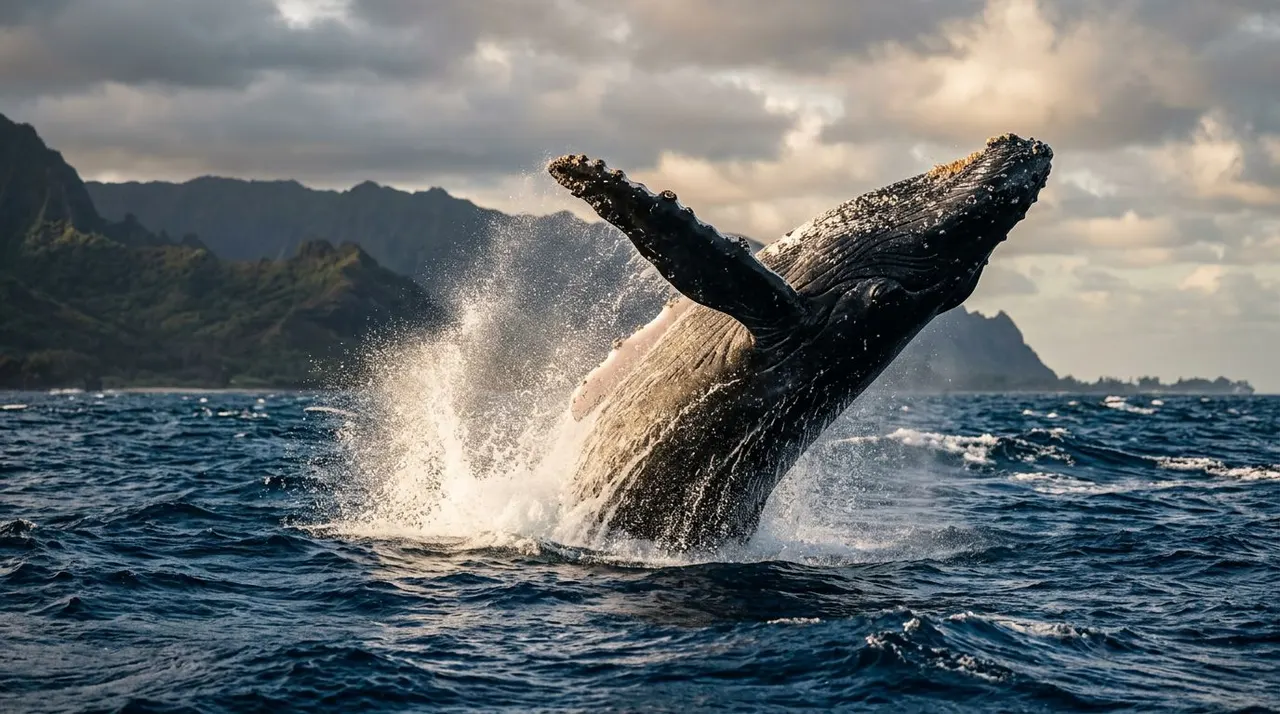
A humpback whale can turn a calm Oahu sea into a burst of white water with one powerful fin slap. The sound travels across the surface, while the whale’s long pectoral fin rises and drops like a broad ocean paddle.
When you plan whale watching Oahu, this behavior is one of the most exciting moments you may witness. However, a pectoral fin slap isn’t random. It can carry social meaning, show agitation, attract attention, or help a whale interact with others nearby. Learning what to watch for makes your time on the water more rewarding.
Why humpbacks visit Oahu in winter
Humpback whales visit Hawaii during the winter season, with sightings around Oahu typically running from January through March. These whales spend much of the year feeding in colder, food-rich waters. Then they migrate to tropical areas, including the Hawaiian Islands, for breeding, calving, and raising young.
Oahu’s south shore offers a convenient viewing area because boats can leave Honolulu and reach open water quickly. The coastline near Waikiki also gives you wide views across the Pacific, which helps you spot blows, breaches, and surface activity.
A whale’s exhalation is often the first clue. Look for a vertical plume rising above the water, followed by a dark back or dorsal fin. Calves may surface beside their mothers, while groups of adults can gather during social activity.
Weather affects every outing. Calm seas make it easier to scan the horizon and keep your balance while watching. Bright sunlight can also reveal the contrast between a whale’s dark body and the pale splash around its fin.
Although the season offers strong opportunities, whales are wild animals. No responsible operator can promise a specific behavior on a particular trip. You may see a distant blow, a close pass, a tail raise, or a dramatic fin slap. Each sighting has its own pace.
A fin slap can happen in seconds, so keeping your eyes on the whale after the first splash may reveal another behavior.
What a humpback pectoral fin slap looks like
A pectoral fin slap happens when a humpback raises one fin out of the water and brings it down against the surface. The whale may roll onto its side, exposing the pale underside of the fin before creating a loud splash.
The movement can be slow and deliberate or fast enough to catch you off guard. Sometimes the whale repeats the motion several times. Other times, one slap is followed by a dive or a long pause.
Humpback pectoral fins are long, flexible appendages. They help the whale steer, turn, and control its position underwater. During a slap, the fin also becomes a visible signal above the surface.
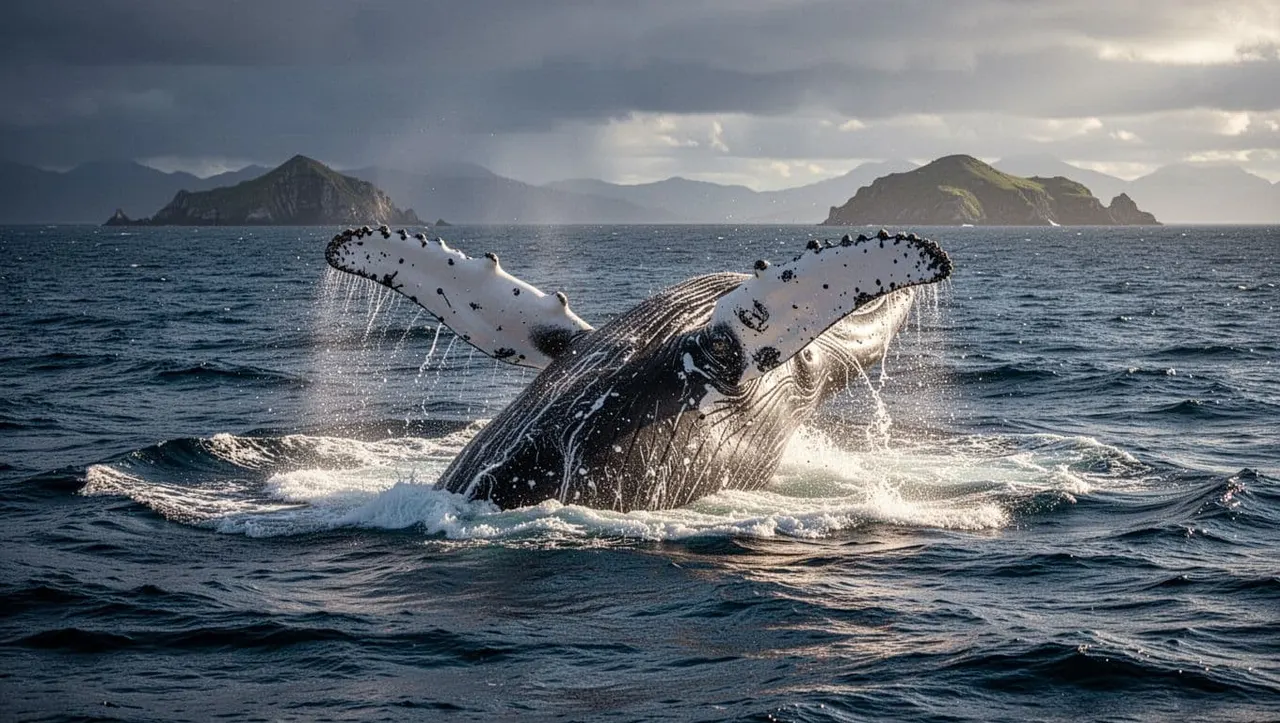
The angle matters when you’re watching. A side-on view gives you the clearest look at the fin’s shape and the whale’s body position. From farther away, you may see only the splash. A guide can help you connect that splash with the movement that caused it.
Pectoral fin slapping is different from a tail slap. A tail slap uses the broad flukes at the end of the whale’s body. A pectoral slap uses one of the front fins, often while the whale lies partly on its side.
The two actions may look similar at a distance, but they provide different clues about body position. A knowledgeable guide can help you identify which part of the whale you saw.
Why do humpback whales slap their fins?
Scientists have observed pectoral fin slapping in several social situations. The behavior doesn’t have one fixed translation, so you shouldn’t treat every slap as a simple message.
In some cases, the slap may attract attention. A loud impact creates sound and movement that other whales can notice. The action may help one whale communicate its presence when several animals are close together.
A slap may also show excitement, irritation, or competition. During social encounters, whales can change speed and direction quickly. A fin slap may form part of that display, especially when multiple adults interact.
Female humpbacks have also been observed slapping their fins around groups of competing males. Research on pec-slapping behavior in Hawaiian wintering grounds examines how this action may relate to social interactions and competition.
Young whales may practice surface behaviors as they develop coordination. A calf’s movement may look less powerful or less controlled than an adult’s. Even so, the sight can be memorable because the calf often stays close to its mother.
Context gives the behavior meaning. Notice how many whales are nearby, whether the animals change direction, and what happens before and after the slap. A guide who follows whale behavior can explain those details without turning an uncertain interpretation into a definite claim.
You may also see a whale use its pectoral fins while turning or resting near the surface. The same body part supports several movements, so the surrounding activity matters.
How to watch the behavior without missing it
Your position on the boat can affect what you see. An open upper deck offers a wider view, while shaded seating can help you stay comfortable during a longer period of scanning. Choose a spot where you can look across the water without railings or other guests blocking your view.
Keep your gaze moving across the horizon. Whales don’t always surface where you expect. Search for blows first, then watch the area around each blow for a back, fin, or splash.
A camera with a long lens can help, but you don’t need professional equipment. Your eyes often catch the action faster than a phone camera. If you take photos, keep the device ready without staring at the screen for the entire trip.
Listen to the crew. Guides watch several directions at once and can point out a whale before you spot it. They also help you understand whether an animal is traveling, resting, diving, or interacting with another whale.
Comfort matters too. Wear sun protection, bring a light layer, and secure loose belongings. Even calm-looking water can move a boat. If you tend to experience seasickness, sit near the center of the vessel, look toward the horizon, and ask the crew for practical advice before departure.
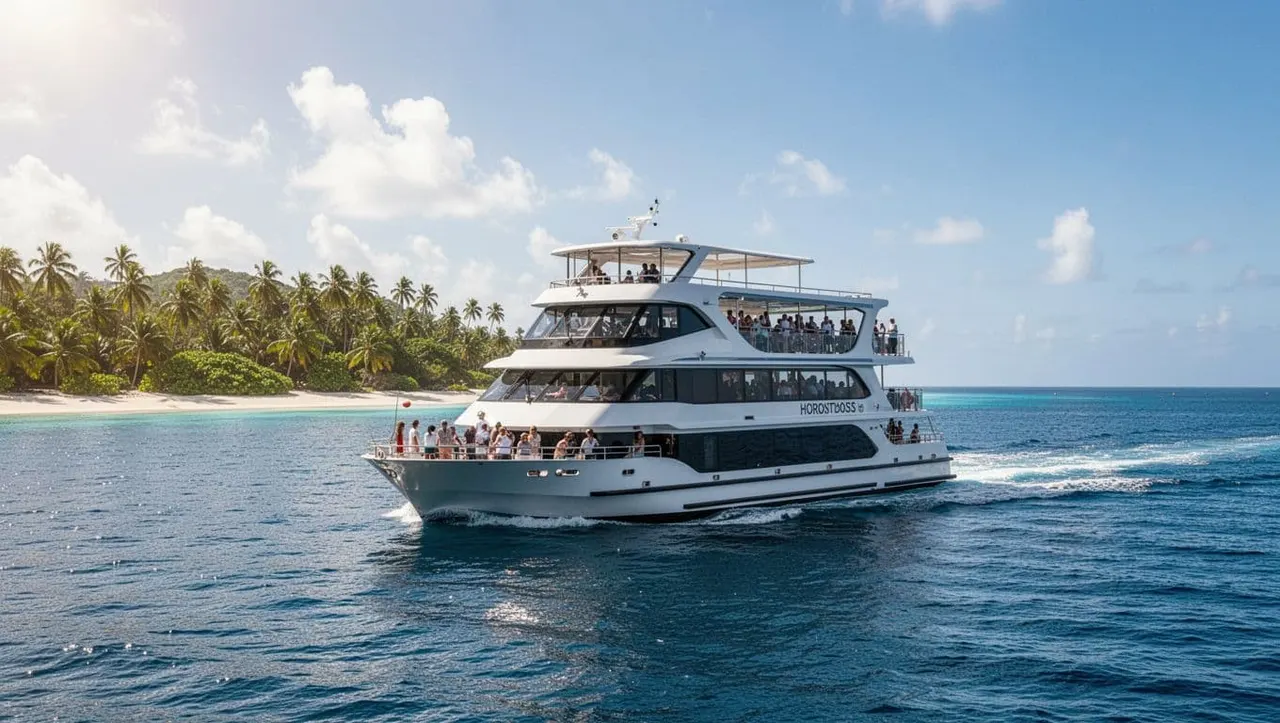
The boat itself can shape the experience. Living Ocean Tours departs from Kewalo Basin Boat Harbor, just minutes from Waikiki Beach. Its Coast Guard-inspected double-decker vessels include shaded seating, restrooms, dry storage, and sturdy ladders.
The Lokahi also features a SeaKeeper stabilization system, which helps reduce side-to-side rolling. That added steadiness can make it easier for you to watch the horizon, especially when you’re traveling with children or guests who are sensitive to motion.
Choose a responsible whale watching Oahu tour
A good wildlife tour gives you access to the ocean without treating whales like a performance. The crew should respect distance, avoid chasing animals, and allow the whales to choose their own direction.
Living Ocean Tours offers seasonal humpback whale watching trips along the Waikiki coastline. The company combines local guidance with comfortable boats, giving couples and families a practical way to search for whales during the winter season.
Living Ocean Tours is also the only tour company with professional snorkel guides. Although whale watching doesn’t involve entering the water, that knowledge supports a strong culture of safety and marine respect across the company’s ocean experiences.
You should also look for clear guidance about wildlife etiquette. Keep your hands away from marine animals, never feed them, and follow crew instructions. Observing, not touching, protects whales, sea turtles, coral reefs, and the wider Hawaiian ecosystem.
You can review the company’s broader ocean tours in Honolulu before choosing the experience that fits your schedule. For whale season, reserve early when possible because January through March can be popular with visitors hoping to see humpbacks.
The crew may help you identify a fin slap, but nobody can order a whale to perform one. That uncertainty is part of responsible wildlife viewing. A distant blow can be just as meaningful as a dramatic splash when you understand the animal’s natural behavior.
Ready to look for winter humpbacks along the Waikiki coast? CHECK AVAILABILITY
What to remember during your Oahu whale watch
A pectoral fin slap is a visible surface behavior, but its meaning depends on context. The whale’s position, nearby animals, repeated movements, and next action all help tell the story.
You may see the fin rise before you hear the impact. You may notice a mother and calf traveling together. You may watch one whale slap once, then disappear below the surface. Each moment gives you a closer look at natural behavior without requiring the animal to approach the boat.
Bring patience, listen to your guide, and keep watching after every blow. The next splash may come from a fin, a tail, or a full-body breach.
Conclusion
Whale watching Oahu becomes more rewarding when you know what a pectoral fin slap can mean. The movement may signal attention, express social energy, or occur during a larger interaction between whales.
Your best experience comes from choosing a respectful crew, watching the water carefully, and accepting that humpbacks control the encounter. When that broad fin finally strikes the Pacific, you’ll recognize more than a splash. You’ll be seeing one small part of a complex life above and below the surface.


