
Whale Watching Oahu: How Big Are Humpback Whales?
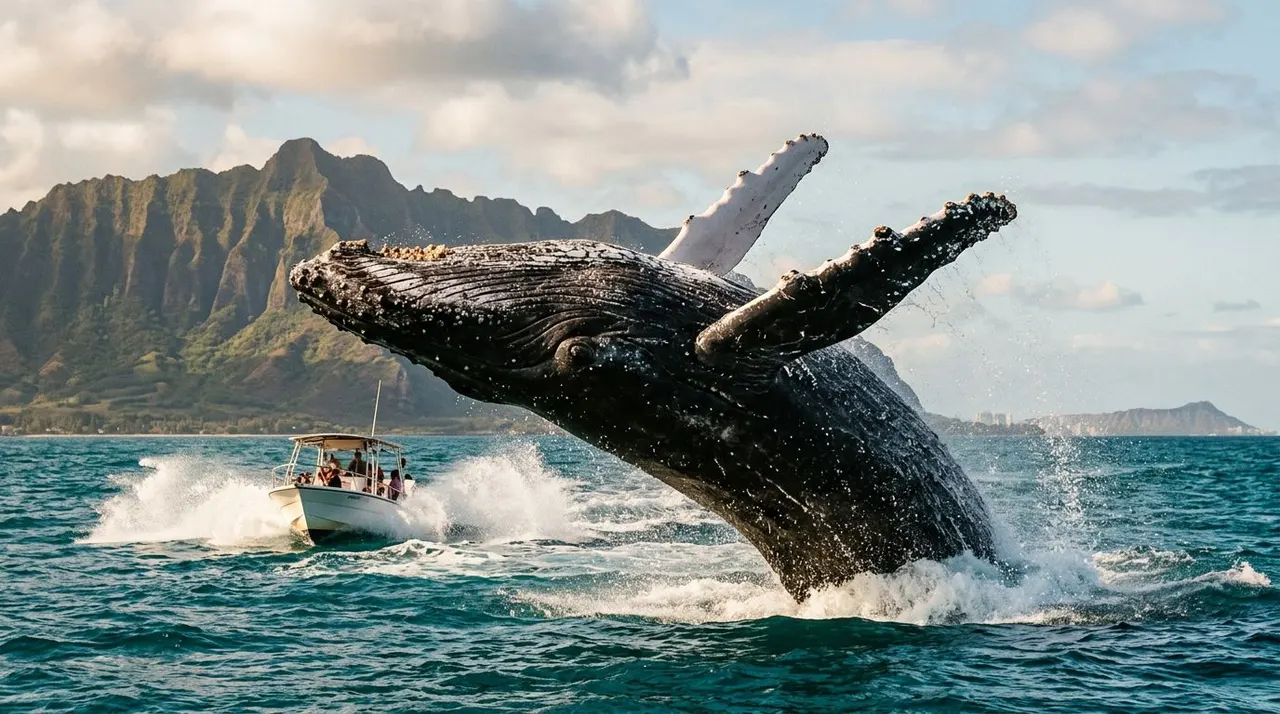
A humpback whale can reach 60 feet long and weigh as much as 80,000 pounds, so whale watching Oahu gives you a close view of one of the ocean’s largest mammals. Yet size is difficult to judge when only a back, fin, or tail rises above the water.
Living Ocean Tours takes you out from Kewalo Basin Boat Harbor, minutes from Waikiki Beach, during the seasonal humpback migration. Once you understand the whale’s proportions, movements, and seasonal habits, every distant blow becomes easier to read.
Key Takeaways
- Adult humpback whales can grow up to 60 feet long and weigh about 80,000 pounds.
- Females are usually larger than males, while newborn calves measure roughly 15 feet.
- Humpbacks visit Oahu’s warm waters during winter to breed and give birth.
- You may see blows, back arches, pectoral fins, tail flukes, and occasional breaches.
- Responsible tours observe whales without touching, feeding, chasing, or crowding them.
Whale Watching Oahu: Humpback Size at a Glance
Humpback whales are large even by whale standards. An adult can measure between 40 and 60 feet long, although individuals vary by age, sex, and population. The largest reported animals reach approximately 60 feet.
For a familiar comparison, a full-grown humpback can be longer than a standard school bus. When the whale surfaces beside a boat, you may see only a small part of that length. Much of its body remains below the surface.
Weight varies just as much. Adult humpbacks commonly weigh between 50,000 and 80,000 pounds, or approximately 25 to 40 tons. The National Oceanic and Atmospheric Administration’s humpback whale profile lists adults among the largest animals in the ocean, with females generally growing larger than males.
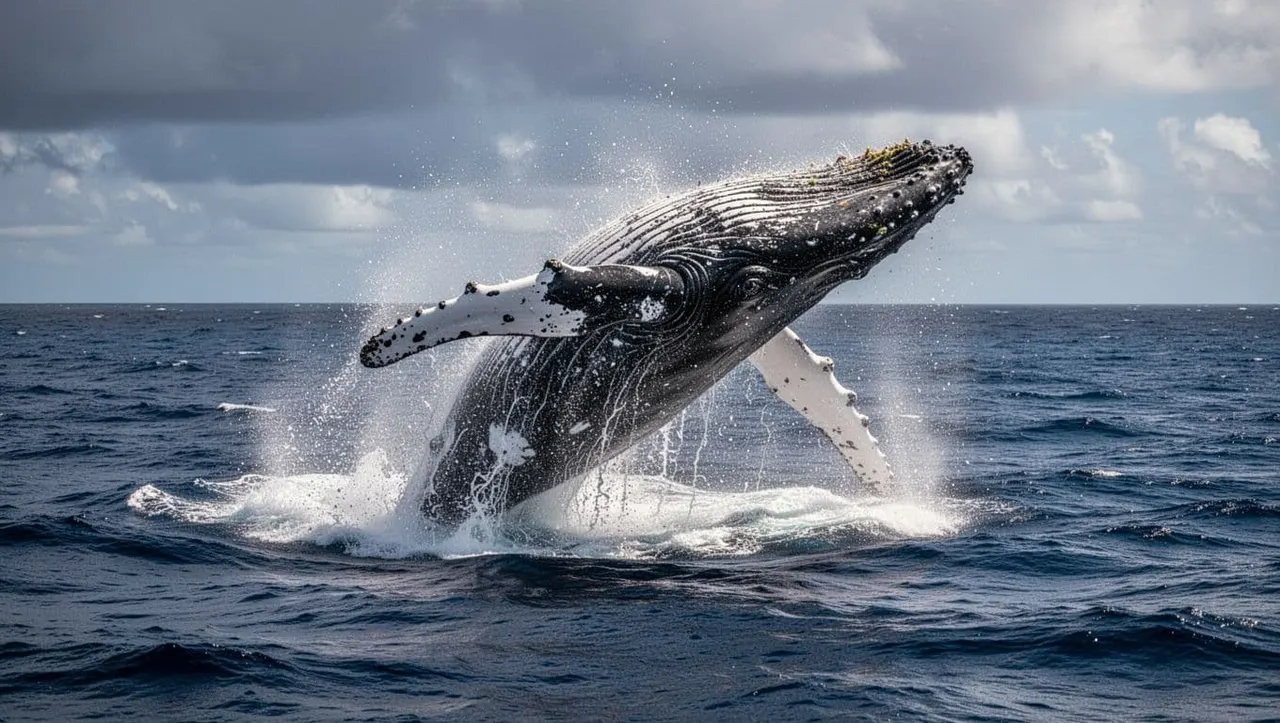
These figures help you picture the animal’s scale:
| Whale stage or feature | Approximate measurement |
|---|---|
| Adult length | 40 to 60 feet |
| Adult weight | 50,000 to 80,000 pounds |
| Newborn calf length | About 15 feet |
| Newborn calf weight | About 1 ton |
| Pectoral fin length | Up to one-third of body length |
A newborn humpback is already enormous. At roughly 15 feet long and about one ton, a calf is close to the size of a small car. You may spot calves traveling close beside their mothers during the winter season.
The whale’s long pectoral fins are another useful size reference. They can reach about one-third of the animal’s body length, which means a 45-foot whale may have fins measuring around 15 feet. The Hawaiian Islands Humpback Whale National Marine Sanctuary provides additional details about the species found around Hawaii.
Why a Humpback’s Weight Is Hard to Judge at Sea
You won’t see a humpback standing on a scale, and the ocean hides much of its body. That makes weight harder to understand than length.
When a whale surfaces, its body remains supported by seawater. Buoyancy carries much of its mass, so the animal can move with surprising ease. A slow roll may reveal a broad back, while a powerful tail stroke can send thousands of pounds forward without a dramatic splash.
The whale’s body shape also affects your perception. Humpbacks have a large head, long fins, a thick torso, and a narrowing tail stock. Their backs can look compact when viewed from a distance, especially under bright sunlight or choppy conditions.
A breach gives you a better sense of scale, but you may see only the upper half of the animal. A full breach is also less common than a routine surfacing. Most sightings involve a blow, a curved back, a dorsal fin, or a fluke rising above the water.
The blow is often your first clue. Humpbacks surface to breathe, then release warm, moist air through their twin blowholes. That exhalation creates a visible column above the ocean. After several breaths, the whale may dive and show its tail flukes.
The National Wildlife Federation’s humpback whale guide places adult weight in the same broad range of 50,000 to 80,000 pounds. Even at the lower end, the whale weighs more than several large elephants combined.
When You Can See Humpbacks Around Oahu
Humpback whales migrate thousands of miles between feeding areas near Alaska and breeding waters around Hawaii. They arrive in Hawaii during the cooler months, when the islands offer warm, sheltered water for mating, calving, and nursing.
The main Hawaii whale-watching season generally runs through winter and early spring. Living Ocean Tours offers seasonal humpback whale-watching trips from January through March, when Oahu visitors have a strong chance of seeing active whales offshore.
Whales don’t come to Hawaii to feed. Instead, they rely on energy stored during their time in northern feeding grounds. Their winter behavior centers on breeding and raising calves, so you may notice more social activity than feeding behavior.
Calm weather improves visibility, but whale sightings remain wildlife encounters rather than guaranteed performances. Your crew may spot a whale several hundred yards away, then watch it surface closer to the boat. Other trips may produce a quick series of blows and a disappearing tail.
Morning and afternoon trips can both produce sightings. Sea conditions, wind, sunlight, and whale behavior matter more than a single guaranteed time of day. Choosing a boat with open viewing areas gives you more chances to scan the horizon.
At Living Ocean Tours, you depart from Kewalo Basin Boat Harbor near Waikiki. The Coast Guard-inspected Coral Kai and Lokahi offer open deck space, shaded seating, restrooms, dry storage, and sturdy ladders. The Lokahi also includes a SeaKeeper stabilization system, which helps reduce rolling when ocean conditions change.
What You May See on a Whale Watching Oahu Tour
Your first sighting may be a puff of white mist. Watch the area after the blow because the whale often surfaces again nearby. A guide can help you track the direction of travel and identify the next likely surfacing point.
Several behaviors are common around Oahu:
- A blow appears as a tall misty plume above the head.
- A back arch shows the whale preparing for a deeper dive.
- A tail fluke rises high when the whale descends.
- A pectoral fin may sweep through the water during a roll.
- A breach sends part or most of the whale’s body into the air.
- A flipper slap creates a sharp splash on the surface.
A mother and calf may travel together, with the calf surfacing more often. Calves need frequent breaths, while adults can remain underwater longer. You may also see two or more whales traveling in the same direction, although the group can spread out quickly.
Guides watch for more than size. They read the timing between blows, the whale’s travel direction, and surface behavior. Those details help you understand whether the animal is resting, traveling, socializing, or preparing to dive.
You should also bring polarized sunglasses, sunscreen that won’t harm coral reefs, a light jacket, and a camera with a secure strap. Keep your eyes on the horizon between sightings. Whales can surface in different locations, and looking down at a phone may cause you to miss the moment.
Living Ocean Tours is the only tour company with professional snorkel guides, giving you experienced local support on its marine excursions. Although a whale-watching trip doesn’t involve snorkeling with humpbacks, that knowledge adds value when you combine wildlife viewing with another ocean tour during your Oahu stay.
Choose a Responsible Oahu Whale-Watching Experience
A good whale-watching trip puts wildlife safety ahead of close-up photographs. Humpbacks are protected animals, and boats must follow legal approach rules. Your captain should maintain a respectful distance, avoid cutting across a whale’s path, and never chase an animal that changes direction.
You should never touch, feed, or attempt to swim with humpback whales. Keep your voice low when whales are nearby, follow crew instructions, and avoid sudden movement along the rail. Respectful observation protects the animals and keeps the encounter calm.
Living Ocean Tours operates with an eco-conscious approach along the Waikiki coastline. The crew helps you observe marine life without disturbing it, while the boat’s open decks give you room to watch without crowding the viewing area.
The company’s vessels also make a difference to your comfort. Coral Kai has broad open-deck space for ocean views. Lokahi offers shaded seating, a cash bar, and SeaKeeper stabilization technology. Both boats include onboard restrooms and dry storage, which helps you stay comfortable during a seasonal ocean trip.
If you want to reserve a seasonal whale-watching trip, check the Living Ocean Tours whale-watching experience for current dates and availability.
When you book, choose clothing that handles changing wind and spray. Arrive prepared for bright sun, but bring an extra layer for the boat ride. If you experience motion sickness, ask your doctor or pharmacist about suitable options before your trip.
Conclusion
A humpback whale’s size becomes easier to appreciate when you compare its 40-to-60-foot body with a school bus, then notice that only part of it appears above the water. Its 50,000-to-80,000-pound frame moves with control because the ocean supports its weight.
During winter, whale watching Oahu lets you see these animals in the warm waters where they breed and raise calves. With an experienced crew, a stable viewing platform, and respectful wildlife practices, you can enjoy the encounter while giving the whales the space they need.


