
Whale Watching Honolulu: What a Spyhop Means
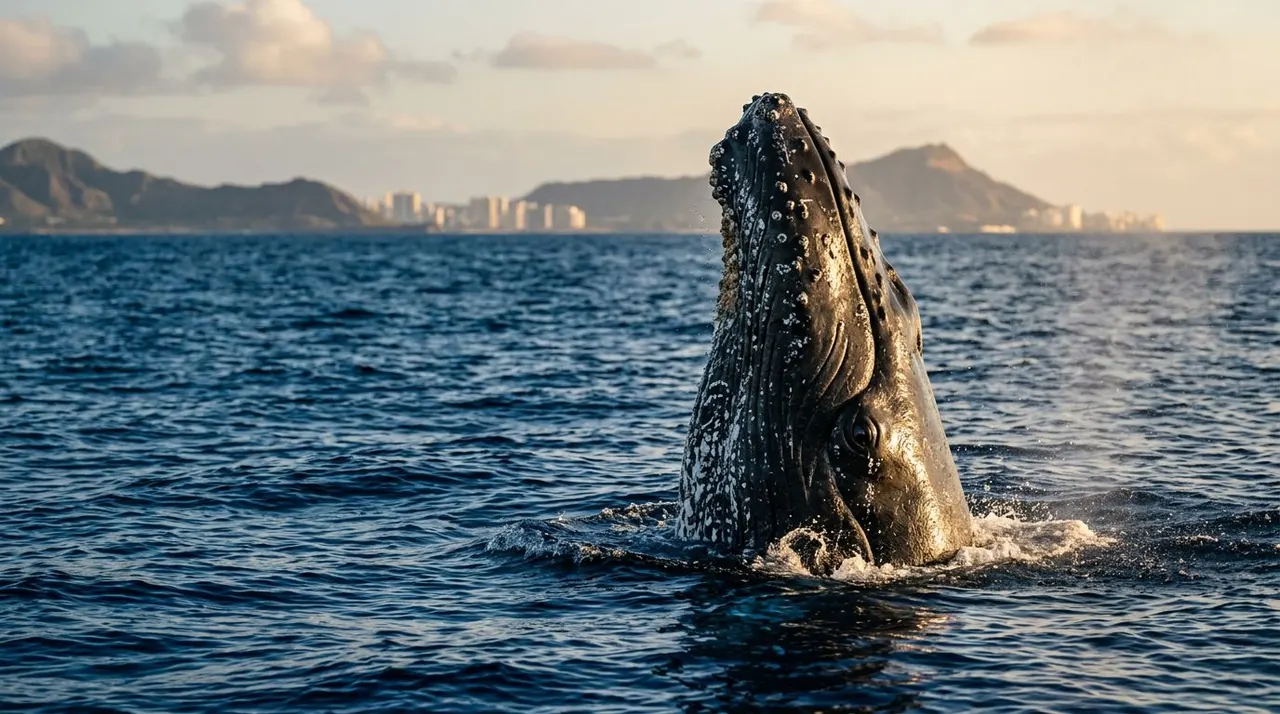
A humpback whale can vanish beneath the surface, then rise vertically with its eyes above the water. That brief, quiet appearance is called a spyhop, and it can become the most memorable moment of your whale watching Honolulu experience.
A spyhop isn’t the same as a breach, tail slap, or blow. Once you know what you’re seeing, you can read the whale’s movements more accurately and enjoy the encounter without expecting every sighting to become a dramatic jump.
Key Takeaways
- A spyhop happens when a whale raises its head vertically above the surface.
- Humpback whales may spyhop to look around, communicate, or respond to activity nearby.
- The behavior can last only a few seconds, so you need to watch the entire surface.
- Winter is the right season for whale watching tours around Honolulu, with Living Ocean Tours offering seasonal trips from January through March.
- Responsible viewing means giving whales space and observing without touching or calling them closer.
What a Whale Spyhop Looks Like
During a spyhop, a whale lifts its head through the surface in a near-vertical position. You may see the rostrum, or upper part of the head, along with one or both eyes. The whale might pause for a moment before slipping beneath the water again.
The movement is controlled and often surprisingly quiet. Unlike a breach, the whale doesn’t launch its body into the air. It also doesn’t expose its tail like it would during a fluke-up. You may see only the whale’s dark head and a small ring of water around it.
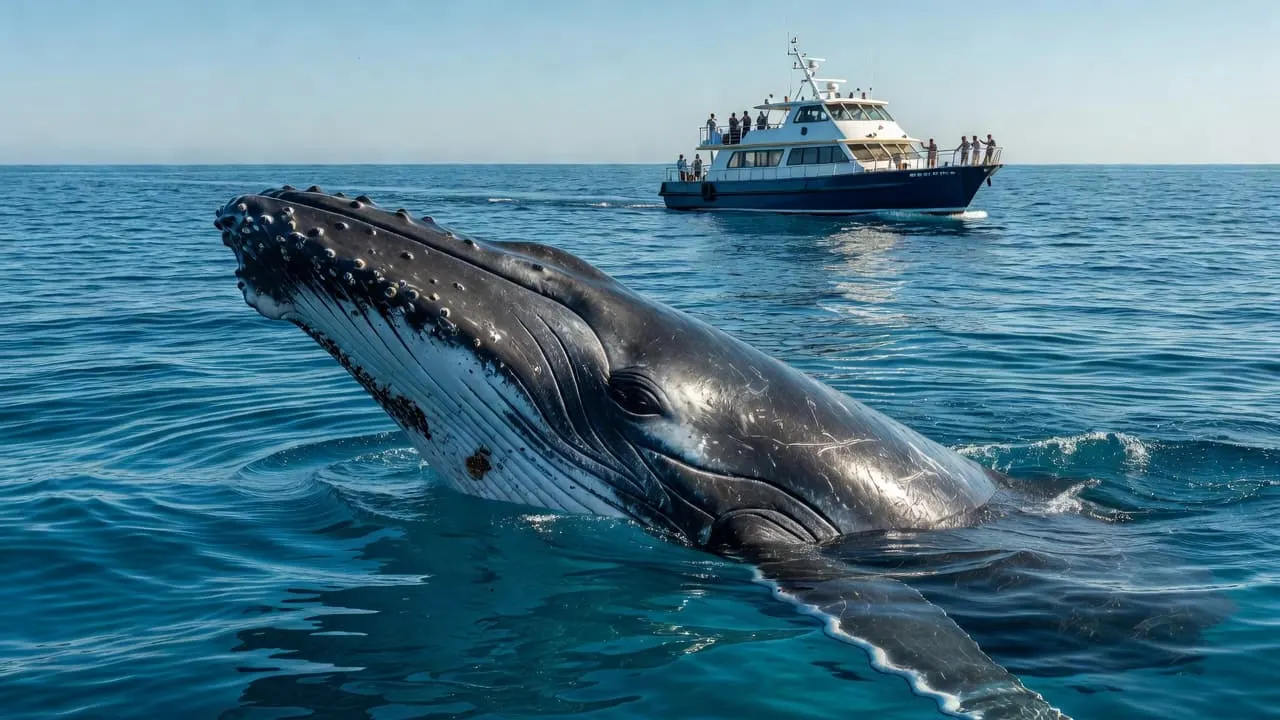
NOAA’s guide to whale behaviors describes spyhopping as a whale positioning itself vertically or at an angle while raising its head and eyes above the water. That definition helps you separate a spyhop from other surface behaviors.
You may also notice the whale turning slightly during the movement. That angle can make the behavior look like a slow roll, but the key detail is the head rising first. If the whale propels most of its body above the surface, you’re probably watching a breach instead.
A spyhop can happen close to a boat, but proximity doesn’t mean the whale wants contact. Humpbacks are wild animals, and their behavior remains their own choice. Your captain and crew should keep the vessel at a respectful distance while allowing you a clear view.
Why Humpback Whales Spyhop
No single explanation applies to every spyhop. Researchers connect whale behaviors with several possible purposes, including visual inspection, communication, and awareness of nearby whales or boats.
A whale may raise its head to see what sits above the waterline. Because the ocean surface distorts sound and limits visibility, lifting the eyes can provide a better look at the surroundings. The whale may also use the movement to observe another humpback.
Social behavior could play a role as well. Humpbacks travel, feed, rest, and communicate in changing patterns. A spyhop might help one whale maintain awareness of another animal nearby. However, you shouldn’t assume that every spyhop means a whale is greeting you or performing for the boat.
Water conditions can affect what you see. A calm surface gives a whale a clearer view, while wind and chop can make the behavior harder to spot. Light also matters. A whale’s head may blend into the ocean when you face glare, then become obvious when the sun sits behind you.
The cetacean surfacing behavior overview places spyhopping among the many movements whales and dolphins make at the surface. You can use that broader context to understand why a whale may appear, pause, and disappear without breaching.
During whale watching in Honolulu, your best response is patience. Watch where the whale last surfaced, scan nearby water, and listen to your guide. A second spyhop may happen several yards away from the first one.
How to Read a Spyhop on a Honolulu Whale Watch
Your guide may call out a whale’s direction before you see anything. Follow the call, but avoid staring at one fixed point. Humpbacks can surface ahead, behind, or to either side of the boat, and their next appearance may not occur where you expect.
Look for a small change in the water. A spyhop may begin with a smooth bulge, a dark shape, or a narrow vertical rise. It often lacks the large splash that makes a breach easy to notice. Once the head appears, keep your camera ready, but don’t let the screen take your attention away from the ocean.
A spyhop is a short viewing opportunity, not a guaranteed photo moment. Put your camera down often enough to watch the whale directly.
You can also track the whale’s breathing pattern. A humpback may surface to exhale, remain visible briefly, and then dive. A blow by itself doesn’t mean a spyhop is coming, but it gives you a useful point to watch.
Your captain may slow or reposition the boat for a better angle while following viewing rules. Keep your body inside the designated passenger area, and avoid sudden movement near railings. If you’re traveling with children, remind them to watch quietly and wait for the crew’s instructions.
The Marine Mammal Center’s visual guide to whale behaviors also covers breaching, lunge feeding, and other movements. Learning these differences before your trip makes the experience more rewarding because you can identify what you see instead of waiting for a single dramatic jump.
When to Plan Whale Watching in Honolulu
Humpback whales visit Hawaii during the winter season. Living Ocean Tours offers seasonal whale watching trips from January through March, which gives you a focused window for seeing these animals along the Waikiki coastline and nearby Oahu waters.
Sightings can vary by day. Ocean conditions, wind, visibility, and whale activity all affect what your crew finds. A calm morning may offer smooth viewing, while a breezier afternoon can create more surface movement. Your guide can’t control the ocean, but local experience helps the crew search responsibly and read changing conditions.
Book a time that fits your tolerance for motion. If you are sensitive to seasickness, choose a calmer part of the day when possible, eat a light meal, and take any motion-sickness medicine according to its instructions. Stay near the center of the vessel, where movement is often less noticeable, and spend time looking at the horizon.
Wear clothing that handles wind and sun. A light layer, sunglasses with a secure strap, reef-conscious sunscreen, and a hat can make your trip more comfortable. Bring a phone or camera with a wrist strap, but keep both hands available when moving around the boat.
Respectful whale watching protects the experience for everyone. Never reach toward a whale, throw anything into the water, or ask the captain to move closer. Keep voices low when an animal surfaces, follow crew instructions, and accept that a whale may choose to remain underwater.
You can review Living Ocean Tours experiences before choosing the trip that fits your group. The company’s whale watching season works well for couples, families, and first-time wildlife viewers who want a guided ocean experience near Waikiki.
Choose a Comfortable Whale Watching Boat
Living Ocean Tours departs from Kewalo Basin Boat Harbor, only minutes from Waikiki Beach. Its Coast Guard-inspected, custom-built double-decker vessels, the Coral Kai and Lokahi, provide open viewing areas, shaded seating, onboard restrooms, dry storage, and sturdy ladders.
The Lokahi also includes a SeaKeeper stabilization system that helps reduce rolling motion. That feature can make a difference when you’re watching the horizon, helping you stay comfortable during the search for a surfacing whale. The Coral Kai offers generous open-deck space for guests who want a broad view of the ocean.
The company is the only tour company with professional snorkel guides, and its crew brings that same focus on safety, clear instruction, and marine respect to wildlife outings. You don’t need previous boating or snorkeling experience to join. Listen to the pre-trip briefing, ask questions, and let the crew help you find the best viewing position.
If you want to check current whale tour dates, use the booking option below.
Conclusion: Watch the Moment, Respect the Whale
A spyhop gives you a rare look at a humpback’s head and eyes above the ocean. It may help the whale inspect its surroundings or stay aware of other animals, but you can’t assign one fixed meaning to every appearance.
When you choose whale watching in Honolulu during the January-through-March season, stay patient and watch the full surface. The best encounter may last only seconds, yet a respectful view of that moment can stay with you long after the boat returns to shore.


