
Whale Watching Honolulu: How Humpbacks Use Their Pectoral Fins
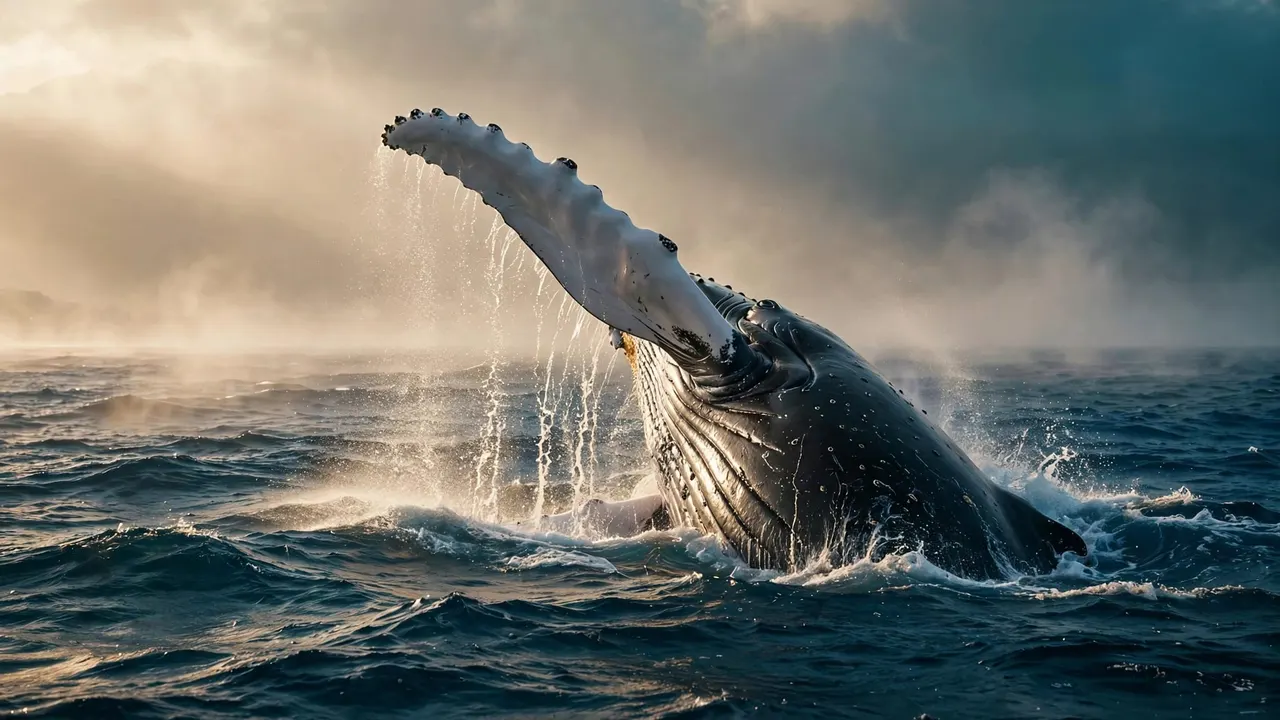
A humpback’s pectoral fin can rise from the Pacific like a white wing, then disappear beneath the surface in one slow sweep. During whale watching Honolulu visitors often notice these enormous fins before they see the whale’s full body.
Living Ocean Tours offers seasonal cruises from Kewalo Basin Boat Harbor, close to Waikiki, where you can watch for humpbacks while learning to recognize the movements that make each encounter memorable. Once you know what those fins do, every roll, slap, and turn has more meaning.
Why whale watching Honolulu reveals remarkable fins
Humpbacks have the longest pectoral fins of any whale species. Their fins can reach roughly one-third of their body length, which is extraordinary on an animal that may grow to nearly 60 feet.
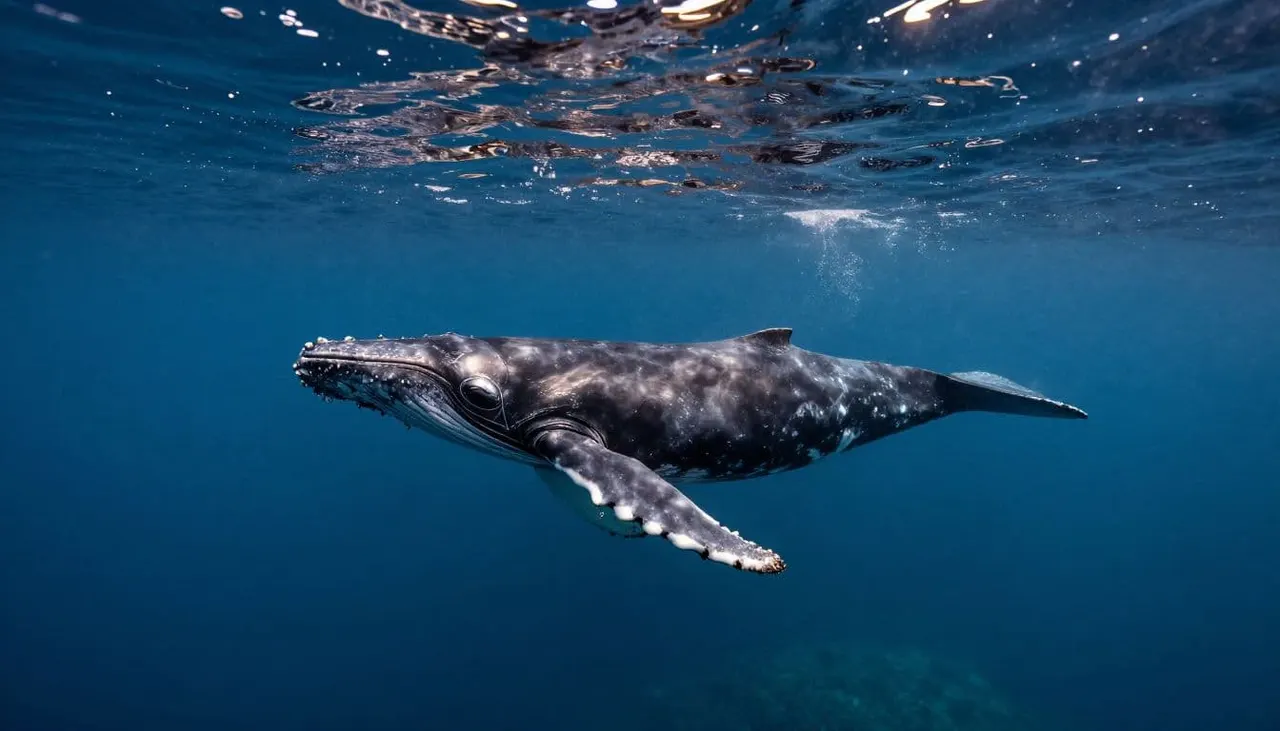
Unlike the narrow flippers of many other whales, a humpback’s fins are broad, flexible, and often pale underneath. When the whale turns beneath clear Hawaiian water, their bright coloring can flash through the blue.
Their shape helps them steer
A whale’s tail flukes supply the forward power. Pectoral fins work more like control surfaces, helping the animal turn, slow down, roll, and hold position.
That control matters when a humpback swims beside a calf, shifts direction near the surface, or moves through a group of whales. A large body takes planning to redirect, so those fins give the whale surprising agility.
Bumps along the leading edge are useful
Look closely at photographs of a humpback fin and you may see rounded bumps along its front edge. These bumps are called tubercles. They are a defining feature of humpbacks, along with the small knobs on their heads.
Scientists have studied how tubercles affect water flow. Their shape can help a fin maintain lift at steep angles, which supports tight turning and controlled movement. You won’t see that detail from every boat, but knowing it is there changes how you view a simple fin lift.
NOAA Fisheries’ humpback whale profile offers a helpful overview of the species that visits Hawaii each winter.
Pectoral fins support feeding and social movement
Humpbacks are built for more than long-distance travel. Their fins help them make fine adjustments when the water becomes busy, whether they are feeding in other parts of their range or moving among other whales in Hawaii.
Fine turns take less effort
A humpback may bank through the water with one fin angled outward and the other drawn closer to its body. This movement helps it change direction without relying only on its flukes.
You might see a whale roll on its side before lifting a fin. At the surface, that posture can look casual. Underwater, it is a controlled repositioning of a massive animal.
A fin may also stabilize the body while the whale rests or moves slowly. For a calf still learning to swim, following close to its mother provides protection and a useful model for these movements.
Fins can help manage a feeding maneuver
Humpbacks feed mostly outside Hawaii, where some populations use complex methods to gather small fish. Their pectoral fins help with turning and positioning during these maneuvers.
Hawaiian waters are primarily a breeding, calving, and resting destination for the whales you see on a winter cruise. Still, the same anatomy that helps a whale feed far north helps it maneuver around Oahu’s coastline.
What a pectoral fin slap may tell you
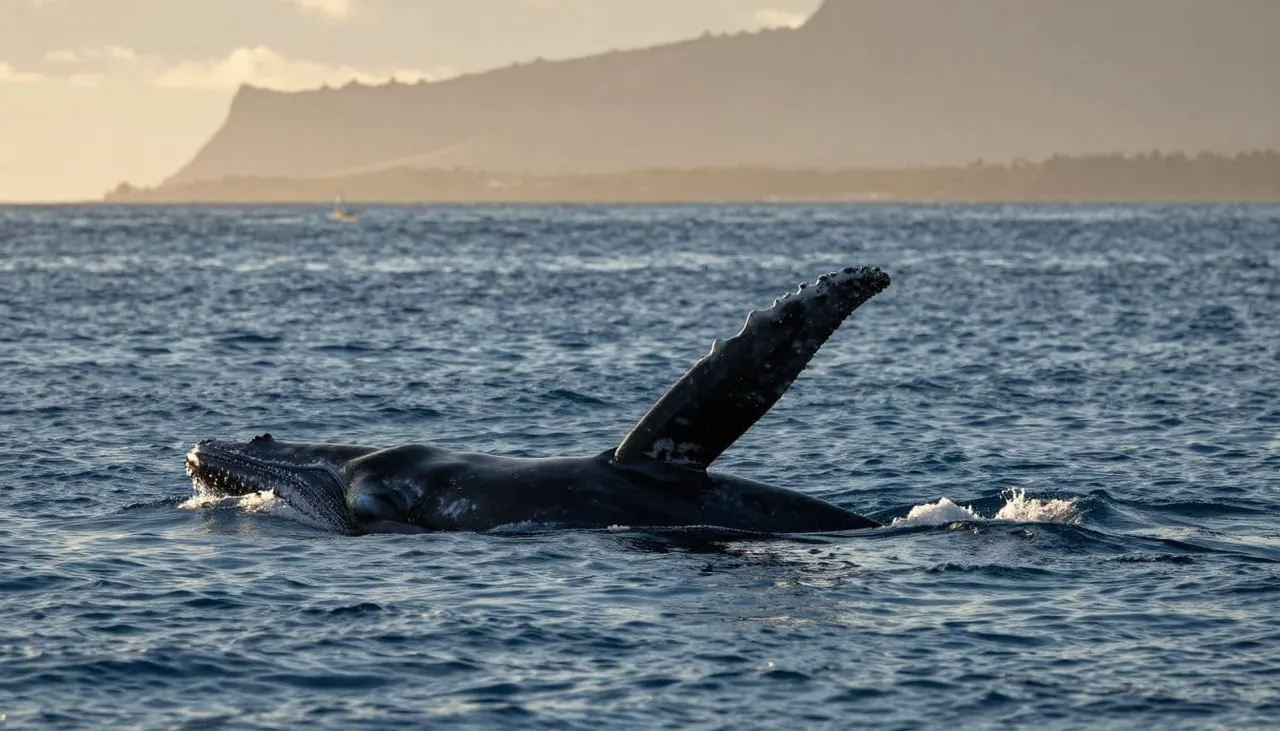
A pectoral fin slap happens when a humpback raises one fin and strikes it against the water. The sound can travel across the surface, and the splash may be visible from far away.
The behavior is dramatic, but it does not translate into one fixed message. Whales may slap during social interactions, courtship activity, excitement, or when nearby whales are present.
A fin slap is a behavior to observe, not a signal you can reliably interpret as a single emotion or message.
Watch for the setup before the splash
You may spot a humpback lying on its side with one long fin lifted above the water. Sometimes the whale holds the fin there briefly, then lets it fall. Other times, the movement comes quickly and repeats.
A slap can be a welcome sight during whale watching Honolulu because it gives you a clear view of the fin’s length and underside. However, whales set the schedule. A quiet sighting with a steady blow and a rolling back is just as valuable.
Other surface behaviors add context
Fin slaps often appear alongside other visible actions. A whale may lobtail with its flukes, breach completely, or spyhop with its head above the surface.
Keep your eyes on the water after one splash. A whale may surface again nearby, although it may also travel on without repeating the behavior. Patience gives you the best chance to notice the sequence rather than only the biggest splash.
When to look for humpbacks off Honolulu
Humpbacks migrate to Hawaii during winter to breed and give birth. Living Ocean Tours runs seasonal whale watching trips from January through March, which places you in the heart of the island’s most reliable viewing period.
Morning conditions are often calmer, yet whales can appear throughout the day. Wind, swell, visibility, and the whales’ own movement affect every outing.
Read the first clues on the water
Start by scanning the horizon for a blow. In bright sun, it may look like a brief white puff above the water. You may then see a dark back, a dorsal fin, or the broad sweep of a tail.
A patient captain and crew can interpret changing conditions without crowding wildlife. During whale watching Honolulu, you should also expect stretches of open water. Those quiet minutes make a close, natural sighting feel earned.
Respectful distance protects whales
Federal rules prohibit approaching humpback whales within 100 yards in Hawaii waters. Your boat should slow down and give the animals space, especially when a calf is nearby.
Review NOAA’s vessel-strike guidance before heading out if you plan to boat on your own. Watching from a responsible distance protects whales and gives them room to choose their path.
Choose a Honolulu whale cruise built for comfort
You want clear views, knowledgeable crew members, and a boat that feels comfortable when the trade winds pick up. Living Ocean Tours operates Coast Guard-inspected double-decker vessels from Kewalo Basin Boat Harbor, minutes from Waikiki.
The Coral Kai provides open-deck viewing space, shaded seating, restrooms, and dry storage. The Lokahi also features a SeaKeeper stabilization system that helps reduce rolling, which can make a real difference if you are prone to seasickness.
Living Ocean Tours is the only tour company with professional snorkel guides. That same hands-on marine knowledge adds depth to a seasonal whale cruise, while the crew keeps the experience welcoming for couples, families, and first-time ocean visitors.
Browse Honolulu humpback whale watching tours when you want a Waikiki departure that pairs comfort with responsible wildlife viewing.
If a winter whale cruise is on your Oahu wish list, CHECK AVAILABILITY before your preferred date fills.
Prepare for a better time on the water
Comfort lets you focus on the water instead of your gear. Bring a light layer because ocean breezes can feel cool after a warm morning in Waikiki.
Polarized sunglasses can reduce glare, although you should never stare toward the sun. Secure your hat, charge your phone, and use a wrist strap or dry pouch for cameras.
Photograph the behavior, then lower the camera
Set your camera before the boat reaches an active whale area. A fast shutter speed helps freeze a fin slap, but you should not spend the entire trip looking through a screen.
Watch the whale’s behavior with your own eyes first. Then take a few photos when it surfaces nearby. You will remember the blow, the sound of the splash, and the scale of the fin better when you stay present.
Help protect the encounter
Follow crew instructions, keep voices calm near active whales, and never ask for the boat to move closer. Responsible viewing is part of what makes a wildlife sighting feel special.
If you own a boat, NOAA offers its free See A Spout whale-safety course. The course covers safer choices around whales and other marine mammals.
The fin is only part of the story
A humpback’s pectoral fins give you a visible clue to how a huge animal turns, balances, socializes, and moves through the Pacific. Their size is impressive, yet their control is what makes them unforgettable.
During whale watching Honolulu, give each whale the space to behave naturally. A single fin rising above the water can become the moment you remember most from your time on Oahu.


