
Whale Watching Honolulu: What Your Tour Price Includes
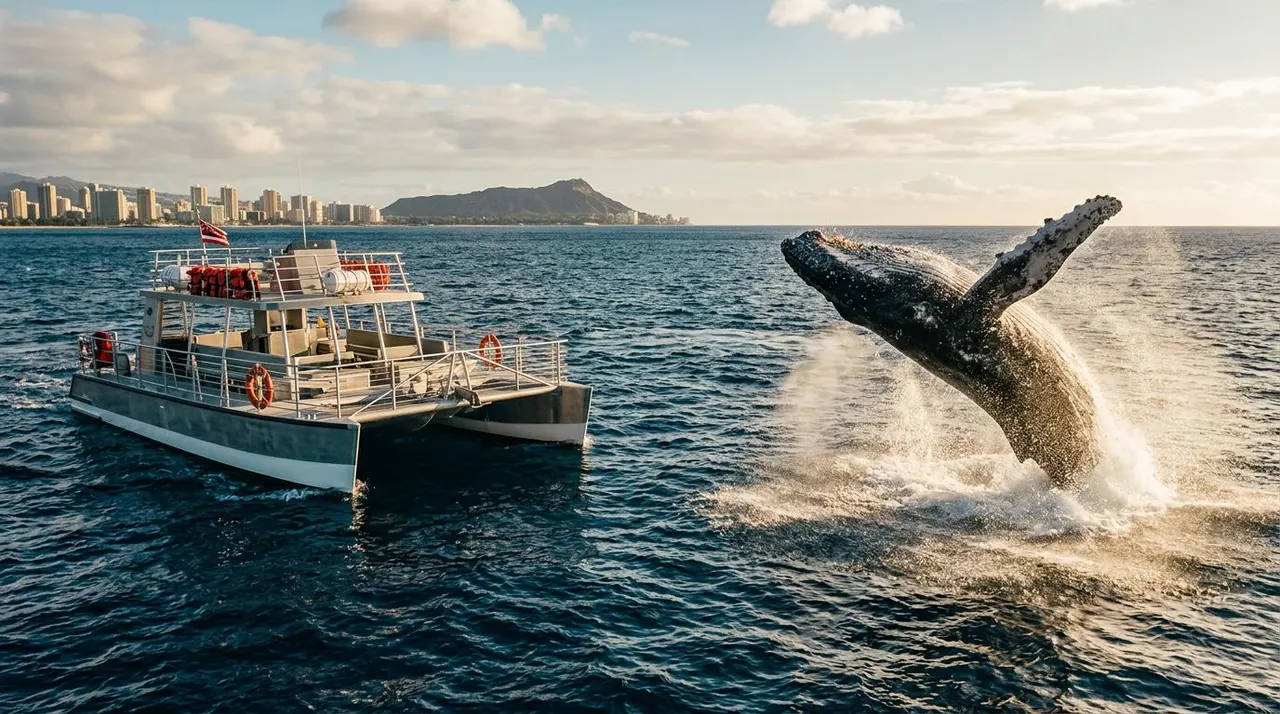
Seeing a humpback breach off Waikiki can change the pace of your whole vacation day. However, the experience starts before the first spray breaks the surface, when you choose a boat with enough comfort, guidance, and viewing space.
With whale watching Honolulu, your ticket should cover more than a seat and a hopeful ride. Living Ocean Tours departs from Kewalo Basin Boat Harbor, minutes from Waikiki, so you spend your time scanning the coastline and open Pacific.
Some fares cover passage alone. Others include refreshments, a restroom, wildlife narration, or a return-trip promise if whales don’t appear. Knowing the difference lets you book with confidence.
Whale Watching Honolulu: Read the Price as a Package
A whale watch is a seasonal wildlife trip, so the price reflects the boat, crew, route, safety equipment, harbor operations, and time spent searching. You are paying for a well-run outing that gives whales room to move naturally.
When you compare whale watching Honolulu departures, avoid choosing on price alone. Check the trip length, boat layout, departure harbor, comfort features, and sighting policy before you commit.
Your fare supports a safe on-water experience
A quality ticket typically includes boarding, a licensed captain, trained crew, vessel fuel, safety equipment, and access to viewing areas. The crew also watches water conditions and wildlife behavior, which matters when families and first-time boat guests are aboard.
You should expect a clear itinerary, an easy-to-find departure point, and basic instructions before leaving the dock. On a good boat, you can move between shaded seating and open deck space without competing for one narrow view.
The price does not buy a close approach to a whale. Federal protections set the distance, and a respectful captain keeps the boat where it belongs.
Several details can change the listed fare
Tour duration is one of the biggest differences. A short cruise can fit easily between breakfast and a beach afternoon, while a longer outing gives the crew more time to search different waters.
Boat type also affects cost. A large double-decker vessel may offer more room, restrooms, and wraparound views. Smaller boats can feel more personal but often carry fewer guests. Food, drinks, hotel transportation, gratuity, taxes, and booking fees may also affect your final total.
Read the booking page carefully. A low starting rate can still be a strong value when the essentials are included and the timing fits your plans.
Book During Honolulu’s Reliable Whale Season
Humpback whales visit Hawaii each winter to breed and give birth. NOAA’s Hawaii humpback season guidance describes the broader season as generally running from November through May, although sightings vary across those months.
Living Ocean Tours schedules its seasonal Waikiki whale watches from January 2 through March 31, when your odds are strongest. The current Waikiki whale watching tour starts at $49 per person and runs for 1.5 hours. It welcomes guests ages 3 and up.
Peak dates give you better odds, not a scripted show
January through March brings the most dependable window for whale watching off Honolulu. You might see a broad back rise beside the boat, a tail slap, a calf with its mother, or a full breach that sends everyone toward the rail.
Still, whales choose the moment. Conditions, migration patterns, and the animals’ behavior change every day. A crew can search known habitat and spot signs on the water, but it cannot direct a humpback to perform.
Living Ocean Tours offers Waikiki views, Diamond Head scenery, wraparound seating, onboard amenities, refreshments, and a restroom. The company is also the only tour company with professional snorkel guides, a difference you can appreciate when you book its guided reef experiences.
Understand the sighting guarantee before departure
A whale sighting guarantee adds real value, but the terms matter. Living Ocean Tours offers a free return trip if whales are not seen, provided you use it during the same whale-watch season.
A return-trip policy protects your plans without pressuring the captain to crowd wildlife for a sighting.
Once you have chosen your travel dates, select CHECK AVAILABILITY to view open departures.
What a Whale Watch Tour Price Can Include
Your ticket should make the time on the water comfortable, not complicated. Before booking, check the tour details for the features that matter most to your group.
Boat amenities make a difference offshore
A restroom is more useful than it sounds when you are traveling with children or avoiding an early return to shore. Shaded seats also matter on bright Hawaii mornings, while an open upper deck gives you a wider field of view.
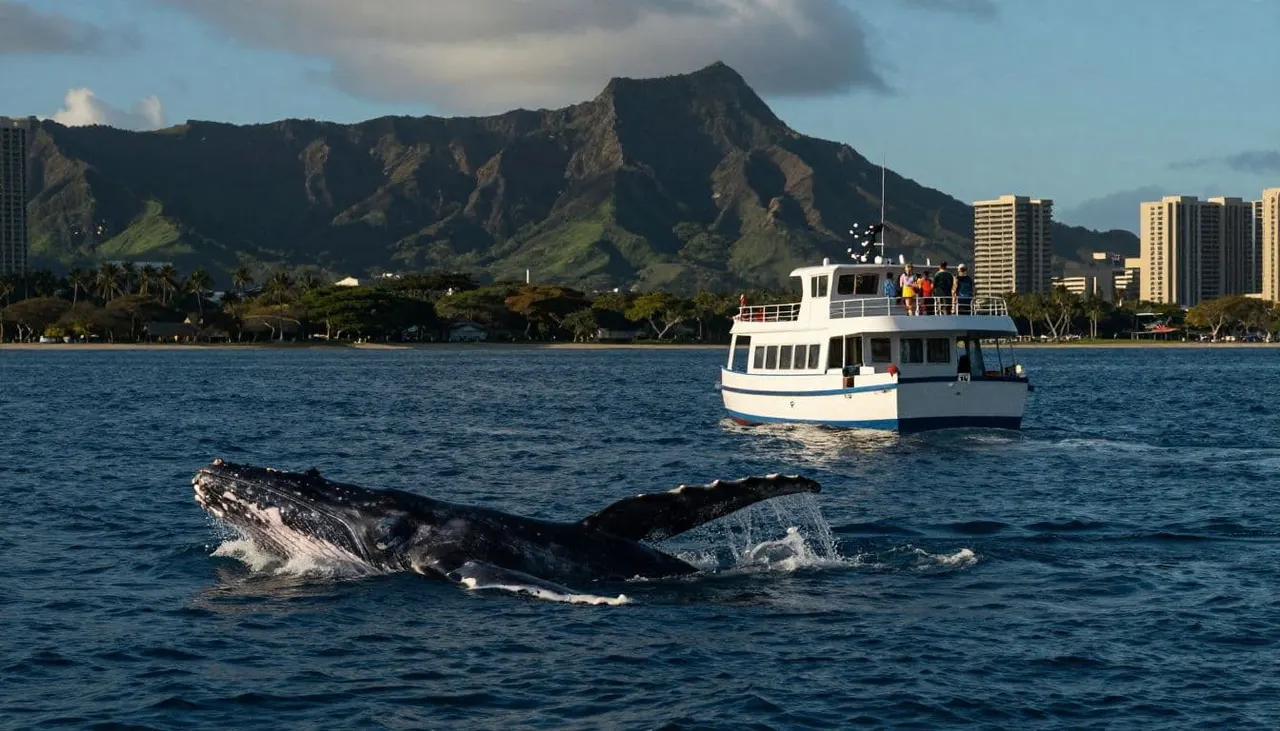
Living Ocean Tours lists double-decker viewing space, wraparound seating, onboard refreshments, whale facts, and a restroom with its Waikiki whale-watch experience. You can watch the Honolulu shoreline, Diamond Head, and the horizon without feeling boxed into a cabin.
Here is how those inclusions support your trip:
| Included feature | Why it matters |
|---|---|
| A 1.5-hour cruise | Fits easily into a Waikiki vacation day |
| Double-decker viewing areas | Gives you more angles when whales surface |
| Restroom and seating | Keeps families and nervous boat guests comfortable |
| Whale information from the crew | Helps you recognize behaviors you see |
| Same-season return policy | Gives you another chance if whales stay out of view |
The strongest value is a boat that feels prepared before wildlife appears, not one that only looks good in a listing.
Ask about items outside the base ticket
Transportation from your hotel may be separate. So might alcoholic drinks, special food requests, gratuities, or a private charter upgrade. If you are prone to motion sickness, ask whether the boat has shaded seating, an enclosed area, or stabilization features.
You should also confirm the cancellation policy. Ocean conditions can change quickly, and a responsible operator may cancel or reschedule when weather makes the ride unsafe or unpleasant.
Respectful Viewing Is Part of the Experience
The best whale encounter happens on the whales’ terms. A breach looks even more impressive when you know the captain did not chase it.
Humpbacks need a 100-yard buffer
Federal rules prohibit approaching humpback whales within 100 yards in Hawaiian waters. NOAA’s marine-life viewing distance rules apply to boats, kayaks, swimmers, drones, and other ways people might try to get closer.
That distance does not make the experience less exciting. A humpback is enormous, and a tail slap or breach remains visible from far away. In some cases, a curious whale may choose to approach a vessel. The crew still must avoid changing course to reduce the distance.
Mothers and calves deserve extra care. Give them space, keep voices low near viewing areas, and never expect a captain to position the boat in their path.
Responsible captains adjust to whale behavior
A respectful crew slows down, observes, and changes course rather than pursuing a moving animal. NOAA’s boating guidance recommends six knots within 400 yards of whales when approaching or leaving the area.
You can help by keeping clear of crew work areas and listening when the captain asks guests to shift sides. Move calmly, hold children securely near rails, and keep your camera strap around your wrist.
Those small choices protect the wildlife and help everyone enjoy a steadier, safer view.
Questions to Ask Before You Book Your Cruise
A few direct questions can reveal whether a whale-watch fare fits your group. You do not need a long checklist, but you should understand the basics before paying.
Confirm timing, comfort, and age requirements
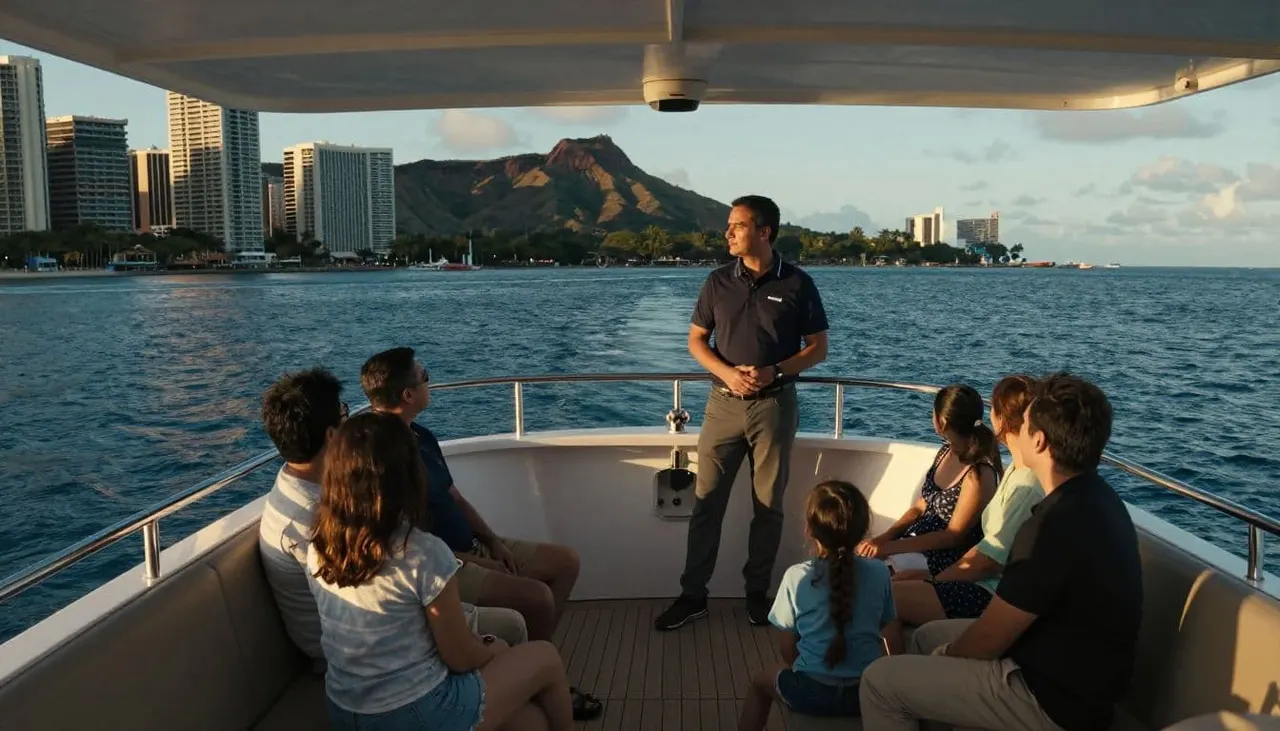
Ask whether the listed duration starts at departure or includes check-in time. Arrive early enough to park, find the dock, and hear the safety briefing without rushing your family.
Check the age policy if you are traveling with young children. Living Ocean Tours welcomes guests ages 3 and up for its whale watch. If anyone in your group worries about seasickness, choose a morning departure when conditions are often calmer and sit where the crew recommends.
Check the total cost and return policy
Before checkout, verify taxes, fees, and optional purchases. Then read the no-sighting policy closely. A free return trip is valuable only if you will still be on Oahu during the same season.
If your trip falls outside January through March, compare other Honolulu ocean tours that fit the season and your group’s interests. Turtle snorkeling, wildlife cruises, sunset sails, and private charters can keep your ocean day memorable when whale watches are not operating.
Choose the Experience, Not Only the Lowest Fare
Whale watching Honolulu is worth booking when the fare gives you a comfortable boat, a capable crew, clear inclusions, and room for wildlife to remain wild. A lower price has value only when it still supports a safe, enjoyable outing.
Choose dates in the heart of the season, read the sighting policy, and ask about the amenities your group will use. The right cruise leaves you with ocean memories, not surprise charges or rushed decisions.


