
Whale Watching Honolulu: Arrive Early at Kewalo Basin
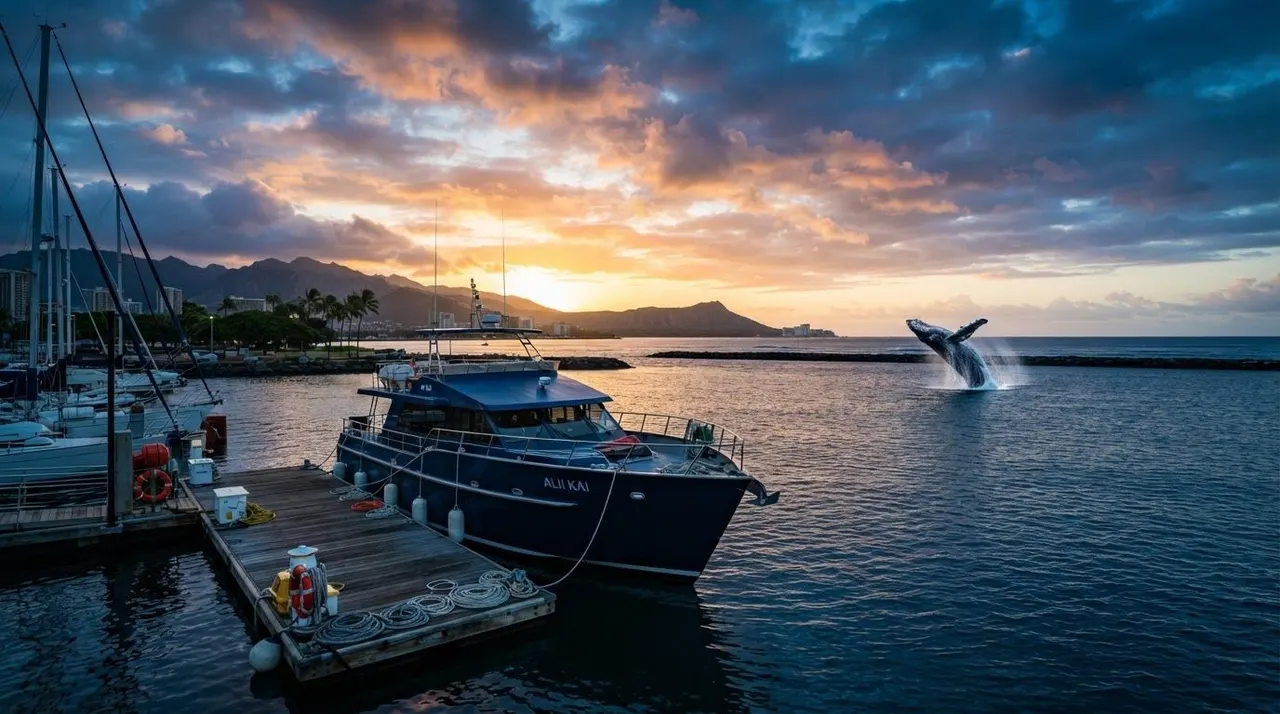
A whale can surface while you’re still circling for parking. If you searched for whale watching Honolulu, the practical answer is simple: arrive at Kewalo Basin at least 20 minutes before departure, then add extra time if you’re driving.
Living Ocean Tours departs from Slip B-01 at Kewalo Basin Boat Harbor, just minutes from Waikiki. With the right arrival plan, you’ll have time to check in, find your boat, and settle aboard without starting your excursion in a rush.
How early should you arrive for whale watching Honolulu?
Plan to arrive at least 20 minutes before your scheduled departure. That gives you time to walk from the parking area, locate Slip B-01, check in, and follow the crew’s boarding instructions.
A posted Living Ocean Tours listing shows a 4:30 p.m. check-in for a 4:45 p.m. departure. Your confirmation should provide the exact time for your cruise, so use that information instead of relying on the departure time alone.
Arriving at the last minute creates unnecessary pressure. You may need to find parking, use the restroom, apply sunscreen, and get your family organized before boarding. Boats also operate on a schedule, and a late arrival may affect your ability to board.
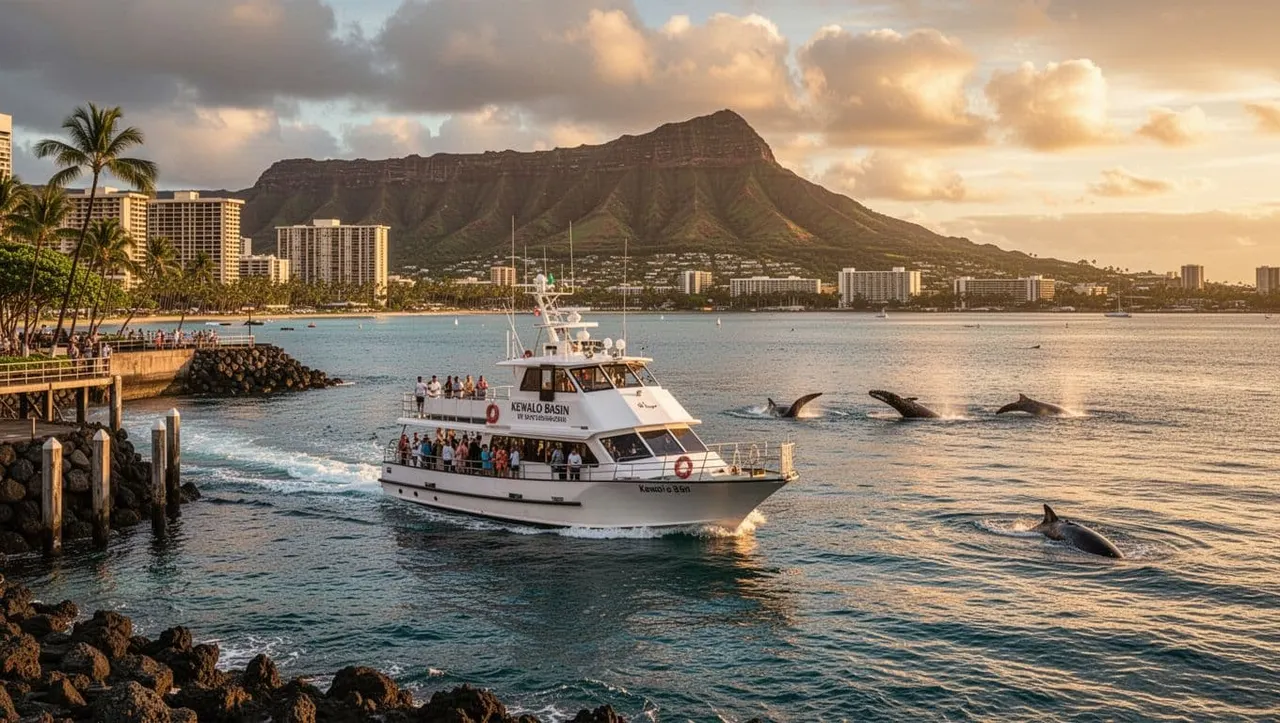
Add time for parking
If you’re driving, plan more than the 20-minute check-in minimum. Living Ocean Tours’ Kewalo Basin guidance recommends arriving 30 to 45 minutes early on weekdays and 45 to 60 minutes early on weekends.
Paid parking is available at Kewalo Basin Harbor, but spaces and traffic conditions can change. Weekend mornings, holidays, and popular travel periods deserve the larger buffer. For an early morning departure, check the harbor’s parking conditions and consider arriving before 7 a.m. if your schedule requires it.
Families should use the longer buffer
Traveling with children means every step takes longer. You may need to manage snacks, sun protection, swimwear, and restroom breaks before you reach the boat.
Arriving 30 minutes early gives you breathing room. You can also help children get comfortable with the harbor before stepping aboard. That calm start matters when you’re preparing for an ocean trip.
Finding Kewalo Basin from Waikiki
Kewalo Basin Boat Harbor is at 1125 Ala Moana Boulevard, Honolulu, HI 96814. Living Ocean Tours operates from Slip B-01, which is in the harbor area near Ala Moana Boulevard.
Although Kewalo Basin is close to Waikiki, traffic along Ala Moana Boulevard can slow your trip. Leave your hotel earlier than the map’s ideal driving estimate, especially during busy weekend periods.
Confirm the harbor and slip
Search for Kewalo Basin Boat Harbor rather than Waikiki Beach. A whale-watching boat doesn’t leave directly from the beach, and heading to the wrong waterfront area can cost valuable time.
Before leaving your hotel, review your reservation confirmation. Check the operator name, departure time, meeting point, and slip information. Living Ocean Tours lists its Honolulu whale watching departures from Kewalo Basin, giving you a reliable reference for the harbor location.
Plan the final walk
Once you arrive, allow time to walk from your parking space to the meeting point. Harbor layouts can feel unfamiliar, particularly when several boats are loading guests at the same time.
Keep your reservation details easy to access. If you’re using a rideshare, allow enough time for the driver to reach the harbor entrance and for you to walk to Slip B-01.
What happens when you arrive at Kewalo Basin?
Your first step is check-in with the tour operator. Keep your confirmation ready and follow the crew’s instructions when you reach the meeting point.
The pre-boarding period is also a good time to use the restroom, apply sunscreen, secure your belongings, and ask questions about the trip. Living Ocean Tours’ vessels include onboard restrooms, shaded seating, dry storage, and sturdy ladders for safe movement around the boat.
Check in before you look for the perfect seat
You may want an unobstructed view as soon as you board, but check in first. The crew can direct you to the correct vessel and explain where you can sit or store your belongings.
If you’re traveling with children, organize your group before boarding. Keep loose items secured and use the shaded areas when you need a break from the sun.
Use the boat’s comfort features
Living Ocean Tours operates Coast Guard-inspected, custom-built double-decker vessels called the Coral Kai and the Lokahi. The Coral Kai offers generous open-deck space, while the Lokahi includes a SeaKeeper stabilization system designed to reduce rolling.
Your assigned vessel can vary by schedule. Either way, you can expect helpful crew members, open ocean views, and comfortable areas for watching the water.
When is the best season for whale watching in Honolulu?
Humpback whales visit Hawaii during the winter months. NOAA says the season generally runs from November through May, with the greatest abundance usually occurring between January and March. You can review NOAA’s Hawaiian Islands boating guide for seasonal and wildlife-viewing information.
Living Ocean Tours offers seasonal humpback whale-watching tours from January through March. Since whale behavior is unpredictable, no responsible operator can promise a specific breach, tail slap, or close view. The crew can provide local knowledge, but the whales decide what happens on the water.
Choose your date with flexibility
If whales are a major part of your Honolulu plans, schedule the tour earlier in your vacation rather than on your final day. That gives you more flexibility if weather affects the schedule or you want another ocean outing.
A single trip can produce several sightings, distant blows, or quiet stretches between activity. Each experience is different. Watching patiently makes the trip more rewarding and respects the animals’ natural behavior.
Pick a departure that fits your plans
The best departure time is one that lets you arrive relaxed and prepared. Avoid choosing a time that forces you to race from the airport, breakfast, or another activity.
Check the forecast and your confirmation before leaving. Ocean conditions can change, so keep your schedule open enough to follow the operator’s updates.
What should you bring on a Honolulu whale-watching tour?
Wear comfortable clothing that can handle sun, wind, and ocean spray. A light layer helps if the boat feels cool while moving, even on a warm Honolulu day.
Bring sunglasses, a hat with a secure fit, and sunscreen that follows Hawaii’s marine-protection rules. A phone or camera in a waterproof pouch can help protect your belongings from spray. Use the boat’s dry storage when the crew directs you to do so.
Prepare for motion
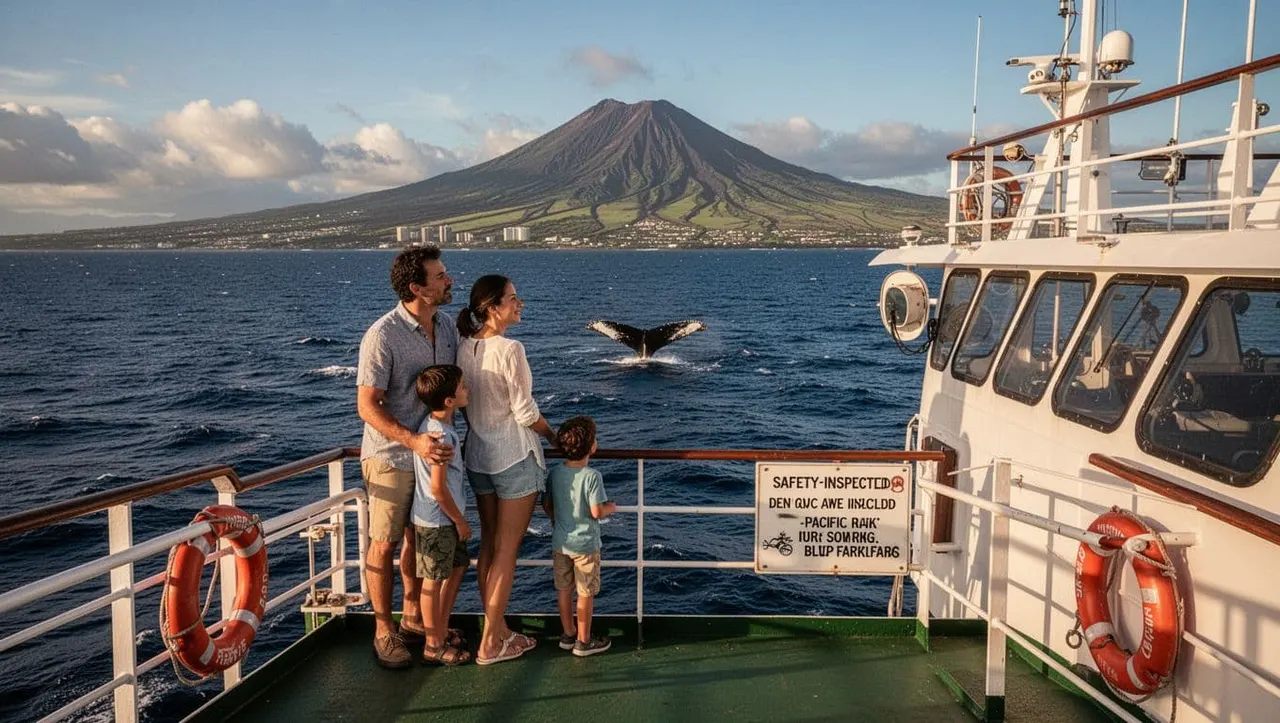
If you tend to feel seasick, tell the crew before departure. They can suggest a comfortable place to sit and explain how to move around safely.
Many guests prefer a light meal before boarding rather than arriving overly full. Follow any medication instructions from your healthcare professional, and avoid waiting until you’re already uncomfortable before asking for help.
Families should also bring water and any small essentials children need during the trip. Keep bags compact so they don’t take up limited seating or deck space.
Follow responsible whale-watching rules
Humpback whales are protected in Hawaiian waters. NOAA’s Hawaiian Islands sanctuary information explains the protections that apply during whale season and throughout the year.
Federal regulations prohibit approaching humpback whales within 100 yards, or 91 meters. The rule applies to boats, kayaks, swimmers, drones, and other forms of approach. Your captain should position the vessel responsibly and wait for the whales to move naturally.
Observe without chasing
NOAA guidance also recommends slowing to no-wake speed near marine mammals and placing the engine in neutral when whales approach the boat. Vessels shouldn’t chase, encircle, intercept, or leapfrog whales.
The guidance also says to avoid separating a mother and calf and to limit observation to 30 minutes or less. These rules protect the animals while giving you a respectful opportunity to watch them.
You won’t enter the water with humpback whales. Keep your distance, listen to the crew, and remember that wildlife viewing is about observation rather than interaction.
Why book a Kewalo Basin whale watch with Living Ocean Tours?
Living Ocean Tours combines a convenient Kewalo Basin location with professional crew support and comfortable boats. The company is the only tour company with professional snorkel guides, so you also have an experienced option when you want to add a reef adventure to your Honolulu itinerary.
The Coast Guard-inspected fleet includes shaded seating, restrooms, dry storage, open viewing areas, and heavy-duty ladders. The Lokahi’s SeaKeeper stabilization system adds extra comfort for guests who worry about rolling, while the Coral Kai provides spacious open-deck seating.
For whale watching Honolulu travelers can book near Waikiki, this location keeps the harbor easy to reach without sending you across the island. The crew also emphasizes responsible wildlife viewing, including observing marine life without touching or disturbing it.
When your travel dates fall within whale season, review the available departure times and CHECK AVAILABILITY before planning the rest of your day.
Plan your arrival before you leave Waikiki
The safest plan is to reach Kewalo Basin 20 minutes before departure. If you’re driving, arrive 30 to 45 minutes early on a weekday and 45 to 60 minutes early on a weekend.
Check your confirmation for Slip B-01, leave room for parking, and bring clothing suited to sun and wind. Once aboard, follow the crew’s guidance and give the whales plenty of space.
A calm arrival lets you focus on the reason you booked the trip: watching humpbacks surface against the Honolulu coastline. For whale watching Honolulu visitors remember long after their vacation, arriving early is one of the easiest parts to get right.


