
Whale Watching Honolulu: Why Humpbacks Have Throat Pleats
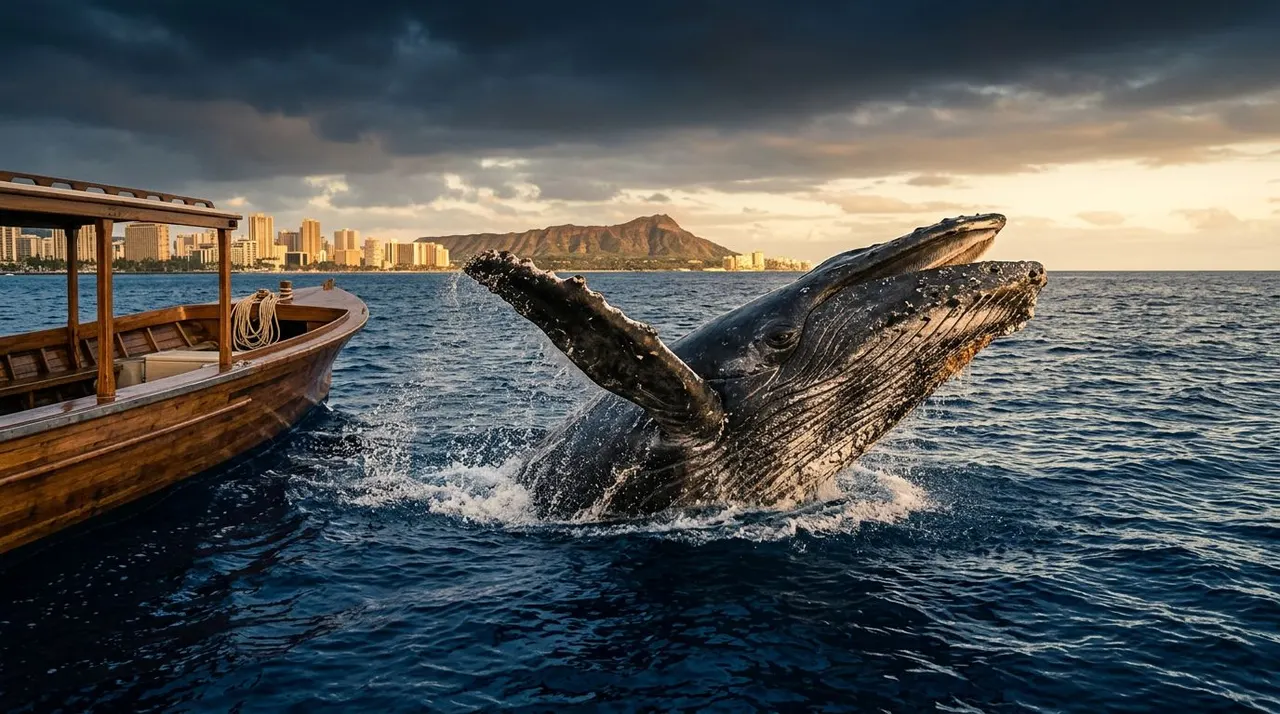
If you’re searching for whale watching Honolulu, you’re probably hoping for more than a distant splash. You want to understand what you’re seeing when a humpback rises beside the boat, opens its mouth, or arches its massive body above the Pacific.
Those folds beneath a humpback’s jaw are called ventral pleats. They help the whale take in huge amounts of water while feeding, even though humpbacks visiting Hawaii usually come for breeding and calving rather than meals. Living Ocean Tours gives you a comfortable way to observe these seasonal visitors along the Waikiki coast, with professional guides who help you read each behavior.
Whale watching Honolulu starts with a remarkable feeding design
Humpback whales are baleen whales, which means they filter food instead of biting it with teeth. Adults can reach about 60 feet long and weigh up to 40 tons. Their enormous size requires an efficient way to collect small prey such as krill and schooling fish.
The pleats run along the underside of the whale’s lower jaw and throat area. When relaxed, they look like long ridges in the skin. During feeding, the folds stretch outward and allow the mouth and throat region to expand.
These grooves aren’t gills, and they don’t help the whale breathe. Humpbacks breathe through blowholes on top of their heads, as explained in the Smithsonian Ocean Portal’s whale guide. The pleats have a different job: they create a flexible pouch for water and prey.
A humpback’s mouth can hold an enormous volume of water during one feeding lunge. Without expandable skin, the whale couldn’t open its mouth wide enough to collect a dense patch of fish or krill. The pleats give the whale room to expand without placing damaging strain on its body.
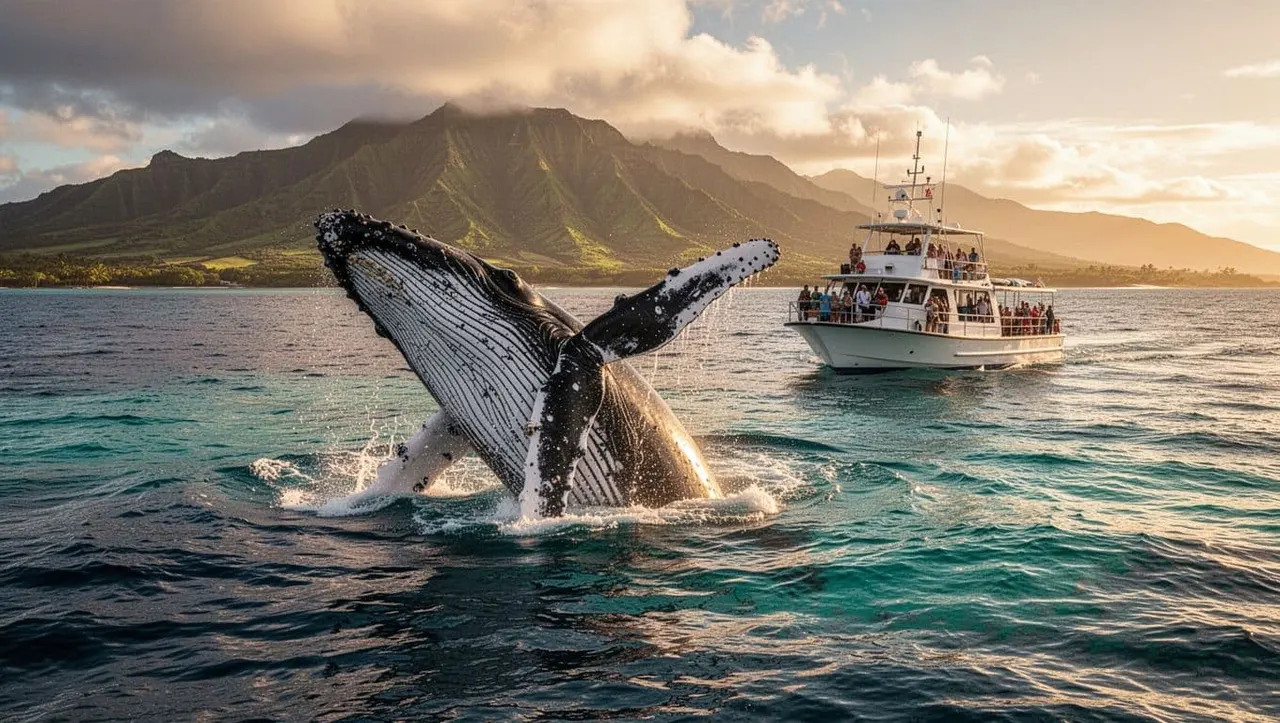
Ventral pleats are the expandable grooves beneath a humpback’s jaw.
How humpback throat pleats work during feeding
Humpbacks use a feeding method called lunge feeding. The whale accelerates toward a concentrated group of prey, opens its mouth, and engulfs water along with the fish or krill. The throat pleats expand during this powerful movement.
The process happens in a few connected stages:
- The whale gains speed toward a prey group in its feeding grounds.
- It opens its jaws and takes in a large volume of water.
- The ventral pleats stretch, allowing the throat area to expand.
- The whale closes its mouth and pushes water through its baleen plates.
- The baleen traps the prey while the filtered water leaves the mouth.
Baleen is made from keratin, the same durable protein found in your fingernails and hair. The plates hang from the whale’s upper jaw in rows. As the whale’s tongue presses water outward, the baleen acts as a filter.
The Natural History Museum’s explanation of baleen feeding shows why the pleats and baleen work together. The pleats collect the water, while the baleen separates food from the water.
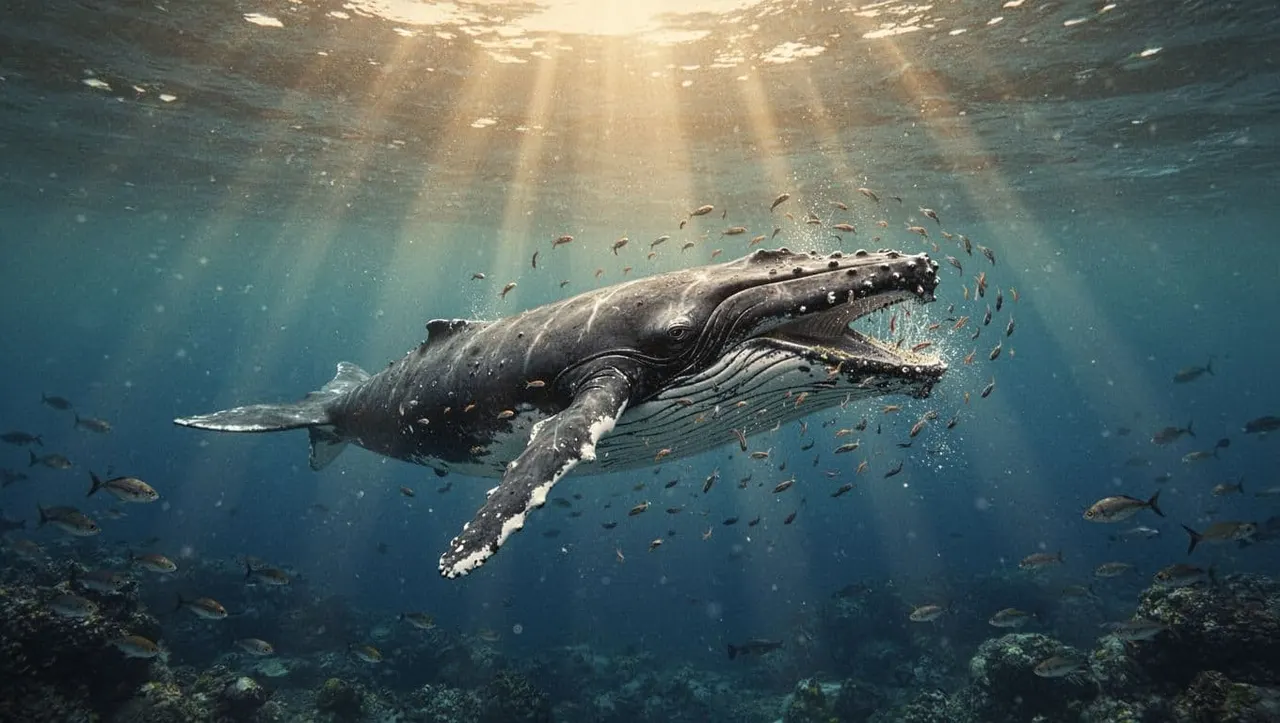
During a feeding lunge, the pleats expand before the whale filters water through its baleen.
The folds can expand and contract repeatedly during feeding. A Marine Education Society of BC explanation of whale anatomy compares this action to an accordion. That description helps you understand why the grooves are so visible when the whale opens its mouth.
Why Hawaii’s humpbacks still have throat pleats
Humpbacks travel to Hawaii during the winter breeding season. In the waters around Oahu, you may see them between January and March, when they give birth, care for calves, and interact with other whales.
Hawaii is primarily a breeding and nursery area for these humpbacks. The whales generally feed in colder, productive waters before migrating south. As a result, you shouldn’t assume that a whale near Honolulu is actively hunting just because you notice folds beneath its jaw.
You may see the pleats when a whale surfaces at an angle, raises its head, rolls, or breaches. Sunlight can highlight the grooves for a few seconds before the whale disappears below the surface. A close view of the underside can reveal how different the whale’s flexible throat looks from its smooth back.
The most useful clue is the full behavior, not one body feature. Your crew may explain whether the whale is traveling, resting, socializing, surfacing with a calf, or preparing for another dive.
A visible throat pleat tells you about the whale’s anatomy, but the surrounding behavior tells you what the whale is doing.
What to look for on a Honolulu whale watching cruise
A whale-watching trip becomes more rewarding when you know what to watch between major sightings. Humpbacks don’t perform on a schedule, so patient observation matters.
- A blow appears when the whale exhales at the surface. The shape and height can vary with the whale’s position and the wind.
- A breach happens when the whale launches part or most of its body from the water. You may see the head, torso, or full side rise before the splash.
- A tail slap occurs when the whale lifts its flukes and strikes the surface.
- A pectoral fin wave shows one long fin above the water as the whale rolls or turns.
- A calf surfacing beside an adult can reveal how closely the mother and young whale travel together.
Bring your attention back to the water after each sighting. The same whale may surface again several hundred feet away, and a second whale can appear while everyone is watching the first.
Your viewing position also matters. An open deck gives you a wider sightline, while shaded seating helps you stay comfortable during a longer cruise. Polarized sunglasses reduce surface glare, making it easier to spot a blow or dark back in bright sunlight.
Choosing the right whale watching Honolulu tour
A good whale-watching boat should give you space to observe without crowding the animals. It should also offer a stable ride, helpful crew, and clear instructions for guests who haven’t spent much time offshore.
Living Ocean Tours departs from Kewalo Basin Boat Harbor, just minutes from Waikiki Beach. Its Coast Guard-inspected double-decker vessels, the Coral Kai and Lokahi, provide shaded seating, open deck areas, onboard restrooms, dry storage, and sturdy ladders.
The Lokahi includes a SeaKeeper stabilization system that reduces side-to-side rolling. That feature can make a difference when you’re traveling with children or when you worry about seasickness. You can move around the vessel, find a comfortable viewing spot, and keep your attention on the ocean.
Living Ocean Tours is also the only tour company with professional snorkel guides. Although the winter whale cruise focuses on surface wildlife, that marine knowledge supports a strong understanding of Hawaii’s ocean environment. The crew can help first-time guests identify behaviors while reminding everyone to observe, not touch, the wildlife.
For seasonal dates, departure details, and the current route, visit the Waikiki whale watching tour page. You can also CHECK AVAILABILITY before building the rest of your Honolulu itinerary.
Respectful whale watching protects the experience
Wild whales need room to travel, rest, nurse calves, and communicate. Never try to approach a whale by swimming toward it, touching it, or feeding it. On a boat, follow your crew’s directions and keep your voice low when a whale surfaces nearby.
Responsible viewing also means accepting that you might not see a breach. A whale may show only its back, blow, or tail before continuing its journey. That brief sighting still gives you a real look at an animal that spends most of its life underwater.
Pack light layers because winter mornings can feel cool on the water. Bring reef-conscious sunscreen, a hat with a secure fit, sunglasses, and any motion-sickness remedy you already know works for you. Keep your phone protected, and avoid leaning over the rail while trying to capture a closer photo.
Conclusion
A humpback’s throat pleats are flexible folds that let the whale expand its mouth and filter massive amounts of water during lunge feeding. In Hawaii, you usually see these seasonal visitors during their breeding season, so the pleats offer an anatomy lesson even when the whales aren’t feeding.
When you choose whale watching Honolulu, look beyond the possibility of a breach. A stable boat, knowledgeable crew, respectful viewing practices, and patience can turn a few seconds at the surface into a much richer encounter with Hawaii’s humpbacks.


