
Whale Waste Hawaii Receives: Its Ocean Food Web Role
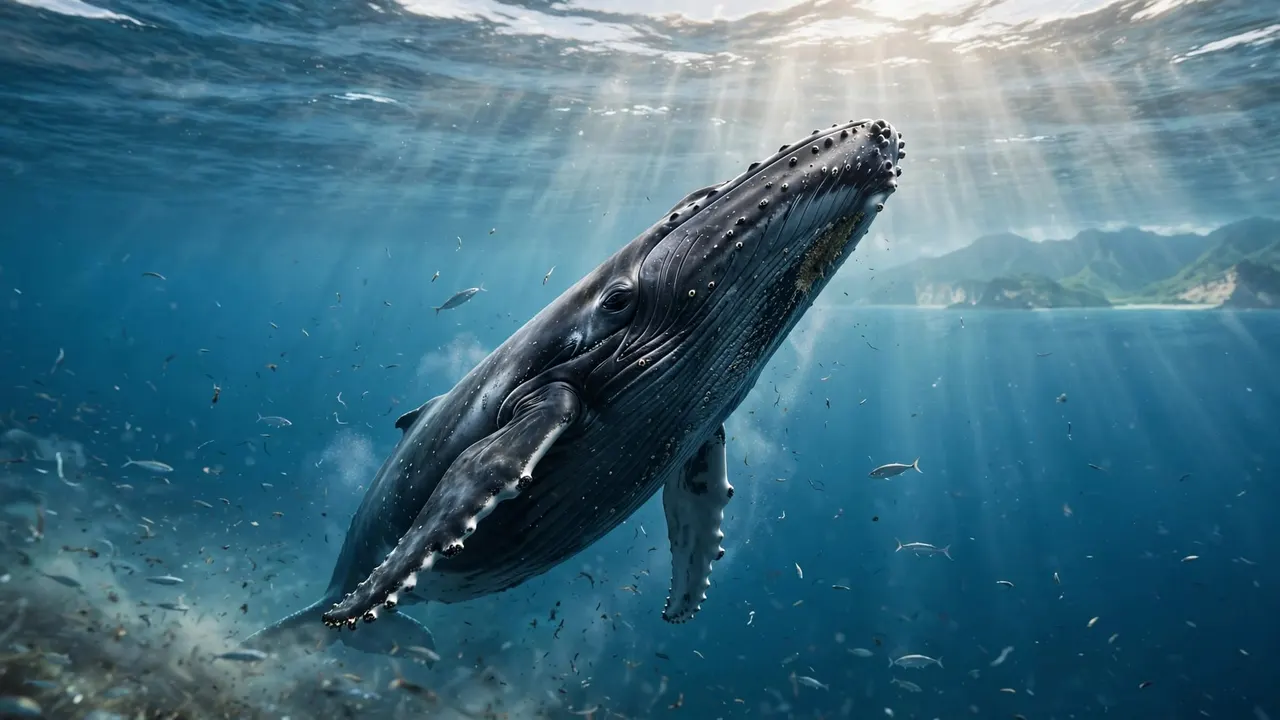
The whale waste Hawaii receives adds nitrogen and other recycled nutrients to ocean waters, where microscopic organisms can use them. Those nutrients help connect large marine mammals with the much smaller life supporting ocean food webs.
However, Hawaii’s visiting humpbacks spend most of their winter stay breeding, calving, and relying on stored energy. Understanding their nutrient contribution starts with separating what whales release from what scientists have measured in Hawaiian waters.
Key Takeaways for Ocean Lovers
- Whale urine and feces carry different nutrients, so both belong in the story of ocean fertilization.
- Hawaii’s humpbacks generally feed in northern waters before migrating south, transporting nutrients between distant habitats.
- Nutrient delivery doesn’t establish how much plankton grows or how a particular Hawaiian reef responds.
When you watch a humpback surface off Oahu, you’re seeing one visible moment in a much larger exchange. Its connection to the food web extends beyond the animals it eats.
What the Whale Waste Hawaii Receives Contains
Whale waste includes dissolved substances in urine and particles in feces. These materials take different routes through seawater, so treating all waste as “whale poop” misses an important distinction.
Urine supplies dissolved nitrogen
Whales release urea through urine as their bodies process protein. Microorganisms can transform that nitrogen into forms other organisms use.
Nitrogen helps phytoplankton build the molecules needed for growth. However, adding nitrogen doesn’t guarantee a bloom. Light, water movement, and the availability of other nutrients also influence the response.
This matters in Hawaii because a fasting whale still produces metabolic waste. Regular feeding isn’t required for every nutrient release during its winter stay.
Feces carry particles and trace elements
Fecal material contains organic matter and nutrients left after digestion. Its composition depends partly on the whale’s diet and physiology.
Research discussed by the University of Washington found that whale excrement contains substantial iron. Iron supports biological processes, including photosynthesis, but its importance varies among ocean regions.
You shouldn’t apply an iron-driven explanation from another ocean directly to Oahu. Different waters have different nutrient shortages, and the same release can produce different ecological responses.
How the Whale Pump Keeps Nutrients Near Sunlight
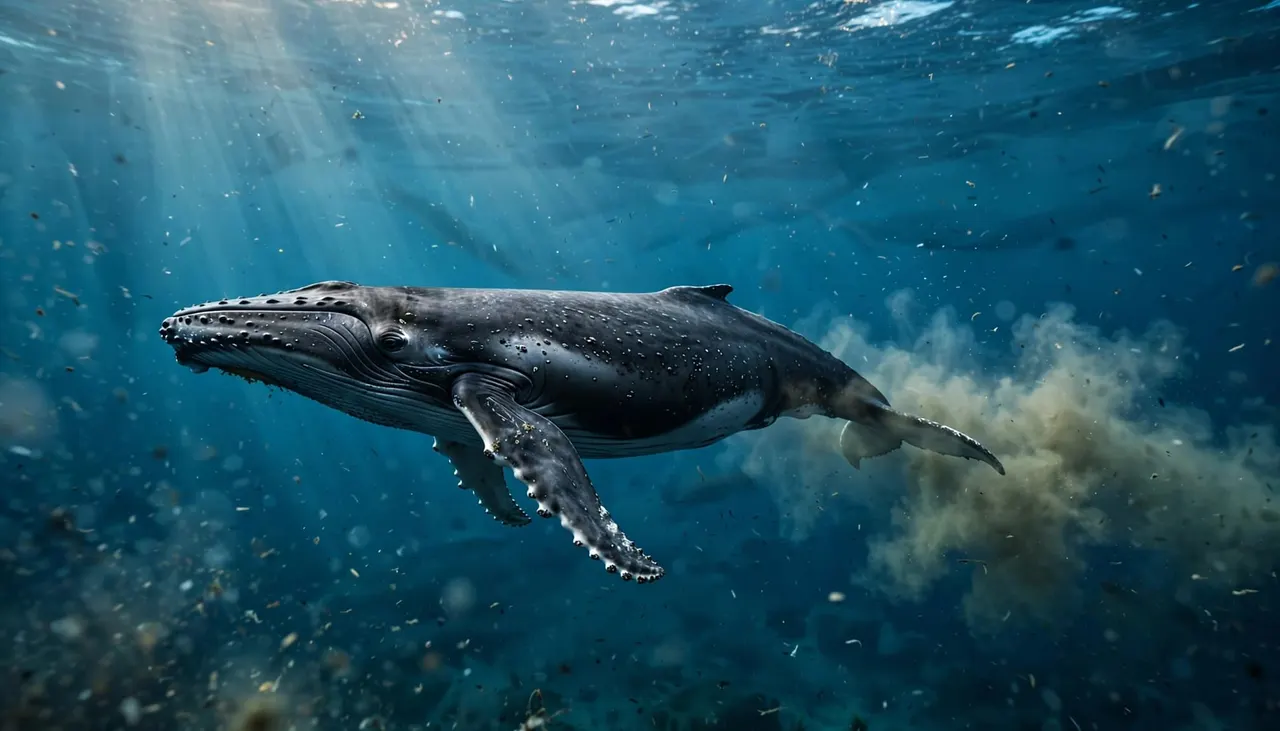
Illustration of a whale releasing a diffuse fecal plume.
The “whale pump” describes how marine mammals can help retain or return nutrients to surface waters. These sunlit waters support photosynthesis, while sinking particles otherwise carry nutrients downward.
Whales can consume prey below the surface and later release waste nearer the top. Their movements therefore help redistribute materials through the water column.
The foundational 2010 whale-pump study examined this process in the Gulf of Maine. Researchers collected 16 humpback fecal-plume samples at Stellwagen Bank and found concentrated nitrogen within them.
That study gives you evidence for the mechanism, but its location matters. Stellwagen Bank is a feeding area, while Hawaii is primarily a winter breeding destination.
Measurements from a northern feeding ground explain how the whale pump can work. They don’t measure its strength at a Hawaiian reef.
For Hawaii’s seasonal visitors, long-distance nutrient transport is another important part of the story.
Why Hawaii’s Visiting Humpbacks Are Different
Much of the whale waste Hawaii receives arrives during a season shaped by migration and reproduction. To understand that contribution, follow the whales’ annual cycle.
Northern feeding grounds supply stored energy
North Pacific humpbacks eat krill and small schooling fish in productive northern waters. Their baleen filters prey from mouthfuls of seawater, allowing them to capture many small animals together.
Those meals help whales build energy reserves before traveling toward Hawaii. During their winter stay, humpbacks generally fast or feed very little while mating, giving birth, and nursing calves.
Occasional feeding observations don’t change Hawaii’s primary role as a breeding and calving destination. You shouldn’t expect the bubble-net feeding scenes associated with northern feeding grounds during an Oahu outing.
Migration carries nutrients across ocean regions
A whale transports material acquired through feeding in its body. Some of that material later enters another ecosystem through urine, reproductive material, or death.
A 2025 study of migrating baleen whales estimated that North Pacific humpbacks deliver approximately 477 metric tons of nitrogen during three months on Hawaiian calving grounds.
That is a population-scale estimate, rather than a measurement beside a particular coral colony. It describes a substantial seasonal transfer without telling you how evenly currents distribute the nitrogen or which organisms use it.
Where Whale Nutrients Go in the Food Web
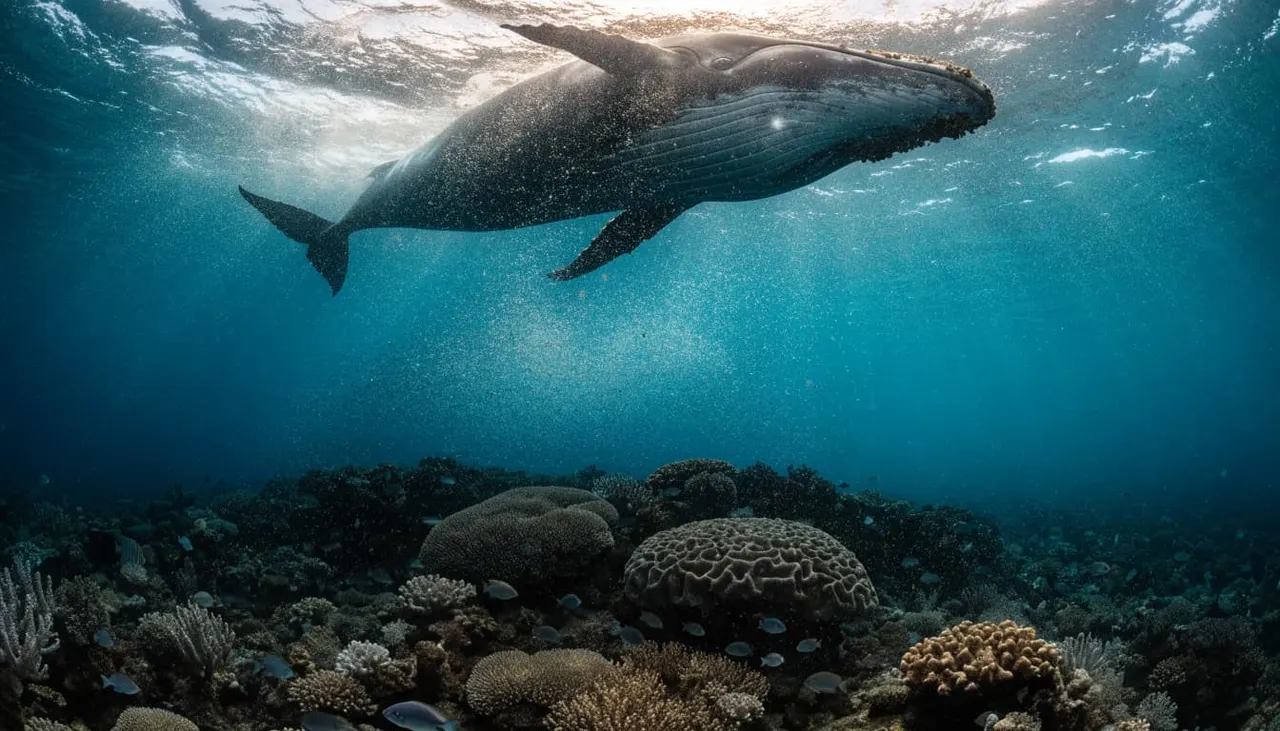
Illustration of connected ocean habitats, rather than a measured nutrient pathway at a specific reef.
The whale waste Hawaii receives enters water already exchanging nutrients through currents, microbes, and countless other organisms. Its eventual destination depends on those processes.
Bacteria can break down organic material and transform dissolved compounds. Meanwhile, phytoplankton can absorb available nutrients and use sunlight to produce organic matter.
Small grazers eat phytoplankton. Larger animals then consume those grazers, creating several routes into the wider food web. Some material stays near the surface; some sinks or travels elsewhere.
However, you shouldn’t picture every nutrient particle passing neatly through the same sequence. Ocean food webs branch, recycle material, and connect organisms at different depths.
Nor should you assume that whale-derived nutrients feed every fish you see while snorkeling. A parrotfish grazing a reef surface and a small fish eating drifting plankton use different food sources, even when they share nearby habitat.
Why Natural Fertilizer Doesn’t Guarantee a Healthy Reef
Nutrients support marine life, but their effects depend on concentration, timing, and environmental conditions. More nutrients don’t automatically produce healthier coral.
Reef responses depend on several pressures
Corals live alongside algae, grazing fish, and microbes. Changes in nutrient availability can influence those relationships, while temperature, sediment, and water quality also affect the outcome.
Research at Kahekili Beach Park on west Maui illustrates the importance of context. A US Geological Survey study examined corals exposed to polluted groundwater with lower pH and nitrate concentrations around 50 times normal levels.
Researchers found coral bioerosion rates up to eight times greater than expected away from the pollution source. Those results describe that Maui setting, not every Hawaiian coastline.
Natural whale inputs and polluted groundwater have different sources and delivery patterns. You can’t use one as a simple substitute for understanding the other.
Carbon benefits need careful interpretation
Phytoplankton absorb carbon dioxide during photosynthesis, and some organic material eventually sinks. Whales also store carbon in their bodies.
NOAA’s explanation of whales and carbon sequestration describes these connections. However, nutrient recycling doesn’t provide a simple carbon total for each whale sighting or boat trip.
For your reef visit, the useful takeaway is connection rather than a guaranteed outcome. Whales contribute to ocean processes alongside many other influences.
Watch Whales With the Food Web in Mind
With us at Living Ocean Tours, you can explore this seasonal connection on our Waikiki whale watching tour. Our January through March outings depart from Kewalo Basin Boat Harbor, near Waikiki.
You may see a blow, a lifting tail, or a breach. Those observations reveal behavior, but they don’t tell you whether a whale recently ate or how much nitrogen it released.
In Hawaii, you must stay at least 100 yards from humpback whales. Respectful viewing gives mothers, calves, and other whales space to continue their activities.
Across our Oahu marine wildlife tours, observation comes before touching or feeding wildlife. For reef outings, we’re the only tour company with professional snorkel guides, giving beginners support while exploring responsibly.
Bring that same attention beneath the surface. Keep your fins clear of coral, leave fish unfed, and watch animals use their habitat without trying to attract them.
For a winter outing, CHECK AVAILABILITY for our whale watching experience.
Frequently Asked Questions About Whale Waste
Does the whale waste Hawaii receives help coral reefs?
Whale-derived nutrients can enter coastal food webs, but their arrival alone doesn’t establish a benefit to coral. Reef responses depend on nutrient availability, circulation, grazing, temperature, and other conditions. You can’t trace a healthy coral patch back to nearby whales through observation alone.
Do humpbacks stop producing waste when they fast?
No. Their bodies continue processing stored resources, so fasting doesn’t eliminate metabolic waste. However, fecal output and nutrient release differ from periods of heavy feeding. That’s why urine deserves attention alongside the more familiar subject of whale poop.
Can you see whale waste during a tour?
A fecal plume can sometimes be visible, but seeing one is unpredictable. Urine generally disperses without a distinct feature you can identify from a boat. Your most likely observations are surface behaviors, and a distant plume wouldn’t reveal its chemistry or ecological effect.
A Whale Sighting Connects You to a Larger Ocean
Understanding the whale waste Hawaii receives changes how you view a winter visitor. Its body links northern feeding grounds with Hawaiian breeding waters through the movement of nutrients.
That contribution belongs within a larger story of ocean connections, rather than a promise that every release improves a reef. When you watch respectfully, you can appreciate both the whale above the surface and the less visible processes around it.


