
Can You Hear Whale Songs Waikiki?
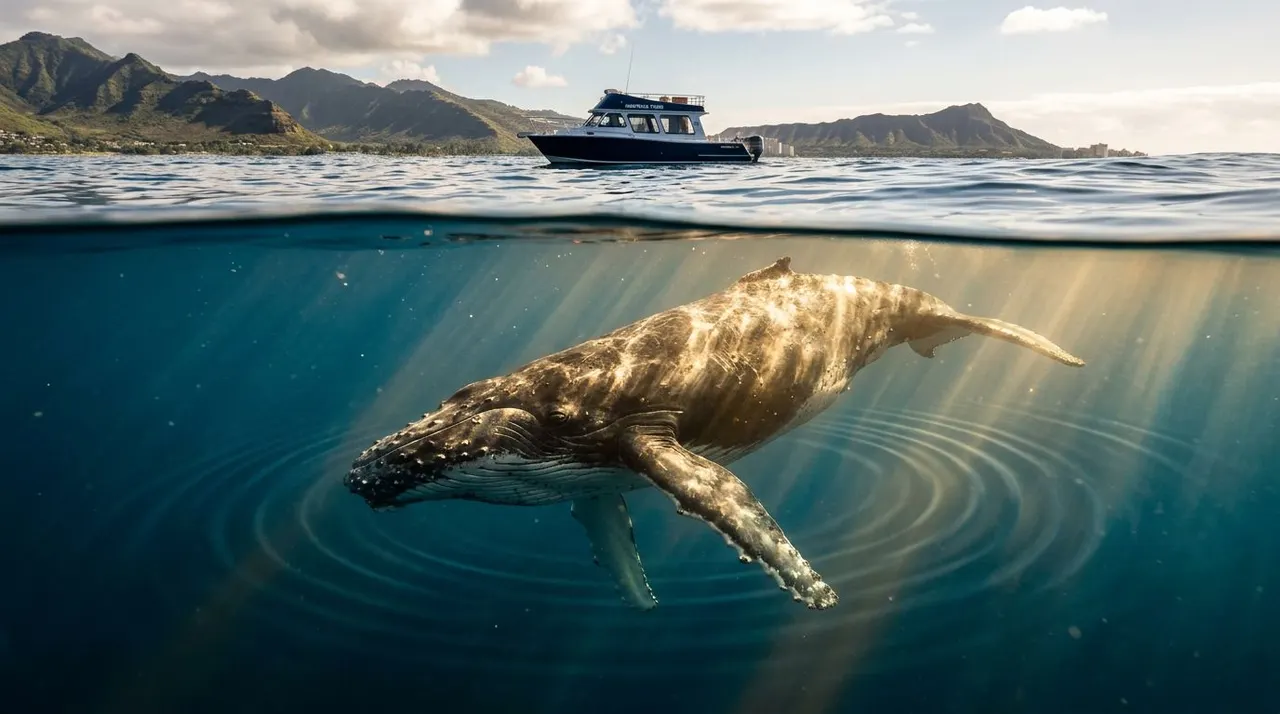
The whale songs Waikiki visitors hope to hear come from humpback whales wintering in Hawaii’s warm waters. You may hear a distant blow, a powerful splash, or a tail slap during a whale watching trip, but the songs themselves are much harder to hear from above the surface.
That doesn’t make the experience any less special. With the right conditions, a quiet boat, and a curious crew, you can learn how humpbacks communicate and understand why sound matters so much beneath the Pacific. The details below will help you set realistic expectations before booking your whale watching adventure.
Key Takeaways
- Humpback whale songs travel underwater, so you usually won’t hear them clearly from a boat.
- Male humpbacks produce the long, complex songs associated with Hawaii’s winter breeding season.
- January through March is the seasonal whale watching period for Living Ocean Tours.
- Calm water and reduced boat noise give you the best chance of noticing whale sounds.
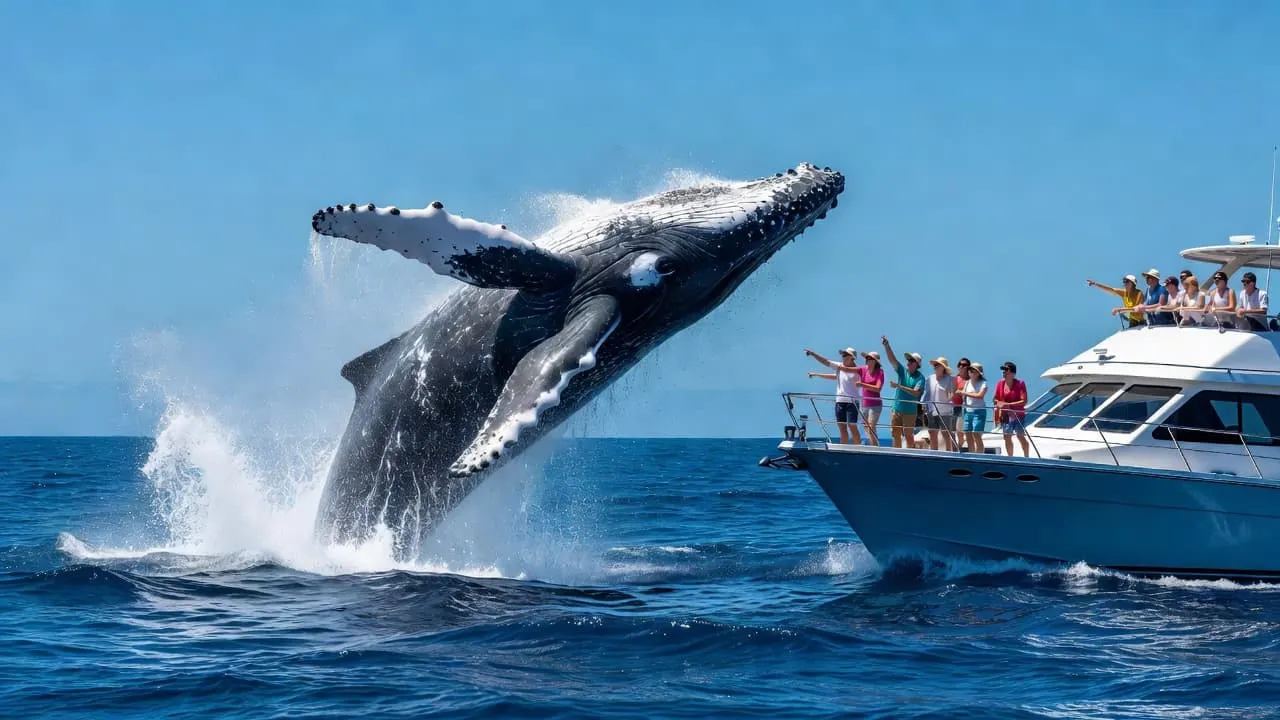
- You can still experience unforgettable surface behavior, including breaches, blows, tail slaps, and pec slaps.
Whale Songs Waikiki Visitors Hope to Hear
Humpback whales are famous for their haunting underwater songs. In Hawaii, male humpbacks sing during the breeding season, and their calls can travel through the ocean over long distances.
A song may include low moans, pulses, grunts, and higher sounds. The sequence can last for many minutes, and whales may repeat parts of the song. To human ears, the sound resembles a deep underwater melody rather than a clear tune.
The ocean carries sound better than air. Water is denser, so low-frequency whale calls can move through it efficiently. A humpback several miles away may communicate with another whale even when neither animal is visible.
Your position on the boat changes what you can hear. The surface separates you from the main acoustic environment, while wind, engines, waves, and conversation cover faint sounds. Even when a whale is singing nearby, you may experience the moment as silence.
Researchers use underwater microphones called hydrophones to study these calls. The National Marine Sanctuary whale acoustics overview describes how scientists listen for whale vocalizations to monitor humpback activity in Hawaiian waters.
Can You Hear Humpback Songs From a Waikiki Boat?
You might hear a whale song during a Waikiki cruise, but you shouldn’t book a trip expecting a guaranteed audible performance. Most passengers notice the whale first through movement, a blow, or a sudden change in the captain’s direction.
A whale’s song is more likely to reach you when the boat is stopped or moving slowly. Calm weather also helps. If the crew spots a whale and reduces engine noise, listen carefully near the rail. You may hear a faint moan or rhythmic pulse, although the sound can be subtle.
Sometimes your crew may describe the whale’s vocal behavior without you hearing it directly. Guides can explain how whales use sound, how males compete for breeding opportunities, and why the same area may contain several singing whales.
The research on humpback whale singing patterns shows that whale song forms a major part of Hawaii’s underwater soundscape during the breeding season. That finding helps explain the difference between seeing a whale and hearing its hidden communication.
A whale watching trip also gives you a useful reference point. After hearing the boat’s engine and the wind at the surface, you can appreciate how much quieter the ocean becomes beneath the waves.
Whale songs are an underwater experience first. From the boat, you may hear only a faint trace, while the most dramatic evidence appears above the surface.
What You Can Hear During Whale Watching Waikiki
Even if you don’t hear a song, the ocean around Waikiki has plenty of natural sounds. A humpback’s blow can sound like a sharp burst of air when it surfaces. Close to the boat, you may hear the exhale before you see the mist rise.
A breach creates a heavy splash that carries across calm water. Tail slaps and pectoral fin slaps produce shorter, louder impacts. Calves may surface near their mothers, while adults often roll, dive, or lift their flukes before disappearing.
The sound depends on distance and sea conditions. A whale surfacing nearby can make the entire boat react, while a whale farther away may reveal itself only through a small spout. Your guide will help you watch the horizon and identify the behavior.
Whale watching also rewards patience. Humpbacks spend time underwater between breaths, so a quiet stretch may end with a sudden breach or a series of blows. Keep your eyes moving across the water instead of staring at one spot.
Bring your attention to the full experience. Notice the direction of the wind, the rhythm of the swell, and the pause before a whale returns. Those details make the trip feel active even when the animals remain below the surface.
When to Hear Whale Songs Waikiki Visitors Seek
Living Ocean Tours offers seasonal humpback whale watching trips from January through March. This period aligns with the time humpbacks gather in Hawaiian waters to breed, give birth, and care for calves.
The season doesn’t produce the same conditions every day. Weather, ocean movement, whale behavior, and boat traffic all affect what you experience. A calm morning may offer better listening conditions, while a breezy afternoon may make surface sounds harder to notice.
Early trips often provide softer light and less wind, but the best departure time depends on the day’s marine conditions. Ask the crew what they expect before boarding. A local team can explain whether the ocean looks calm enough for a comfortable ride and good visibility.
Living Ocean Tours departs from Kewalo Basin Boat Harbor, only minutes from Waikiki Beach. The location makes it easy to reach the boat without spending extra time traveling across Honolulu.
The company uses Coast Guard-inspected, custom-built double-decker vessels, including the Coral Kai and Lokahi. The Lokahi includes a SeaKeeper stabilization system that reduces side-to-side rolling, while both boats offer shaded seating, restrooms, dry storage, and sturdy ladders.
That comfort matters during a whale watching trip. You can spend more time watching the water instead of searching for a place to sit or worrying about the boat’s motion.
How to Prepare for a Better Whale Watching Experience
Your preparation affects how much you notice. Dress for wind on the open water, even when the temperature feels warm near your hotel. A light jacket or long-sleeved layer can make the ride more comfortable.
Use sunscreen that follows reef-safe practices, and bring sunglasses with a secure strap. Glare can make it difficult to spot a distant blow, so polarized sunglasses may help you scan the horizon.
Keep your phone or camera ready, but don’t watch the entire trip through a screen. Whale activity can last only a few seconds. Look with your own eyes first, then take photos when the moment allows.
Follow the crew’s instructions when whales appear. Responsible whale watching means keeping a respectful distance, avoiding sudden approaches, and letting the animals control the encounter. Never expect a whale to perform on demand.
Living Ocean Tours also emphasizes responsible marine experiences. The company’s professional snorkel guides support safe, respectful ocean recreation, and the crew encourages guests to observe wildlife without touching it. That standard applies to every marine encounter, including whales.
You can review the company’s Waikiki whale watching tour before choosing your date. The broader selection of Waikiki boat tours and cruises also includes snorkeling, wildlife, sunset, and fireworks experiences.
What Makes a Waikiki Whale Tour Worth Booking?
A good whale watching trip gives you more than a chance to take a photograph. You get access to local knowledge, a stable viewing platform, and guidance that helps you understand what you see.
Living Ocean Tours operates from Kewalo Basin, close to Waikiki, so you can reach the harbor without a long transfer. Once aboard, you can use the open deck to scan the horizon or sit in a shaded area while the crew watches for activity.
The double-decker layout gives you different viewing positions. The upper deck can provide a wider view, while the lower areas offer shelter when the wind picks up. On a moving boat, having options can make the trip easier for families and guests who prefer a quieter seat.
First-time whale watchers can feel confident with an experienced crew nearby. You don’t need specialist knowledge to enjoy the trip. The guides can point out blows, flukes, breaches, and other behavior as it happens.
Couples may appreciate the open-water setting and changing views along the Waikiki coastline. Families can turn the outing into a shared wildlife lesson. Ocean lovers can focus on the details, including the silence between surfaces and the sounds that travel across the water.
Whale songs add another layer to the experience, even when you don’t hear them directly. Knowing that a male humpback may be singing below the boat can change how you look at a calm patch of sea.
Are Whale Songs Worth Listening For?
Yes, but listen without treating sound as the only measure of success. Whale watching is visual, acoustic, and physical. You may hear a blow, feel the boat pause, and then watch a whale breach beyond the rail.
If the crew stops the engines, lower your voice and listen for subtle sounds. Keep one ear open to the water while you watch the horizon. You may hear a distant exhale, a splash, or a low call that disappears beneath the wind.
Even when no song reaches the surface, the knowledge adds meaning to the encounter. Humpbacks communicate through a hidden system that extends far beyond what your eyes can see.
Conclusion
You can sometimes hear whale songs Waikiki visitors seek during a whale watching trip, but clear songs are uncommon from above the surface. Boat noise, wind, distance, and the density of the ocean all affect what reaches your ears.
January through March gives you the seasonal opportunity to watch humpbacks near Oahu. With a stable boat, professional guides, and respectful viewing practices, you can enjoy every blow, breach, tail slap, and quiet pause, whether or not a song reaches the deck.


