
Waikiki Sunset Cruise: Why the Sky Stays Bright

A Waikiki sunset cruise can reveal a colorful sky even after the sun drops below the horizon. That’s because twilight begins when the sun is out of sight but still lights the atmosphere above you.
At Living Ocean Tours, we love watching that change along the coast. The timing and colors vary, but understanding the light can help you appreciate every part of your evening on the water.
Why the Sky Glows After Sunset
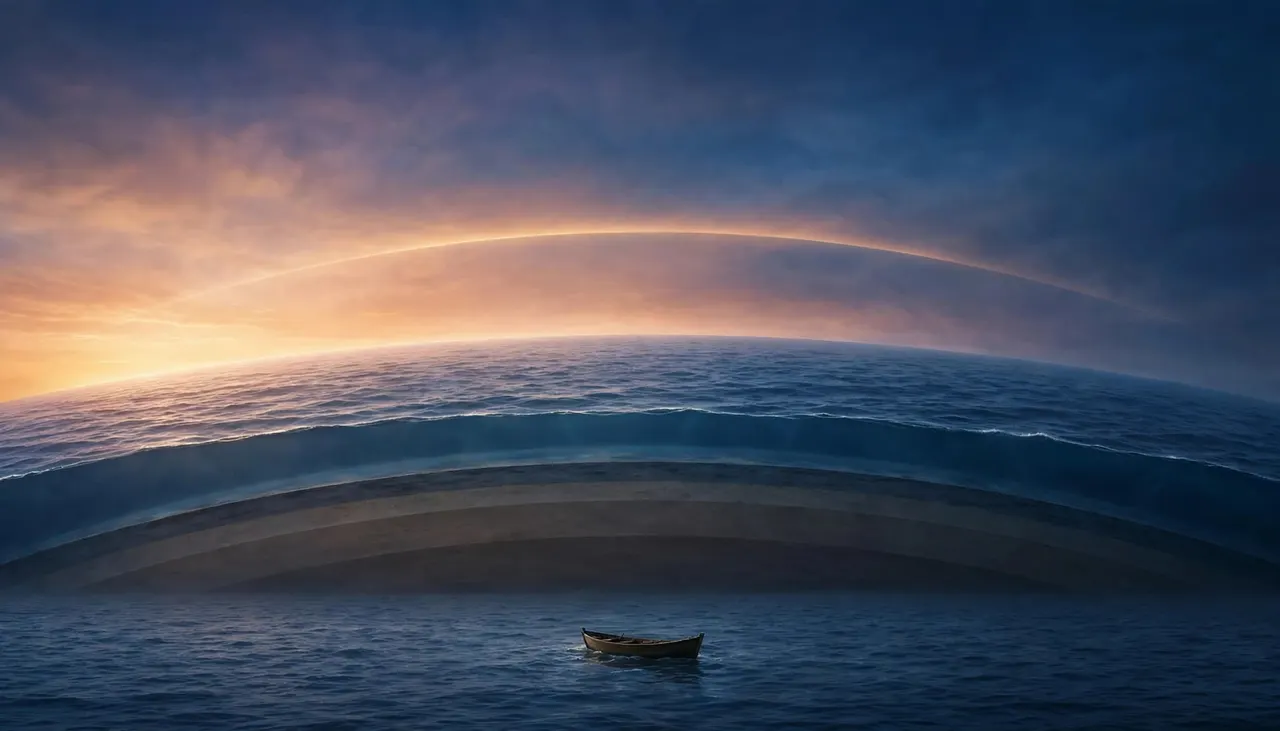
The atmosphere stays in the sun’s path
When the sun disappears below your horizon, its light doesn’t stop reaching Earth all at once. Sunlight can still reach parts of the atmosphere above you, even though the planet blocks your direct view of the sun.
Air molecules and particles scatter some of that light toward the ocean. That’s why you can still see the coastline and clouds after the sun itself has vanished. The U.S. Naval Observatory describes this period as twilight caused by scattered sunlight.
As the sun moves farther below the horizon, less sunlight reaches the atmosphere you can see. The glow gradually fades, and the sky darkens.
Your horizon is a viewing boundary
Sunset is a moment tied to your position. You see the sun disappear when it passes below your visible horizon, but people and clouds at different elevations have a slightly different view.
That difference helps explain why high clouds can remain bright after the water and shoreline look darker. They’re still catching sunlight above you, while the direct beam no longer reaches your position on the boat.
On a Waikiki sunset cruise, the open water gives you a broad view of that transition. The sky can continue to change after the sun has disappeared, although the timing depends on your departure and the date.
Why Sunset Colors Change Above Waikiki
Longer paths through the atmosphere
Sunlight contains many colors. When the sun is low, its light travels through more atmosphere before reaching your eyes than it does when the sun is high overhead.
Air molecules scatter shorter blue wavelengths more readily. As a result, the direct light reaching you near sunset often looks warmer, with more yellow, orange, and red. After sunset, scattered light can illuminate clouds and parts of the sky in those warm shades.
You won’t see the same palette every evening. Moisture, haze, particles in the air, and cloud cover all influence the view.
Clouds can catch the last light
Clouds aren’t always an obstacle to a colorful sunset. When sunlight reaches their undersides or edges, they can display pink, peach, or orange against a darkening sky.
Their position matters, though. A thick cloud bank near the western horizon can hide the sun and block light that might otherwise reach clouds overhead. Clear skies can also be beautiful, with a subtler band of color near the horizon.
Watch the whole sky rather than one patch of water. Color may appear above the coast or behind you after the brightest glow begins to fade.
The Three Stages of Evening Twilight
Twilight has three stages, defined by how far the center of the sun sits below the horizon. The boundaries describe the sun’s position, not a promise that the sky will look a particular way.
Civil and nautical twilight
Civil twilight begins at sunset and ends when the sun reaches 6 degrees below the horizon. During this early stage, you can often still make out the coast and other familiar features without artificial light.
Nautical twilight follows, ending when the sun reaches 12 degrees below the horizon. The sky grows darker, more stars become visible under clear conditions, and the ocean horizon becomes harder to distinguish. Astronomy magazine’s guide to twilight explains how the stages relate to observing the sky.
Astronomical twilight and darkness
Astronomical twilight lasts until the sun reaches 18 degrees below the horizon. After that point, the sun no longer contributes twilight illumination to the sky.
The stages are useful for understanding the change in light, but they don’t guarantee dark skies. Honolulu’s city lights, moonlight, clouds, and haze can all affect what you see. As Space.com explains, astronomical twilight is the last stage before the sun’s twilight glow disappears.
You don’t need to identify each stage on the boat. Notice how the horizon, skyline, and stars change as the evening progresses.
What You May See Along the Coast
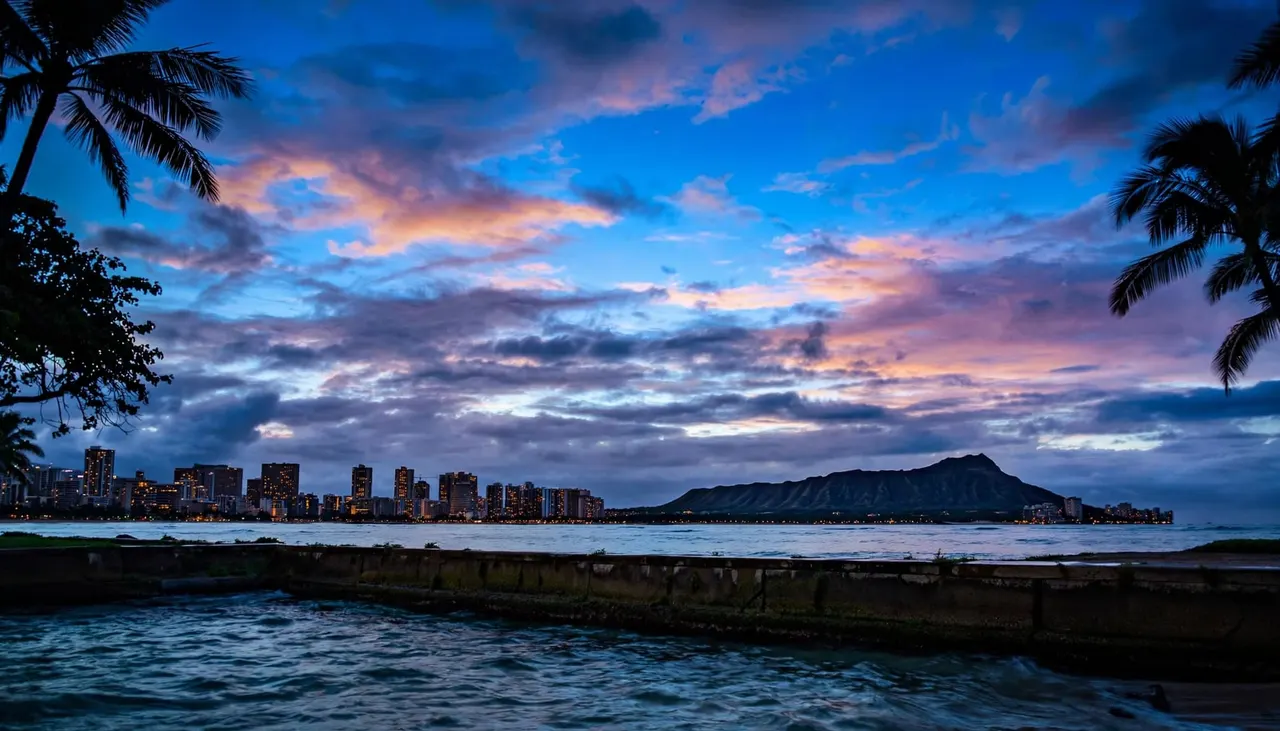
A Waikiki sunset cruise gives you more than one direction to look. Early in the outing, low sunlight can bring out the shape of Diamond Head and brighten the waterfront. The ocean may reflect the sky in patches, while the shoreline stays detailed enough to pick out buildings and beaches.
As the light fades, turn toward Waikiki as well as the horizon. Diamond Head can become a dark outline, and hotel lights grow more visible against the coast. On a clear evening, the contrast between the remaining sky glow and the city’s lights can be especially striking.
The ocean doesn’t turn one uniform color. Your viewing angle, the clouds, and the surface of the water all affect what you see. Give yourself a little time to look around rather than waiting for one perfect photograph.
Plan Your Cruise Around the Changing Sunset
Match the departure to your travel dates
Our Waikiki Sunset Cruise runs daily and lasts 90 minutes. The sightseeing route travels along the coast toward Diamond Head and back to Kewalo Basin Boat Harbor.
The listed departure changes with the season:
| Travel dates | Departure | Approximate return |
|---|---|---|
| April 1 through September 15 | 5:30 p.m. | 7:00 p.m. |
| September 16 through March 31 | 5:00 p.m. | 6:30 p.m. |
These times help you plan the outing, but sunset itself shifts throughout the year. In early July, for example, sunset can occur after 7 p.m., so a 5:30 p.m. cruise may return before the sun reaches the horizon. Enjoy the changing coastal light, while allowing for that seasonal difference.
Leave room on either side of the trip
Plan to arrive about 30 minutes before departure. That gives you time to find the boat, settle your group, and listen to the crew’s safety guidance.
Our departure point is Kewalo Basin Boat Harbor at 1125 Ala Moana Blvd, Slip B-01, in Honolulu. If you’re arranging dinner afterward, allow time to return to the harbor, disembark, and travel to your next stop.
Photograph the Afterglow From the Water
Start before the sky gets dark
Take a few photos while the coastline still has detail. Wide shots can include the water, Diamond Head, and Waikiki’s buildings in the same frame. Later, those landmarks may appear as silhouettes against the sky.
Keep your phone or camera secure when you’re near the rail. A wrist strap or phone lanyard can help, and it’s worth putting the device away when you’re moving around the boat.
Adjust as the light fades
As twilight deepens, a phone may automatically lengthen its exposure. On a moving boat, that can blur buildings or lights, so hold the camera steady and take a few frames.
Tap the brightest part of the sky on your screen if the colors look washed out. For a different view, turn toward the coast and photograph the skyline as its lights appear. Then set the camera aside for a while: the changing light is easier to appreciate when you aren’t watching it through a screen.
Choose Your Living Ocean Tours Sunset Outing
Our sunset cruise options welcome guests ages 3 and up. The trip is a sightseeing outing, so you can enjoy the ocean without swimming or bringing snorkel equipment.
We offer professional snorkel guides on our snorkeling trips, and we’re the only tour company with professional snorkel guides. Your sunset outing focuses on coastal views, with crew guidance aboard.
Sunset departures include BYOB and cash-bar options on different sailings. Complimentary soda, juice, water, and light snacks are also available. Bring a light layer for the return ride, when the ocean breeze can feel cooler.
You can CHECK AVAILABILITY for a Waikiki sunset cruise that fits your plans.
You can also browse our available ocean outings below.
Frequently Asked Questions About Twilight
Does the sky stay bright after every sunset?
Some twilight follows every sunset, but its appearance varies. Heavy clouds can make the evening look darker, while clear air or illuminated clouds may reveal a longer-lasting glow.
Will I see the sun set on my cruise?
Your view depends on the date, sunset time, weather, and the scheduled outing. Because sunset shifts through the year, a cruise can return before the sun reaches the horizon. You can still enjoy the low evening light and coastal scenery.
Is blue hour the same as twilight?
Blue hour is a photography term for a period when the sky often takes on a deep blue color. It can occur during twilight, but it doesn’t have the same precise astronomical boundaries as civil, nautical, or astronomical twilight.
Enjoy the Whole Evening Sky
The sun’s disappearance is one moment in a longer change. Scattered sunlight can keep the atmosphere glowing, while Waikiki’s shoreline takes on a different look as daylight fades.
On your Waikiki sunset cruise, give yourself time to watch the coast as well as the horizon. You may find that the quieter light is every bit as memorable as the sunset itself.


