
Waikiki sunset cruise: How Dusk Changes the Coastline
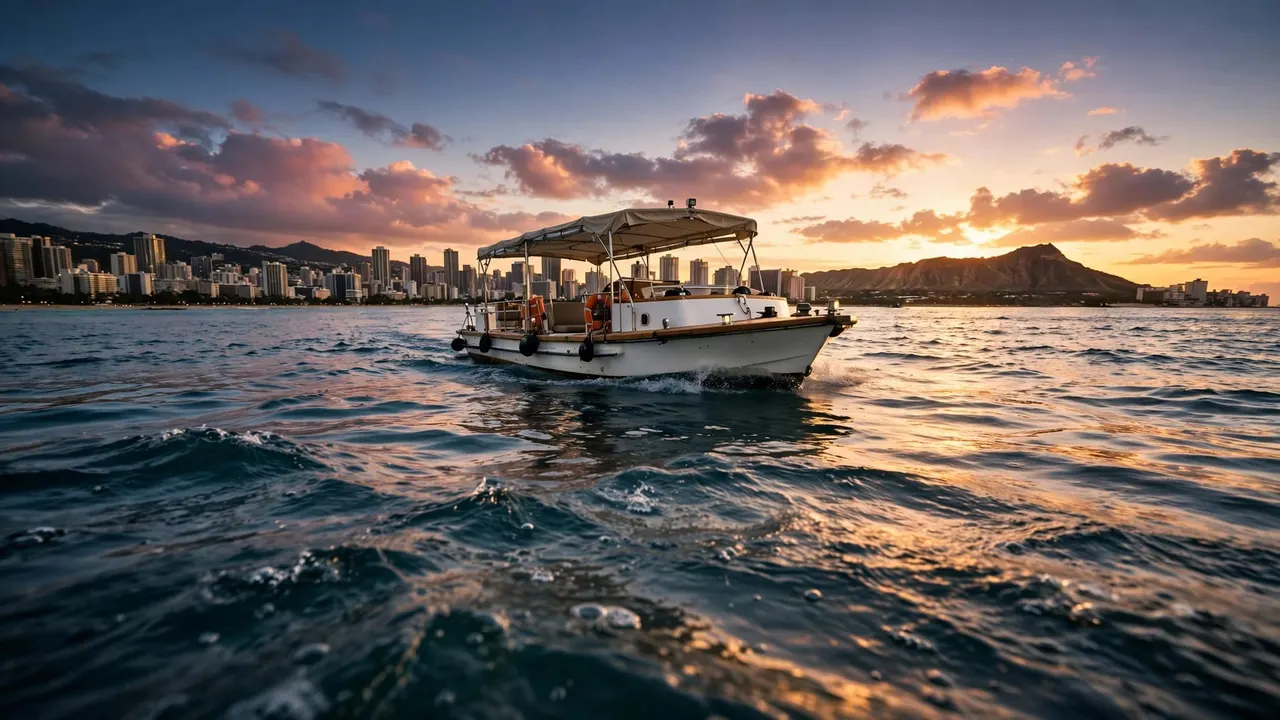
A Waikiki sunset cruise gives you a different view of Honolulu because you can watch the shoreline, open ocean, and evening sky together. As daylight fades, you may notice familiar landmarks becoming silhouettes while the city begins to glow.
With Living Ocean Tours, you can enjoy that transition on a 90-minute sightseeing outing departing from Kewalo Basin. Your evening centers on coastal views, without needing to swim or pack snorkeling equipment.
Start by looking beyond the setting sun, because the shoreline deserves your attention, too.
Key Takeaways
- Your offshore perspective brings Waikiki’s buildings and coastal landmarks into one broad view.
- Golden light, sunset, and twilight can produce different colors during the same outing.
- Clouds and viewing direction affect what you see, so no two evenings look identical.
- Our daily cruise welcomes guests ages 3 and up, with BYOB and cash-bar options available on different departures.
What a Waikiki sunset cruise changes about the view
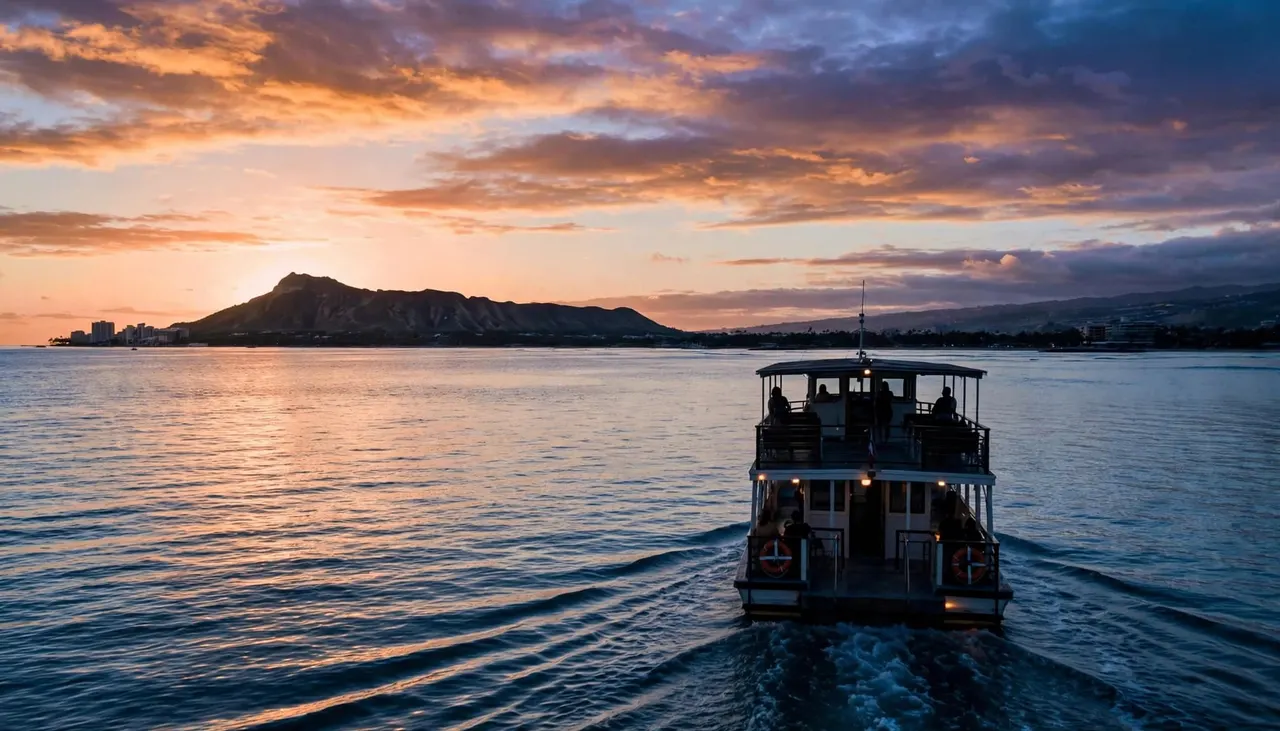
From the beach, nearby umbrellas, palms, and buildings frame your view. Offshore, you gain more distance, so you can appreciate how the shoreline fits together.
You see the coastline as a whole
Instead of focusing on one stretch of sand, look along the line where Honolulu meets the Pacific. Buildings that dominate a sidewalk view become smaller parts of a much wider scene.
That distance also changes what catches your eye. You might notice spaces between towers, a lighter strip of beach, or clouds resting above the island.
For families, this creates an easy sightseeing activity. Invite children to spot the shoreline’s tallest building or follow a cloud as its color changes. You can enjoy the same scene without everyone needing the same interests.
Landmarks become easier to read as shapes
When Diamond Head is visible, watch its outline rather than searching for fine detail. As the light drops, the crater’s profile can become more noticeable than the texture of its slopes.
Meanwhile, Waikiki’s buildings offer a different set of shapes: narrow towers, broad hotel fronts, and lower waterfront structures. Seeing those forms together helps you understand the coast’s layout.
Your view changes with the boat’s position, too. Keep looking around rather than choosing one direction for the entire outing.
Golden light brings different details into focus
Before sunset, low-angle sunlight can bring out surfaces that looked flatter under the midday sun. Look for changes in brightness rather than expecting the entire coastline to turn orange.
Watch the buildings and clouds
Depending on your viewing angle, some building faces may catch warm light while neighboring walls remain shaded. That contrast can make individual towers easier to distinguish.
Clouds add another layer. Their brighter edges and darker undersides can create more visual depth than a completely clear sky.
However, a colorful evening isn’t guaranteed. Thick cloud cover may hide the sun, while breaks in the clouds can create brief patches of light. You still have the coastline and open-water perspective to enjoy when the sky stays subdued.
Follow the reflections across the water
The ocean’s appearance depends partly on the sky above it and the angle from which you look. Small waves can break a bright reflection into scattered highlights.
Because the sun’s position changes through the year, the light won’t fall across the same scene identically every evening. NOAA’s solar calculator provides sunset and solar-position information by location.
On your Waikiki sunset cruise, notice both the brightest water and the darker areas beside it. Those contrasts can be as interesting as the horizon.
Blue hour gives Honolulu a different outline
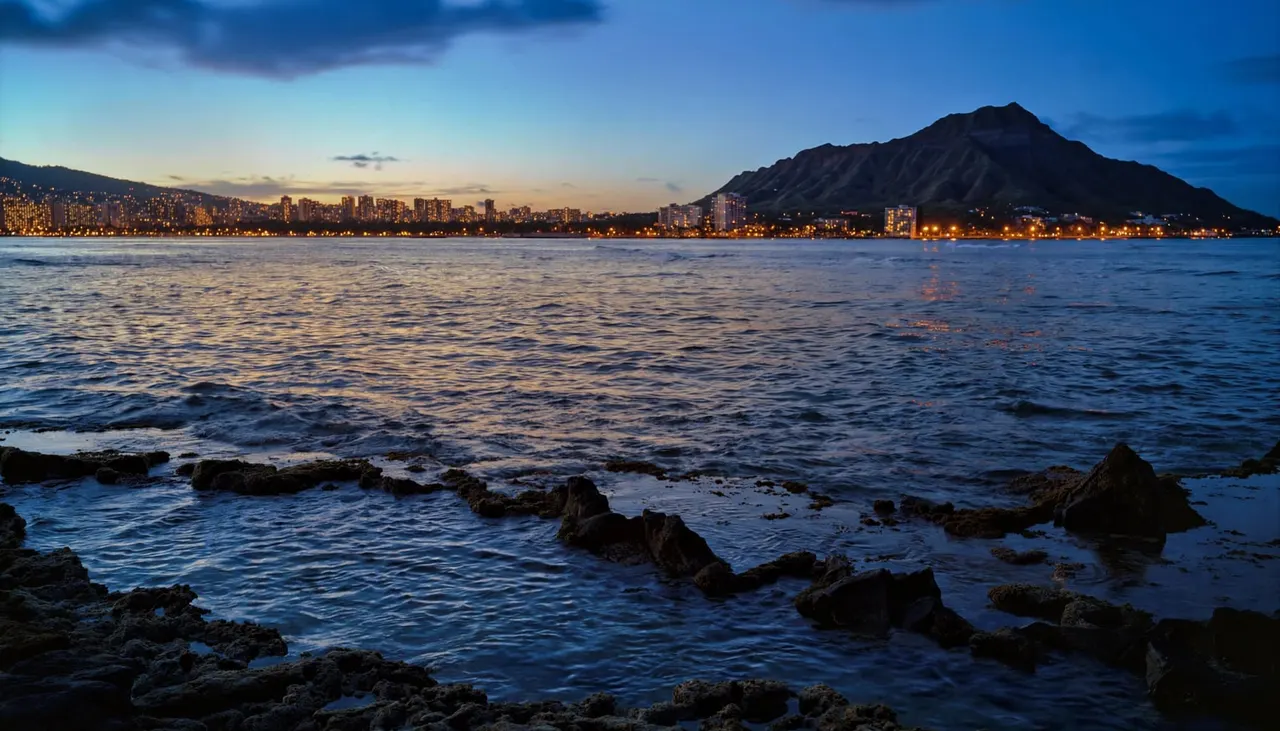
After the sun disappears, you may see a softer, cooler version of the shoreline. Blue hour is a descriptive term, rather than a promise of exactly 60 minutes of blue light.
Look back toward land as well as toward the sunset. As natural light fades, illuminated windows and waterfront lights can become more noticeable. Reflections may appear as broken streaks across the moving water.
You might also find that the coastline becomes easier to appreciate as an outline. Fine details fade, leaving larger shapes against the remaining sky.
The evening continues through distinct twilight stages. The National Weather Service’s twilight glossary describes nautical twilight as the period after civil twilight when brighter navigational stars appear and the horizon may remain visible.
That later stage isn’t part of every cruise. Your experience depends on the season and how the scheduled outing overlaps with sunset.
For couples, the appeal is the chance to share the view without filling every moment. Families can enjoy the same slower pace, especially after a busy beach day.
Understand the light without chasing a clock
Sunset is one event within a longer transition. Evening civil twilight begins at sunset and ends when the sun’s center reaches six degrees below the horizon.
These broad stages give you different things to notice.
| Stage | What to look for |
|---|---|
| Before sunset | Sunlit surfaces, cloud detail, and bright water reflections |
| Sunset | The horizon and changing contrast along the coast |
| Civil twilight | Remaining sky color and increasingly noticeable city lights |
| Later twilight | Darker silhouettes and a less distinct ocean horizon |
The takeaway is simple: keep watching after the sun disappears.
The U.S. Naval Observatory’s daily sun data treats sunset and the end of civil twilight as separate events. That distinction explains why daylight doesn’t vanish all at once.
Your Waikiki sunset cruise runs for 90 minutes, but that doesn’t mean every twilight stage will fall within it. Enjoy the light available during your outing rather than measuring the experience against one particular photograph.
A warm horizon, a cloud-filled sky, and a subdued evening each offer a different coastal view.
Take photographs without missing the evening
You don’t need a large camera to capture the coast. A phone can record the changing scene, especially if you keep your composition simple.
Give each photograph one clear subject
Choose Diamond Head when visible, a section of skyline, or a reflection across the water. Including everything can leave your photograph without a clear focal point.
Keep the horizon level and avoid excessive digital zoom. A wider image often gives you more useful detail than a tightly cropped, grainy view.
For a couple’s photograph, position yourselves where some remaining light reaches your faces. Ask someone to take it without blocking a walkway or another guest’s view.
Adjust as the light fades
Clean your lens before boarding, then take a few photographs early. As dusk progresses, hold your phone steady and use the rail only where it’s safe.
A moving boat and a long night-mode exposure can produce blur, even when the skyline looks sharp to your eyes.
Short video clips can capture reflections and the feeling of movement better than repeated still photographs. Secure your phone with a strap, then put it away for part of the ride.
You’ll notice more when you’re watching the coastline directly instead of viewing the entire evening through a screen.
Choose your evening with Living Ocean Tours
Our Waikiki sunset cruise departs daily from Kewalo Basin aboard our double-decker vessels, Coral Kai and Lokahi. You get 90 minutes on the water, with an experience suited to couples, friends, and families with children ages 3 and older.
You can choose between eligible BYOB departures and cash-bar options. On BYOB outings, guests must be 21 or older to bring alcoholic beverages, and drinks must be in cans rather than glass bottles.
We’re also the only tour company with professional snorkel guides for our in-water excursions. Your sunset outing is a separate, dry sightseeing experience, so snorkeling isn’t part of this cruise.
Bring sunglasses for the brighter portion of the trip and a light layer for the breeze. If motion affects you, prepare before boarding and ask our crew for seating advice.
You can CHECK AVAILABILITY for an evening that leaves room to enjoy the cruise without rushing to dinner afterward.
Frequently Asked Questions
Is the cruise suitable if you don’t swim?
Yes. Your Waikiki sunset cruise is a dry sightseeing outing, so swimming ability isn’t required. You stay aboard to enjoy the coastline and evening light. Our crew provides onboard guidance, and life jackets are available.
Will you always see a colorful sunset?
No particular color display is guaranteed. Clouds, visibility, and the sun’s position affect the scene. You may enjoy bright reflections, muted tones, or a dramatic cloud layer. The offshore perspective remains different from your view on the beach.
Should you stay in one spot throughout the cruise?
You can enjoy the scenery while seated, but looking in different directions gives you a fuller picture. Move only when it’s safe, follow crew instructions, and share viewing space. The sunset horizon and the shoreline may offer different subjects at the same moment.
Is the sunset outing the same as a snorkeling tour?
No. Our 90-minute sunset sightseeing trip focuses on coastal views. You won’t need a mask, fins, or plans for getting into the water.
Let the Whole Evening Become the View
A Waikiki sunset cruise gives you time to notice more than the sun’s final appearance. The coastline’s changing contrast, water reflections, and emerging lights can all become part of the experience.
Bring a light layer, leave room in your evening, and give the full transition your attention. Your most memorable view may arrive while you’re looking back toward shore.


