
Waikiki sunset cruise: Why the Sun Looks Flattened
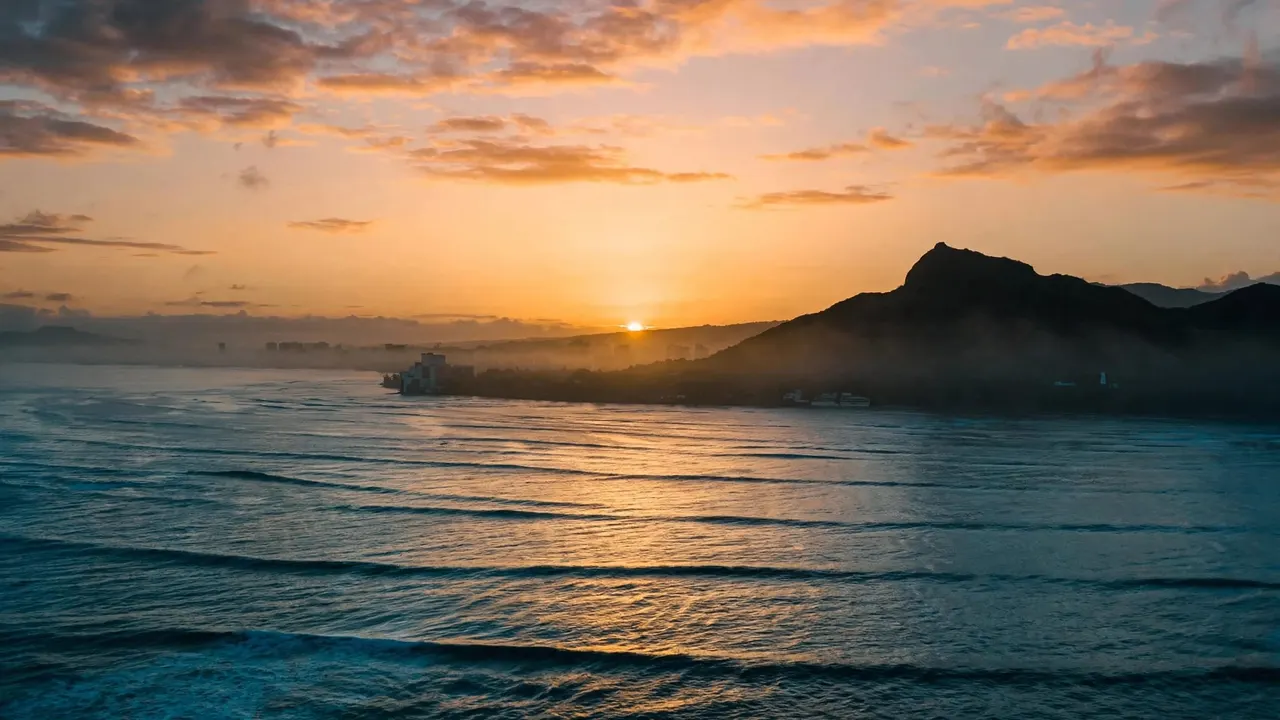
The sun looks flattened near the horizon because Earth’s atmosphere bends light unevenly across its disk. On a Waikiki sunset cruise with us at Living Ocean Tours, that familiar sunset can become a lesson in atmospheric refraction.
You might notice an oval outline, a compressed lower edge, or a shape that changes before disappearing. The sun hasn’t changed shape; the air between you and it has changed the image reaching your eyes.
Start with how that light travels, and the final minutes of daylight become even more interesting.
Key takeaways
- Atmospheric refraction lifts the sun’s apparent position, with a stronger effect on its lower edge.
- Unequal bending compresses the disk vertically, so you see a flattened outline near the horizon.
- Air conditions and clouds affect how clearly you can distinguish the shape, so every evening looks different.
A Waikiki sunset cruise gives you an open-water perspective for appreciating these changes alongside the coastline.
Why the sun looks flattened near the horizon
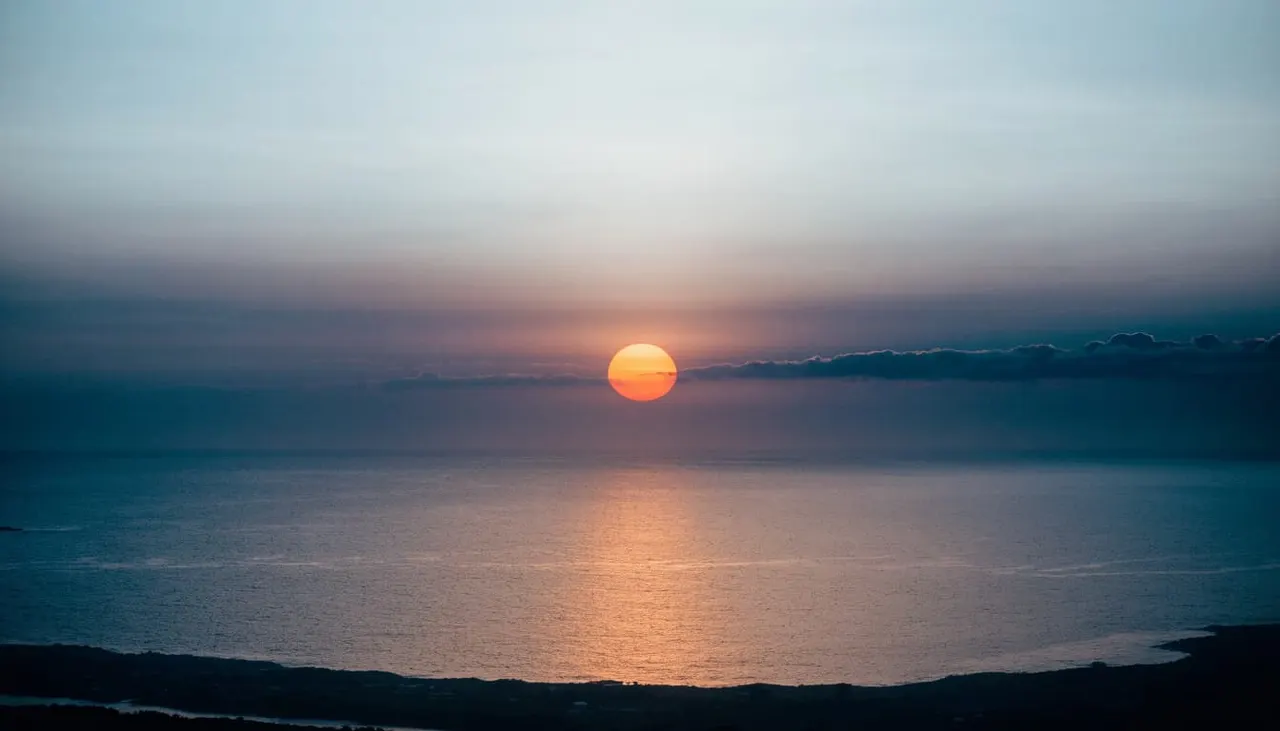
Air bends the sunlight reaching you
Light doesn’t follow a perfectly straight path through an atmosphere whose density changes with height. Instead, its path curves as it passes through different layers of air.
You interpret incoming light as though it traveled straight toward you. Because the atmosphere bends that light, the sun appears higher than its geometric position.
This effect becomes more pronounced close to the horizon. As EarthSky explains in its discussion of distorted suns and moons, atmospheric refraction can produce flattened or jagged outlines.
During a Waikiki sunset cruise, the low horizon gives you a useful reference for recognizing that compressed appearance.
The lower edge gets lifted more
The sun’s upper and lower edges sit at slightly different angles above your horizon. Although the difference looks small, refraction changes rapidly at these low angles.
Light reaching you from the lower edge bends more strongly than light from the upper edge. Therefore, the bottom appears lifted farther upward.
That unequal displacement reduces the disk’s apparent height. Its width changes much less, so the outline looks oval rather than circular.
The entire sun appears lifted, but its lower edge rises more than its upper edge. That difference creates the flattened shape.
The ocean provides the backdrop. The distortion happens in the atmosphere above it.
Why the shape changes between evenings
Atmospheric layers affect the outline
You won’t see an identical flattened sun every evening because the air doesn’t maintain one fixed arrangement.
Temperature and pressure affect air density. Meanwhile, the structure of those layers determines how light bends on its way toward you.
The U.S. Naval Observatory’s astronomical glossary explains that refraction depends on both an object’s altitude and atmospheric conditions. That helps explain why one sunset has a smooth oval outline while another appears irregular.
A clear sky overhead doesn’t describe every layer along your line of sight. Near sunset, you’re looking through a long stretch of atmosphere close to the horizon.
Clouds can hide or imitate compression
A narrow cloud bank can cover the sun’s lower edge and leave a shape that looks flattened. However, simple obstruction and atmospheric refraction are different effects.
With obstruction, a cloud hides part of the disk. With refraction, the atmosphere changes where parts of the disk appear.
Sometimes both happen together, so a single photograph won’t reveal the full story. The outline may remain visible above a cloud while the lower portion disappears behind it.
You don’t need a perfectly cloudless evening to enjoy the view. Still, an exposed horizon makes the optical changes easier to distinguish.
What happens as the sun approaches the water
The most useful detail is the changing relationship between the disk and the horizon. A single photograph captures one shape; a short sequence reveals how that shape develops.
You can follow the progression through safely obtained photographs rather than staring at the sun:
- Begin with a wider coastline image while the sun remains above the horizon.
- Compare later frames as the disk approaches the horizon and vertical compression becomes easier to recognize.
- Continue photographing the surrounding sky after the disk disappears, when the shoreline takes on a different appearance.
Refraction also delays the sun’s apparent disappearance. Its light can still reach you after the sun has crossed below the geometric horizon.
Khan Academy’s explanation of advanced sunrise and delayed sunset describes this related effect. The atmosphere changes both the apparent position and the outline you see.
However, avoid treating the final moment as a precise countdown. Clouds and atmospheric conditions affect the visible ending, so the last clear glimpse varies.
What a Waikiki sunset cruise adds to the view
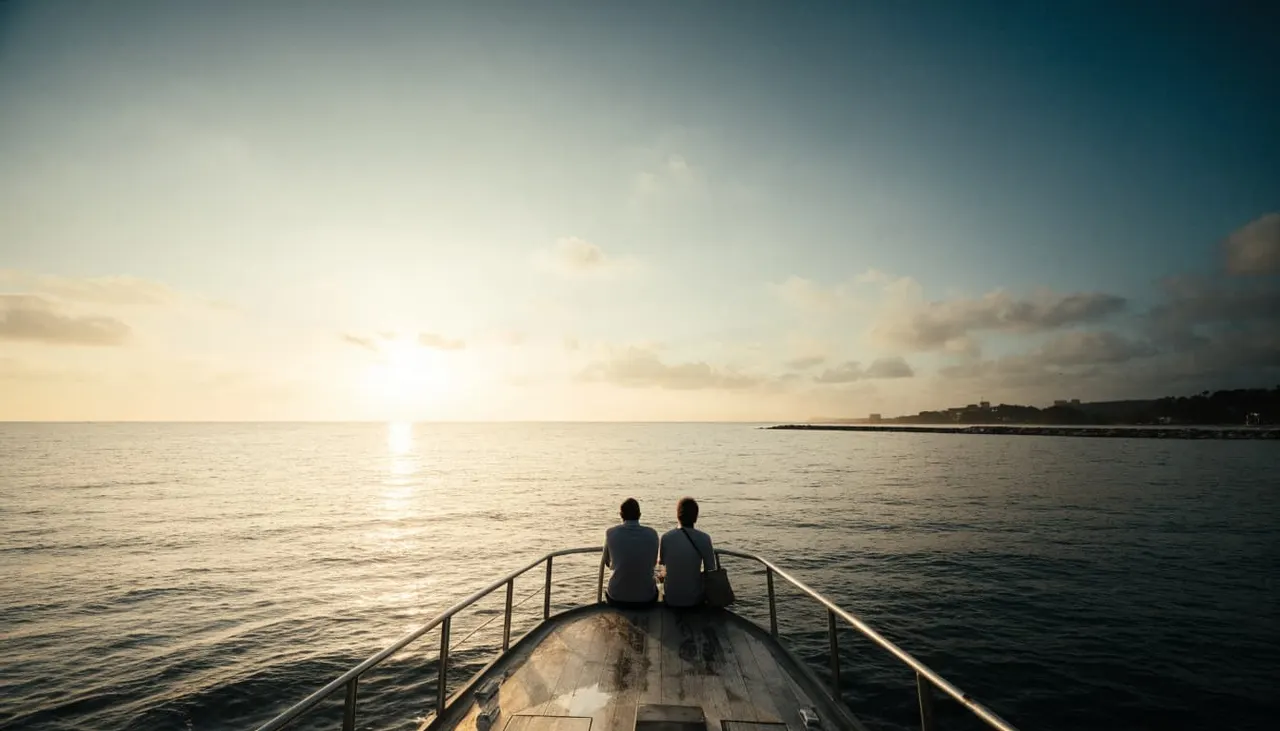
An open-water perspective
Our Waikiki sunset cruise gives you space to appreciate the horizon alongside views of Diamond Head and the Waikiki skyline.
Those are different parts of the scenery, so turn around occasionally. While the sun draws your attention offshore, the coastline offers another view as daylight fades and city lights become visible.
The boat doesn’t cause the flattening or magnify it. Instead, the open-water setting helps you notice the horizon without buildings interrupting your view.
A relaxed evening without swimming
Our 90-minute sunset outing welcomes guests ages 3 and older. You can enjoy the coastal scenery without packing snorkeling gear or planning time to change afterward.
We offer BYOB and cash-bar options across our sunset departures. That gives couples, families, and friends a relaxed setting for spending time together.
Our daytime experiences have a different focus: we’re the only tour company with professional snorkel guides. For this evening, you can keep your attention above the water.
You can browse our Honolulu ocean excursions when planning the rest of your stay.
Photograph the sunset without losing the evening
Keep your composition simple
A small sun against a broad ocean tells a different story than a tightly cropped disk. First, decide whether you want the atmosphere of the evening or a record of the sun’s outline.
For a landscape image, include some water and leave the horizon level. A reflection or a section of coastline can give the frame depth without crowding it.
If your phone supports exposure adjustment, lowering exposure can help preserve detail around a bright sky. However, heavy digital zoom often makes the outline softer rather than clearer.
Take a few frames, then put the device away and enjoy the surrounding scenery.
Protect your eyes and equipment
A low sun can still damage your eyes. Haze, a flattened outline, or apparent dimness doesn’t make direct viewing safe.
Never stare at the sun, and don’t look at it through binoculars, a telescope, or an optical camera viewfinder without appropriate solar protection.
Close-up solar photography requires equipment-specific precautions and suitable filters. Ordinary sunglasses aren’t solar-viewing protection.
Meanwhile, keep your phone or camera secure aboard the boat. A wrist strap helps, and a stable stance matters more than reaching over the rail for a slightly different angle.
Plan for comfort before departure
Your Waikiki sunset cruise should leave you free to enjoy the view. Bring a light layer for the breeze, wear comfortable shoes, and keep anything loose securely stowed.
If motion bothers you, tell our crew early rather than waiting until you feel uncomfortable. Follow their instructions when moving around the boat, especially while taking pictures.
For families, explain the flattened-sun effect before boarding. Then children can compare the horizon and sky in your photographs without turning the evening into a lesson.
When you’re ready to choose your evening, CHECK AVAILABILITY for our sunset experience.
Frequently asked questions
Can you see flattening on every Waikiki sunset cruise?
You won’t always get a clear view of the disk. Atmospheric refraction affects low sunlight, but clouds and haze can conceal the outline. Even with an open horizon, the amount and appearance of distortion vary with conditions.
Does the sun actually change shape?
The flattened appearance doesn’t mean the sun has physically compressed. You’re seeing an image altered by Earth’s atmosphere. Because the lower edge experiences more refraction, its apparent position shifts upward more than the upper edge does.
Can you see the same effect from the beach?
Yes, you can see a flattened sunset from shore when the horizon is visible and conditions allow it. A boat offers a different setting and coastal perspective, rather than an exclusive optical phenomenon. The same atmospheric process operates wherever you observe it.
Enjoy the view with a clearer understanding
A Waikiki sunset cruise pairs coastal scenery with a chance to recognize uneven atmospheric refraction. The sun’s lower edge appears lifted more than its upper edge, which compresses the disk you see.
Keep your viewing safe, leave room for the whole coastline, and enjoy the changing sky. Knowing the reason behind that flattened outline adds another detail to an evening on the water.


