
Waikiki sunset cruise: What Creates the Green Flash
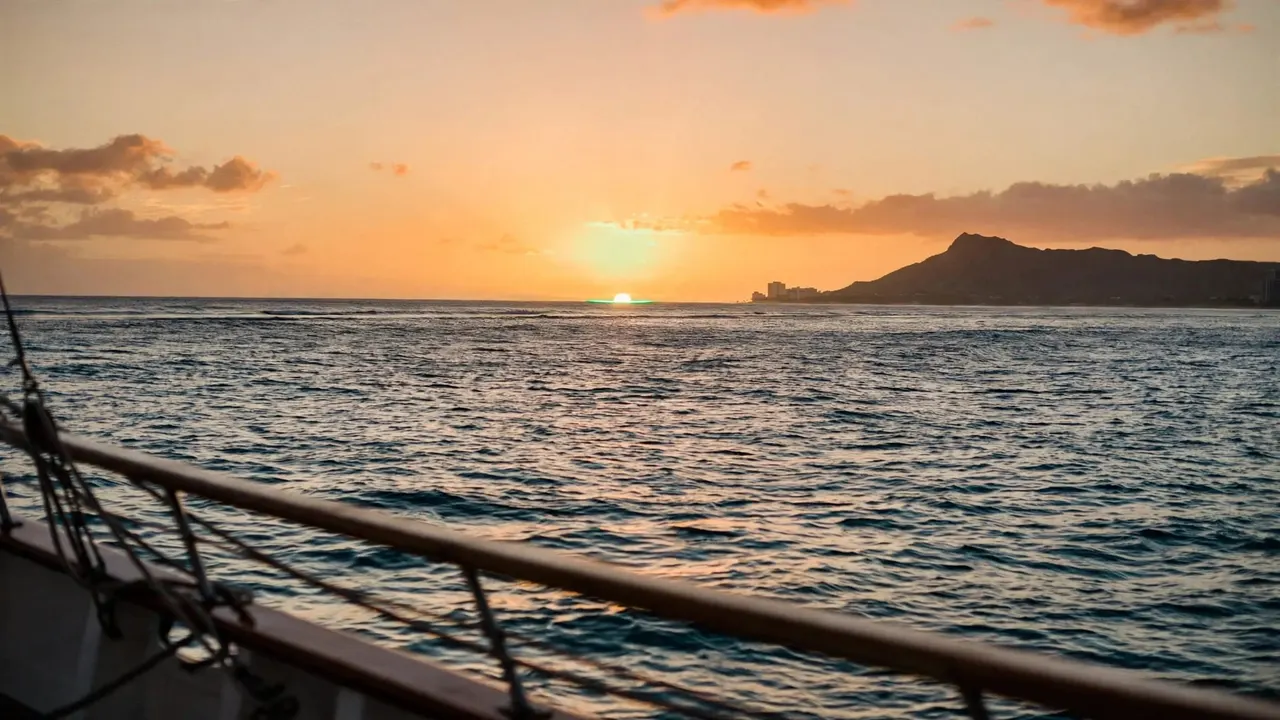
On a Waikiki sunset cruise, the sun’s last visible edge can briefly turn green before it disappears. With Living Ocean Tours, you get open-water views and time to enjoy the evening, whether that fleeting color appears or not.
The green flash is a real atmospheric optical effect, but seeing it requires more than a colorful sky. Your view of the horizon and the evening’s atmospheric conditions both matter.
Start with what you’re looking for, so you can appreciate the moment without making it the entire purpose of your trip.
Key Takeaways
A green flash is a brief change in the color of part of the sun near sunset or sunrise.
- The green color appears near the sun itself, rather than spreading across the whole sky.
- An unobstructed horizon helps, but clear-looking weather doesn’t guarantee that you’ll see the effect.
- Our daily sunset cruises last 90 minutes, with BYOB and cash-bar options for enjoying the broader coastal experience.
You can enjoy Waikiki’s changing light, Diamond Head, and the shoreline even when the green flash never appears.
What the Green Flash Looks Like at Sea
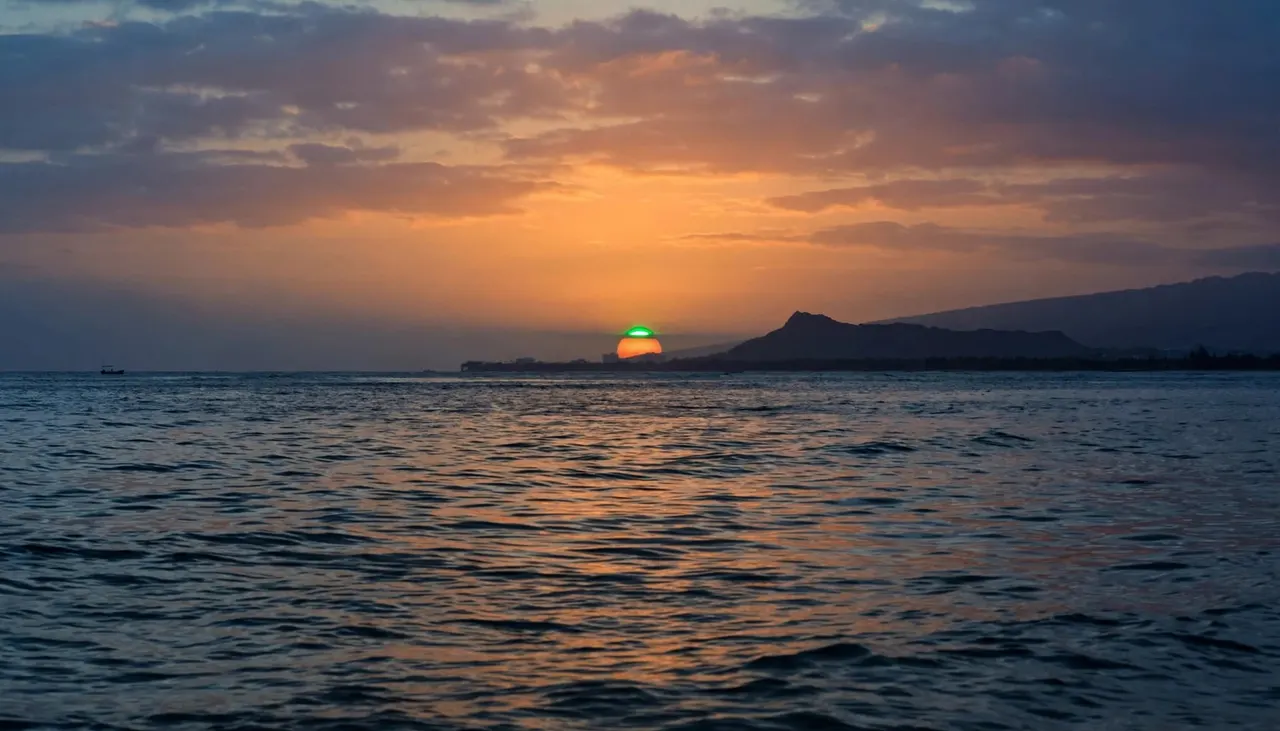
Illustration of a green flash near the ocean horizon.
A small color change at the sun’s edge
You might expect a bright green streak across the Pacific. However, the effect is usually much smaller than that expectation.
Look for a brief green appearance associated with the sun’s remaining visible edge. It isn’t a green wash over the ocean, and it doesn’t turn the surrounding clouds emerald.
The Atmospheric Optics Glossary describes green flashes as sudden color changes in part of the sun at sunrise or sunset. At sunset, that change can be from red or orange to green or blue.
A fleeting detail within a larger sunset
Because the display is brief, you can miss it while adjusting a camera or looking toward the coastline. That doesn’t mean your evening had poor sunset conditions.
A Waikiki sunset cruise offers plenty to watch before and after the sun disappears. Warm reflections move across the water, clouds change color, and Honolulu’s shoreline gradually becomes brighter against the darkening sky.
Treat the flash as a possible extra. You’ll enjoy the outing more when one tiny detail doesn’t determine whether the whole evening feels worthwhile.
What Creates the Green Flash at Sunset?
Sunlight and the atmosphere near the horizon
The green flash comes from the way sunlight appears through the atmosphere near the horizon. The sun itself doesn’t suddenly change into a green object.
At sunset, your view places the sun against the distant meeting point of sky and sea. The air along that view affects its appearance, and under suitable conditions, part of the remaining visible sun briefly looks green.
The ocean provides a useful backdrop, but it doesn’t produce the green light. You can also encounter green flashes in other settings with a suitable horizon.
Why sunset color alone isn’t enough
A sky full of orange clouds doesn’t necessarily give you a better chance of seeing green. Those broad sunset colors and the brief change at the sun’s edge are different displays.
Similarly, a vivid pink sky after sunset isn’t evidence that you missed a green flash. You may be watching twilight color rather than a change in the sun’s visible edge.
A spectacular sunset and a visible green flash are separate possibilities. You can have one without the other.
This distinction helps you appreciate the sky without searching for green in every reflection, cloud opening, or camera flare. On a Waikiki sunset cruise, the entire transition into evening remains worth your attention.
Which Conditions Help You See the Green Flash?
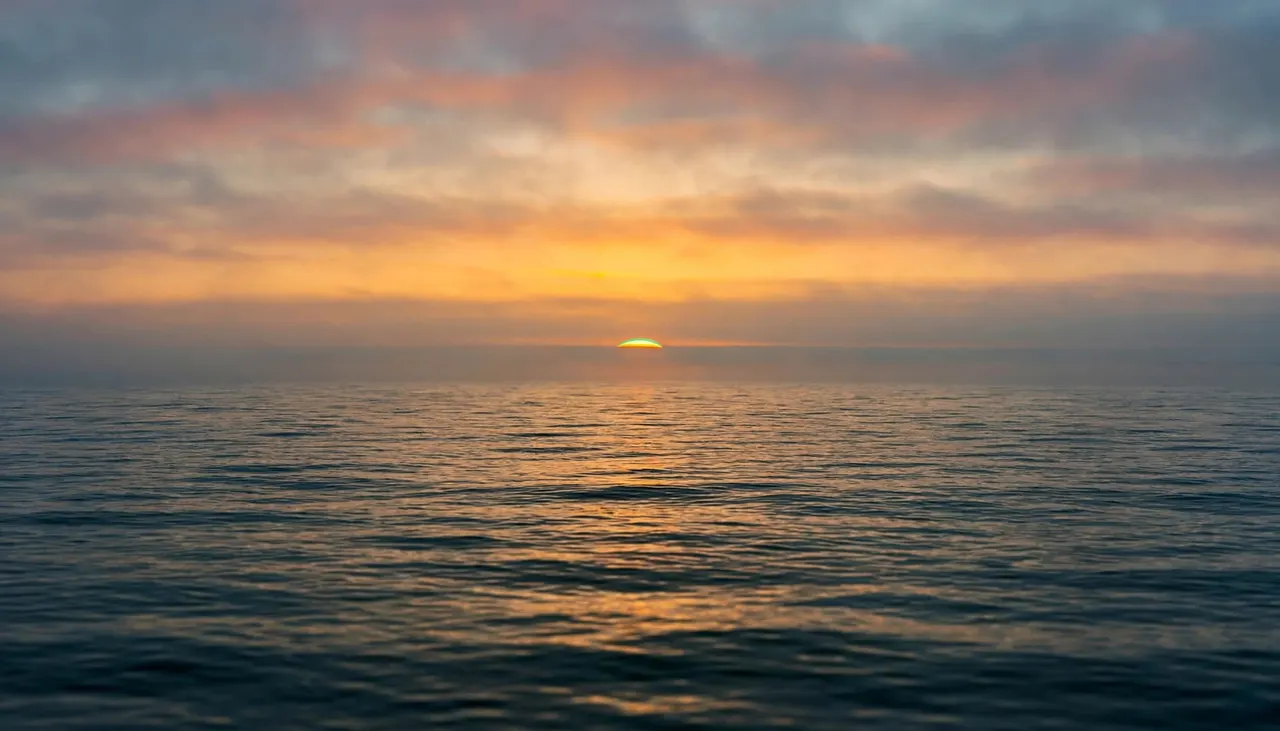
Illustration of a sunset with an unobstructed ocean horizon.
A clear view where the sun disappears
Your sightline matters most near the point where the sun meets the horizon. A cloud bank in that location can hide the final visible edge, even when the sky overhead looks clear.
Offshore views reduce some beachfront obstructions, including buildings and people between you and the water. However, a boat can’t remove clouds or haze.
Choose a comfortable viewing position that doesn’t block other guests. Also, remember that the boat’s heading can change, so the best view won’t always remain directly ahead.
Clear skies don’t promise a sighting
Atmospheric conditions influence what you see, but you can’t judge every relevant condition from a sunny hotel balcony. Even an evening with a crisp-looking horizon may pass without an obvious flash.
Meanwhile, broken clouds may create beautiful sunset color while obscuring the exact spot you hoped to watch. Those clouds can add interest to photographs without helping you see the final solar edge.
Keep weather expectations separate from comfort expectations, too. A clear sky doesn’t tell you how much wind or movement you’ll feel aboard. Follow the crew’s guidance about seating and moving around the deck.
How to Enjoy the Sunset Without Missing the Experience
You don’t need to spend the entire cruise searching one narrow patch of sky. A little preparation gives you more time to notice what’s happening around you.
- Settle in before the light changes quickly. Stow your bag, find a comfortable seat, and listen to the crew’s safety instructions.
- Take coastal photographs earlier in the ride. You’ll have time to frame Diamond Head and Waikiki without rushing during the final sunset moments.
- Leave some time without a screen between you and the scenery. Watch the surrounding sky and water, then look back toward the shoreline as evening arrives.
Protect your eyes throughout the outing. Don’t stare directly at the sun, even when it’s low, and don’t treat ordinary sunglasses as solar-viewing protection. Proper solar-viewing protection is necessary for direct observation.
Never look at the sun through binoculars, a telescope, or a camera’s optical viewfinder without appropriate solar protection. A sunset cruise doesn’t require magnified solar viewing to be enjoyable.
If you’re photographing the scenery, keep your camera or phone secure and avoid moving backward while framing a shot. Boat movement and changing light deserve your attention.
For families, help children stay comfortably seated when needed. Couples can enjoy a shared rail-side view without occupying the same photo spot for the whole trip.
Enjoy a Waikiki Sunset Cruise With Our Crew
At Living Ocean Tours, Oahu’s top-rated and most reviewed sunset cruise company, we welcome you aboard for coastal scenery and a relaxed evening on the water.
Our daily sunset outings last 90 minutes and welcome guests ages 3 and up. You can choose BYOB or cash-bar options, while our boats offer shaded seating, onboard restrooms, and space to store your belongings.
You stay dry on this sightseeing outing, so swimming experience isn’t necessary. We’re also the only tour company with professional snorkel guides, bringing a safety-minded crew culture to our ocean experiences.
Our sunset cruise options give couples and families a way to enjoy Waikiki without organizing a full day around water activities. Bring secure footwear, sunglasses for the surrounding daytime scenery, and a light layer for the breeze.
You also help protect Hawaii’s marine environment by observing wildlife without touching or feeding it. Coastal sightseeing is the focus, rather than a promised animal encounter.
Stay for the Colors After Sunset
A Waikiki sunset cruise gives you more to enjoy than the instant the sun disappears. Resist the urge to stop watching as soon as that moment passes.
On a clear evening, look toward the horizon opposite the setting sun. You may see the Belt of Venus, a soft pink band above a blue-gray layer. That darker layer is Earth’s shadow rising through the atmosphere after sunset.
Unlike the green flash, this display occupies a broad part of the twilight sky. It offers another reason to look around rather than keeping your attention fixed in one direction.
Meanwhile, Diamond Head can darken into silhouette as Waikiki’s lights become more noticeable. These views give your evening a different character after the warm daytime light fades.
If an ocean evening fits your plans, you can CHECK AVAILABILITY for our sunset outing.
Frequently Asked Questions About the Green Flash
Can you see a green flash every evening?
No. The effect depends on atmospheric conditions and your view of the sun near the horizon. Even a clear-looking evening doesn’t guarantee a visible flash, so choose the cruise for the coastal experience rather than that single possibility.
Does the green flash happen only at sunset?
No. Green flashes can also occur at sunrise. For an evening boat outing, however, sunset is the relevant opportunity. The important feature is a brief color change associated with part of the sun near the horizon.
Is a green reflection on the water the same thing?
A green reflection by itself doesn’t establish that you saw a green flash. The defining display is associated with part of the sun. Reflections, camera effects, and other patches of color can look interesting without being that phenomenon.
Is this cruise suitable if you don’t swim?
Yes. Our sunset sightseeing outing keeps you dry and welcomes guests ages 3 and up. You can enjoy the coastline, ocean air, and evening light without bringing snorkeling equipment or planning time to change after swimming.
Enjoy the Whole Evening, Flash or No Flash
The green flash is a brief atmospheric display at the sun’s edge, and a Waikiki sunset cruise offers an appealing setting to watch the evening unfold.
Keep your expectations flexible and your eyes protected. You’ll have more than one moment to enjoy as the Pacific darkens and Honolulu’s lights appear.
Whether green shows itself or not, give the surrounding sky and coastline your attention. The evening continues long after the sun disappears.


