
Waikiki Sunset Cruise: An Insider’s Guide for 2026
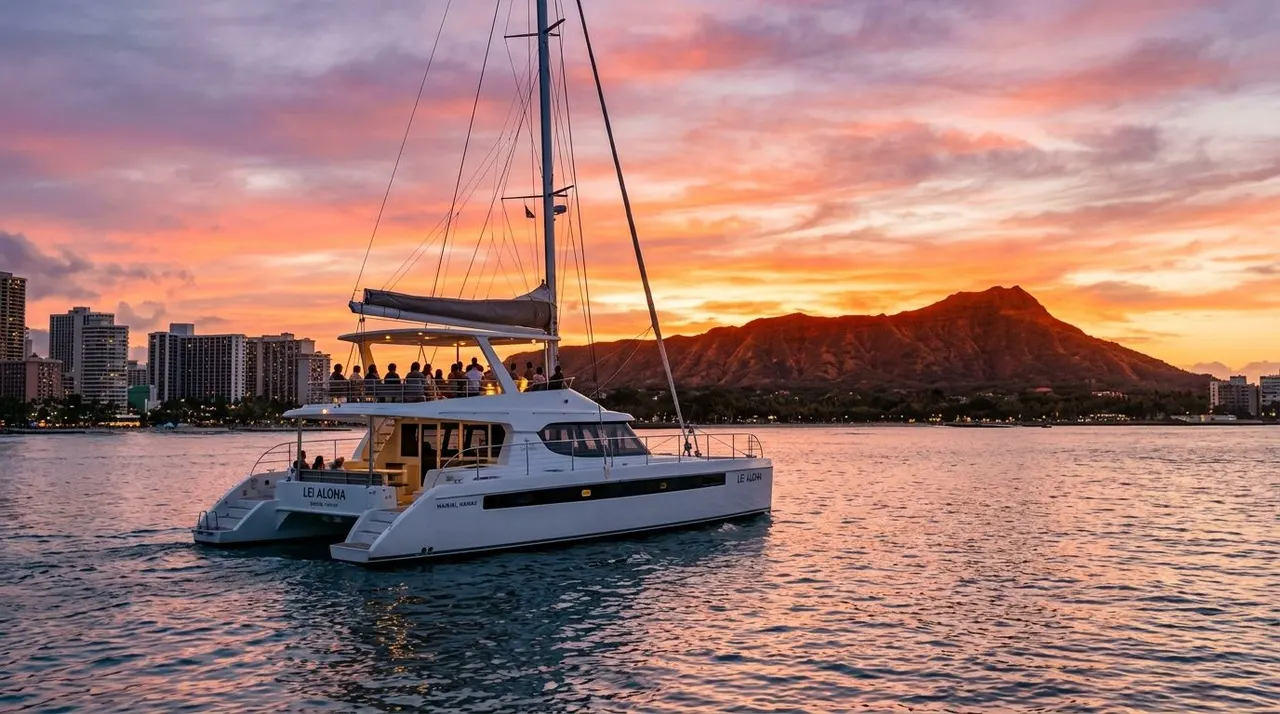
You’re probably looking at a sunset cruise the same way most visiting families do. One person wants the postcard view of Diamond Head at golden hour. Another wants a smooth ride and a bathroom close by. Someone in the group gets seasick. Someone else wants photos without a crowd leaning into the frame. And if you’re traveling with grandparents, kids, or both, the usual “romantic sail” descriptions don’t answer the questions that matter.
A good waikiki sunset cruise isn’t just about the sunset. It’s about how the evening feels from the moment you book to the moment you step back onto the dock. The best trips make boarding simple, seating easy, and the ride comfortable enough that everyone can enjoy the skyline, the trade winds, and the color change over the water instead of managing discomfort.
That’s where local knowledge helps. The coastline is beautiful on any boat, but not every boat handles family groups the same way, and not every cruise atmosphere fits a mixed-age party. If you know what to look for before you reserve, you’ll avoid the most common mistakes and end up with a cruise that feels easy from start to finish.
An Unforgettable Way to Experience a Hawaiian Sunset
At beach level, sunset in Waikiki is already good. From the water, it’s a different experience entirely. The shoreline stretches out cleanly, Diamond Head sits in profile, and the city starts to glow behind the beach as the light softens over the Pacific.
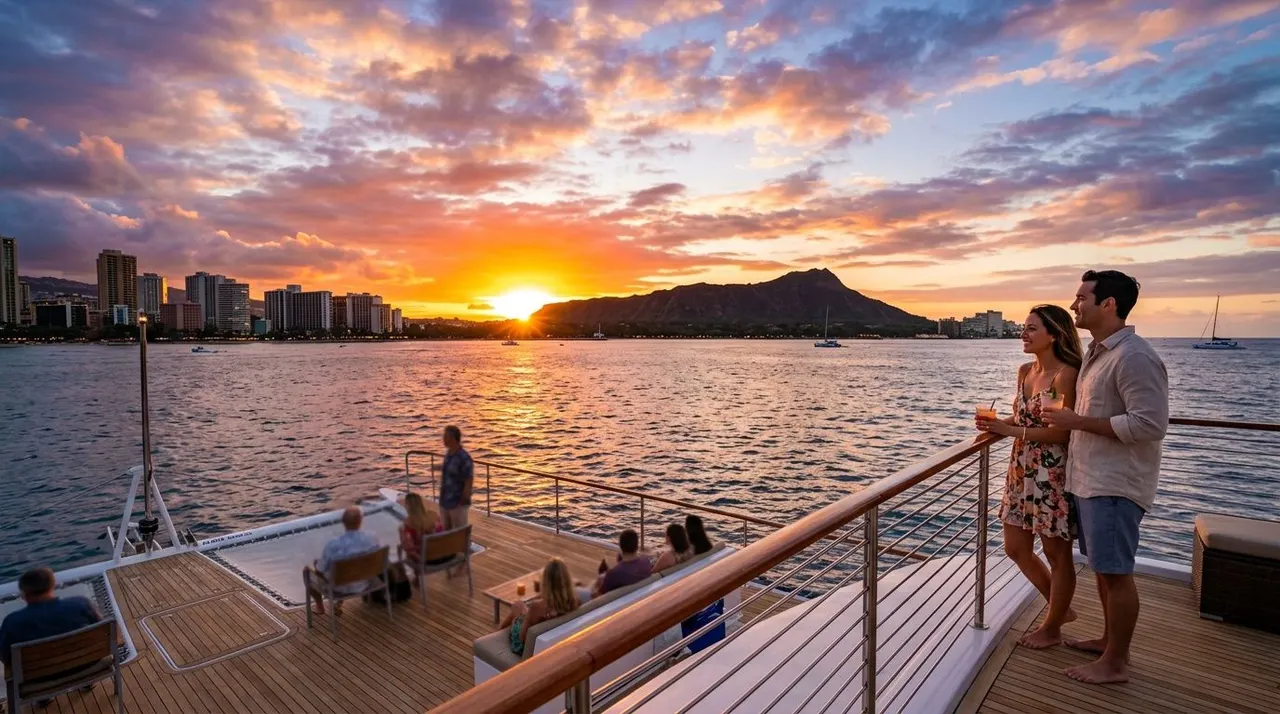
What surprises first-time visitors is how much calmer the coast looks once you leave shore. The beach noise drops away. You stop looking around other people and start seeing the whole line of Waikiki at once. For couples, that feels intimate. For families, it gives everyone the same view without jockeying for space on a crowded sidewalk.
The difference is perspective. From land, you’re watching the sun. From a boat, you’re also watching the coastline react to it. Hotels pick up the warm light, the water reflects the sky, and Diamond Head becomes the anchor for every photo.
Why the ocean view changes the experience
A sunset cruise works because it gives you motion without rush. You’re moving along the coast, but the evening still feels slow. That balance matters when you have children, grandparents, or a group with different energy levels.
A few practical advantages stand out:
- Open sightlines: On the water, fewer things block your view of the horizon and shoreline.
- Shared experience: Everyone in the group sees the same sunset instead of getting split up along the beach.
- Better photo angles: Diamond Head and the Waikiki skyline read clearly from offshore.
- A more relaxed pace: Once the boat is underway, there’s nothing left to organize.
Practical rule: If your group wants one activity that feels special without requiring athletic ability or a full-day commitment, sunset cruises are one of the safest bets in Waikiki.
Who enjoys it most
Not every family trip needs to be high energy. Some of the best evenings are the easy ones. Grandparents can sit and enjoy the coastline. Kids usually stay engaged because the boat itself is part of the fun. Parents get an activity that doesn’t require constant logistics once boarding is done.
That’s why a waikiki sunset cruise works so well as a first-night activity, a rest-day activity, or the evening plan before an early departure home.
The Historic Coastline You'll See from the Water
The first thing many families notice offshore is how different Waikiki feels once the beach noise drops away. From the boat, the shoreline reads in layers. You see the curve of Diamond Head, the older hotel facades, and the built-up city behind them, all on the same stretch of coast.
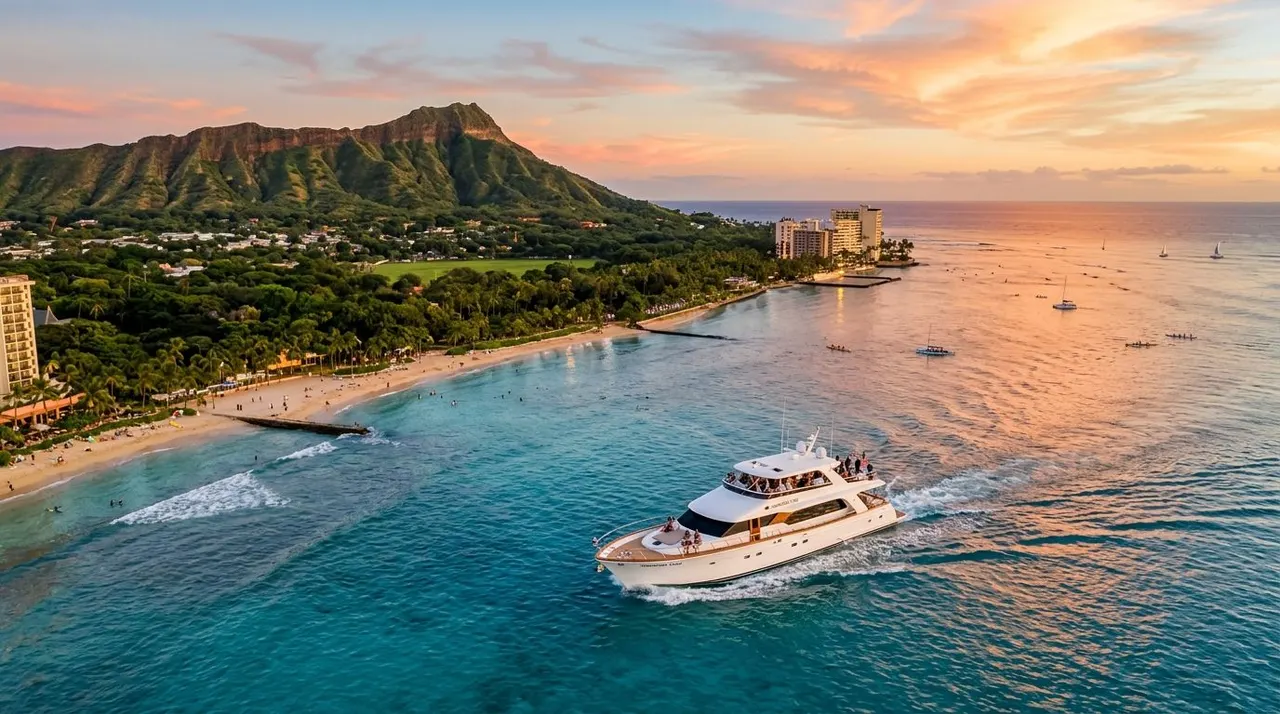
Waikiki looks polished today, but this shoreline started as a wetland system that supported Hawaiian communities long before it became a visitor district. Early chiefs used managed water, fishponds, and taro patches to make this area productive and livable. Later, Waikiki also served as a seat of power on Oahu, which gives the coast a very different feel once you know what you are looking at.
That history comes through clearly from the water.
A shoreline shaped by power and change
One of the defining events tied to this coast came in 1794, when Kamehameha I’s forces landed here during the campaign that helped unify the islands. By the nineteenth century, the same shoreline had become a retreat for Hawaiian royalty, including Queen Liliuokalani. Then came dredging, filling, road building, and hotel construction, which turned a once-marshy coastal plain into modern Waikiki.
That shift is significant. You can still feel both versions of Waikiki from the water. The coast is active and urban now, but it also carries the outline of an older royal shoreline beneath the hotels and beach parks.
For mixed-age groups, that makes the cruise easier to connect with. Kids usually lock onto the big visual markers. Parents and grandparents tend to appreciate the story behind them.
What stands out once you are offshore
A good captain usually points out the same landmarks, but the value is not just naming them. It is understanding how they fit together along one short stretch of coast.
- Diamond Head: The headland that frames the east side of Waikiki and gives everyone on board an easy reference point.
- The Moana Surfrider: One of the clearest reminders of early resort-era Waikiki and how tourism took root here.
- The rebuilt shoreline: Much of the Waikiki visitors know today sits on land that was reshaped from older wetlands and coastal flats.
- Kewalo Basin and the working harbor side of town: This part of the route helps families see that Waikiki is not only a postcard beach. It is also an active waterfront connected to departures like this sunset cruise from Kewalo Basin near Waikiki.
From offshore, those pieces line up in a way they do not from the sidewalk. Street level gives you fragments. The ocean gives you the full coastline.
Why the history helps on a family cruise
On board, the practical win is simple. People of different ages stay engaged for different reasons, without anyone needing a separate activity. One person is watching for the green flash. Another is asking about Diamond Head. A grandparent is pointing out how much the shoreline changed over time.
That is part of what makes this coast work so well for multi-generational groups. The view carries the evening, and the history gives the group something to share besides photos. As a captain, I have seen that make a real difference. Families talk more, kids ask better questions, and the ride feels richer than a sunset watch with no context at all.
Your Experience with Living Ocean Tours Sunset Cruise
If your priority is a smooth family-friendly ride, the boat matters as much as the route. For this stretch of coast, catamarans usually give mixed-age groups the easiest evening because they feel steadier underfoot and offer more usable viewing space than many visitors expect.
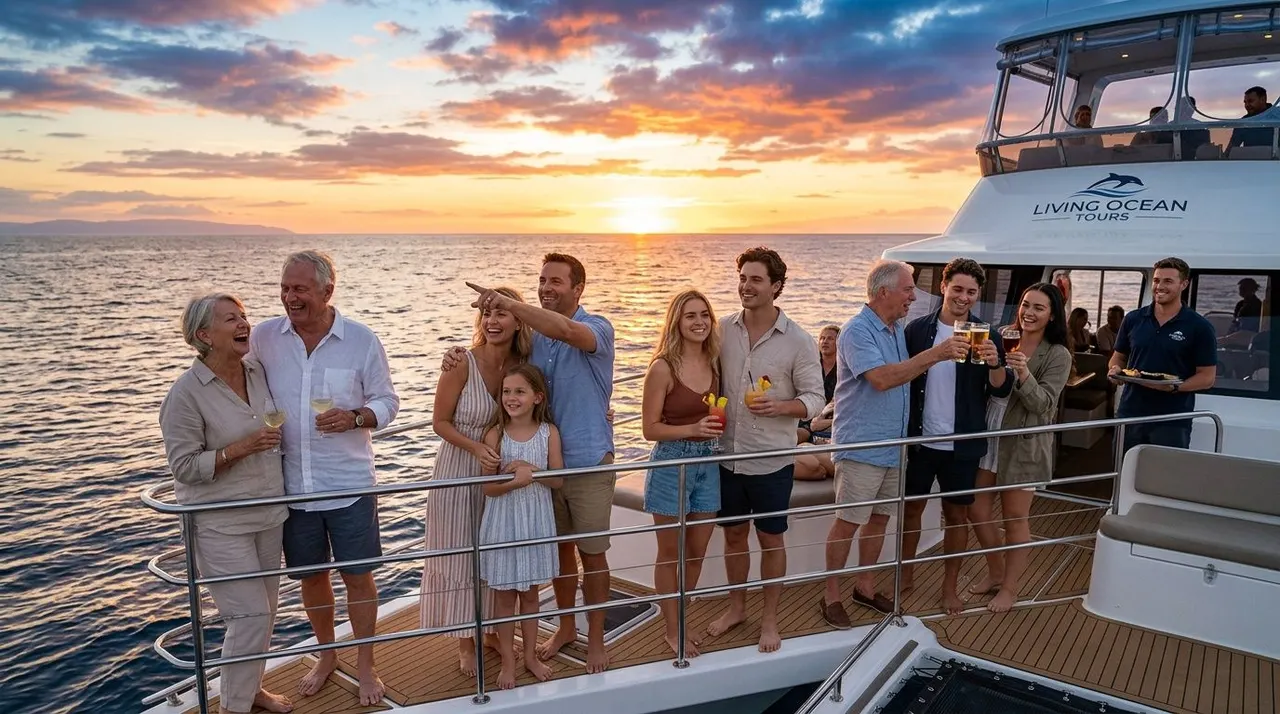
One option to look at is the Waikiki sunset cruise tour page. The operation uses the 50-foot Coral Kai, a double-decker power catamaran. According to this vessel overview of Waikiki sunset cruise boat types, catamarans like the Coral Kai reduce motion sickness by 30 to 50% compared to single-hull vessels, and their multi-level decks provide panoramic views along the 2 to 3 mile Waikiki coastline.
That trade-off is practical, not theoretical. A steadier platform usually means fewer issues for nervous passengers, easier movement for older guests, and a more relaxed ride for parents who don’t want to spend the evening managing kids who suddenly feel queasy.
What works well onboard
The strongest part of this type of cruise is flexibility. Different guests can use the boat differently without splitting the group too much.
A few details are worth paying attention to:
- Upper deck views: Better for wide photos, skyline shots, and Diamond Head silhouettes.
- Lower deck comfort: Better when someone wants shade, less wind, or easier footing.
- Restroom access: Important on any family outing, especially with small children.
- USCG capacity: The vessel setup supports up to 49 passengers under the standards cited in the boat-type reference above.
If you want more detail on the departure area and harbor setup, the Kewalo Basin sunset cruise guide gives a useful preview.
What the atmosphere is like
Some Waikiki sunset outings lean hard into party energy. Others feel nearly private and quiet. The middle ground tends to work best for multi-generational groups. You want enough energy that the ride feels festive, but not so much that grandparents can’t hear each other or kids are navigating a loud adult scene.
This style of cruise usually fits families, couples, and small groups because it leaves room for choice. Guests who want a drink can often bring one or buy one onboard. Guests who don’t can enjoy the route and the light.
The easiest family cruises are the ones that don’t force everyone into the same mood. Some people want photos. Some want a seat. Some want a drink. A good boat lets all three happen at once.
Reviews and onboard expectations
The biggest mistake I see visitors make is treating all sunset cruises as interchangeable. They aren’t. Vessel layout, boarding process, deck access, and crew pacing all shape the evening. Those details decide whether your group feels settled in five minutes or spends half the trip rearranging itself.
Living Ocean Tours is often mentioned by visitors looking for ocean activities because it’s known as the top rated and most reviewed snorkel company on Oahu. For travelers already familiar with their water operations, that can make the sunset cruise an easy fit.
Planning Your Itinerary Timing and Booking
A family sunset cruise starts well before the boat leaves the harbor. I’ve seen the same route feel easy for one group and exhausting for another, and the difference usually comes down to timing. If you are coordinating grandparents, kids, and adults who all keep different vacation schedules, the best booking is the one that protects everyone’s energy.
Most Waikiki sunset sails fit into late afternoon or early evening and run long enough to catch the light change without turning into a full-night commitment. For mixed-age groups, that window works well because younger kids can usually make it through the trip, while older relatives are not stuck out on the water too late.
How to choose the right day
Put the cruise on a day with some breathing room around it. Families often get into trouble by stacking a sunset sail after a long beach morning, a missed lunch, and one more “quick stop” at the hotel. By the time they reach the harbor, somebody is hungry, somebody is tired, and somebody is already stressed.
I usually suggest booking it earlier in the trip if you can. That gives you options if weather shifts, a child needs a slower day, or the group decides they would rather swap evenings.
Three booking filters help:
- Choose your light first. Check the Waikiki sunset times by date so your departure lines up with the kind of sky and photo window you want.
- Protect the afternoon. Leave a gap before check-in instead of planning shopping, dining reservations, or a long drive right before boarding.
- Match the trip to the slowest mover in the group. If one grandparent needs extra walking time or one child still naps, build the schedule around that person.
That last point matters more than visitors expect.
Booking for multi-generational groups
For a couple, almost any open sunset slot can work. For a larger family, details matter. Confirm check-in timing, parking or rideshare drop-off, and whether your group wants to stay together during boarding. If you are splitting transportation between hotel guests, rental cars, and relatives coming from another part of the island, set one firm meet time and make it earlier than feels necessary.
If you’re sailing with Living Ocean Tours for a birthday, reunion, or anniversary dinner afterward, reserve early. Sunset departures are limited, and the easiest times go first, especially when several people need the same evening.
What to expect on the day
Keep the pre-boarding routine simple.
- Leave Waikiki with cushion time. Traffic, loading strollers, and gathering everyone in one place always take longer than families expect.
- Use the restroom before boarding. That saves hassle during the first part of the trip, especially with kids.
- Keep a light layer and any motion remedy easy to reach. Don’t bury them at the bottom of a beach bag.
- Decide your boarding priorities before you arrive. Know who needs the most stable spot, who wants photos, and who should stay shaded at first.
I tell families the same thing every week. Do the planning on land so you can enjoy the water once you step aboard.
Essential Tips for Families and Groups
A family sunset cruise goes well when the group is comfortable before the sky gets colorful. I’ve seen three-generation groups have a great evening on the water, and I’ve seen the same size group struggle because nobody decided who needed shade, who needed the steadiest seat, and who could handle stairs.
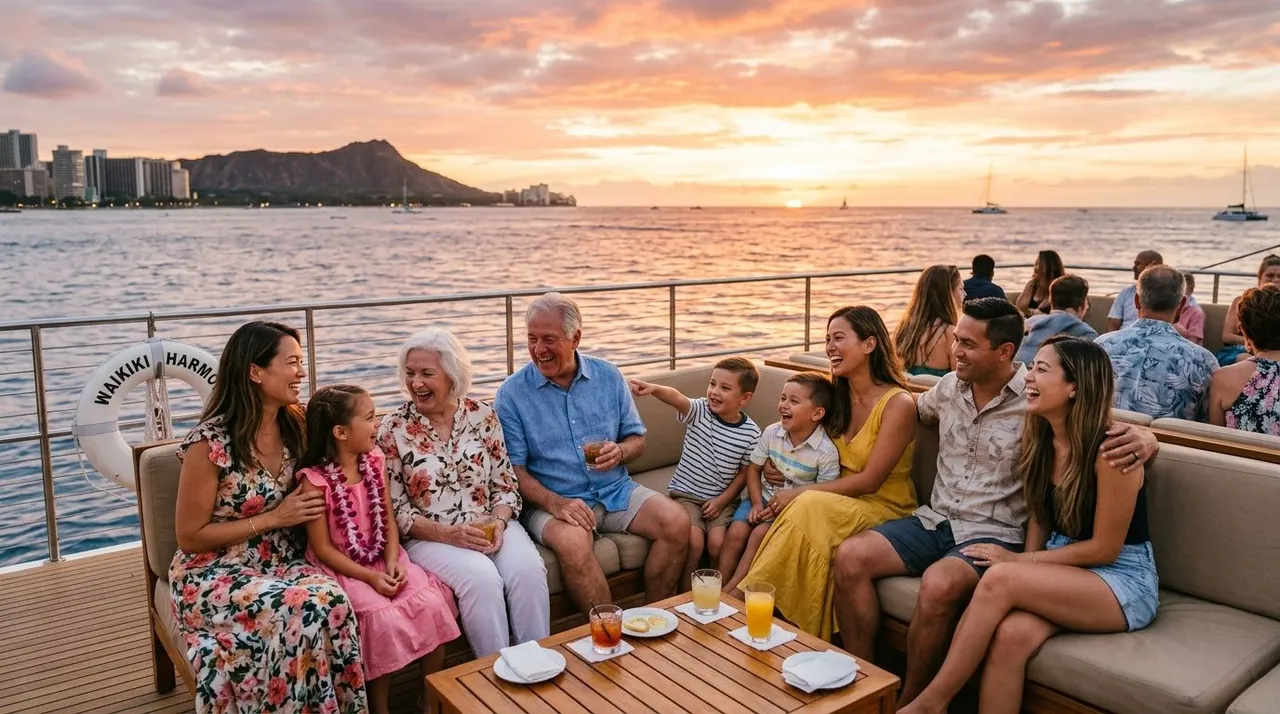
Before you board, sort your group by comfort needs first and social preferences second. That one decision prevents a lot of frustration once the boat leaves the harbor. If you want a clearer picture of boat layout and the overall onboard flow, the Waikiki sunset cruise experience overview helps set expectations.
The other guide I point families to is the family seating guide for Waikiki sunset cruises. Upper decks usually give the widest view. Lower decks on catamarans are often the better call for grandparents, younger children, and anyone who feels motion early.
Best seating by group type
Seat choice changes the whole trip for mixed-age groups.
- Grandparents or guests with limited mobility: Lower deck, near the center, with the fewest stairs and easier restroom access.
- Young kids: Start lower and more stable. Move them for a few photos later if they still feel good.
- Teens and photo-focused travelers: Mid-ship or upper deck usually gives cleaner sightlines without as much spray.
- Mixed-age family groups: Break up by comfort needs. Keep one adult with kids and one adult free to help older relatives.
What works and what causes problems
Crews can help, but families that do these few things usually have the smoothest trip.
What works:
- Choosing seats by stability, shade, and stair access
- Keeping a light layer handy once the sun drops
- Giving kids a simple snack before boarding
- Asking the crew which side is calmest that evening
What causes problems:
- Sending the whole group upstairs right away for the view
- Treating the cruise like a full dinner for hungry kids
- Assuming every older relative is comfortable on wet steps
- Waiting until the last ten minutes for every family photo
One practical trade-off matters more than people expect. The seat with the best photo angle is not always the seat where your group will feel best for ninety minutes. If one person gets cold, uneasy, or tired of climbing up and down, the whole family starts adjusting around that.
Small adjustments that make a big difference
Mid-ship is often the safest default if your group includes both kids and older adults. It usually gives you the steadiest ride and keeps everyone close enough to move together when the light changes. Stern seating can be fun and social, but engine noise and wake can bother guests who are sensitive to motion or sound.
I also tell families to spread out only after everyone gets settled. Start together, let the children and older guests find their sea legs, then rotate people up for photos. The families who enjoy the cruise most are usually the ones who make a few calm decisions early and spend the rest of the evening watching the coastline instead of managing discomfort.
How Living Ocean Compares to Other Local Options
Waikiki has several distinct sunset cruise styles. Picking the right one is less about finding a “best” cruise and more about matching your group to the right boat and onboard atmosphere. That’s where many visitors go wrong. They book by price or photo alone and end up on a cruise that fits someone else’s vacation.
One practical comparison point is the boat tour versus sunset cruise breakdown for Waikiki visitors. It helps clarify whether your group wants a dedicated sunset outing or a more general harbor-and-coast experience.
Waikiki Sunset Cruise Options at a Glance
| Cruise Type | Best For | Vessel | Vibe |
|---|---|---|---|
| Family-focused catamaran cruise | Multi-generational groups, couples, casual visitors | Double-decker power catamaran | Relaxed, scenic, flexible |
| Party-style cruise | Groups prioritizing drinks and loud social energy | Large catamaran or similar high-capacity boat | Lively, high-energy, adult-focused |
| Private yacht charter | Celebrations, privacy-focused travelers | Private yacht | Quiet, premium, customized |
| Sober-friendly cruise | Wellness travelers, families, guests avoiding party scenes | Varies by operator | Calm, educational, marine-focused |
The real trade-offs
Family-oriented catamarans usually hit the middle ground well. They give you stability, deck choices, and enough room to spread out without making the evening feel formal. That’s often the sweet spot for groups with different ages and priorities.
Party boats can be fun if everyone is there for the same reason. They’re less ideal if half the group wants conversation and sunset photos while the other half wants a social drinking scene. The mismatch, not the boat, is usually the problem.
Private yachts solve crowding and atmosphere issues, but they aren’t always necessary for families who are looking for a comfortable public cruise. For many groups, the extra cost doesn’t improve the parts of the experience that matter most, such as seating comfort, restroom access, or a clear Diamond Head view.
If you want another dedicated option to compare, Waikiki sunset cruise alternatives are worth reviewing alongside your shortlist.
The sober-friendly shift
One category deserves more attention than it gets. According to this roundup of Waikiki sunset cruise types and travel trends, some operators are beginning to offer sober-friendly sunset cruises that emphasize marine education and a calmer onboard environment instead of the usual booze-cruise setup.
That matters for families and wellness-focused travelers. On a sober-friendly trip, the tone often stays quieter, wildlife spotting tends to hold attention longer, and the crew can lean more into the reef, the coastline, and onboard education. If your group doesn’t care about cocktails, that format can be a better fit than the heavily promoted party model.
FAQ and Your Pre-Sail Checklist
A waikiki sunset cruise is simple once you’ve handled the basics well. Most problems come from packing the wrong things, arriving rushed, or booking a cruise type that doesn’t fit the group.
Pre-sail checklist
- Bring a light layer: Trade winds can make the return leg feel cooler than the dock.
- Wear flat, secure footwear: Decks move. Good footing matters more than dress shoes.
- Keep your phone or camera accessible: Sunset color changes fast.
- Carry ID if alcohol is part of your plan: Don’t assume the crew can make exceptions.
- Use lotion sunscreen, not spray: Spray can make decks slick and is a poor choice around the marine environment.
Common questions
Where do most Waikiki sunset cruises depart from?
Many depart from Kewalo Basin, which is a short ride from most Waikiki hotels.
What if it rains?
Light showers usually don’t ruin a Hawaii boat trip. Conditions on the water matter more than passing rain. If operators need to cancel for safety, they’ll usually offer the next step directly. If you’re concerned about weather logistics, the Waikiki sunset cruise rain plan guide outlines what to expect.
Are there restrooms onboard?
On many family-friendly catamarans, yes. Always confirm before booking if that’s a must-have for your group.
Should kids sit upstairs?
Only if they’re comfortable with more wind and you’re confident on stairs and movement. For many families, downstairs first is the smarter choice.
Is a sunset cruise worth it if someone in our group doesn’t love boats?
Usually yes, if you choose a stable vessel and seat that person conservatively. Comfort decisions matter more than enthusiasm at booking time.
A calm, well-run sunset cruise can be one of the easiest shared memories of an Oahu trip. If you want to compare schedules, boat details, and family-friendly ocean outings, take a look at Living Ocean Tours.


